Why Most Companies Outgrow Their First AI Chatbot for Business

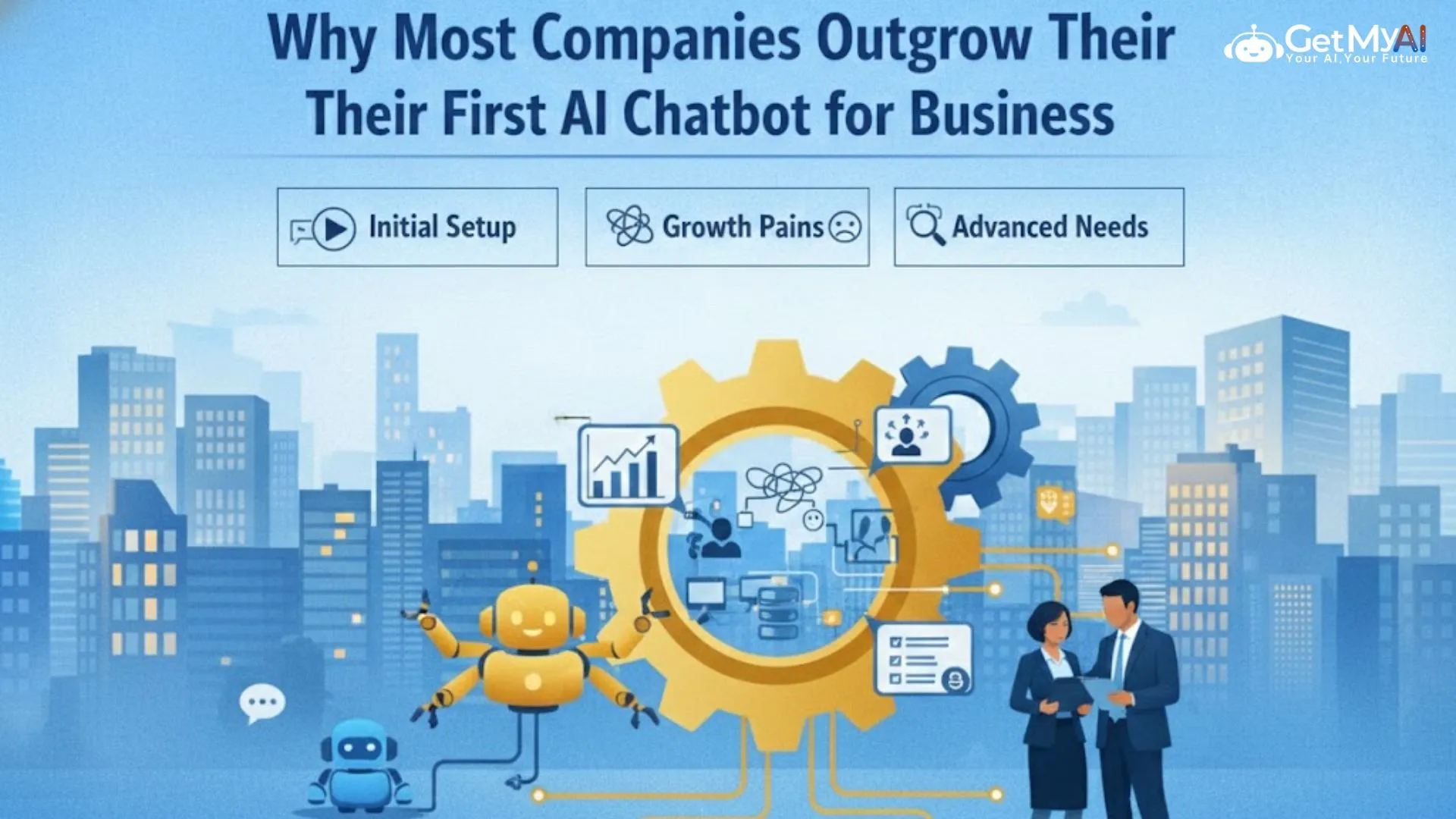
Did your chatbot feel like the right decision at launch, but now feels harder to manage than it should? At the beginning, it probably felt like a win. Fewer emails. Faster replies. A sense that support was finally under control. The AI chatbot for business looked like a smart move. Cheap. Fast. Good enough. Then the business grew. Traffic increased. Questions changed. Teams expanded. And slowly, that chatbot stopped feeling helpful and started feeling fragile.
This is not a failure story. It is a growth story. Most companies outgrow their first chatbot setup. Not because chatbots do not work, but because early choices are made for speed, not for scale. This piece breaks down why that happens, what signals show up first, and what mature teams look for when they move to the next stage.
The First Chatbot Is Usually Chosen for Speed, Not Longevity
The first chatbot decision is almost never strategic. It is reactive. A support queue is getting noisy. Founders are answering tickets at midnight. Someone suggests adding a chatbot. A quick search leads to a free tool, a basic widget, or a plugin bundled with something else. It feels smart. It feels modern. And it launches in a day. Most early setups rely on basic AI chatbot software. Simple flows. Pre-written answers. Maybe a handful of FAQs connected to a homepage. The goal is not long-term architecture. The goal is to stop the bleeding.
Early results reinforce the decision. Fewer repetitive questions. Some automation. A sense of progress. But this is where the illusion forms. The initial AI chatbot implementation is rarely designed to grow with the company. It is a proof of concept. Not infrastructure. It works because the business is still small enough to fit inside its limits. Those limits only become visible later.
Growth Reveals When a Chatbot Is No Longer Enough
Growth rarely breaks systems in one day. It applies pressure slowly, over weeks and months. More users arrive. They ask different questions. They use new words. They expect fast and correct answers every time. What once felt simple starts to feel crowded.
A chatbot that handled ten common questions now faces hundreds of variations. Content needs updates more often. Small mistakes show up more frequently. Accuracy slips. Confidence drops. For an AI chatbot for growing businesses, this is the turning point. What once ran quietly in the background now needs attention. Someone has to check replies. Someone has to fix gaps. The work increases as the business grows.
Leadership also starts paying closer attention. The AI chatbot for business is no longer just a support tool. Customers rely on it. It speaks for the brand. When it gives the wrong answer, trust takes a hit. At this stage, growth introduces risk. The chatbot becomes part of the customer experience, not just a helper on the side. This is where cracks form. Slowly, but consistently.
When Chatbots Start Feeling Like More Work Than Value
There is a clear moment when teams stop trusting their chatbot. It does not happen all at once. It builds over time.
- Teams delay updates because they are unsure what might break. Simple changes feel risky.
- Support agents correct bot answers or respond manually instead of relying on automation.
- Marketing avoids adding content because syncing it feels painful. The chatbot gets ignored.
- Users stop using the bot and ask directly for a human, usually through email or forms.
This does not mean chatbots are bad. It means the setup has outgrown.
Early chatbots depended on rigid logic. They need constant tuning. Every change costs time and energy. Over time, maintaining the system takes more effort than it saves. That is when teams start looking for something different. Not just another chatbot, but a better way to manage conversations. This is where real buying intent begins.
AI Chatbot vs Live Chat: Why “Just Add Humans” Stops Working
When chatbots fail, most teams do the same thing. They add people. Live chat feels safe. Humans understand tone. They can think through messy questions. They can say sorry when things go wrong. Compared to fixing broken automation, hiring one more agent feels easier. In the short term, it works. Customers get answers. The pressure drops. But this is where the real AI chatbot vs live chat problem begins. It is not about which one feels better. It is about what happens when conversations keep growing every month.
Live chat grows in a straight line. More chats mean more agents. More agents mean more training. Training brings uneven answers. Costs rise quietly in the background. What once looked like an Affordable AI chatbot for business now sits beside a payroll that never stops expanding. Support becomes harder to manage, not easier. Live chat solves today’s issue but creates tomorrow’s bottleneck.
The real goal is not choosing bots or humans. It is a balance. Automation should handle repeat questions at scale. Humans should step in when judgment is needed. That balance needs the right foundation.
| Area | AI Chatbot | Live Chat |
| Scaling | Handles many chats at once | Needs more people |
| Cost growth | Stable over time | Increases with volume |
| Consistency | Same answer every time | Varies by agent |
| Availability | 24/7 without fatigue | Limited by shifts |
| Best use | Repetitive questions | Complex edge cases |
This is why mature teams rethink structure, not headcount.
Case Signals: How Different Industries Outgrow Early Chatbots
This problem is not limited to one market or one type of business. It shows up across industries, at different speeds, but with the same result. Early chatbots work when questions are simple, and volume is low. As soon as complexity grows, cracks appear. The industry changes, but the pattern stays the same.
1. SaaS: Fast Product Changes Break Static Logic
In SaaS, things change often. New features launch. Old flows change. Help content updates weekly. An AI chatbot for SaaS support struggles to keep up when it depends on fixed scripts. Each release creates new questions that the bot cannot answer correctly. Teams rush to update it, but updates lag behind reality. Over time, support agents stop trusting the bot because it reflects yesterday’s product, not today’s.
2. Real Estate: Context Matters More Than Scripts
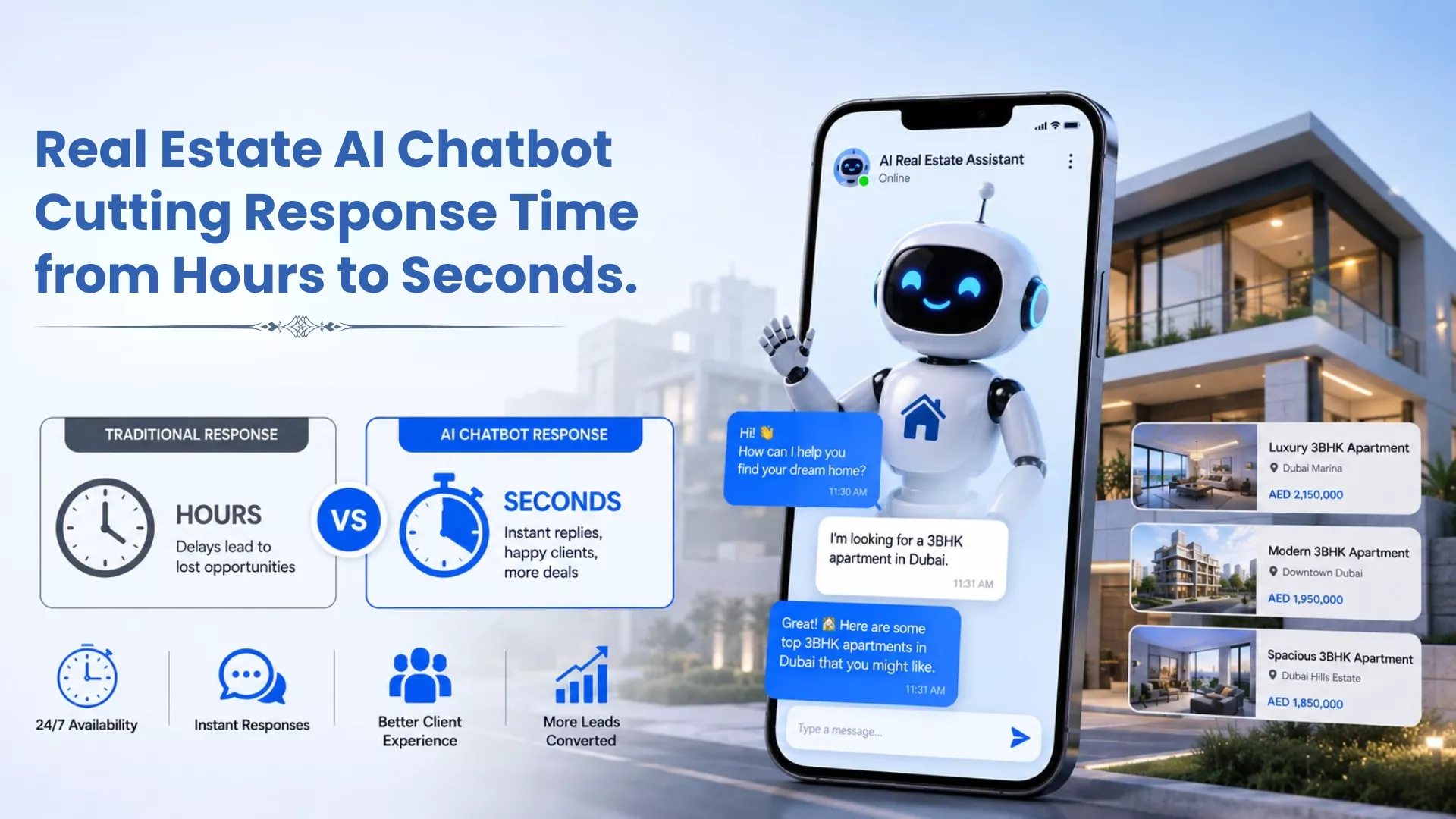
A Property inquiry chatbot works well at first. It can reply to simple questions about listings or contact info. But real buyers ask deeper questions. They want to know about locations, timelines, and next steps from past chats. Without memory or context, the bot starts over each time. Fixed scripts fail in real buying journeys, so users soon ask for a human.
3. E-Commerce: Volume and Change Create Chaos
An AI chatbot for online stores faces constant pressure. Products go in and out of stock. Orders ship late. Return policies vary. Static answers become wrong fast. Customers ask order-specific questions that simple bots cannot understand. As volume grows, outdated replies cause frustration. What once reduced tickets now creates more follow-ups and manual work for support teams.
4. EdTech: Curiosity Does Not Follow Flows
In education, questions are rarely direct. Students explore. They ask “what if” and “how does this work?” An AI chatbot for EdTech platforms struggles when it relies on linear paths. Learning is not linear. When bots cannot handle open-ended curiosity, students lose confidence and stop using them. Support teams then step in to fill the gaps.
5. Legal Services: Accuracy Is Not Optional
An AI chatbot for law firms carries real risk. Language must be precise. Answers must stay within clear boundaries. Early chatbots often oversimplify or respond too freely. That creates compliance issues. When accuracy cannot be guaranteed, firms limit bot usage or shut it down. At this stage, the chatbot becomes a liability instead of a support tool.
Across industries, early chatbots fail for the same reason. They are built for simple questions, not real-world complexity. Growth exposes limits, no matter the business type.
What Companies Look for in Their Second Chatbot Setup
The second chatbot decision feels very different from the first. Speed matters less. Control matters more. At this stage, teams are not chasing quick wins. They have learned that fast launches often create long-term pain. Now they care about stability, accuracy, and ownership. They want systems that feel calm to manage, easy to update, and reliable under pressure. Control becomes more valuable than speed.
Teams want ownership. They want to update content without fear. They want to see what users ask and how the bot responds. They want confidence.
A mature AI chatbot platform is judged on different criteria.
- Can teams manage it without developers?
- Is the data visible and searchable?
- Does behavior stay predictable at scale?
- Can it evolve as the business changes?
This is where companies start looking for a real AI chatbot solution for businesses. Not a widget. Not an experiment. Infrastructure. The buying conversation shifts from “Can we launch this?” to “Can we live with this for years?” Leaders think long term. They want tools that grow with the company, not ones they will replace again. The focus moves to durability, clarity, and trust. The chatbot must support daily operations, not create new work.
Why GetMyAI Fits Companies That Have Outgrown Their First Bot
Most chatbot tools are built for starting out. They work well when traffic is low, questions are simple, and expectations are forgiving. Then the business grows, and the tool stays the same. That is when teams outgrow it.
GetMyAI is built for a different reality. It is designed for companies that expect change and want their chatbot to keep up, not fall behind. Instead of solving just the early stage, it grows alongside the business.
Here is how GetMyAI scales with you:
- Knowledge grows without risk
With GetMyAI, teams can update documents, Q&A, and training content directly from the Dashboard. If something changes, you retrain the agent and move on. Existing answers stay stable, and updates don’t break what already works. Improving knowledge feels controlled, not risky.
- Control stays with the business
GetMyAI is built so internal teams stay in charge. Marketing, support, or operations teams decide what the chatbot knows, how it speaks, and what it should answer. You don’t need developers, and you’re not dependent on vendors to make changes.
- Behavior stays consistent at scale
As conversations grow from a few per day to thousands, GetMyAI keeps responses steady. It uses meaning-based retrieval from your approved content, so answers stay aligned with your documents and Q&A. The bot doesn’t guess, drift, or change tone as volume increases.
- Visibility improves over time
GetMyAI shows exactly what’s happening. The Activity section lets you review real conversations and unanswered questions. Analytics show total chats, messages, engagement, and where users struggle. You always know what the bot is doing and where it needs improvement.
- Operations feel lighter, not heavier
GetMyAI does not create more work for teams. It takes care of repeated questions, gathers feedback centrally, and lets teams make improvements directly inside the Dashboard. As usage grows, the system supports your team instead of adding more maintenance.
For teams that already felt the pain of outgrowing their first setup, this kind of AI chatbot for business feels different. Not flashy. Not fragile. Just reliable.
GetMyAI is not a stepping stone. It is infrastructure built for the long run.
Outgrowing Your First Chatbot Is a Signal, Not a Setback
Outgrowing your first chatbot is not a setback. It is a clear sign that your business has moved past quick fixes. When a chatbot feels harder to control, less trusted by teams, or slower to update, it usually means expectations have grown. Customers ask better questions. Teams need accurate answers. Leaders need systems they can rely on. Most companies do not move on because automation failed. They move on because they finally see what a real AI chatbot for business should do. The next setup should remove stress, not add to it. It should feel stable, predictable, and easy to improve as the business evolves. That shift, from testing to infrastructure, is a natural step in a growing company’s journey.
If your chatbot no longer keeps pace with your business, it may be time to rethink the foundation. A scalable platform like GetMyAI is built to support teams that are ready for that next stage.