AI Chatbot Deployment Strategy for Long-Term Knowledge Use

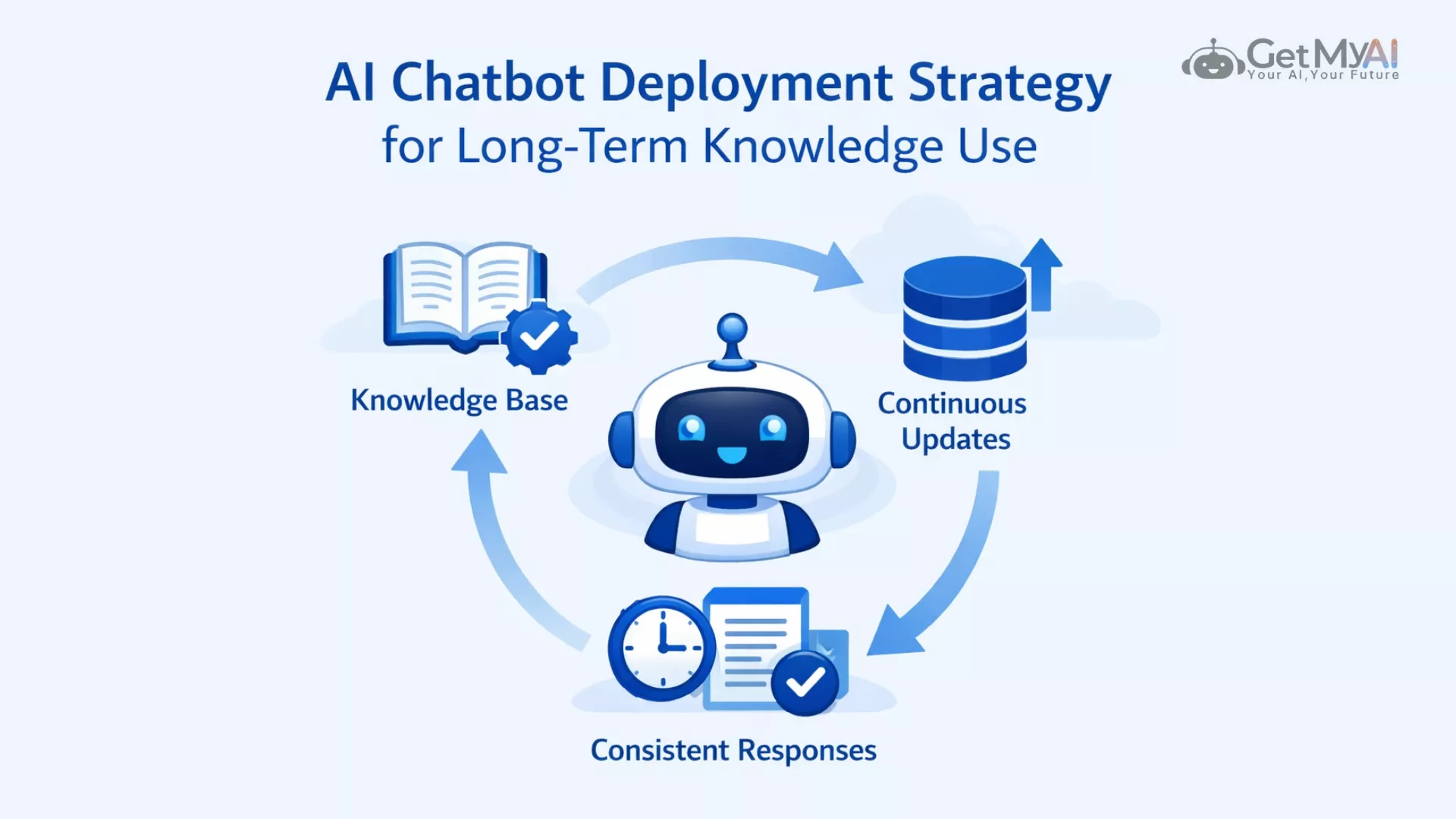
We see many teams rush to deploy an AI chatbot. The focus is often on launch dates, placement on the website, or how fast answers appear. That thinking misses where real value comes from.
AI chatbots do not earn their place because they exist. They earn it when they become the place people trust for answers. That only happens when a chatbot grows into a knowledge layer, not a short-term feature.
This difference is subtle but important. Launching a chatbot is a moment. Building a knowledge asset is a decision that plays out over time.
In this article, we explain what businesses should prepare before deployment. Not settings or screens, but the thinking that allows an AI chatbot to stay useful, trusted, and relevant long after the first rollout.
AI Chatbots Mirror How Businesses Treat Knowledge
Every business already has knowledge. It lives in documents, FAQs, internal notes, and shared files. Most of it is useful. Much of it is scattered. Some of it is outdated.
AI chatbots do not create answers on their own. They surface what already exists. That is why preparation matters.
When knowledge is clear, current, and aligned, chatbots respond well. When knowledge is fragmented or unclear, chatbots feel shallow and unreliable.
This is where AI chatbot deployment strategy begins to matter. The chatbot reflects how seriously a company treats its information. If knowledge is treated as shared truth, AI becomes dependable. If it is treated as leftovers from past work, AI becomes forgettable.
Good preparation turns an AI chatbot into a long-term asset. Weak preparation limits it to a short-lived experiment.
Prepare Documentation that Works as a Shared Truth
This is not about writing new documents. It is about making existing ones usable.
Clear documentation allows AI systems to deliver consistent answers over time. That clarity comes from a few simple practices.
- Focus on one answer per question, not multiple versions across teams
- Remove contradictions between older and newer files
- Ensure policies reflect how work is done today
- Treat documents as the company truth, not team notes
When documentation is aligned, AI responses stay aligned. That is the foundation of AI readiness for businesses.
Teams that do this work early avoid confusion later. The chatbot stays helpful because the knowledge behind it stays stable.
Ownership Keeps Knowledge Alive
Knowledge without ownership fades quietly. Files age. Answers drift. Small changes stack up until nobody is sure what is correct.
Strong chatbot outcomes depend on ownership. One person or role must be accountable for keeping knowledge current. That does not mean daily updates. It means clear responsibility.
This applies to customer-facing bots and internal bots alike. Someone owns the knowledge layer, reviews gaps, and approves updates.
This is AI chatbot governance done right. It is governance without friction. Control without complexity.
Ownership ensures that as teams grow, answers remain reliable. That consistency supports AI chatbot lifecycle management, where value increases instead of declining.
Clear Scope Keeps Answers Reliable
AI works best when it knows its role. A chatbot does not need to answer everything.
Before deployment, teams should decide what the AI should handle and what it should avoid. This clarity improves long-term performance.
Here is how focused scope helps:
- It reduces conflicting answers across topics
- It improves trust by avoiding guesswork
- It keeps updates manageable
- It supports sustainable AI chatbot practices over time
A focused AI stays reliable. A broad, unfocused AI becomes inconsistent. Clear scope is a sign of maturity, not limitation.
Align the Chatbot with Long-term Business Needs
AI chatbots can support customer support, onboarding, sales, and internal teams. Their value grows as knowledge grows.
Unlike campaigns or tools that reset each quarter, chatbots build on what already exists. Over time, answers improve. Coverage expands. Teams rely on them more.
This is where long-term AI strategy matters. Leaders who align chatbots with ongoing needs see compounding value. Leaders who treat them as short-term tools often replace them.
As teams scale and knowledge evolves, aligned chatbots become part of the business infrastructure. They support work quietly, without constant rethinking or rebuilding.
Frequently Asked Questions
1.How early should we think about preparation?
Preparation should start before deployment. Preparing for AI implementation early avoids rework and helps the chatbot stay useful longer.
2.Is this only for customer-facing chatbots?
No. The same preparation supports internal bots and improves AI chatbot performance over time.
3.Do we need technical teams to do this work?
Most preparation is content and ownership-focused. It supports AI readiness for businesses without heavy technical effort.
4.What happens if knowledge is not maintained?
The chatbot still runs, but trust drops. This affects AI chatbot lifecycle management and long-term value.
5.Can preparation evolve after launch?
Yes. Early preparation sets direction, but ongoing care keeps results strong and supports AI chatbot deployment strategy.
Preparation Defines Long-term Value
The difference between a short-lived chatbot and a lasting knowledge asset is not the launch. It is what happens before and after.
Preparation decides whether AI becomes background noise or a trusted system that teams rely on daily. Businesses that think ahead build something that improves as knowledge grows.
Platforms like GetMyAI support this shift by enabling teams to manage knowledge, scope, and ownership from one place. When preparation leads, AI follows with lasting value.