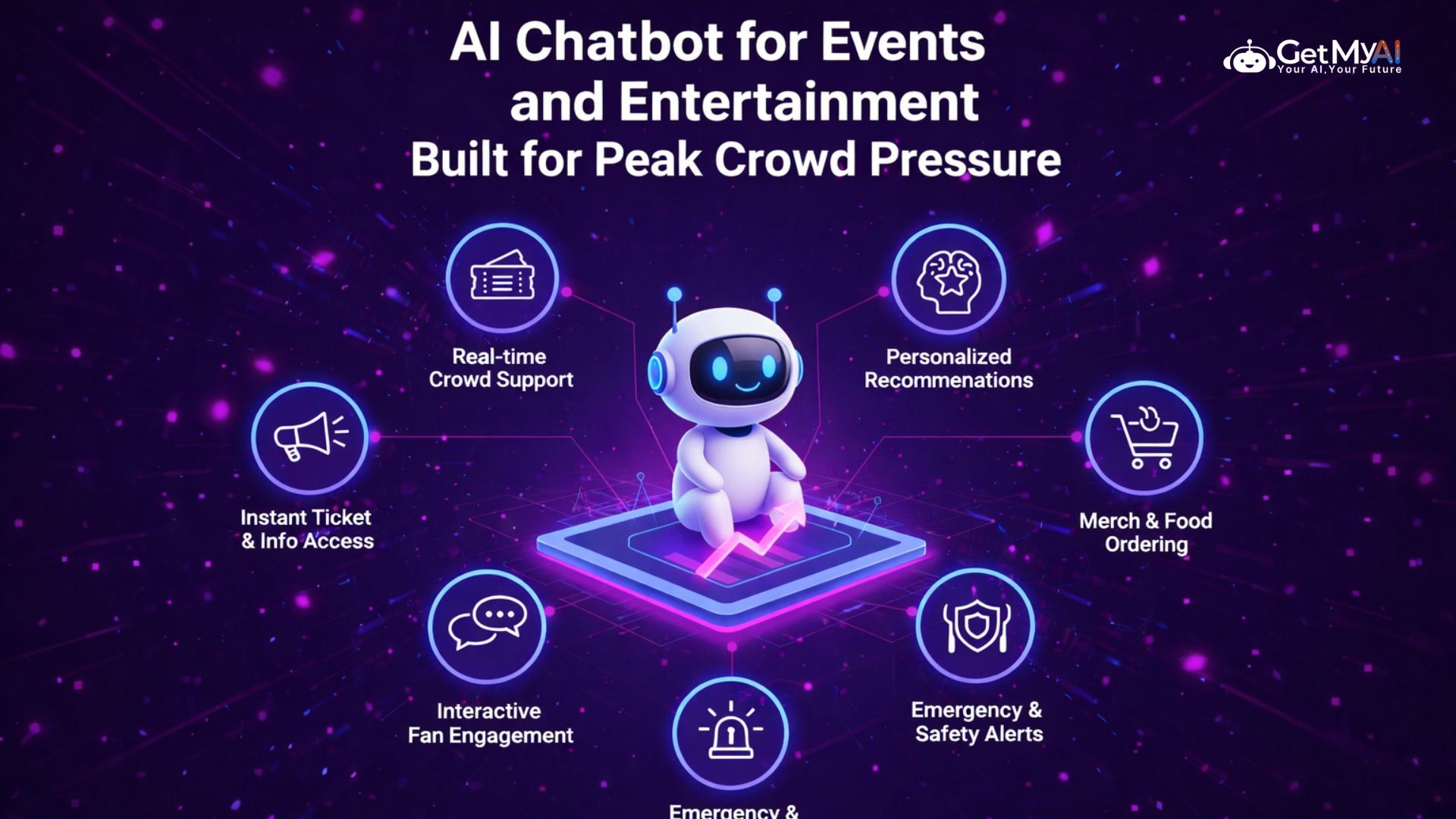
AI Chatbot for Events and Entertainment Built for Peak Crowd Pressure

Key Takeaways
- Delayed answers break the event’s momentum
- Guests now demand instant, DIY solutions
- Chatbots handle the crowds without extra hiring
- Your crew stays focused on high-level tasks
- Good info leads to a seamless guest experience
Events look smooth on the outside. Behind the scenes, they are controlled chaos. The moment tickets go live, questions begin to pile up. People want to know where to buy tickets, how entry works, what time doors open, and whether rules have changed; for such needs, an AI chatbot for events and entertainment is a must. As the event gets closer, the pressure increases. Support teams face thousands of questions in a very short time window, often while managing vendors, schedules, and last-minute changes.
The real challenge is timing. Questions do not arrive evenly throughout the day. They come in waves. During ticket sales, before entry, and at the busiest moments of the event. Old support tools like static FAQs, contact forms, or email cannot keep up when many people ask questions at the same time.
Attendees today expect instant clarity. When they do not get it, confusion grows fast. Missed answers lead to missed sessions, long lines, and frustration. That frustration quietly damages the overall event experience, even if the show itself is great.
The Real Support Problem in Events & Entertainment
Events are temporary, but the pressure is intense and immediate.
Unlike ongoing businesses, events do not have time to adjust slowly. A concert, conference, or festival may last only a few hours or days, yet it must support thousands of people at the same time. When something is unclear, everyone asks at once. Support demand spikes sharply instead of growing gradually.
Most event teams already know this pain. They prepare FAQs, update websites, and brief staff. Still, the same questions repeat again and again. Support desks get overloaded. Staff are pulled away from critical tasks to answer basic questions that never change.
Common issues almost always include:
- Ticket access and verification
- Schedule changes or session timings
- Venue rules and entry requirements
- Entry timing and gate information
- Last-minute announcements
This is where an event customer support chatbot becomes essential. Instead of answering the same question hundreds of times, the chatbot delivers consistent answers instantly, no matter how many people are asking.
The Old Way vs the AI Chatbot Way
Event support used to rely on preparation and hope. Teams prepared pages, guides, and staff schedules, then hoped attendees would find answers on their own during busy moments. This approach breaks down quickly when pressure rises, and timing matters most. That is why an AI chatbot for events and entertainment has become a more reliable way to support attendees at scale.
| The Old Way | The AI Chatbot Way |
| Static FAQs are buried on pages | Instant answers through chat |
| Overloaded support desks | Always-on attendee assistance |
| Delayed or missed replies | Real-time responses at scale |
| One-to-one human responses | Thousands of users helped at once |
| Staff pulled from operations | Teams stay focused on critical tasks |
Events benefit more than most industries from this shift. Information during an event has a short shelf life. An answer that arrives late is often useless. An AI chatbot for event websites places help exactly where attendees already are, without forcing them to search or wait.
Where AI Chatbots Fit in the Event Lifecycle
Every event moves in phases, but attendee expectations stay constant. People want clarity before they arrive, guidance while they are inside the venue, and answers even after the lights go out. An event website chatbot fits naturally into this flow because it does not care about timing, crowd size, or pressure. It stays available through every stage, quietly supporting the experience without demanding attention from staff or attendees.
Before the Event
Before the event begins, anticipation is high, and patience is low. Attendees want clear information about tickets, schedules, venues, and rules. They do not want to dig through pages or wait for replies. A chatbot answers these questions instantly, reducing anxiety and setting expectations early. The people who received information about the event before their arrival showed up to the event with calmness and confidence, and they were prepared to experience the event.
During the Event
This is when pressure peaks. Entry questions, timing confusion, and rule clarifications all at once. An AI chatbot for ticket enquiries helps people move quickly, reduces crowding, and keeps staff focused on operations instead of repeating instructions. At this point, the quick answers manage to keep vexation invisible across the venue from smaller issues.
After the Event
Questions do not stop when the event ends. Attendees ask about recordings, follow-ups, or missed sessions. Chatbots continue to support attendees while also prompting feedback and closing the experience professionally. This post-event support helps leave a positive final impression, even for those who did not get everything they expected during the event.
Together, these phases explain why chatbots work so well for events. They are not tied to a single moment or task. They move with the audience, adapting to needs as they change, and making sure no stage of the event feels confusing or unfinished.
Myth vs Reality: Chatbots Ruin the Event Experience
Many organisers hesitate because they picture chatbots as cold pop-ups that interrupt the mood. In reality, modern tools designed for AI chatbots for customer engagement stay quiet until needed, helping attendees without forcing interaction, awkward scripts, or replacing the human energy that makes events memorable.
The Myth: Chatbots feel robotic, scripted, and break the emotional flow of live events.
The Reality: Attendees prefer instant, accurate answers without waiting or explaining themselves repeatedly.
The Logic: During busy moments, answers and fast replies matter more than small talk.
This is why an AI chatbot for attendee support works so well during live events. It steps in quietly, gives answers fast, and steps back. By reducing confusion at peak moments, it protects the experience attendees came for, while letting human teams stay focused where they are needed most.
Why Event Teams Still Question Chatbots And Why They Shouldn’t
Event teams often pause when chatbots come up in planning discussions. The most common worry is timing. Events move fast, sometimes lasting only a few days or just a few hours. It can feel unsafe to spend effort on something that looks temporary. But this view ignores how tools like an AI chatbot for lead generation can be reused across events to capture interest, answer questions, and support engagement long after one event ends.
A chatbot is never built for only one moment. It trains using event pages, schedules, rules, and FAQs, then works again and again. Each new event needs small changes, not a full rebuild. Over time, the chatbot becomes smarter, faster, and more tuned to how attendees really ask questions. This makes the early setup more valuable, not wasteful at all.
Another concern is scale. During live events, questions do not arrive politely. They arrive together. Entry times, ticket access, rule clarifications, and schedule changes often trigger hundreds or thousands of identical questions at once. No human team can respond at that speed, no matter how prepared they are.
This is where a customer support chatbot for websites becomes essential. It answers everyone simultaneously, without delays or queues. Attendees get instant clarity. Staff stay focused on safety, coordination, and real issues. Instead of fighting demand, teams finally stay ahead of it.
In high-pressure environments like events, speed is not a luxury. It is the experience.
How Event Teams Use GetMyAI in Practice
Event teams do not look for shiny tools. They look for reliability under pressure. During live events, there is no room for experimentation, delays, or learning curves. This is why an AI chatbot for events and entertainment, like GetMyAI, is used as a quiet support layer that absorbs pressure without disrupting operations.
How Teams Prepare Before the Event
Preparation starts with training the chatbot using the content teams already have. Event pages, schedules, ticket rules, and FAQs are uploaded so the chatbot reflects official information from day one. This system provides attendees with consistent answers that match published information from other sources while avoiding creating duplicate content and unnecessary work.
Key Content typically includes:
- Event schedules and session timings
- Ticket access and entry rules
- Venue guidelines and policies
- Common attendee questions
How It Supports Attendees During Peak Moments
When added to the event website, the chatbot quickly becomes the first stop for attendee questions. As an AI chatbot for event websites, it gives fast answers even when thousands of people are asking at the same time. Information on entries, issues on tickets, or any unexpected news is resolved in no time without any wait.
What This Solves During Live Events:
- Cuts down waiting for human support
- Manages repeat questions smoothly
- Lowers confusion during busy moments
- Helps staff focus on operations
How Teams Improve After the Event
After everything wraps up, teams review chats inside the Dashboard to see what confused them. Questions that appear often or get missed show where information was weak. These insights help teams improve clarity, update answers, and prepare more smoothly for future events.
This Improves the Next Event by:
- Finds recurring attendee confusion
- Shows missing or unclear information
- Improves responses for future use
- Helps plawith nning without extra staff
Benefits for Organisers, Staff, and Attendees
Events succeed when everyone involved feels supported without friction. Attendees want clarity, staff need breathing room, and organisers look for control without added complexity. This is where conversational support quietly reshapes outcomes.
By handling information flow at scale, chatbots reduce pressure everywhere, ensuring the event experience feels smooth on the surface, even when operations grow intense behind the scenes inside today.
For Attendees
Attendees benefit most from speed and clarity. Instead of searching pages or waiting in lines, they receive instant answers to common questions through an AI chatbot for attendee support. Entry rules, schedules, and ticket details are explained consistently, even during peak moments. This reduces confusion, lowers stress, and helps people stay focused on enjoying the event rather than solving logistical problems. The experience feels guided, not overwhelming.
For Staff
Fewer interruptions help the most during stressful moments. When common questions get handled automatically, teams focus fully on safety, coordination, and solving issues that need human judgment daily. A reliable customer support chatbot for websites stops staff from breaking focus to answer the same questions again, helping operations stay smooth and controlled even when attendee numbers spike suddenly.
For Organisers
Event leads get full oversight and control without having to hire a single extra person. Real-time chats show exactly what your guests care about, where they’re getting stuck, and how their interest shifts as the day goes on. Using an AI chatbot for customer engagement keeps your communication sharp while keeping your budget predictable. Eventually, these patterns help you design more intuitive layouts and smarter plans, leveling up the experience without adding any extra weight to your operations.
Why Events and Entertainment Need AI Chatbots More Than Ever
Events are judged by how smooth they feel, not how complex they are behind the scenes. Attendees rarely remember how many staff were present or how detailed the planning was. They remember whether they felt confused, rushed, or lost. When answers are easy to get through an event customer support chatbot, people relax. When information flows naturally, the event feels well-run.
Support pressure during events is no longer predictable or gradual. Questions arrive in sharp waves, not steady lines. Entry times, ticket access, and sudden changes trigger thousands of identical questions at once. Human teams cannot scale instantly, no matter how experienced they are. This gap between demand and response is where frustration quietly grows.
Temporary fixes no longer match modern attendee expectations. Static FAQs and extra support desks help only to a point. They break down when timing matters most. An AI chatbot for events and entertainment provides consistent answers without delay, even during peak moments. It absorbs pressure without drawing attention to itself.
The goal is not automation for its own sake, but experience protection. Chatbots do not replace teams or personalities. They protect staff from overload and attendees from confusion. When information is handled smoothly, the event feels effortless. That is why this shift is becoming essential, not optional.
Learning From Every Event
Every interaction during an event leaves behind valuable signals. When reviewed carefully, those signals help teams improve clarity, timing, and communication for future events without guesswork.
- Reveals which questions caused repeated confusion
- Highlights gaps in schedules, rules, or instructions
- Shows when support demand peaked during the event
- Helps refine content using real attendee behaviour
- Makes each future event easier to manage than the last
Conclusion
Events feel successful when attendees never have to stop and think about logistics. Getting straight to the point: nothing kills the vibe of a great event like a confused attendee stuck at the door. Providing clear, instant answers removes that friction right when it matters most. Using an AI chatbot for support keeps your guests informed during the busiest rushes, so your team doesn't get buried or the live experience interrupted.
When the right info is easy to find, the whole event feels effortless. Chatbots aren't there to replace your team’s energy; they’re there to back them up. They quietly protect the experience during pressure moments, helping organisers deliver events that feel organised, confident, and enjoyable from start to finish.