AI Chatbot for Logistics: Smarter Support for Courier Teams
 Jan 28, 2026
AI Chatbot for Logistics
Logistics customer support chatbot
Courier service chatbot
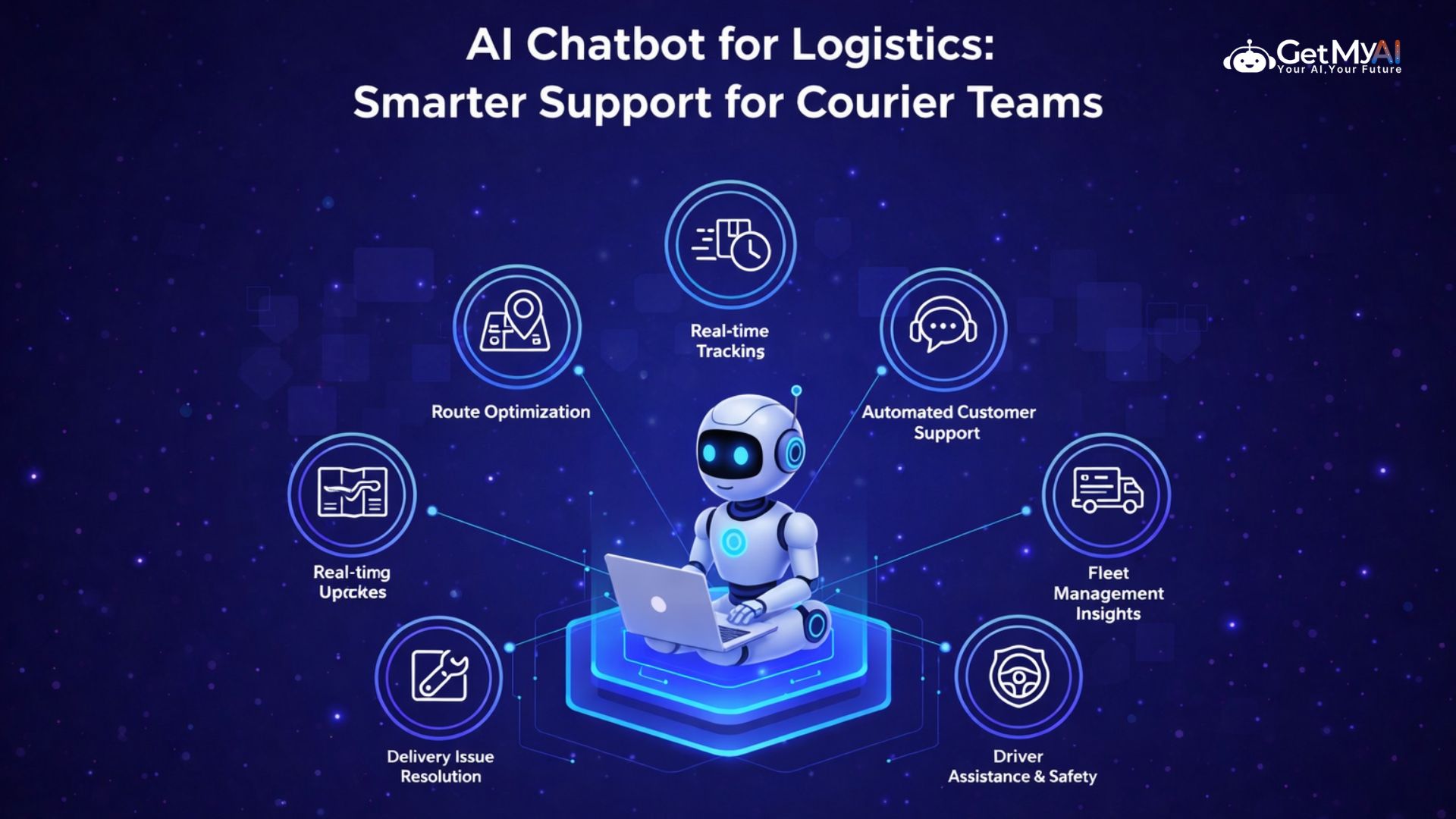
Logistics companies move packages quickly, but communication often falls behind. Shipments cross cities and countries fast, yet customers wait days for clear answers. They want updates on location, delivery time, and what to expect if a problem happens. These questions are not complex. They are repetitive, frequent, and time-sensitive. This is where most logistics businesses struggle.
Customer support teams in logistics face constant pressure. The same shipment questions arrive all day. Tracking requests, delivery updates, and policy clarifications fill inboxes and phone lines. During peak seasons, the volume increases sharply. Teams work harder, but response times still slip. This creates frustration on both sides. Customers feel ignored. Support teams feel overwhelmed.
Traditional support tools were not built for this pace. Email queues grow quickly. Ticket systems add delay. Phone support does not scale well. Hiring more agents helps for a while, but it is expensive and hard to manage. Many leaders know this problem well, yet they still treat communication as a support task instead of an operational infrastructure.
This is why an AI Chatbot for Logistics is gaining attention, not as a fancy tool, but as a practical layer that handles everyday communication. When done right, chatbots answer shipment questions instantly, explain delivery processes clearly, and guide customers without creating tickets. They do not replace people. They remove noise.
Modern logistics depends on speed, clarity, and trust. Communication sits at the center of all three. If customers cannot get answers quickly, confidence drops. If teams spend all day repeating the same information, productivity suffers. An AI chatbot for logistics companies helps close this gap by offering reliable, always-on responses tied directly to how logistics actually works.
This article explains where logistics communication breaks down, how chatbots fit into real workflows, and what decision-makers should look for when evaluating this technology.
The Daily Communication Challenges in Logistics & Courier Operations
Every logistics business faces similar communication problems, regardless of size. The most common issue is volume. Customers ask the same questions again and again. Where is my shipment? Has it left the warehouse? Why is there a delay? These are not rare edge cases. They are the core of daily support.
A Courier customer service chatbot becomes relevant because manual teams cannot keep up without sacrificing quality. During sales events or holiday seasons, messages can increase very fast. Support teams reply slower, not from carelessness, but because too many requests arrive together. Even trained agents find it hard to manage when hundreds of similar tickets come in at once.
Another challenge is inconsistency. Different agents may explain the same policy in different ways. Delivery timelines, service coverage, and exception handling can sound unclear to customers. This leads to confusion and follow-up messages. In logistics, unclear answers create more work, not less.
Time zones add another layer of difficulty. Logistics companies often serve customers across regions. When support hours end in one location, shipments keep moving elsewhere. Customers expect answers at all hours. Without automation, this gap becomes visible very quickly.
Internal communication also suffers. Operations teams, partners, and distributors often need quick access to process information. When they cannot find it easily, they ask support teams instead. This pulls agents away from customer-facing issues.
A Logistics customer support chatbot helps because it addresses the root problem. It answers the same questions again and again, gives clear replies, and works all day and night. Without this support, logistics teams keep reacting instead of working in an organized way.
These challenges are not caused by bad teams or poor intent. They are structural. Logistics has outgrown manual communication models. The pressure will only increase as delivery expectations rise and margins tighten.
How AI Chatbots Fit Into Modern Logistics Workflows
AI chatbots work best when they fit smoothly into current logistics workflows. They do not replace systems or interrupt daily operations. Their job is to answer questions, guide users, and reduce extra steps.
Most logistics interactions start on a website. Customers visit to track shipments, understand services, or check delivery coverage. An AI chatbot for shipment enquiries fits here immediately. Instead of forcing users to search through pages, the chatbot provides direct answers in plain language.
Another key area is real-time response. Customers do not want to wait for a ticket confirmation. They want clarity now. An AI chatbot for delivery support responds instantly without creating a backlog. This alone removes pressure from support queues.
Across time zones, chatbots act as a bridge. They support customers when human teams are offline. This keeps communication consistent and reduces frustration.
Operationally, chatbots reduce manual follow-ups. When customers receive clear answers upfront, they do not ask again.
Common workflow placements include:
- Website chat for shipment and service questions
- Help centers for policy explanations
- Partner portals for distributor support
- Internal portals for SOP access
A courier service chatbot also helps with early communication. It explains delays, shows customers what to do next, and lowers confusion during delivery issues.
The goal is not automation by itself. It is about reducing friction. A trained chatbot fits into daily logistics work and handles routine questions, so teams focus on harder tasks.
When chatbots are aligned with real workflows, adoption happens naturally. Customers use them because they are helpful. Teams trust them because answers are accurate. That alignment is what makes this technology effective in logistics.
Practical Use Cases of AI Chatbots in Logistics & Courier Businesses
Use cases matter because they show how technology works in real conditions. In logistics, the most valuable chatbot use cases are practical, not experimental.
Shipment tracking is the most common need. Customers prefer simple and clear updates. An AI chatbot for shipment enquiries explains shipment stages, delivery timelines, and current status without sharing technical backend details.
Delivery timelines are another common area. Customers often ask how long delivery takes for a specific region or service type. An AI chatbot for delivery support answers these questions clearly and consistently.
Delays and exceptions create stress. When shipments are held or rerouted, customers need guidance. A chatbot can explain what happened, what to expect next, and when human support will step in if needed.
Partner and distributor support is often overlooked. Logistics companies work with multiple stakeholders. A Courier customer service chatbot can provide partners with process information, documentation access, and operational guidance.
Internal teams also benefit. New hires and field staff often need quick answers about SOPs. A Logistics automation customer support approach includes internal chatbot access for knowledge retrieval.
Each of these use cases removes repetitive communication from human teams. The result is faster response, fewer errors, and better overall visibility.
What makes these use cases effective is accuracy. Logistics information changes often. A chatbot must reflect current policies and operations. When it does, it becomes a trusted source instead of a risk.
Why Knowledge-Based AI Chatbots Matter in Logistics
Not all chatbots are equal. In logistics, accuracy is everything. One wrong answer can damage trust immediately. This is why knowledge-based chatbots matter more than scripted ones.
Logistics operations rely on rules. Service areas, delivery timelines, handling processes, and exception policies change frequently. A generic chatbot cannot keep up. It guesses. That is dangerous in logistics.
An AI chatbot for logistics companies trained on real documents behaves differently. It answers based on actual SOPs, FAQs, and internal guidelines. This keeps communication consistent across channels.
Customers notice consistency. When answers match what agents say, trust grows. When they do not, frustration follows. A Logistics customer support chatbot must act as a single source of truth.
Knowledge-based chatbots also adapt better. When policies change, teams update documents. The chatbot learns from those updates. This avoids long retraining cycles.
Internal confidence increases as well. Support teams trust the chatbot because it reflects their reality. They rely on it instead of correcting it.
In logistics, reliability beats creativity. A chatbot does not need to be clever. It needs to be correct. That is why document-trained systems outperform scripted flows in this industry.
How Teams Use GetMyAI in Practice
Logistics teams use GetMyAI to make daily support easier and more organized. The team begins their work with existing knowledge, which includes FAQs and delivery regulations. The team prioritizes providing immediate answers to their questions without bringing changes to their operational procedures.
How Logistics Teams Work With GetMyAI
Logistics teams train GetMyAI using documents they already depend on. These include SOPs, service rules, and internal support material. After setup, the chatbot answers common questions from customers and staff. Teams review chats often to understand common problems. This helps them improve answers and keep information simple and reliable.
- Add existing FAQs and process documents to the system
- Respond to shipment and workflow questions without opening tickets
- Look through chatbot conversations to spot confusion
- Update guides using real questions from customers
How Courier Teams Work With GetMyAI
Courier teams use GetMyAI to support fast delivery work. The chatbot explains delivery steps, delays, and service limits in simple language. Couriers and support staff also use it to quickly find process answers. This reduces back-and-forth and saves time. Over time, the chatbot stays aligned with daily courier tasks.
- Explain delivery timelines and courier steps clearly and simply
- Support customers during delays or special delivery issues
- Help internal teams access process information without delay
- Reduce repeated questions during peak delivery times
Benefits for Logistics Teams and Customers
Chatbot benefits in logistics are easier to understand when separated by users.
For customers, speed is the top need. A Courier service chatbot provides instant responses. No waiting. No tickets. This reduces frustration and increases trust.
Customers also gain clarity. Consistent explanations reduce confusion. An AI chatbot for delivery support helps customers understand what is happening, even during delays.
For teams, relief comes first. Repetitive tickets disappear. A Logistics automation customer support setup frees agents to handle complex cases.
Clear benefits include:
- Faster response times
- Fewer repeated questions
- Better visibility into customer needs
An AI chatbot for logistics companies improves daily operations quietly. It does not demand attention. It simply works.
Both sides benefit when communication flows smoothly. That is the real value.
Scaling Support Without Adding More Agents
Growth sounds good, but it brings real pressure. When shipments increase, customer questions increase too. People want updates. They want answers fast. They want clear explanations. Support teams feel this pressure every day. Hiring more agents seems like the easy answer, but it rarely works for long. Training takes weeks. Costs grow fast. During peak seasons, even larger teams struggle to keep up.
This is where an AI Chatbot for Logistics makes a difference. It handles large volumes of questions at the same time without slowing down. When sales spike or delivery demand rises, the chatbot answers common questions instantly. Customers get help right away, even during busy hours. There is no waiting and no growing queue.
Response quality stays steady. A customer asking a question on a quiet day gets the same clear answer as someone asking during a peak rush. This consistency builds trust over time.
A Courier customer service chatbot also helps teams work smarter. It does not replace people. It supports them. Agents spend less time repeating basic answers and more time solving real problems. When volume rises, communication stays strong. Chatbots help keep support stable, even when demand changes quickly.
What to Look for When Choosing an AI Chatbot for Logistics
Choosing the right chatbot for logistics is not about picking the most advanced tool. It is about choosing something that works well every day. Accuracy should always come first. The chatbot must give correct answers, especially when customers ask about shipments, delivery steps, or service rules. One wrong reply can quickly confuse people. A good chatbot should learn from documents like FAQs, SOPs, and policy files. Teams should also be able to update answers easily when rules change.
Visibility is just as important. Leaders need to see what customers are asking and where problems appear. A Logistics customer support chatbot should clearly show conversation trends, common questions, and gaps in information. Without this view, teams cannot improve support.
Security is critical in logistics. Customer details, shipment data, and internal processes must stay protected. An AI chatbot for logistics companies should follow access controls and keep sensitive data safe at all times.
Ease of deployment also matters. If a chatbot is hard to set up or manage, teams will avoid using it. Simple tools get adopted faster. The best chatbots fit quietly into daily operations. They help without creating extra work or confusion.
AI Chatbots Are Becoming Core Infrastructure in Logistics
Logistics depends on fast movement, but strong communication builds trust. When customers cannot get clear answers, they start to worry. Even small delays feel bigger when no one explains what is happening. At the same time, support teams spend hours answering the same questions about shipments, delivery times, and next steps. This slows everyone down and affects daily work.
AI chatbots help fix this problem in a simple way. They give quick answers to common questions, day and night. Customers do not have to wait for an agent. Teams do not have to repeat the same information again and again. This steady flow of answers brings calm to busy logistics operations and helps things run smoothly.
When used the right way, chatbots support teams instead of replacing them. They handle the simple work so people can focus on real problems. A Logistics customer support chatbot removes friction from daily communication, not responsibility from teams. Customers get faster answers. Teams get breathing room.
Tools like GetMyAI show how AI chatbots can fit into real logistics workflows when accuracy and control matter most. For logistics leaders, the real question is no longer whether chatbots belong in support. It is how fast communication can be treated as a core part of the operation, not something added later.
FAQs
1. Why do logistics companies need an AI chatbot?
An AI Chatbot for Logistics answers repetitive shipment questions instantly, reducing support delays and helping customers get clear updates without waiting.
2. What problems does a Logistics customer support chatbot solve?
A Logistics customer support chatbot handles tracking, delays, and policy questions without creating support tickets.
3. Can a Courier service chatbot handle delivery delays?
Yes. A Courier service chatbot clearly explains delays and next steps, reducing frustration.
4. Is a Courier customer service chatbot helpful during holidays?
Absolutely. A Courier customer service chatbot manages increased queries without adding staff.
5. Can an AI chatbot for shipment enquiries reduce phone calls?
Yes. When customers get answers instantly, they do not need to call support.
Automate. Engage. Convert
Create seamless chat experiences that help your team save time and boost customer satisfaction
Get Started Free