AI Chatbot for SaaS Companies: Support, Onboard, and Retain Users

SaaS companies are built to move fast, but their teams are overloaded with questions. New features ship often. Interfaces change. Pricing plans evolve. Each update improves the product, but it also creates new questions. Most of those questions land in the support inbox. Teams quickly notice a pattern. Users are not asking rare or complex things. They are asking the same things again and again. Where is this setting? What does this feature do? Is this included in my plan?
As a product grows, the gap between what users know and what the product can do gets wider. Documentation exists, but most users do not want to search through help pages. They want answers right where they are working. Support teams want to help, but they spend large parts of the day repeating explanations instead of solving deeper issues.
This is where an AI chatbot for SaaS companies starts to matter. It gives users instant answers without waiting for a ticket reply. It also gives teams breathing room. Instead of replacing support, the chatbot handles the repetitive layer of questions that slow everyone down. Many SaaS leaders still see chatbots as simple pop-ups. That view is outdated. Modern chatbots are trained on real product knowledge.
They explain features, guide onboarding, and support users across time zones. They work quietly in the background while teams focus on building and improving the product. As SaaS businesses scale, questions scale faster than teams. That mismatch creates stress, delays, and churn. Understanding how chatbots fit into this picture is no longer optional. It is part of building a support system that grows with the product instead of breaking under it.
The Unique Support Challenges SaaS & Tech Companies Face
SaaS support is different from traditional customer service. Products are not static. They change weekly or even daily. Each release adds value, but it also adds complexity. Support teams must stay updated while explaining those changes to users who log in from many backgrounds and skill levels.
Another challenge is feature depth. Most SaaS tools do more than users realize. Features depend on plans, permissions, and integrations. A simple question often needs a precise answer. When that answer is delayed or unclear, users feel lost. Over time, that confusion leads to lower usage or cancellation.
Time zones add another layer. SaaS products sell globally from day one. A small support team may serve customers across continents. Live coverage is hard to maintain. Tickets pile up overnight. Response time grows, even when the team is working at full capacity.
Many SaaS companies also operate with lean teams. Growth is expected without matching headcount growth. Hiring helps, but it does not scale cleanly. Each new agent needs training. Each new release creates more knowledge to absorb. The cycle repeats.
An AI chatbot for SaaS support addresses these exact pressure points. It does not get tired. It stays consistent. It answers the same question accurately every time, using approved documentation. It continues to help users after work hours and expands as demand grows.
Key SaaS support realities include:
- Regular product changes that affect daily use
- Feature access based on pricing and permissions
- Users are spread across different time zones
- Lean teams managing large customer groups
Traditional support tools fall short since they depend on staff availability. Chatbots add round-the-clock support that manages high volume while keeping responses accurate. This is not about deflection.
It is about stability in an environment where change is constant.
Where AI Chatbots Fit in the SaaS Customer Lifecycle
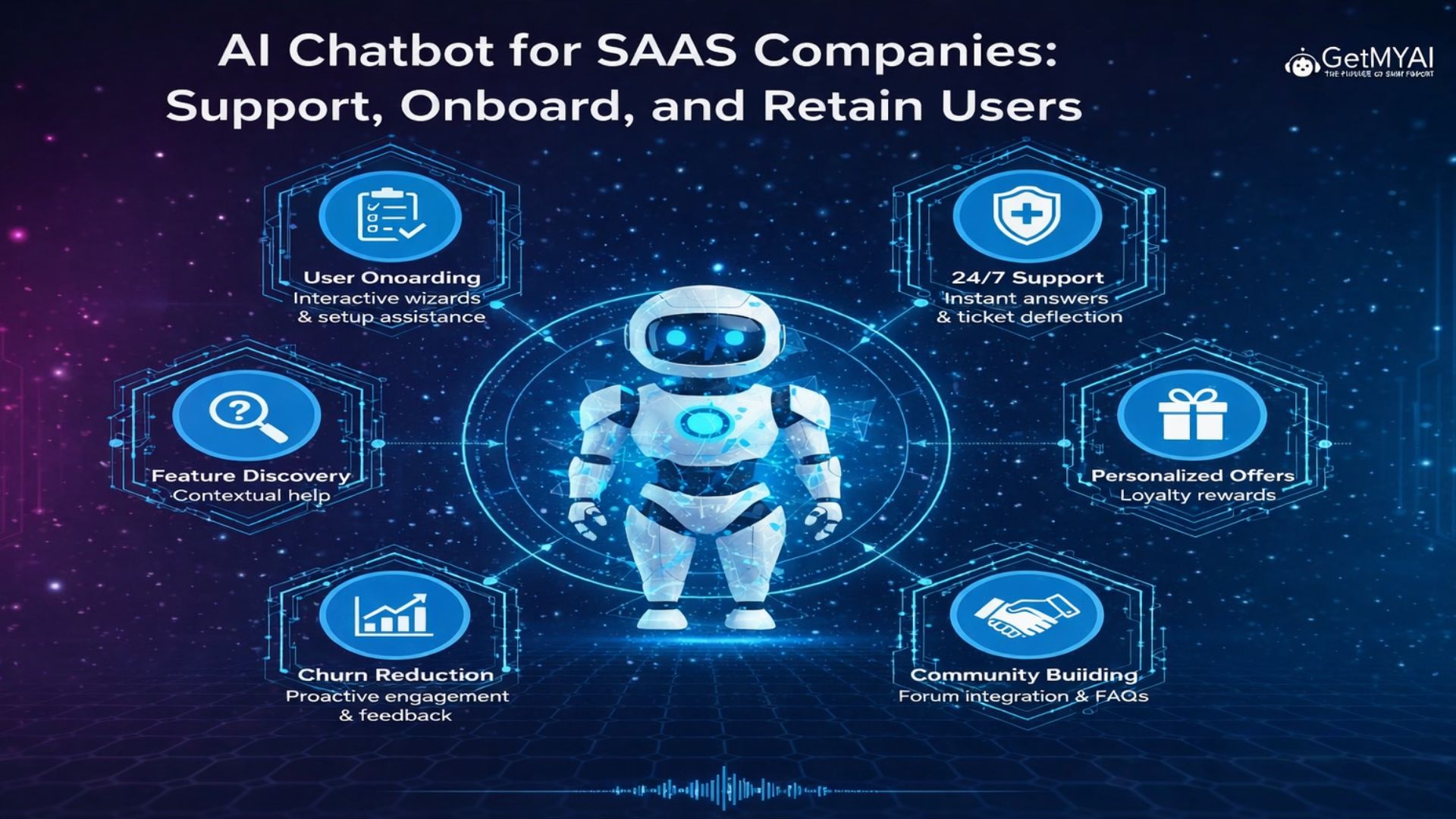
A SaaS journey happens over time, not all at once. Users learn slowly by trying things, asking questions, and checking if the product fits their work. An AI chatbot for SaaS companies supports this journey by giving helpful answers at the right moment.
Before Signup
Before creating an account, users want clarity. They ask about plans, pricing, and features. An AI chatbot for SaaS companies answers these questions right away, helping users move forward with confidence.
During Onboarding
Once users sign up, setup begins. Confusion here often leads to churn. An AI chatbot for customer onboarding guides users step by step without forcing them to read long help articles.
Feature Exploration
As users explore tools, questions appear. What does this button do? Is there a limit? An AI chatbot for product support explains features clearly using approved documentation.
Daily Usage
Over time, users ask similar questions again and again. The chatbot handles these common requests, so support teams are not overwhelmed.
Ongoing Support
Complex issues still go to human agents. The chatbot filters noise so agents can focus on real problems.
Throughout the lifecycle, the chatbot stays active. It is not a one-time tool. It supports learning, reduces delays, and keeps users confident. For B2B SaaS, this steady support improves adoption and builds long-term trust.
Practical Use Cases of AI Chatbots for SaaS Teams
SaaS teams often wonder how chatbots help in daily work. The answer is simple. Chatbots handle the same questions teams already answer again and again. An AI chatbot for SaaS companies works quietly in the background, giving clear answers and saving time for both users and teams. These tools are not about replacing people. They are about making everyday support easier and faster.
Feature and Product Questions
Many users want to know what a feature is for, how to switch it on, or when it makes sense to use it. An AI chatbot for product support responds using trusted product documents. Users get simple explanations without raising tickets or looking through guides.
Onboarding and Setup Help
New users need guidance during their first days. Many setup questions already exist in the documentation. An AI chatbot for customer onboarding points users to the right steps inside the product, helping them move forward without breaking focus.
Pricing and Plan Explanations
Pricing questions come up often. Users want to know what each plan includes and if an upgrade makes sense. A chatbot explains plan differences clearly, reducing confusion and helping users choose with confidence.
Internal Team Support
Chatbots also help teams internally. Support agents, product managers, and success teams use a Business AI chatbot platform to find answers quickly. It becomes a shared knowledge space that keeps everyone aligned and informed.
These use cases work because they focus on clarity. The chatbot gives consistent answers, reduces tickets, and allows human teams to spend time on meaningful work that needs experience and judgment.
How AI Chatbots Improve Customer Onboarding and Adoption
Early user experience decides whether customers stay or leave. Many users sign up with interest but drop off when they feel confused or stuck. Slow answers and unclear steps create doubt. Even small delays can make users question the value of the product. This is where chatbots play an important role by giving timely support without adding pressure.
Onboarding
Good onboarding depends on timing. An AI chatbot for customer success helps users the moment questions appear. There is no waiting and no searching. Users continue their work with answers shown instantly.
- Gives fast guidance during setup
- Removes the need to look through help pages
- Keeps users working without pauses
Adoption
Adoption improves when support feels helpful but not distracting. Chatbots stay quiet until users need help. They respond based on what users are trying to do, which builds confidence and comfort.
- Supports feature discovery at a natural pace
- Lowers the number of repeated support requests
- Encourages deeper product usage
Over time, this steady support changes behavior. Users explore more features, feel less blocked, and get more value from the product. When onboarding feels smooth and adoption feels natural, retention improves, and customer trust grows.
How SaaS Teams Use GetMyAI in Practice
SaaS teams using GetMyAI usually begin with what they already have. They upload product documents, FAQs, help guides, and setup articles into the system. This matters because the chatbot learns only from approved content. It does not guess. Every answer is based on real product knowledge that teams already trust.
Once training is done, teams place the chatbot where users need it most. This can be on the website, inside the product dashboard, or on help pages. Users ask questions while they work. They do not need to open tickets or search long pages. Answers stay the same everywhere, so there is no confusion between what support says and what the documentation shows.
Inside the GetMyAI dashboard, teams can review real conversations. They see what users ask again and again. They also see where answers are missing or unclear. This helps teams improve chatbot replies and fix gaps in their help content. Over time, documentation becomes clearer because it is shaped by real questions.
GetMyAI is not only for customers. Internal teams use it daily to save time and reduce back-and-forth.
Common ways teams use GetMyAI:
- Adding product documents, FAQs, and release updates
- Replying to customer questions on help pages and sites
- Reviewing chatbot talks to fix unclear answers
- Helping support agents access information quickly
- Assisting product and customer success teams
Over time, GetMyAI becomes part of daily work. It helps teams in the background and keeps everyone working in sync.
Benefits for Product, Support, and Customer Success Teams
When SaaS companies add an AI chatbot, the impact is felt across teams, not just support. Each group works differently, but all of them deal with the same problem. Too many questions. Not enough time. An AI chatbot for support teams helps remove daily friction by making answers easy to find and always available. Instead of spending the whole day reacting, teams can work with more attention and direction.
The value is not about replacing people. It is about reducing distractions. When common questions are solved early, teams can focus on work that needs human judgment. This builds better workflows and improves results across the company.
Product Teams
Product Teams often do not know where users feel lost. Chatbot conversations make this easy to see. Repeated questions show which features are confusing or where documentation falls short. This real usage data helps Product Teams improve design and explanations without guessing. Feedback appears naturally through user questions, not surveys.
Support Teams
Support teams feel the benefit first. Repetitive tickets drop quickly. Response times improve because agents are not answering the same questions all day. An AI chatbot for SaaS support handles common requests, so agents can focus on complex issues that need experience and judgment. Work becomes less stressful and more meaningful.
Customer Success Teams
Customer success teams see better onboarding and stronger adoption. Users receive answers while setting things up instead of waiting for help. An AI chatbot for customer success helps users see value sooner. When users feel supported from the start, they continue using the product and build trust. This results in better customer relationships and improved retention.
Scaling SaaS Support the Smart Way With the Right AI Chatbot
As SaaS companies grow, support pressure increases fast. Hiring more people can help in the short term, but it also brings long-term cost and complexity. Each new agent needs training. Knowledge spreads across tools and conversations. Over time, keeping everyone aligned becomes harder, not easier. Growth starts to slow support instead of strengthening it.
Chatbots scale in a different way. When usage increases, they do not need more seats or longer shifts. The same system can support more users without raising costs at the same rate. Whether a company runs one product or several, chatbots adapt quietly in the background. Support stays steady even when demand spikes.
For founders and operators, this matters. Growth should never break the support experience. An AI chatbot for B2B companies helps maintain quality while the business scales. It helps manage large accounts, difficult questions, and more users without putting pressure on internal teams. This builds a strong support foundation that grows as the product grows.
Choosing the right chatbot is just as important as deciding to use one. Not all tools are built for SaaS needs. A poor choice can add risk when the goal is to reduce it.
What to Look for in an AI Chatbot for SaaS Companies
- Pulls answers directly from your documentation
- Makes it easy to review and track conversations
- Allows different chatbots for different use cases
- Protects user data with strong security practices
- Fits easily into current support workflows
A strong AI chatbot for SaaS companies turns into a lasting resource. It earns user confidence, helps teams work better, and supports growth without creating confusion.
AI Chatbots Are Becoming Core SaaS Infrastructure
AI chatbots are quickly becoming a core part of how SaaS businesses run. SaaS growth depends on clarity at every stage. Users expect fast and clear answers, no matter where they are or what time it is. At the same time, teams need systems that grow smoothly without adding friction. This is where an AI chatbot for SaaS companies fits naturally. It sits between users and teams, making sure questions are answered without delays or confusion.
AI chatbots lower daily pressure on support teams. They help new users understand the product faster during onboarding. They also support adoption by guiding users as they explore new features. An AI chatbot for SaaS support does not replace human teams. It removes repeated tasks that slow people down. This lets people focus on harder problems and real customer needs. An AI chatbot for customer success helps users reach results faster and stay longer.
As SaaS tools grow and more users join, chatbots become part of the base system. They are no longer optional. Platforms like GetMyAI help teams stay quick, informed, and consistent. For SaaS leaders, the real question is no longer about fit. It is about how well the chatbot is used and how clearly it supports users from start to finish.