AI Chatbot for Telecom: Handling High-Volume Support Smoothly
 Jan 29, 2026
AI chatbot for telecom
AI Chatbot for Telecom
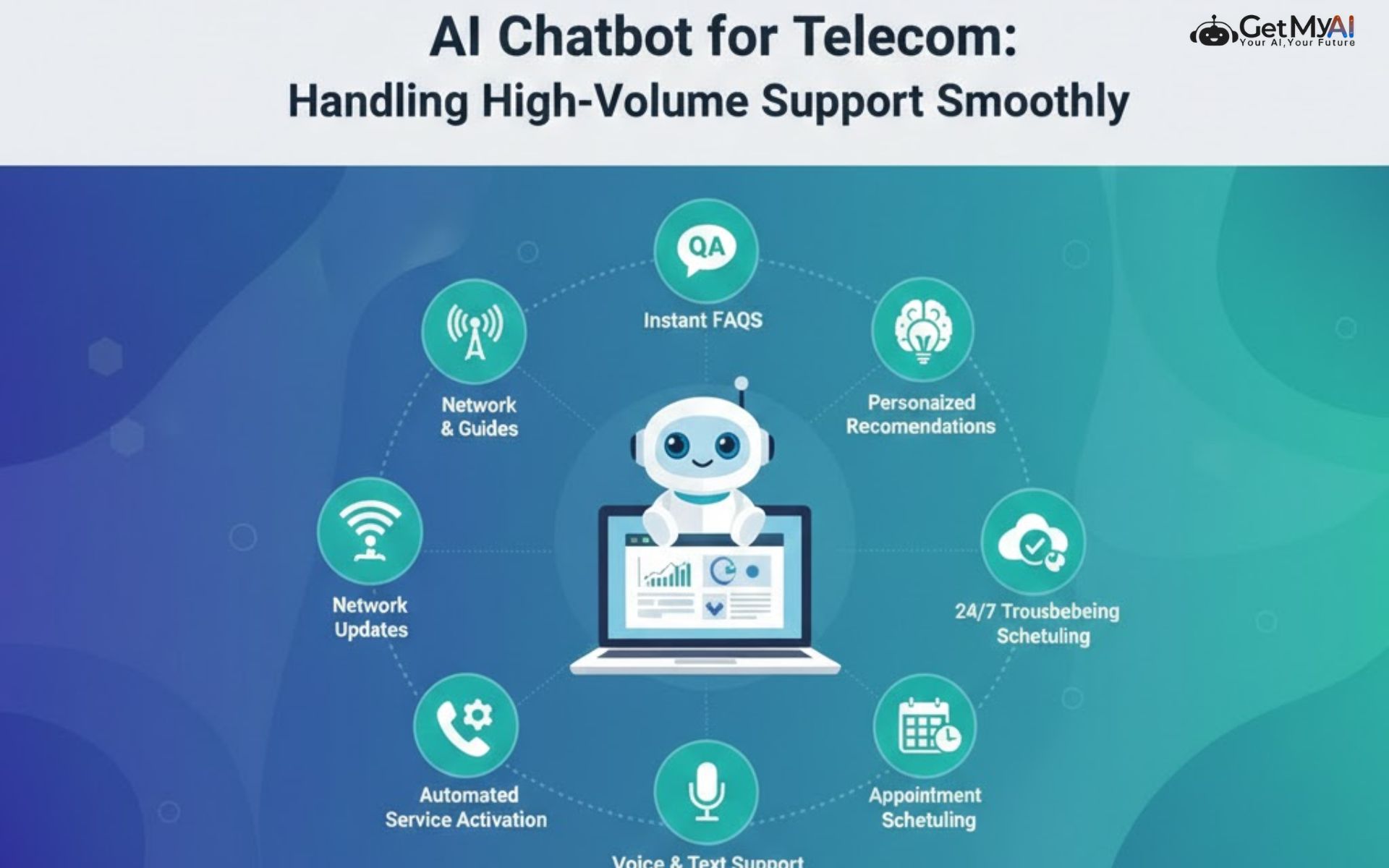
Telecom customers expect answers the moment something goes wrong. Slow internet, dropped calls, billing doubts, or roaming issues cannot wait. When support lines get busy, trust breaks fast. This is where an AI chatbot for telecom changes the experience. It steps in first, gives instant clarity, and reduces panic before frustration grows. For telecom teams, it is not about replacing people. It is about being available when customers need help the most.
Telecom services run all day, every day. But support teams cannot always keep up with sudden demand. One small issue can trigger thousands of messages in minutes. Customers do not want long explanations. They want quick updates, clear steps, and simple answers. When help takes too long or feels unclear, customers lose patience and leave. They want quick answers, not repeated explanations from scripts.
That shift has made AI-driven customer care for telecom a strong advantage. Automated telecom support responds fast, lowers wait times, and keeps customer experiences smooth during peak traffic periods.
The Real Cost of High-Volume Queries in Telecom
Telecom support is reactive by nature. Demand never arrives slowly. It comes in waves. A short network issue, a billing date, or a new plan launch can trigger thousands of customer questions in minutes. Support teams do not get warnings. They get pressure. When answers are delayed, customers assume the worst. Confusion grows faster than the issue itself, even when the problem is small.
Most telecom questions are repetitive, but they feel urgent to customers. People are not looking for long calls or detailed explanations. They want quick confirmation. They want to know what happened, what to do next, and when things will be fixed. Human teams cannot suddenly grow larger during these moments. Without help, queues build up, agents rush, and quality drops. This is when a telecom customer support chatbot helps early and keeps rising pressure from turning into chaos.
Common high-volume telecom queries include:
- Network outage and service availability questions
- Billing, payments, and invoice clarification
- Plan upgrades, add-ons, and data limits
- SIM activation, roaming, and device setup
Each issue is easy on its own. The real problem is scale. When thousands ask together, response speed quickly drops. Without smart filtering, tickets pile up, and agents repeat the same answers all day. This is why many telecom teams now rely on an AI chatbot for ticket deflection to handle repeat questions early and keep support systems from getting overwhelmed.
Two Support Models: Very Different Customer Experiences.
Telecom support used to depend fully on people. When demand increased, wait times grew, and customers repeated the same questions again and again. Teams worked hard, but the scale was limited. This is why many telecom businesses now turn to a telecom customer support chatbot to respond faster and keep service steady during sudden spikes.
| Traditional Telecom Support | AI Chatbot-Led Support |
| Long wait times | Instant responses |
| Repeated agent explanations | Consistent answers |
| High ticket volumes | Ticket deflection |
| Costly support scaling | Scales without hiring |
| Frustrated customers | Self-serve clarity |
Telecom questions follow clear patterns. Plans, bills, data limits, and outages do not change every minute. When answers are predictable, automation works well. AI-led support gives customers clarity right away and keeps teams focused on problems that truly need human care.
This is where an AI chatbot for telecom creates an immediate impact.
AI Chatbot’s Part in the Telecom Customer Journey
Telecom support does not start when a ticket is raised. It starts much earlier, often when a customer feels unsure or confused. People look for quick answers while checking plans, bills, or service status. If they cannot find clarity, they reach out to support. This is where AI chatbots quietly step in to help customers at every moment. They clear confusion early, assist with problems, and stay helpful even after issues are fully resolved.
Before a Support Ticket
Many telecom questions appear before real trouble starts. Customers look to review data use, billing details, plan options, or roaming rules. These moments feel small, but they decide whether a ticket gets created. A chatbot gives instant answers without waiting. Customers feel informed and confident, so they move on instead of calling support. This early help reduces load on teams and keeps queues from filling up.
During an Issue
When something goes wrong, emotions rise fast. A slow network or outage creates stress, especially when customers hear nothing. During these moments, silence causes more frustration than the issue itself. AI chatbots provide quick updates, explain what is happening, and share next steps. Even simple messages calm customers. Clear communication during peak traffic keeps trust intact while teams work behind the scenes.
After Resolution
Even after service comes back, customers still want answers. They ask what caused the issue and if it might return. An AI chatbot for ticket deflection replies with simple, clear messages. It confirms the fix and helps customers move ahead. This reassurance reduces repeat contacts and helps support feel well managed and completion.
For the Skeptical Telecom Leader
Many leaders ask, “Won’t a chatbot frustrate customers even more?” It is a fair concern. But frustration does not come from automation. It comes from waiting, guessing, and feeling ignored. When customers sit in queues with no updates, anger builds fast. A chatbot changes that experience. It responds instantly, explains what is happening, and gives direction, even if the issue is still being fixed. Clear information removes fear and keeps emotions under control.
Why Chatbots Reduce Frustration Instead of Creating It
- Customers get answers right away instead of waiting on hold
- Simple updates reduce confusion during busy moments
- Clear guidance makes support feel present, not distant
Another common question is, “Can this actually reduce call center load?” The honest answer is yes, and the reason is simple. Most telecom questions are not complex. Customers are checking status, limits, or confirmations. These do not need long conversations. They need fast replies. An AI chatbot for ticket deflection handles these early, so fewer calls ever reach agents. This lowers pressure without lowering service quality.
How Chatbots Actually Lower Call Center Load
- Repeat questions are resolved before tickets are created
- Agents spend time on real problems, not confirmations
- Support teams stay calm during sudden traffic spikes
Skepticism often fades after seeing real usage. When customers get help faster, they complain less. When agents face fewer repeat tickets, they perform better. Automation does not replace care. It protects it. By handling routine questions consistently, chatbots create space for human support.
How Telecom Teams Use GetMyAI in Practice
Telecom teams use AI to handle growth, not to remove people from support. When message volume rises fast, the real problem is losing focus. Agents spend time answering the same questions while serious issues wait. Tools like GetMyAI help manage large numbers of common requests so agents can focus on sensitive or complex cases. This balance is important in telecom, where pressure builds quickly, and small mistakes can damage trust. The goal stays clear. Keep support calm, clear, and reliable, even when customer demand suddenly increases.
In practice, telecom teams use the platform in very practical ways. Nothing experimental. Nothing complicated. It works with existing systems and daily workflows, covering gaps where fast and steady answers matter the most.
In practice, teams use the platform to:
- Train the chatbot on plans, policies, and FAQs
The system learns only from approved telecom material. This keeps answers aligned with live plans, billing terms, and service policies, not broad online data. - Deploy it on telecom websites where traffic already exists.
Customers get help at the exact moment they look for it, without switching channels or waiting in queues. - Handle peak-time traffic automatically.
During outages, billing cycles, or plan launches, the chatbot absorbs pressure and responds instantly to common questions. - Review conversations in a central dashboard.
Teams can see what customers ask, where confusion happens, and which answers work well. - Improve answers using real customer questions.
Updates are based on actual usage, not assumptions, keeping responses accurate and useful over time.
This approach supports telecom customer service automation while maintaining accuracy and control. Teams stay informed because they see real customer questions as they happen. Customers stay supported because answers are always available, not delayed. Agents stay focused on issues that truly need human care, even when demand peaks. When put under pressure, support never feels stretched, and service quality holds up instead of faltering.
Why This Works for Telecom Operations
Telecom support succeeds when answers are fast, consistent, and easy to trust. By grounding automation in real policies and real conversations, teams reduce noise without losing visibility. The result is calmer operations, fewer repeat tickets, and support that holds up under pressure instead of breaking when volume rises.
It also works because help shows up exactly where customers look for it first. A customer support chatbot for websites answers questions right when they appear. Customers do not have to wait or search. Support teams face less pressure. This early support keeps daily operations smooth and easy to manage during busy periods.
Benefits for Customers, Agents, and Telecom Businesses
When telecom support works well, everyone feels it. Customers stay calm, agents stay focused, and businesses stay in control. The right support setup does not just solve problems. It prevents frustration before it starts. This is where smarter support models make a clear difference, especially when demand rises suddenly, and expectations are high.
For Customers
Customers care about one thing most: getting answers fast. When support responds quickly, people feel respected and informed. A telecom customer support chatbot helps customers find answers the moment questions come up. During outages or peak hours, customers are not left wondering what is happening. Simple updates and clear steps reduce stress and slowly build trust.
- Less waiting reduces frustration
- Quick updates keep customers calm
- Clear answers give customers confidence
For Agents
Agents feel stressed when the same questions show up repeatedly during their workday. Saying the same answers again and again drains focus. With an AI chatbot for high-volume support, common questions are handled automatically. This gives agents space to think clearly. They work on real issues, feel more useful, and experience less burnout over time.
- Fewer repeat tickets lower daily stress
- More focus on complex customer issues
- Better energy and morale across teams
For Businesses
For telecom businesses, support quality and cost are closely linked. When unnecessary tickets are reduced, operations become smoother. An AI chatbot to reduce support costs prevents avoidable contacts by answering common questions early. This keeps costs under control while improving customer satisfaction at the same time.
- Lower ticket volume reduces operational strain
- Consistent support improves customer loyalty
- Teams scale without constant hiring
When customers get clarity, agents get focus, and businesses get control, support stops being a problem area. It becomes a strength that holds steady, even when demand spikes. Instead of pressure building up, support stays balanced. Teams handle questions without panic. Every step of the process provides customers with complete support. The telecom services maintain their reliability because of their consistent performance during unexpected outages and peak usage times.
Telecom Support Needs Speed, Not More Scripts
Telecom customers do not judge support by how polite it sounds. They judge it by how fast it responds. When service drops, or a bill looks wrong, people want clarity right away. Long queues and repeated explanations only make things worse. An AI chatbot for telecom helps teams respond instantly, even during traffic spikes. It removes delays, shares clear updates, and keeps customers informed without adding pressure on agents.
As telecom services grow more complex, support cannot rely on manual processes alone. Plans change, usage increases, and customer expectations rise every year. This makes AI-driven customer care for telecom an essential. It keeps support fast, consistent, and available at all times. Even during service issues, the best telecom experiences stay calm because customers understand the situation and clearly know the next steps ahead.
Frequently Asked Questions
1. Why does telecom support get overwhelmed so quickly?
Because demand arrives in waves. An AI chatbot for telecom helps absorb sudden spikes during outages, billing cycles, or plan launches before queues spiral.
2. What types of telecom questions are best handled automatically?
Repetitive billing, data usage, roaming, and outage updates. A telecom customer support chatbot resolves these instantly without escalating to agents.
3. Can chatbots really lower call center pressure?
Yes. An AI chatbot for ticket deflection answers common questions early, preventing thousands of repetitive contacts from reaching agents.
4. Does automation frustrate telecom customers?
No. Frustration comes from waiting. A customer support chatbot for websites responds immediately, reducing uncertainty during high-demand moments.
5. What makes telecom support different from other industries?
Urgency and volume. AI chatbot for high-volume support tools are critical when thousands contact support simultaneously.
Automate. Engage. Convert
Create seamless chat experiences that help your team save time and boost customer satisfaction
Get Started Free