How AI Chatbots Scale Customer Service Without Hiring More Staff


Key Takeaways
- Hiring more people is no longer the only way to handle more customer requests.
- AI customer support automation helps teams manage higher ticket volumes without constantly adding staff.
- An AI chatbot to reduce response time helps customers get answers faster and keeps teams from falling behind.
- AI agents for customer support can handle common questions, allowing human agents to focus on tougher, more important issues.
- A scalable customer support chatbot supports your team’s work instead of replacing it, making service more stable and efficient.
Customer service used to be a simple math problem: more tickets, more agents. If volume increased by 20 percent, headcount increased by 20 percent. The relationship was linear, predictable, and budgetable. That model no longer holds. Across industries, interaction volume is rising steadily. Zendesk reports that 73 percent of service leaders saw measurable increases in requests last year. Most expect that growth to continue.
Teams relying purely on manual processes struggle to keep pace, especially without AI customer support automation to absorb routine load. Yet 55 percent of service teams are maintaining stable staffing levels while handling more volume. The equation is breaking. For executives, this is not an HR issue. It is an operating model issue. And it is becoming structural.
The New Math of Service
Let’s state the problem plainly.
Customer interaction volume is expanding across every channel:
- Live chat
- Messaging platforms
- In-app support
- Self-service portals
- Embedded product chat
Customers no longer use one touchpoint. They move between them fluidly. And each movement creates a service event. At the same time, hiring is constrained. Seventy-seven percent of employers report difficulty finding skilled talent. Replacement costs for frontline employees can reach $40,000 per hire. Wages continue to rise. Attrition remains elevated in customer-facing roles.
This combination creates structural pressure on cost per interaction. If volume grows while headcount remains flat, productivity must increase. If productivity does not increase, margins compress. This is not a temporary imbalance. It is a redefinition of how service capacity works.
Why Linear Hiring No Longer Works
For decades, scaling service meant scaling people.
But that model assumed three things:
- Talent supply was stable
- Training cycles were manageable
- Customer patience allowed for queue-based service
None of those assumptions holds today.
Hiring cycles are longer. Training costs are higher. And customers expect immediate responses. In live chat environments, “fast” now means under two minutes. In messaging, under ten minutes is considered reasonable. Anything slower introduces friction.
If you attempt to scale service purely through hiring, three pressures appear:
- Cost per ticket rises
- Training complexity increases
- Quality becomes inconsistent
Even if the budget allows for aggressive hiring, operational stability becomes harder to maintain. Leaders are discovering that service capacity is no longer directly linked to how many people you can add.
The Hidden Cost of Relying Only on Human Expansion
There is also a quieter cost. When interaction volume increases, agents experience higher cognitive load. Repetitive queries dominate time. Context switching intensifies. Burnout rises. High turnover then amplifies replacement costs.
The cost base expands, even if revenue does not move proportionally. Support budgets increase. Yet customer expectations continue to climb. Faster responses are demanded, not appreciated. Consistency becomes mandatory, not differentiating. This is why many organizations introduce an AI chatbot to reduce response time, ensuring customers are not left waiting while human teams focus on more complex issues.
Consider the replacement math. If a frontline employee costs up to $40,000 to replace when you include hiring, onboarding, training, and ramp time, churn becomes expensive quickly. Now layer rising wages on top.
This is why service leaders are being asked harder questions in boardrooms:
- Can we maintain response times without increasing headcount?
- Can we protect the margin while volume rises?
- Can we improve productivity without exhausting teams?
These are operational questions. Not technological ones. But technology is increasingly part of the answer, particularly through an AI chatbot for support teams that handle repetitive requests while preserving human energy for higher-value work.
Productivity as the Only Sustainable Lever
If headcount cannot expand linearly, productivity must. That is the only remaining lever. McKinsey & Company estimates that applying generative AI to customer care can boost productivity by 30 to 45 percent. Deloitte reports that AI-enabled routing alone can reclaim more than one hour per agent per day.
These are not marginal gains. One hour per agent per day across 100 agents equals 100 hours reclaimed daily. Over a year, that becomes tens of thousands of productive hours returned to the organization. When productivity increases at that scale, cost per interaction declines without reducing service quality. That is operating leverage.
The key is that productivity improvements must be structural, not cosmetic. Script optimizations help. Better macros help. Workflow refinements help. But they do not change the underlying math. Autonomous handling of routine volume, especially when powered by AI agents for customer support, is designed for consistent resolution.
Where the Volume Actually Sits
In most service environments, 40 to 70 percent of interactions are repetitive and predictable:
- Password resets
- Order status inquiries
- Billing clarifications
- Policy explanations
- Basic product questions
These interactions are important. But they are not complex. Yet they consume agent capacity. When humans handle routine, repeatable tasks at scale, the organization effectively allocates skilled labor to low-complexity work. This misallocation becomes expensive as volume rises. An AI chatbot for customer service addresses this specific imbalance in high-volume environments.
It absorbs routine and semi-complex requests autonomously. It retrieves from verified knowledge. It responds instantly. It escalates only when necessary. The human team then focuses on high-value, judgment-heavy cases. Capacity expands without proportional hiring through a Scalable customer support chatbot built to handle peak loads without strain.
The Shift Toward Agentic Infrastructure
Gartner forecasts that half of enterprises will embed agentic AI directly into core software in the coming years. This forecast reflects something deeper than experimentation. It reflects infrastructure evolution. Organizations are no longer asking whether AI can answer questions. They are asking whether AI can carry an operational load.
The distinction matters. A simple chatbot adds a layer of interaction. An AI agent adds a layer of capacity. When embedded directly into service systems, knowledge bases, and workflows, agents become operational participants. They do not just respond. They route. They retrieve. They escalate with context.
This is why the conversation is shifting from AI as a feature to AI as a workforce extension. Not digital gimmickry. Digital labor.
Service Capacity as a Strategic Variable
From a financial perspective, service capacity now influences:
- Cost per interaction
- Customer retention
- Net revenue retention
- Customer lifetime value
- Brand perception
Slow responses increase churn. Inconsistent answers erode trust. Delayed resolution damages renewal probability. When capacity falls behind demand, downstream metrics suffer. Leaders often underestimate how tightly service efficiency links to revenue performance.
If response times drop from hours to seconds for routine interactions, customer satisfaction increases. If escalation flows are clean, resolution quality improves. If agents are less overloaded, morale stabilizes. Service capacity is no longer a back-office function. It is a margin driver. And it cannot rely solely on hiring. This is precisely why organizations deploy an AI chatbot to reduce support costs while improving response quality.
The Economics of Autonomous Handling
Let’s frame this in practical terms. Imagine a service team handling 50,000 interactions per month. If 50 percent are routine, that is 25,000 predictable queries. These are the same questions repeated every day. Password resets. Delivery updates. Billing clarifications. None of them is complex, yet each one takes time. Every minute spent here reduces time available for urgent or revenue-driving conversations.
If those queries are autonomously handled by an AI agent:
- Response time drops to near-instant
- Human workload declines materially
- Overtime decreases
- Hiring pressure slows
Even modest deflection rates produce significant leverage. Now consider growth. If interaction volume increases 20 percent year over year, but autonomous systems absorb the incremental volume, headcount does not need to increase proportionally. This is how service capacity decouples from hiring. The growth curve becomes sustainable.
Beyond Cost: Stability and Resilience
There is also a resilience argument.
Human-only systems are vulnerable to:
- Attrition spikes
- Sick leave surges
- Seasonal peaks
- Unexpected product launches
- Crisis-driven ticket floods
Autonomous agents provide baseline stability. They do not take leave. They do not fatigue. They do not vary in tone. In volatile environments, this consistency becomes strategic. It stabilizes service performance during peak demand periods. Resilience is often overlooked in ROI discussions. But boards increasingly value operational predictability. AI agents contribute to that predictability.
Redefining the Role of the Human Team
Importantly, this shift is not about elimination. It is about redistribution. When routine work is absorbed by an AI chatbot for business operations, the human role changes.
What disappears is repetition. What remains is judgment. Teams are no longer buried under password resets or delivery checks. Instead, they step into situations that require empathy, negotiation, and problem-solving. This shift protects morale. It also improves the quality of conversations that truly influence retention and revenue.
Agents focus on:
- Complex troubleshooting
- Sensitive customer conversations
- Revenue recovery
- Upsell opportunities
- Relationship management
In this model, human effort moves closer to value creation. Support professionals become advisors, not responders. They spend time resolving edge cases, calming frustrated customers, and identifying opportunities that automation cannot see. The organization benefits twice. Customers receive better service, and employees feel their work matters.
This increases job quality and reduces burnout. It also aligns skilled labor with higher-value outcomes. The result is not smaller teams. It is a smarter allocation.
Over time, this smarter allocation strengthens the entire service function. Training improves because agents handle meaningful cases. Performance metrics shift from volume processed to problems solved. Career paths expand as support roles evolve into revenue and customer success functions. What began as cost control becomes capability growth.
The Inflection Point for Leadership
The strategic question facing executives is no longer whether AI will mature. It already has.
The question is whether your current operating model can handle:
- Rising interaction volume
- Flat or constrained hiring
- Escalating wage pressure
- Increasing customer expectations
- Multi-channel complexity
If the answer is no, then AI agents are not optional enhancements. They are infrastructure, for which decisions are not made casually. They shape cost structure, resilience, and scalability for years.
Moving From Experiment to Operating Model
Many organizations have tested chatbots. Fewer have restructured service models around autonomous capacity. The difference lies in intent.
An experiment asks, “Can this answer questions?”
An operating model asks, “Can this absorb load reliably at scale?”
When deployed with clear boundaries, structured knowledge, and measurable analytics, AI agents do more than automate. They change the capacity curve, allow volume to rise without equal increases in headcount, protect the margin, improve speed, and create operating leverage.
When Headcount Stops Being the Answer
Interaction volume will not decline. Talent shortages will not reverse quickly. Wage pressure will not disappear. Customer patience will not increase. These are structural conditions. Organizations that continue to rely on linear hiring models will face escalating cost pressure and service instability.
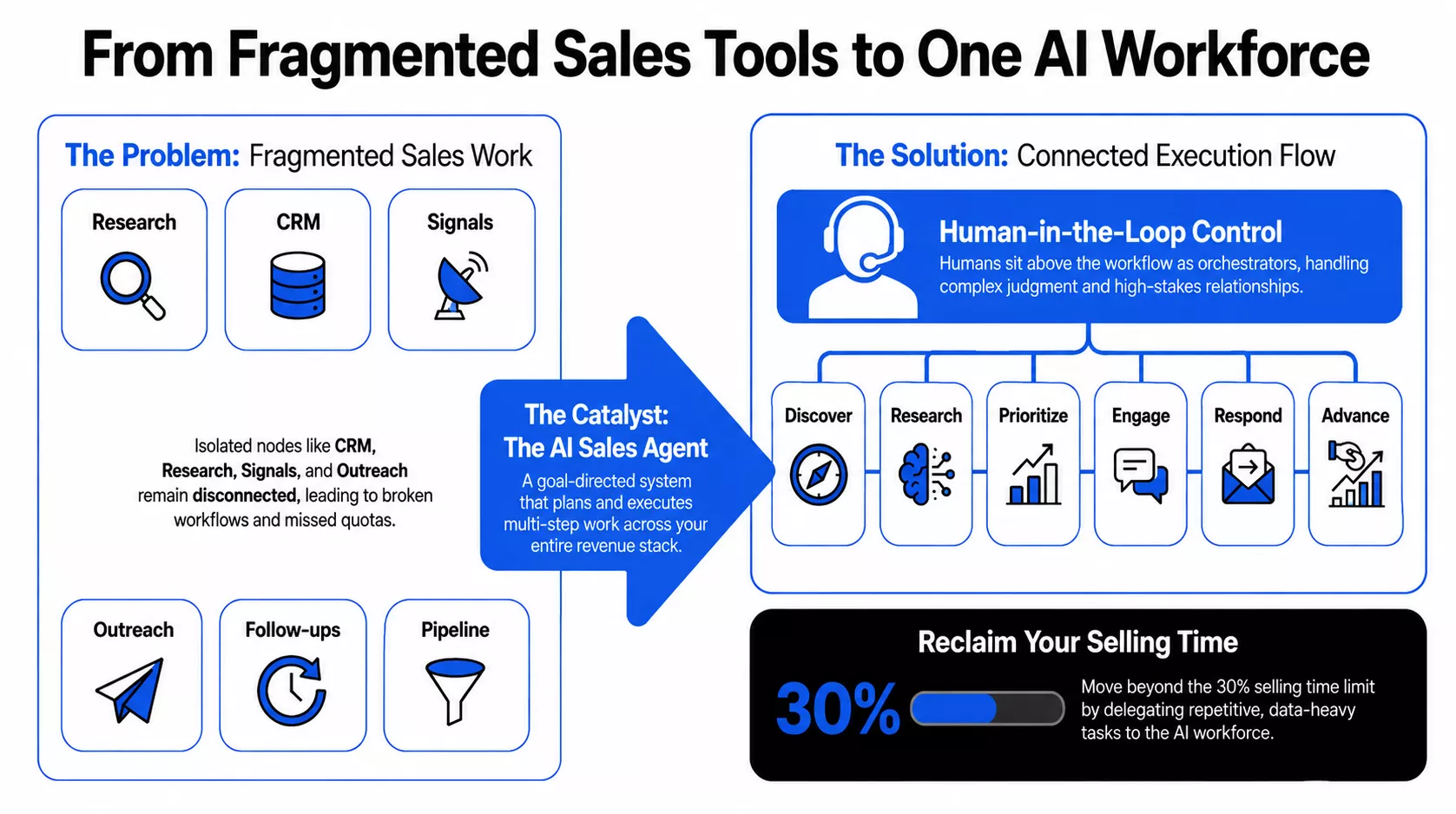
Organizations that embed autonomous capacity into their operations, often through an AI agent platform for business, will decouple growth from headcount. That decoupling is the strategic advantage. Service capacity is no longer a function of how many people you can hire. It is a function of how intelligently you allocate work between humans and AI.
That is not a tactical upgrade. It is a redefinition of the service operating model.
FAQs
1. Will an AI chatbot for customer service replace our team?
No. An AI chatbot for customer service handles repetitive and predictable questions. Your team still manages complex cases, emotional conversations, and high-value accounts. The goal is balance, not replacement.
2. What does a chatbot software really mean for a growing company?
Enterprise AI chatbot software is built for structured environments. It handles high volumes, follows governance rules, and integrates with internal systems. It is not just a chat tool. It becomes part of your operating model.
3. Is an AI chatbot to reduce support costs only about saving money?
No. It also improves speed and consistency. Cost savings are important, but the bigger impact is operational control and predictable service performance.
4. How does GetMyAI change service strategy?
An AI agent platform like GetMyAI shifts the focus from hiring more people to distributing work intelligently between humans and automation. That change allows service capacity to grow without matching headcount growth.
5. Is AI customer support automation suitable for smaller teams?
Yes. Even smaller teams benefit from AI customer support automation because it removes repetitive tasks and protects limited human bandwidth. It helps lean teams operate with more stability and less burnout.