Business AI Chatbots: Improve Conversion Rate Across Digital Channels

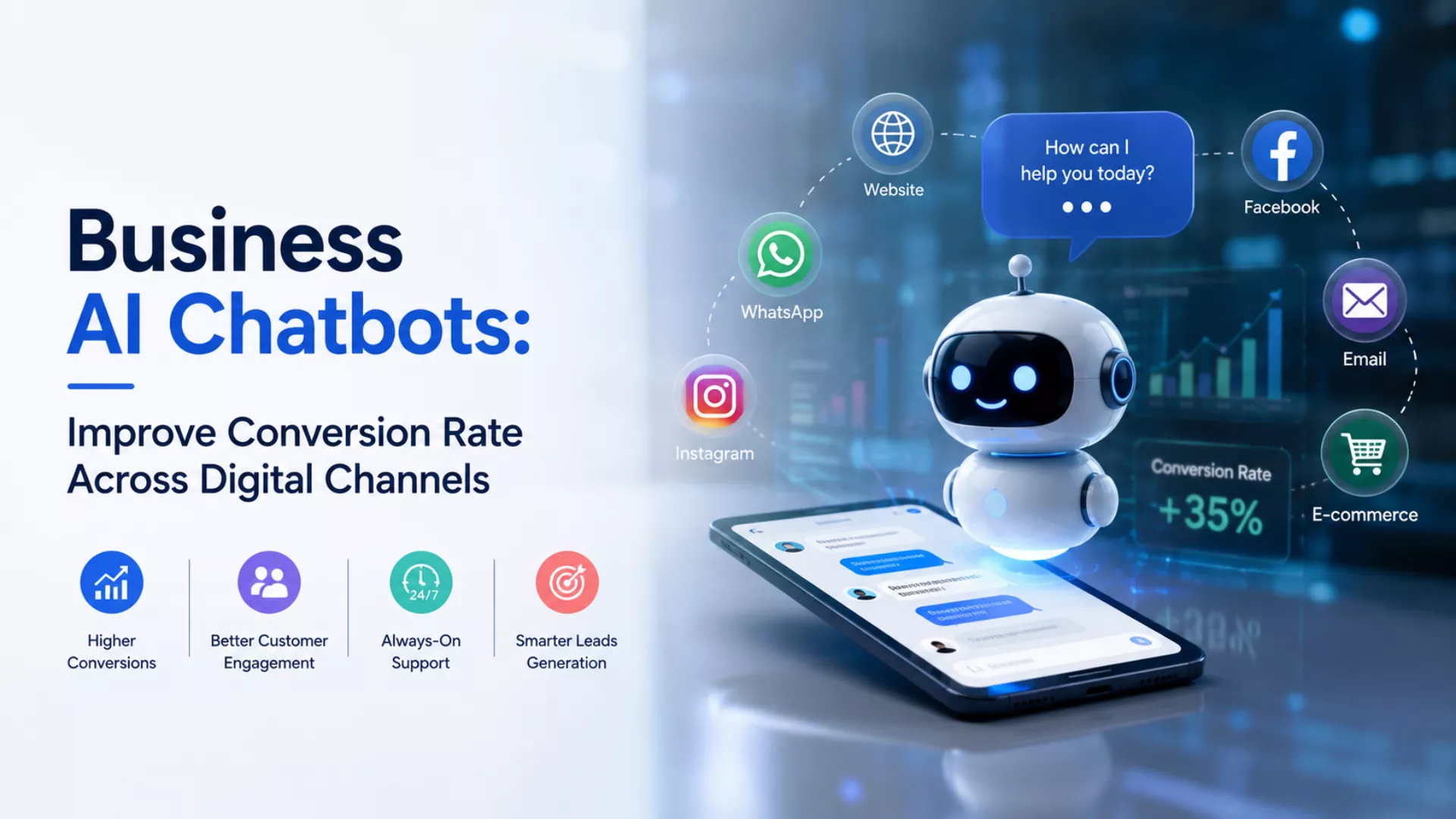
More visitors don’t mean more conversions. Most businesses already know how to drive traffic. Ads, SEO, social media, and partnerships bring people to websites every day. Yet traffic numbers often look strong while sales, sign-ups, or enquiries remain flat. This gap is where many growth plans quietly break down.
Visitors arrive with intent, but intent alone does not convert. People hesitate. They compare. They look for reassurance. When answers are slow or unclear, they leave. This happens across industries, from SaaS and eCommerce to B2B services and education.
The real issue is not interest. It is friction.
Common friction points include unanswered questions, uncertainty about pricing or fit, and unclear next steps. A visitor may like what they see but still feel unsure enough to delay or abandon the journey. Every delay increases the chance of exit.
AI chatbots address this problem at the moment it matters most. Instead of forcing visitors to search through pages, forms, or FAQs, a chatbot opens a direct conversation. It meets the visitor where they hesitate and responds in real time.
An AI chatbot for customer engagement does more than answer questions. It reduces doubt, provides direction, and creates momentum. The main reason for this is that AI chatbots on websites for businesses often result in higher conversion rates without any additional traffic increase.
Getmyai-like platforms are made for this specific problem: transforming mere visitors into fruitful conversations with guidance. If conversation takes place instead of confusion, then naturally conversations are going to follow.
What Stops Visitors From Converting on Websites
Before looking at solutions, it is important to understand what actually blocks conversions. Most websites fail quietly, not because the offer is weak, but because the experience is incomplete. This is where a Business AI chatbot helps by filling the gaps users face at key moments.
Visitors rarely arrive ready to commit. They come with partial information and unspoken questions. When those questions are not answered quickly, confidence drops. Without timely guidance, even interested visitors can lose trust and leave the site.
Common conversion blockers include
- Long forms that ask too much, too early
- Slow or delayed responses to simple questions
- Too many pages are required to understand one product
- Pricing or plan differences that are hard to compare
- No visible help when confusion appears
The modern visitor does not want to dig. They want to ask. If the site cannot respond, the visitor moves on.
This is where traditional website structures struggle. Static pages assume linear behaviour. Real users are not linear. They jump, skim, pause, and reconsider. Most websites are not built to respond when visitors change direction or hesitate.
An AI chatbot for business websites removes this mismatch. Instead of forcing visitors to adapt to the site, the site adapts to the visitor. The experience becomes flexible, responsive, and easier to navigate in real time.
By opening a conversation, the chatbot gives users permission to ask without effort. No form. No email. No waiting. This removes pressure and makes asking questions feel simple and natural.
This matters because hesitation is the most fragile moment in the conversion journey. When a visitor pauses, they are deciding whether to continue or leave. Silence at this moment almost always leads to exit. Even small delays can break trust and stop momentum completely.
A customer service chatbot for websites fills that silence. It acknowledges the pause and offers help immediately. That quick response often keeps visitors engaged and moving forward.
Businesses using GetMyAI often discover that their biggest conversion problems were not about demand, pricing, or messaging. They were about timing. The chatbot arrives at the exact second when support is needed.
Why does this change behaviour
- Visitors feel seen instead of ignored
- Questions are resolved before doubt grows
- The journey feels guided, not forced
Removing friction does not require redesigning the entire site. It requires being present when the visitor hesitates. That presence is what AI chatbots provide.
How AI Chatbots Guide Visitors Instead of Letting Them Drop Off
Traditional websites wait for users to figure things out. AI chatbots take a different approach. They actively guide visitors through decisions, one step at a time.
Instead of reacting after confusion sets in, chatbots anticipate it.
An effective AI chatbot does not overwhelm users. It asks simple questions, listens to responses, and adjusts the conversation naturally. This creates clarity without pressure.
How AI chatbots guide visitors
- Ask short, relevant questions
- Surface the most useful information first
- Suggest the next actions clearly
- Reduce choice overload
This guidance matters because uncertainty is the enemy of conversion. When visitors are unsure, they delay. Delay almost always leads to drop-off.
An AI chatbot for inbound leads keeps momentum alive. It turns browsing into dialogue. Dialogue builds confidence. Confidence leads to action.
For example, instead of showing a long pricing table, a chatbot can ask what the visitor is trying to achieve. The answer, it explains the most suitable option. The visitor no longer guesses. They feel guided.
This approach works across use cases, from product selection to onboarding and demo requests. A business AI chatbot becomes a quiet assistant, not a sales push.
Platforms like GetMyAI focus on this guided experience by training chatbots on real business data. The result is not generic answers, but relevant, contextual responses that feel intentional.
The impact on conversion behaviour
- Visitors spend more time engaged
- Fewer exits occur during decision points
- Actions feel easier and safer
Guidance does not mean control. It means support. When users feel supported, they move forward.
AI chatbots improve conversion rate not by pushing harder, but by making the path clearer. This subtle shift is what separates high-performing websites from the rest.
AI Chatbots Turn Questions Into Conversion Moments
Every time a visitor asks a question, it means something important. It shows they are interested. It shows they are thinking. It may also show they are unsure. These moments matter because they happen right before a decision is made.
Common questions include
- Is this right for me?
- Which option should I choose?
- How long does this take?
These are normal questions. But when no one answers them, visitors usually leave. They may say they will come back later, but most of the time, they do not. They forget, get distracted, or choose another website that feels easier.
An AI chatbot for customer service helps at exactly this point. It provides immediate answers to the questions without the visitor waiting. The interaction takes place on the site; the visitor is not required to open new tabs or search for assistance elsewhere. As a result, their attention is kept on the site.
Quick answers help people feel more confident. Clearing doubts in advance makes decisions easier to take. Customers are not thinking more, waiting for the next step; they are thinking less and moving forward more. Such little instances might look insignificant, but they collectively lead to and cause a remarkable increase in conversions.
An AI chatbot for customer engagement also gets better over time. It learns which questions are asked most often. It improves how it replies, using clear and helpful answers. This makes future conversations smoother and faster for new visitors.
In a separate way, an AI chatbot for inbound leads helps by noticing when questions show strong interest. When a visitor asks about pricing, features, or next steps, the chatbot understands this as a sign of intent. It can then guide that visitor toward the right action, like booking a call or sharing contact details.
This is how simple questions turn into real results. When conversations feel helpful and natural, visitors are more likely to stay, trust, and convert.
Lead Capture and Qualification Happen Inside the Conversation
Lead forms that are conventional typically halt the potential customers at the very beginning. They require a lot of information at once and disturb the normal progression of the site. A lot of people will be confused or irritated and quit before they reach the end of the form. However, chatbots operate in a different manner.
A lead generation chatbot gathers information through simple, friendly conversation. Instead of showing a long list of fields, it asks questions one at a time, only when they make sense. Visitors do not feel pushed or questioned. They feel listened to and understood. This makes them more comfortable sharing details.
An AI chatbot for lead generation helps by doing a few important things naturally:
- Asking for contact details only after trust is built
- Understanding what the visitor is looking for
- Noticing buying intent through answers and tone
- Sending serious leads to the right team automatically
Because the chat feels helpful, more people stay engaged. They are not rushing just to get it over with. As a result, businesses often see more useful leads instead of many low-quality ones.
Companies using GetMyAI often notice this change quickly. Fewer people submit forms just to “check things out.” Instead, sales teams receive conversations from visitors who already understand the product and are more ready to talk. The chatbot does the early filtering, which saves time and reduces cost.
Often, the same chatbot serves as an AI customer service assistant, answering simple questions and capturing lead information in the background. This gives the user a feeling of being engaged in a smooth and natural experience.
When done right, lead capture no longer feels like a task. It becomes a result of a good conversation. Visitors get help, businesses get better leads, and no one feels interrupted along the way.
Why Always-On Support Improves Trust and Conversions
Website visitors do not visit only during work hours. People browse late at night, early in the morning, and on weekends. When they have questions, they want answers right away. If no help is available, they often leave and do not return.
An always-on AI chatbot for customer service makes sure help is available at all times. It answers questions the moment they are asked. Visitors do not have to wait for emails or business hours. This steady support makes people feel comfortable and confident.
When users know they can get answers instantly, they stay on the website longer. The visitors spend more time on the website, consuming various pages and taking time to grasp the offer. When their uncertainties are resolved quickly, they become more confident to proceed. Resulting in more registrations, inquiries, and revenue.
A customer service chatbot for websites also shows that a business is reliable. It tells visitors that the company cares about helping them, even when no human team is online. This kind of support feels professional and thoughtful.
Trust does not come from big promises or bold words. Trust grows when help is available at the right time. When visitors know they can get support anytime, they feel comfortable moving forward. Over time, this trust helps people stay engaged and take action more often.
AI Chatbots Improve Conversion Without Increasing Costs
Hiring more support or sales staff can become costly very quickly. Each new hire brings salaries, training, and daily management. This makes it difficult for businesses to increase support without also raising expenses.
Chatbots work differently. A business AI chatbot can talk to many visitors at the same time without slowing down. It does not get tired, take breaks, or lose focus. Every visitor gets the same clear and helpful response, no matter how busy the website is.
Because chatbots can handle many conversations at once, they turn into a strong conversion tool. They answer questions, guide visitors, and support decisions without needing extra staff. This helps businesses convert more visitors without spending more money.
As website traffic increases, the chatbot keeps up easily. Whether ten people or ten thousand people visit at the same time, support remains available. This means conversion rates can improve while costs stay stable.
Our platform is developed taking such growth into consideration. For the sake of ease, it will be a win-win situation for the businesses supporting more visitors, capturing more leads, and improving conversions without adding more stress to their teams. This kind of balance makes chatbots the best option to be long-term partners for growth.
Better Conversations Lead to Better Conversions
Conversions often fail when visitors feel unsure, unsupported, or ignored. People may like a product or service, but confusion can stop them from taking action. When clarity replaces confusion, visitors feel more confident and are more likely to move forward. AI chatbots improve conversion rate by making the website feel helpful and responsive.
They reply to questions quickly, guide users through choices, collect lead details naturally, and help visitors any time they need it. These simple steps reduce doubt and make choices easier. For modern businesses, conversation is no longer optional. It shapes how people make decisions. When visitors can ask questions and receive clear answers, they feel comfortable continuing.
Websites that only share information often miss chances to help. When websites start real conversations with visitors, the experience feels warmer and more supportive. This helps users feel clear instead of confused. When people feel guided instead of rushed, they spend more time on the site and take action more often. Over time, these conversations build trust and lead to higher conversions, without forcing visitors to figure things out alone.
FAQs
1. How do AI chatbots improve website conversion rates?
AI chatbots improve website conversion rates by engaging visitors in real time, answering questions instantly, reducing friction, and guiding users toward actions like booking a demo, requesting a quote, or completing a purchase. This helps businesses convert more visitors without increasing website traffic.
2. Can AI chatbots increase lead generation for businesses?
Yes. AI chatbots can qualify leads by asking relevant questions, collecting contact information, identifying buyer intent, and directing qualified prospects to the right sales representative. This creates a faster and more efficient lead generation process.
3. Why do website visitors leave without converting?
Visitors often leave because they cannot find answers quickly, are unsure about pricing or product fit, or don't know the next step. AI chatbots reduce these barriers by providing instant, personalized assistance at the moment users need it most.
4. What types of businesses benefit most from AI chatbots?
AI chatbots help businesses across industries, including SaaS, ecommerce, healthcare, education, real estate, financial services, and B2B companies. Any business that receives customer inquiries online can use AI chatbots to improve engagement and increase conversions.
5. Can AI chatbots qualify leads automatically?
Yes. AI chatbots can ask qualifying questions about customer needs, budget, timeline, or product requirements before passing high-intent leads to the sales team. This reduces manual work while improving lead quality and response time.
6. How do AI chatbots reduce website bounce rates?
AI chatbots keep visitors engaged by starting conversations, answering common questions instantly, and recommending the most relevant pages or products. This encourages users to stay longer on the website instead of leaving due to unanswered questions.
7. Do AI chatbots replace human sales or support teams?
No. AI chatbots handle repetitive questions, initial lead qualification, and routine customer interactions. When conversations become more complex, they can seamlessly transfer users to human sales or support agents, creating a better customer experience.
8. Which chatbot features have the biggest impact on conversions?
The most effective chatbot features include instant responses, personalized conversations, lead qualification, product recommendations, appointment scheduling, CRM integration, multilingual support, and 24/7 availability. Together, these features remove friction and help users complete their journey.
9. How do AI chatbots build trust with website visitors?
AI chatbots build trust by providing immediate, accurate, and consistent answers whenever visitors need help. Fast responses reduce uncertainty, increase confidence, and encourage users to move forward with purchases, inquiries, or demo requests instead of leaving the website.
10. What should businesses measure to evaluate AI chatbot conversion performance?
Businesses should track key metrics such as conversation-to-lead rate, lead qualification rate, conversion rate, engagement rate, average response time, bounce rate, completed bookings, and revenue generated from chatbot interactions. Monitoring these KPIs helps optimize chatbot performance and improve ROI over time.