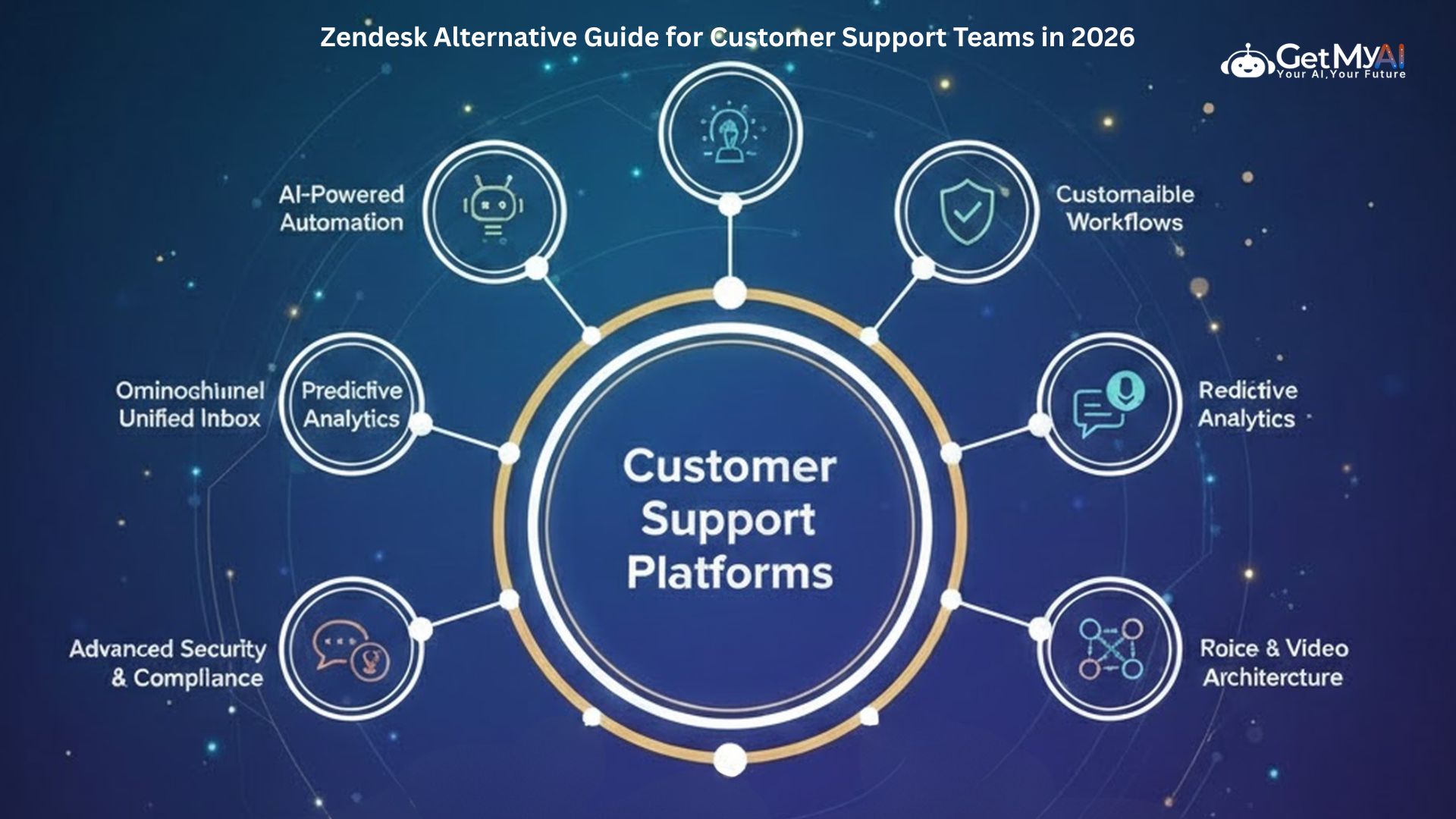
Zendesk Alternative Guide for Customer Support Teams in 2026

Customer support tools were once judged by how well they organized chaos. Tickets came in, agents responded, managers tracked metrics, and the system kept things moving. For a long time, Zendesk defined that model.
Today, customer expectations have changed faster than support software. People no longer think in tickets. They think in questions. They want answers now, often without waiting, logging in, or explaining themselves. This shift is why more teams are actively searching for the best Zendesk alternative, not out of frustration, but out of necessity.
This guide explains why that shift is happening, what modern support teams actually need, and how to evaluate alternatives without falling into feature-list traps.
When Zendesk Starts to Fall Short

Zendesk performs exactly as designed. It captures customer requests, turns them into tickets, assigns ownership, and tracks performance metrics like response and resolution time. In environments where every issue truly requires an agent, this structure still makes sense.
Growing pains really kick in once you start scaling. As your product finds its footing and your audience grows, the sheer number of support tickets naturally climbs, yet the actual substance of those inquiries hardly ever shifts. You find yourself answering the exact same set of questions over and over, sometimes dozens of times before lunch.
What fills the queue most often
Password resets and login help
Billing changes and invoice questions
Account access and permissions
Clarifications around features, limits, or usage
None of these are unusual or complex. Yet in a ticket-first system, every one of them still demands attention.
Even with macros, triggers, and automated workflows humming along, agents still have to:
Open the ticket
Read the request
Apply the correct response
Send it
Close the loop
At scale, this routine turns into a bottleneck. Response times start lagging during peak hours. Backlogs pile up faster than teams can touch them. The go-to fix is usually hiring more people, which spikes overhead without actually making the customer experience any better.
This is usually when teams pause and rethink their entire strategy. Instead of looking for better ticket management, they start questioning why they have so many tickets in the first place. That question is what leads organizations to explore Zendesk-like software, searching for solutions that reduce repetitive work instead of simply organizing it more efficiently.
The Real Shift Isn’t Tools, It’s Timing
Modern support platforms don’t start with tickets. They start before tickets exist.
Instead of waiting for a request to become work, AI-driven systems answer common questions instantly. Customers get what they need. Agents only see conversations that truly require human judgment.
This is where AI for customer service changes the equation. It doesn’t replace support teams. It protects them from repetition.
Zendesk operates after a customer submits a request. AI-first platforms operate the moment a question is asked. That timing difference reshapes the entire support workflow.
How Support Models Actually Compare
At a high level, most teams are choosing between two philosophies, not just tools.
Zendesk excels when most issues require investigation, approvals, or deep context. AI-first platforms win when the majority of requests already have known answers.
Why Ticket Volume Is the Wrong Metric
Many support teams still measure success by how fast tickets are closed. The more mature teams measure something else entirely: how many tickets never existed.
Customers don’t want fast replies. They want no friction.
When an answer is immediate and accurate, there is no waiting, no escalation, and no frustration. Over time, this changes how customers perceive the brand and how support teams operate internally.
This is why modern teams evaluating the best Zendesk alternative look beyond dashboards and response times. They focus on deflection, accuracy, and customer effort.
What Actually Matters When Evaluating Alternatives
Choosing a Zendesk replacement is less about features and more about outcomes.
A strong alternative should allow customers to resolve common issues without opening tickets. If self-serve fails, the system simply adds another layer instead of removing work.
Knowledge accuracy matters more than AI hype. If answers are outdated or inconsistent, trust disappears quickly. Teams need clear control over what the system knows and how it learns.
Visibility is non-negotiable. Leaders must see where AI succeeds, where it fails, and which content needs improvement. Black-box automation creates operational risk.
Deployment speed matters. If implementation takes months, momentum dies. Modern platforms should deliver value in days, not quarters.
Scalability defines long-term value. The right system absorbs growth without requiring linear increases in headcount. This is where many traditional customer support software tools fall short.
Top Picks: Moving Beyond Zendesk for Modern Support

GetMyAI
Why it’s a win: Perfect for SaaS and tech founders who are tired of answering the "how-to" basics every single morning.
The real advantage: What makes GetMyAI different is that it actually stops tickets before they’re even created. It’s an AI-first platform that digests your specific internal files, think PDFs and help center docs, to give customers answers that actually match your product’s latest updates. It focuses on setup, usage, and troubleshooting questions that usually crowd support queues. Teams can review conversations to spot gaps and improve content. Setup is simple and does not rely on complex workflows or long configuration steps.
Limitations: GetMyAI is not meant for complex IT service management or hardware support that depends on strict ticket rules.
Ideal team size: Small to mid-sized SaaS teams with knowledge-heavy products
Intercom
Best for: Fast-growing SaaS and consumer apps that rely on live conversations
Strengths: Intercom brings chat, messaging, and automation together in one system. Its AI agent can answer simple questions, help guide users, and hand chats to human agents when needed. The platform works well for real-time conversations and helps teams stay close to what customers are doing inside the product. It also supports proactive messages and onboarding flows.
Limitations: To access more advanced tools, a higher plan is required, and the pricing is subject to increase depending on the chat volume.
Ideal team size: Mid-market and enterprise teams with many active users
Freshdesk
Best for: Teams needing structured, multi-channel support
Strengths: Freshdesk is built around a classic helpdesk model that brings email, chat, phone, and social support into one system. It helps teams keep customer requests organized and visible across channels. The interface is simple to navigate, so new agents can get comfortable without long training. Automation rules handle basic routing, ticket assignment, and status updates, which reduces manual effort during busy periods. For teams comparing customer support software alternatives, Freshdesk often feels familiar while offering enough flexibility to grow without heavy setup.
Limitations: AI features mainly support ticket handling rather than preventing tickets from being created.
Ideal team size: Small to mid-sized support teams
Front
Best for: B2B service and account teams that depend on ongoing conversations
Strengths: Freshdesk sticks to a solid, classic helpdesk model that pulls email, chat, phone, and social media into one organized system. It is great for keeping customer requests from falling through the cracks because everything stays visible across every channel. One of the best parts is the interface. It is so simple to use that new hires can usually jump right in and feel comfortable without sitting through hours of training. For teams exploring helpdesk alternatives to Zendesk, Front provides structure without heavy processes.
Limitations: Front is not built for large-scale automation or AI-based self-service. It focuses more on team collaboration than on reducing incoming requests.
Ideal team size: Small to mid-sized B2B teams that value teamwork and clarity
Gorgias
Best for: Online stores and growing e-commerce brands that handle many order questions
Strengths: Gorgias is built to support day-to-day e-commerce support needs. It connects closely with platforms like Shopify, allowing support teams to view orders, process refunds, and answer shipping questions from one place. This helps agents respond faster without switching tools. The system also uses automation to reply to common store questions, such as delivery status or return policies. These features reduce manual work and keep responses consistent during busy sales periods. For brands focused on online selling, Gorgias fits naturally into existing store workflows.
Limitations: Gorgias is designed mainly for retail use and does not adapt well to SaaS or service-based support models.
Ideal team size: Small to mid-sized e-commerce support teams managing high volumes of customer questions
Kustomer
Best for: Large consumer brands handling high volumes of customer questions
Strengths: Kustomer is built around a full customer timeline instead of separate tickets. Whether it’s an email, a chat, or a social media DM, every single message lands in one continuous thread. This is a game-changer because agents can actually see the whole history before they send a reply. It’s incredibly handy when you have "frequent flyer" customers who reach out all the time. The setup is perfect for teams that deal with a lot of back-and-forth across different platforms and need to keep the context straight. It also gets smart with routing and automation by looking at the customer's overall profile instead of just their latest ping. Any business trying to step up its game will find that this tool makes managing messy interactions feel much more effortless.
Limitations: Setup can take significant time, and pricing is typically structured for larger budgets rather than smaller teams.
Ideal team size: Large B2C support teams with high daily conversation volume
Help Scout
Best for: Teams that want simple, personal customer conversations
Strengths: Help Scout is built for teams that care about clear and human replies. The platform stays away from complex ticket terms and keeps messages simple. Conversations feel like normal emails, not support cases. This makes customers feel listened to, not rushed. It is useful for everyday questions where clarity and tone are more important than speed. Teams can coordinate quietly without changing the customer experience. For many businesses, Help Scout feels like a lighter versiZendesk alternative that focuses on relationships, not rules.
Limitations: Help Scout has limited automation and AI features. As support volume grows, teams may struggle to scale without adding more people.
Ideal team size: Small teams with steady support volume and a strong focus on personal service
Zoho Desk
Best for: Teams already using Zoho products and tools
Strengths: Zoho Desk is built for teams that need clear workflows and step-by-step support processes. It helps agents manage tickets, track progress, and follow set rules while handling customer questions. Since it connects easily with other Zoho products, teams can keep customer data, support history, and internal notes in one place. This makes daily work easier for teams already familiar with the Zoho system. Zoho Desk is priced to stay within reach for smaller budgets, letting growing teams keep a lid on support spending even as they scale up.
Limitations: The dashboard can get a little messy at times, and you’ll notice the AI is better at sorting through ticket piles than it is at actually talking to your customers.
Ideal team size: Works best for small or mid-sized crews that just want their support workflows to be steady and easy to manage.
Gladly
Best for: High-end brands that really care about keeping things personal.
Strengths: Gladly treats people like individuals rather than just another ticket number. Since every interaction stays in one long, continuous thread, your team always has the full story—whether the customer is reaching out via text, email, or a quick phone call. Agents never ask for ticket numbers, which helps conversations feel natural and human. This setup works well for brands that want customers to feel recognized every time they reach out. Agents can see past messages clearly and continue the conversation without starting over. For teams that value relationships over speed, Gladly feels less like a system and more like a shared inbox with context. It is often chosen as a Zendesk alternative by brands that care more about experience than volume.
Limitations: The platform is expensive, and the number of third-party integrations is limited compared to broader helpdesk tools.
Ideal team size: Large enterprise teams focused on premium, high-touch customer support
HubSpot Service Hub
Best for: Teams who are already set up and working within HubSpot for their sales and marketing.
Strengths: The real magic of Service Hub is how it completely kills off data silos. It pulls every single customer interaction into one spot, so your support team isn't just flying blind. They see exactly what the sales and marketing folks are seeing. This means no more of those annoying conversations where the customer has to repeat their entire issue. It handles all the heavy lifting of daily tickets using chat, email, and smart automation that actually feels logical. Plus, with the built-in feedback loops, you can stop guessing and see how your service is really performing. If you want an AI-boosted support tool that doesn’t force you to learn a brand-new system from scratch, this is a very natural fit.
Limitations: Reporting and workflow customization are limited as support volume grows. Advanced automation often requires higher plans.
Ideal team size: Small to mid-sized teams growing inside the HubSpot ecosystem
A Smarter Way to Compare Platforms
Instead of lining up vendors immediately, experienced teams compare decision criteria first.
Only after this step do teams meaningfully compare tools.
Zendesk vs AI-First Support Platforms (A Mindset Shift)
The real comparison is not Zendesk versus a feature set. It is a mindset difference. Zendesk focuses on managing support work. AI-first platforms focus on preventing it.
Tickets assume effort. Conversations assume clarity. Zendesk optimizes agent efficiency. AI-first customer support tools prioritize customer autonomy.
In a Zendesk model, success means faster resolution. In an AI-first model, success means fewer requests. This changes how leaders measure impact. Cost per ticket matters less when tickets disappear.
This is why the Zendesk vs AI chatbot debate is misleading. They are not competitors in the same lane. One organizes work after demand arrives. The other reduces demand before it becomes work.
Support leaders who understand this shift stop asking, “How do we reply faster?” and start asking, “Why are we replying at all?”
Which Zendesk Alternative Is Right for Your Team?
The right support tool depends on how questions reach your team and how much work you want agents to handle manually. Some teams need fewer tickets. People who struggle with understanding their environment require clear information because their ability to concentrate should be maintained. The use of specific tools to match existing patterns results in improved outcomes for the project.
High Ticket Volume With Repeat Questions: GetMyAI
Teams handling frequent, repetitive questions benefit from AI-first customer support tools like GetMyAI. It answers common queries before tickets exist, reduces agent load, and keeps responses accurate by training directly on internal documentation.
Knowledge-Heavy Products and Services: Intercom
Intercom is particularly effective in assisting clients in finding solutions through guides and workflows, which deal with some unique aspects of a product. As a practical Zendesk alternative, it combines chat, automation, and human support for documentation-driven use cases.
Internal and External Support Together: Freshdesk
When teams handle requests from both staff and customers, flexibility becomes important. Freshdesk provides organized routing across channels, making it easier to manage internal tasks and customer issues in one place.
Compliance and Process-Driven Support: Zendesk
In industries with strict rules and audits, traditional tools like Zendesk still work well. Clear workflows, approvals, and reporting are more important here than automation or chat-based support.
Zendesk Alternatives Exist Because Support Has Changed
Customer support tools change because customer behavior changes. Teams are no longer judged only by how fast they close tickets, but by how easily customers get answers. That is why the search for a Zendesk alternative keeps growing. Many businesses now want fewer tickets, faster resolution, and less pressure on agents, especially as support volumes rise and expectations stay high.
AI-first platforms are part of this shift. Instead of waiting for problems to reach agents, they handle common questions early and guide users to the right answers. Tools like GetMyAI show how documentation-driven automation can remove friction without losing clarity or control. For teams with knowledge-heavy products, this approach changes how support flows through the organization.
That said, no single tool fits everyone. Some teams still need structure, audits, and strict workflows. Others benefit more from conversational layers that reduce demand. The best customer support software alternatives are the ones that match how your customers prefer to ask for help and how much manual effort your team should spend answering the same questions.
FAQs
Is ticket volume still a good success metric?
Not always. Mature teams measure how many tickets never existed using AI-first customer support tools.
What should teams prioritize when choosing a new platform?
Focus on knowledge accuracy, visibility, scalability, and how well AI for customer service reduces repetitive work.
Are AI chatbots better than macros and triggers?
Macros still require manual action. AI-first customer support tools respond instantly without opening tickets.
Does GetMyAI require complex configuration?
No. It is simple to set up using existing documents instead of complicated workflows.
How does it improve customer experience?
By delivering fast, accurate answers, GetMyAI reduces friction and eliminates unnecessary waiting.