How An AI Chatbot For A Small Business Drives Growth

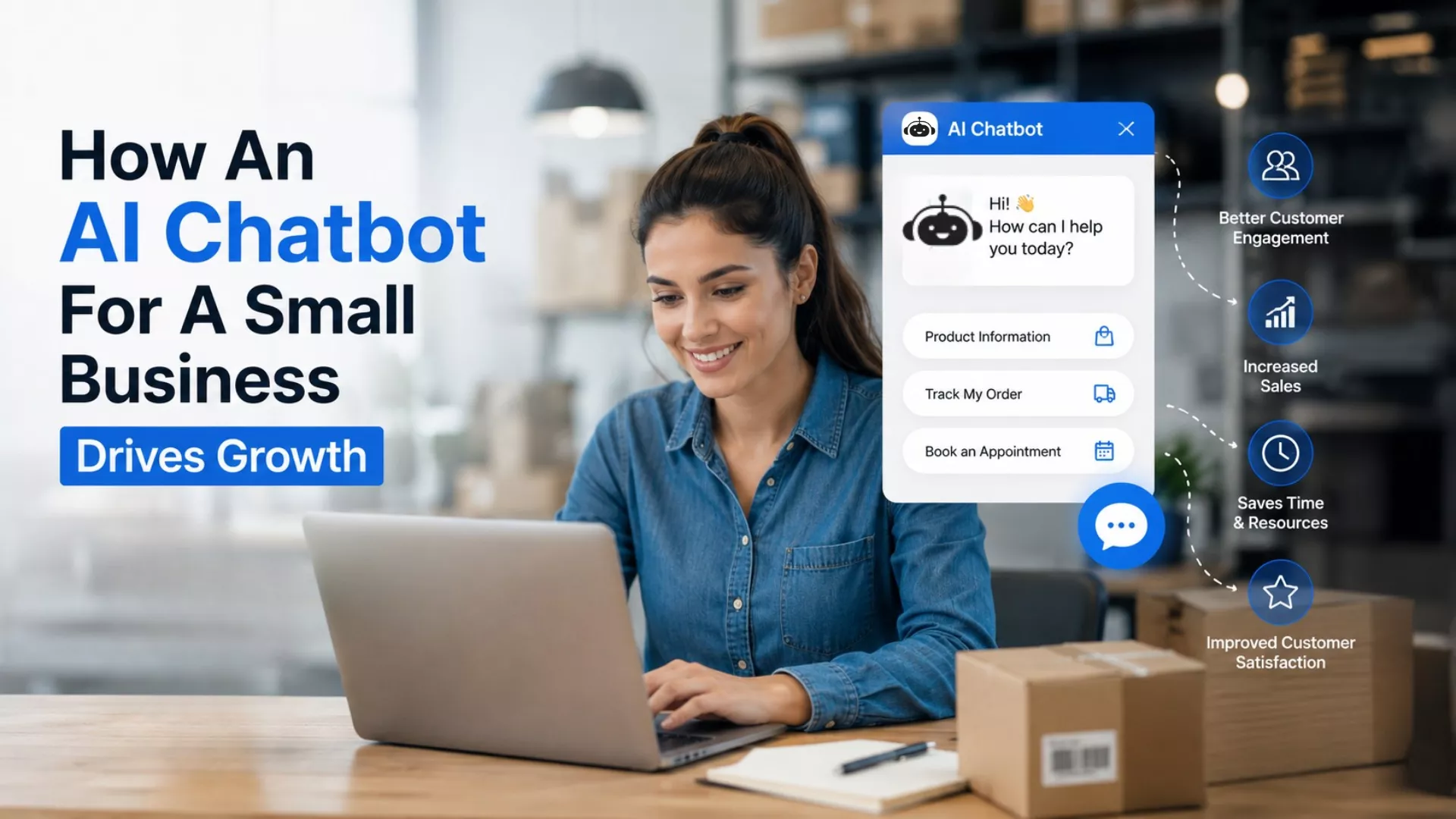
You work hard to bring people to your website. You run ads. You post content. You send emails. Traffic comes in, but something feels off. Visitors land on your page, scroll a little, and disappear. No chat. No form. No clear action. It looks busy, but it is quiet inside. They read your services. They check pricing. They compare options. Then they leave without asking a single question. No lead captured. No sale made. This silent drop off is common for small teams. You have visitors, but you do not have real conversations guiding them forward.
Now imagine this instead.
- A message pops up at the right moment.
- A friendly greeting appears.
- A simple question starts the flow.
This is where an AI chatbot for a small business steps in. It talks to every visitor. It answers in real time. It guides people step by step toward booking, buying, or asking more. No missed chances. No waiting. Just smart, active conversations that turn quiet clicks into real engagement and growth.
The Real Marketing Problem Small Businesses Face
Running a small business means doing many jobs at once. You handle marketing in the morning, answer support questions in the afternoon, and close sales by evening. Sometimes you even fix website issues yourself. With such a small team, you simply cannot respond to every visitor at the same time.
When someone visits your site at 11 PM and wants to know your pricing, who answers? When a buyer feels confused about a feature, there is no instant guide. When a visitor is almost ready to book a call, there is no one to give that final push. Questions sit there. Opportunities fade quietly. This is where an AI chatbot for a small business makes a real difference.
Instead of leaving visitors alone, your site begins a live chat. The bot greets them. It answers in real time. It guides them step by step.
- No waiting for email replies.
- No missed late-night leads.
Just smart conversation replacing silence and turning interest into action.
Why Modern Websites Need Live Conversation
Most small business websites still act like digital brochures. They show products. They list services. They add a contact form at the bottom. Then they wait.
But people do not buy like that anymore. They think out loud. They ask questions. They compare options in real time. If your site cannot respond, they move on. A quiet page cannot guide a confused buyer. A long FAQ cannot adjust to a new question.
This is why conversation matters. When your website can talk back, it becomes active. It becomes helpful. It becomes part of the buying process instead of just a place to read.
Below is how that shift happens.
Static Pages Cannot Guide a Buying Mind
Think about how someone shops online. They want clarity, quick answers, and feel understood.
A static FAQ page shows fixed answers. A contact form waits for someone to type and then sends an email. A pop-up might collect an address, but it cannot answer follow-up questions.
An AI chatbot for business websites works differently.
- It greets visitors the moment they arrive.
- It reads what they type.
- It responds with clear, focused answers.
It feels less like filling a form and more like speaking with a smart assistant. When visitors feel heard, they stay longer. When answers are fast, they move forward. When guidance is clear, they convert.
Turn Traffic Into Real Leads
Every visitor is a chance. But most people do not enjoy filling out long forms. They leave before completing them.
An AI chatbot for lead generation changes that flow. Instead of showing a cold form, it begins with a friendly exchange.
- “Hi, what are you looking for today?”
- “Is this for your team or personal use?”
- “When are you planning to start?”
These questions are not random. They qualify for interest step by step. The chatbot collects names, emails, budgets, and needs in a natural way. It works as a Website chatbot for lead capture, gathering details inside a real conversation.
Visitors feel like they are talking, not submitting data. That small shift increases response rates.
Now your sales team follows up with warm leads. They speak with people who already share intent.
Sales and Support Should Not Be Separate
Many small businesses treat support and sales as two different tracks. In reality, they connect every day. A pricing question can become a purchase. A product doubt can become an upgrade. An AI chatbot for sales and support handles both in one flow. It answers product questions. It explains features in simple words. It shows the next step clearly.
If a question is simple, the chatbot resolves it instantly. If it needs more detail, it gathers information and prepares the handoff.
This keeps the journey smooth.
- No waiting for replies.
- No back-and-forth emails.
- No lost context between messages.
Real Engagement Comes From Context
Some people still believe chatbots give robotic replies. Modern systems are smarter.
An AI chatbot for customer engagement understands context within a session. It remembers what was said earlier. It builds on it.
If a visitor says, “I run a small bakery,” the chatbot can adjust answers to match that business type. It keeps the flow natural. It removes repetition.
Engagement is not just about speed. It is about relevance.
When visitors feel understood, they trust the process. When trust builds, decisions happen faster.
A Simple Setup, Even for Startups
Many founders worry about complexity. They think they need developers. That is not the case.
An AI chatbot for startups is built to be simple. You upload your FAQs. Your documents. Your product details. The chatbot learns from that data.
- You customize how it looks.
- You choose its display name.
- You decide if it is public or private.
Then you embed it on your site or connect it to messaging channels like WhatsApp or Instagram.
Done. No coding. No complicated integrations.
Step by Step: How to Use GetMyAI for Marketing
Let us make this practical, not just informational.
Step 1: Define Your Goal
Do you want more leads?
More sales?
Better support?
Clarity here shapes how your chatbot behaves.
Step 2: Train It Properly
Upload documents that are correct and up to date.
If you change your pricing or services, retrain the agent right away. If older files remain in the system, the chatbot might use outdated information.
Accurate data helps the chatbot give accurate answers.
Step 3: Customize the Experience
Set your display name. Add suggested messages like:
- “View pricing”
- “Book a demo.”
- “Talk to sales”
Match the chat bubble color to your brand. Choose light or dark mode.
This makes the chatbot feel native to your website.
Step 4: Deploy and Go Live
Embed it on your site.
You can also connect it to WhatsApp or Instagram to extend conversations beyond your homepage.
Now your AI chatbot for business is active 24 hours a day.
Step 5: Review and Improve
Use Activity logs to see real conversations.
If the chatbot does not understand a question, add the answer in Q&A. Over time, the system improves.
Then check Analytics.
- Look at total conversations.
- Check thumbs up and thumbs down.
- Review average response time.
This tells you how your AI chatbot for small businesses is performing.
Measuring What Matters
Marketing is not only about launching an AI chatbot for a small business and hoping it works. It is about checking real results. Inside your Dashboard, you can see clear numbers that show how your chatbot is performing over time. These numbers help you understand usage, growth, and user behavior in a simple way.
Your Dashboard shows:
- Total conversations
- Total messages
- Engagement rate
- Chats by country
- Chats by channel
When you update training content or change your messaging, you can compare performance before and after. If traffic increases, you can track how many new chats begin. A chatbot for an e-commerce website should not rely on guesswork. With clear metrics, you make smarter decisions and improve results step by step.
Predictable Costs for Growing Teams
Small businesses need clear control over spending. When you use an AI-powered chatbot for your startup, you should know exactly how much usage each agent consumes. With credit limits and usage controls inside the Dashboard, you decide how much each chatbot can use. This keeps costs steady and avoids surprises at the end of the month.
If you prefer to test before committing, begin with an AI chatbot free trial. Build your agent, explore real conversations, and review performance. Once you see value in action, you can scale with confidence and clear visibility.
The Competitive Advantage Few Small Businesses Use
Here is the truth. Large companies already rely on smart chat systems. They automate support. They qualify leads fast. They study user behavior and improve daily. Many small teams wait, thinking it is complex or costly. Today, that is no longer true. An AI chatbot for small business brings advanced capability without a heavy setup. It works like a digital team member that never logs off.
Enterprise Power Without Enterprise Complexity
A small business AI chatbot gives you tools once reserved for big brands. It answers questions instantly, collects useful data, and guides visitors clearly. You gain smart automation without needing a large technical team or complex systems.
Growth Without Hiring More Staff
Hiring new staff takes budget and patience. Onboarding also takes time and energy. An AI chatbot for business websites answers repeated questions and routine requests on its own without slowing your team down. It can manage ten chats or one thousand without slowing down. Your team focuses on strategy and real relationships.
The Future Is Conversational
Websites are no longer static pages. Visitors expect quick replies and personal guidance. A conversational AI chatbot creates two-way communication. It listens carefully, responds clearly, and helps users move forward with confidence.
The Shift From Traffic to Talking
If your website stays silent, chances slip away. If leads are not qualified, your sales team spends time on the wrong prospects. If support replies are slow, trust fades quickly. These gaps slow growth and reduce confidence in your brand.
A well-trained AI chatbot for a small business changes this flow. It captures interest at the right moment. It qualifies prospects through smart questions. It supports customers with clear, fast answers. It is not only automation. It is an active conversation at scale, helping visitors move from their first click to a confident final choice.
FAQ
1. What is an AI chatbot for a small business?
An AI chatbot for a small business is an intelligent virtual assistant that engages website visitors, answers customer questions, captures leads, and automates routine conversations. It helps small businesses provide instant support 24/7 without increasing staffing costs.
2. How can an AI chatbot help a small business grow?
An AI chatbot helps small businesses grow by responding to customer inquiries instantly, qualifying leads, scheduling appointments, reducing response times, and guiding visitors toward making a purchase or contacting the business. This improves customer engagement and increases conversion opportunities.
3. Is an AI chatbot affordable for small businesses?
Yes. Many AI chatbot platforms offer flexible pricing designed for startups and small businesses. Instead of hiring additional support staff, businesses can automate repetitive customer interactions, making AI chatbots a cost-effective investment with long-term value.
4. Can an AI chatbot generate leads automatically?
Yes. An AI chatbot can qualify visitors by asking relevant questions, collecting contact details, and identifying purchase intent. Qualified leads can then be sent directly to your sales team or CRM, helping businesses capture more opportunities without manual effort.
5. Does an AI chatbot require coding or technical skills?
No. Most modern AI chatbot platforms offer no-code setup, allowing business owners to upload FAQs, website content, and documents, customize the chatbot, and deploy it on their website within minutes.
6. What types of businesses benefit most from AI chatbots?
AI chatbots are valuable for almost every small business, including ecommerce stores, healthcare clinics, real estate agencies, law firms, educational institutions, restaurants, travel companies, financial services, and professional service providers. Any business that receives frequent customer inquiries can benefit from AI-powered automation.
7. Can an AI chatbot work outside business hours?
Yes. One of the biggest advantages of an AI chatbot is 24/7 availability. It can answer customer questions, collect leads, recommend products, and provide support even when your team is offline, ensuring that no potential customer is left waiting.
8. How do AI chatbots improve customer experience?
AI chatbots provide instant, personalized responses, reduce waiting times, answer frequently asked questions accurately, and guide customers throughout their buying journey. Faster support and consistent communication help improve customer satisfaction and build trust.
9. Can an AI chatbot integrate with existing business tools?
Yes. Most AI chatbot platforms integrate with websites, CRM software, helpdesk systems, calendars, and messaging channels. These integrations allow businesses to automate workflows, manage customer data efficiently, and streamline sales and support processes.
10. How do I choose the best AI chatbot for my small business?
When selecting an AI chatbot, look for features such as no-code setup, AI-powered conversations, lead generation, CRM integrations, analytics, multilingual support, customization options, and strong security. Choosing a scalable platform ensures your chatbot can grow alongside your business while continuing to deliver value.