AI Chatbots in Healthcare: Removing Friction Where Patients and Care Teams Feel It Most

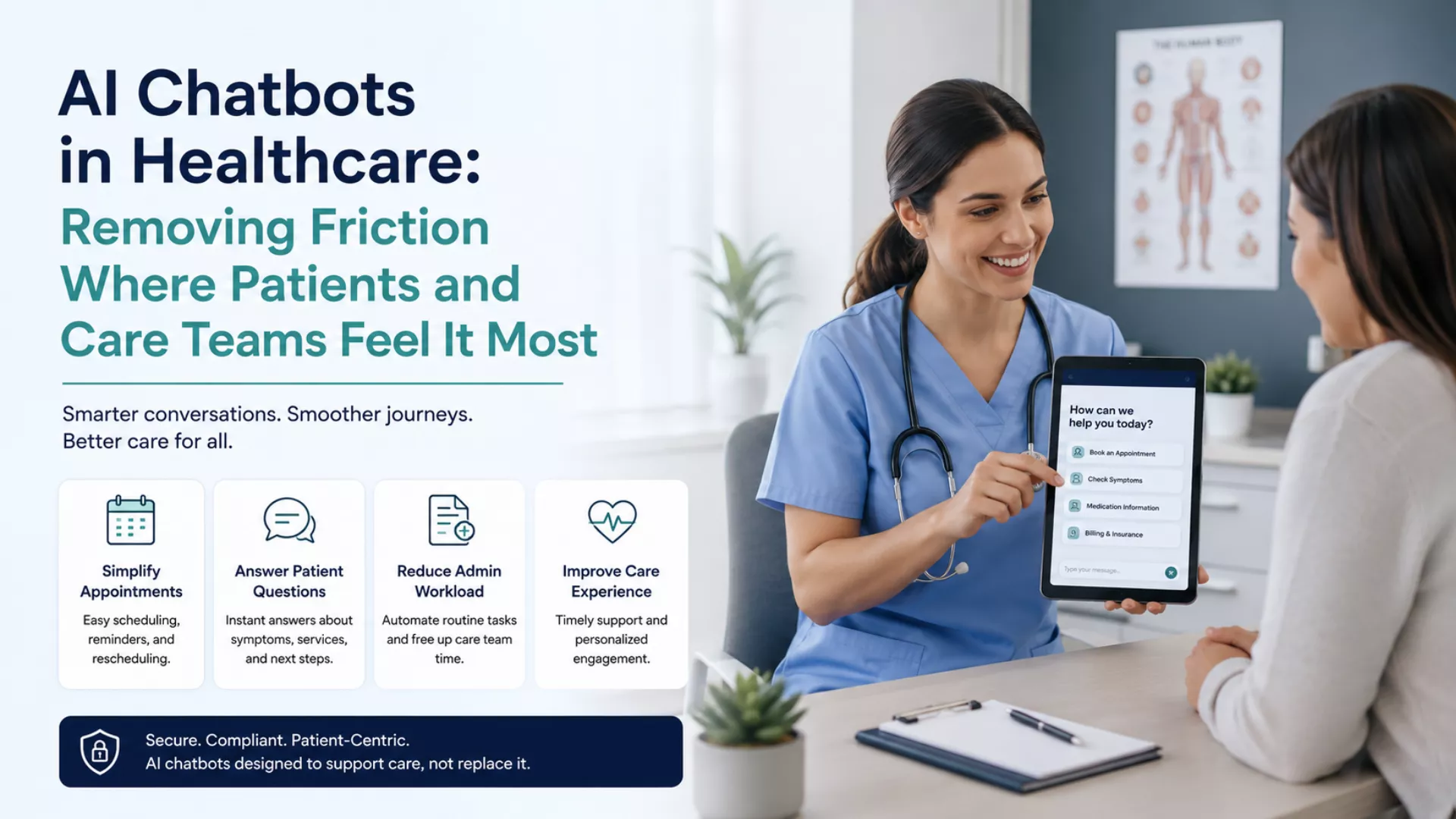
Care, trust, and human connection sit at the heart of healthcare. Still, many patients struggle most with delays, confusing information, and repeated questions rather than medical treatment itself.
This is where AI chatbots in healthcare are starting to make a difference. They do not replace doctors or nurses. Instead, they reduce everyday friction by handling simple interactions that often cause stress and slow things down.
Healthcare chatbots are often described in broad terms. Their real value appears in daily use. By supporting care teams and helping patients find clear answers when needed, the benefits of chatbots in healthcare show up through small actions that quietly improve the experience.
At the same time, it’s important to look at how these tools are being used today and where they are headed. By grounding chatbot healthcare use cases in real workflows and understanding the future of chatbots in healthcare as something steady and responsible, we can talk about AI in a way that stays honest, practical, and human.
Healthcare Doesn’t Have a Care Problem. It Has a Communication Problem.
Most healthcare systems are full of dedicated people doing their best. Still, patients often feel lost. They ask questions like:
- “What happens next?”
- “Where do I find this information?”
- “Is this normal?”
- “Who do I contact for help?”
These are not medical questions. They are information questions. And when answers are delayed or unclear, frustration grows.
Care teams feel this, too. Staff spend large parts of their day answering the same questions again and again. Time that could go toward patients who truly need human attention gets pulled into repetition.
What AI Chatbots in Healthcare Actually Do and What They Don’t
Let’s be clear. Healthcare chatbots are not doctors. They do not diagnose, treat, or replace clinical judgment.
Instead, they act as reliable guides. They help people quickly find the right information, see what to do next, and get answers without having to wait or search around.
When used the right way, chatbots support healthcare by taking care of routine questions, so medical teams can focus on work that truly needs their expertise.
The Real Benefits of Chatbots in Healthcare
These benefits show up in small but meaningful moments. These moments add up to better experiences for patients and smoother operations for care teams.
1. Always Being There When Questions Come Up
Healthcare questions don’t follow office hours. People worry at night. They look for answers on weekends. They want clarity before their next appointment.
Chatbots provide information anytime, without making patients wait or search through long pages of content.
Being available matters more than being fast. When someone knows help is there, anxiety drops.
2. Reducing Repetition for Care Teams
Many questions asked in healthcare are the same every day. Policy details. Process steps. General guidance.
Chatbots take on this repetition so care teams can focus on patients who need personal attention. This doesn’t replace people. It protects their time and energy.
3. Clear, Consistent Answers
Different people can sometimes give different answers to the same question. This can leave people unsure and doubtful.
Chatbots share the same approved information every time. That steady messaging helps patients and caregivers feel more confident and informed.
4. Helping Patients Stay Oriented, Not Overwhelmed
Healthcare journeys can feel confusing. Forms, instructions, and next steps pile up quickly.
Chatbots guide people gently, one question at a time. This reduces overwhelm and helps patients stay engaged instead of giving up or walking away silently.
Chatbot Healthcare Use Cases That Actually Matter
When people talk about the use of chatbots in hospitals and clinics, they often list features. What matters more is how these tools fit into real life.
Here are use cases that truly make a difference.
Answering Everyday Questions Before and After Visits
Patients often want to know:
- What to expect before an appointment
- What happens after a visit
- Where to find instructions or documents
Chatbots handle these questions instantly, without replacing clinical conversations.
The “Nothing Is Wrong” Conversations
Not every question is urgent. Many are about reassurance.
- “Is this expected?”
- “Am I doing this right?”
- “What should I watch for next?”
These moments matter. Chatbots provide calm, clear information that helps people feel supported without stepping into a diagnosis.
Internal Support for Healthcare Teams
One of the most overlooked chatbot healthcare use cases is internal support.
Staff need support too, not just patients:
- Policy questions
- Onboarding help
- Regular process information
Internal chatbots reduce interruptions and allow teams to find answers on their own, faster.
Feedback and Follow-Up
Healthcare continues beyond the conversation. What patients feel afterwards can shape their experience.
Chatbots can follow up by asking:
- “Did this answer your question?”
- “Was anything confusing?”
- “Do you need more help?”
These quick follow-ups help teams notice gaps, communicate more clearly, and make sure patients feel supported even after the conversation ends.
Why Clean Information Is the Foundation of AI Chatbots in Healthcare
Here is a simple truth: AI chatbots can only work as well as the information they are given.
They do not fix messy content. They expose it.
If documents are outdated or conflicting, answers suffer. In healthcare, this matters deeply.
This is why successful healthcare chatbots rely on:
- Clear, accurate documents
- Regular updates
- Ongoing review and improvement
Accuracy is not a one-time setup. It is a habit.
Accuracy Is a Process, Not a Promise
In real healthcare environments, things change. Policies update. Instructions evolve.
Strong chatbot systems support continuous improvement. Teams review unanswered questions, update Q&A, and upload new content when needed.
This creates trust. Patients feel heard. Care teams stay confident in what the chatbot shares.
The Future of Chatbots in Healthcare Is Practical, Not Flashy
When people talk about the future of chatbots, they often imagine dramatic changes. In reality, the future looks quieter and more reliable.
The next phase is not about experimentation. It is about stability.
Here’s what that future looks like:
- Chatbots that focus on communication, not diagnosis
- Tools that support patients without overwhelming them
- Systems that scale during busy periods without breaking
- Platforms that give teams control without technical complexity
The most successful chatbots will be the ones patients barely think about. They just work.
Why This Matters for Patients and Caregivers
For patients, good communication means less stress and more clarity.
For caregivers and healthcare workers, it means fewer interruptions, less repetition, and more time for meaningful care.
AI chatbots in healthcare are not about replacing human connection. They protect it by handling everything around it.
Making Healthcare Communication Easier for Everyone
GetMyAI is built around these realities. It understands that many problems AI chatbots in healthcare aim to fix start with confusing information, the same questions asked again and again, and times when people just need help right away. Rather than making things complicated, the goal is to keep daily communication calm, clear, and dependable for everyone.
It helps healthcare organizations:
- Provide clear answers at any time
- Cut down on repeated questions
- Support patients as well as internal teams
- Improve accuracy over time through regular reviews and updates
Everything runs from the Dashboard, with no code required and no big promises about what AI should do. Teams stay in control, make small improvements over time, and adjust as information changes, without needing technical skills or long setup periods.
Discover a simpler way to support patients and care teams with GetMyAI.
What This Means for Patients and Care Teams
Healthcare is deeply human. Technology should help people, not get in their way.
The real benefits of chatbots come from removing friction, not adding complexity. The best setups focus on clear answers, calm guidance, and steady communication every time someone reaches out. Over time, the tools that succeed are the ones that respect both patients and the people who care for them.
When used thoughtfully, AI chatbots in healthcare don’t change care itself. They make space for it to happen better. They help cut through confusion and make information easier to understand. This gives patients and care teams more space to focus on what truly matters. In a healthcare system that is always under pressure, this kind of quiet help can make a real difference.
As healthcare organizations look at more chatbot healthcare use cases, the ones that work best will stay focused on real problems. Not every question needs a person to answer it, but every interaction should feel clear, thoughtful, and dependable. When technology does that well, it supports care instead of getting in the way.
FAQs
1. What are the benefits of chatbots in healthcare?
Healthcare chatbots improve patient communication, provide 24/7 support, automate appointment scheduling, answer common questions, send medication reminders, and reduce administrative work for healthcare staff.
2. How do AI chatbots improve patient experience?
AI chatbots offer instant responses, guide patients through healthcare services, reduce waiting times, provide appointment updates, and make healthcare information easier to access at any time.
3. Can healthcare chatbots replace doctors?
No. Healthcare chatbots are designed to support doctors and care teams by handling routine tasks and answering general questions. They should not diagnose medical conditions or replace professional medical advice.
4. Are AI chatbots secure for healthcare organizations?
Healthcare AI chatbots can be secure when they use encryption, role-based access controls, audit logs, and comply with healthcare privacy regulations such as HIPAA or GDPR.
5. What tasks can healthcare chatbots automate?
Healthcare chatbots can automate appointment scheduling, patient FAQs, prescription refill requests, follow-up reminders, patient intake forms, insurance inquiries, and internal staff support.
6. How do chatbots reduce healthcare administrative workload?
They automate repetitive conversations, reduce call volumes, answer frequently asked questions, assist with scheduling, and streamline patient communication, allowing healthcare staff to focus on more complex responsibilities.
7. Which healthcare organizations benefit from AI chatbots?
Hospitals, clinics, dental practices, diagnostic centers, telemedicine providers, pharmacies, mental health organizations, and home healthcare providers can all benefit from AI chatbots.
8. What should healthcare organizations consider before implementing an AI chatbot?
Organizations should evaluate data privacy, compliance requirements, integration with existing systems, content accuracy, human oversight, multilingual support, and ongoing maintenance before deployment.
9. Can healthcare chatbots integrate with hospital systems?
Yes. Many healthcare chatbots can integrate with electronic health record (EHR) systems, appointment scheduling platforms, CRM software, and patient communication tools to improve operational efficiency.
10. What is the future of AI chatbots in healthcare?
The future includes AI agents with better workflow automation, multilingual patient support, voice assistants, predictive patient engagement, deeper EHR integration, and more personalized healthcare experiences while maintaining strong human oversight.