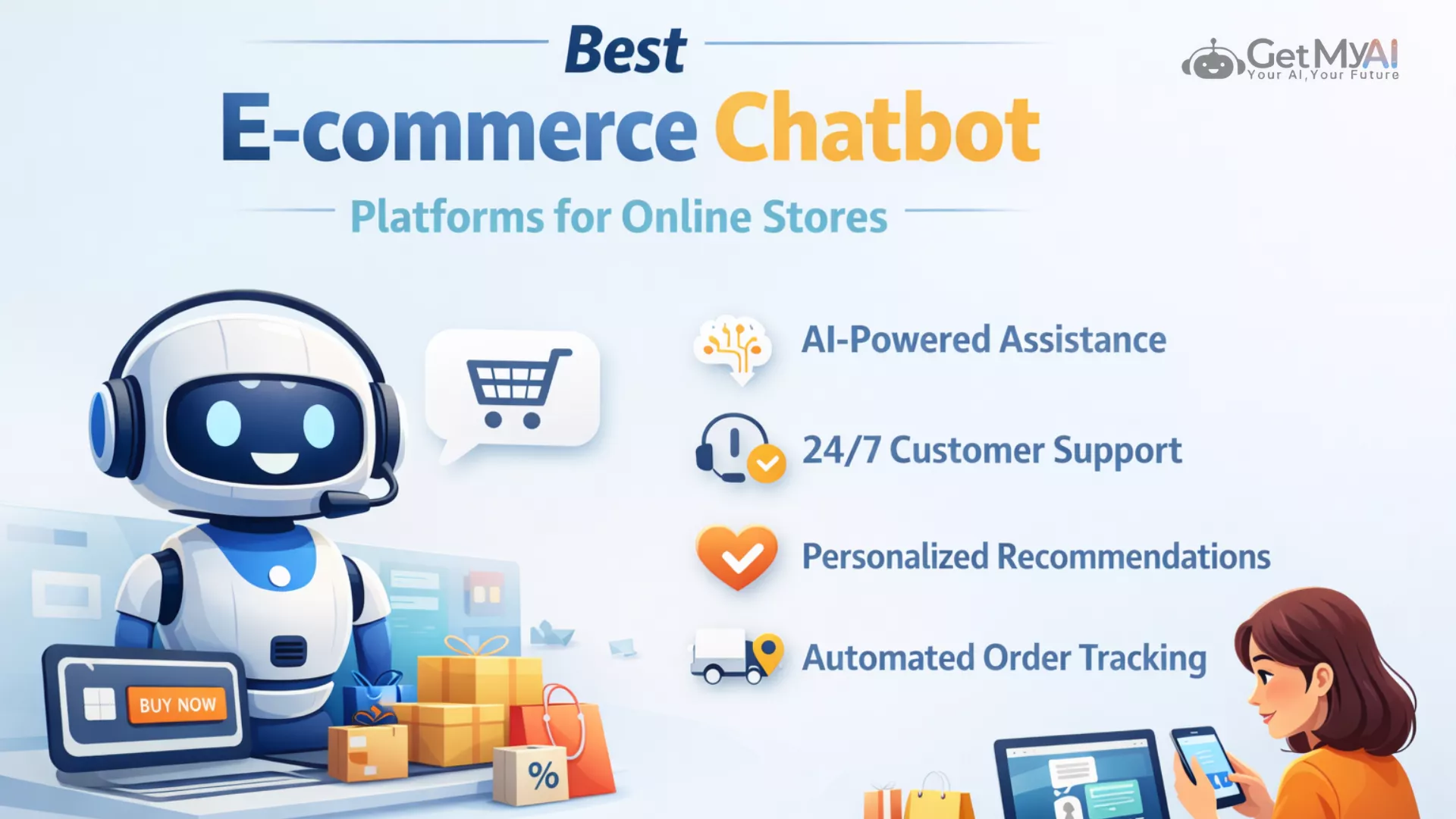
Best E-commerce Chatbot Platforms for Online Stores

Customer support did not break overnight. It became slower, one unanswered question at a time. As online stores grew, chat widgets stayed the same. They waited for users to click. They followed fixed rules. They failed the moment a question sounded different.
That gap is why AI chatbots replaced traditional chatbots.
Customer support today goes beyond sending replies. It plays a role while buyers are still thinking things through. AI chatbots now function as working systems inside e-commerce teams. They help with order questions, explain store rules, support product selection, and stay available at all times. Because of this shift, the e-commerce chatbot has moved from a small support tool into a steady part of everyday business operations.
Why Rule-Based Chatbots Fail as E-commerce Scales
Rule-based chatbots cannot keep up at scale. They rely on keywords, fixed paths, and manual updates. As product catalogs change and policies evolve, those bots drift out of sync. AI chatbots work differently. They read meaning, adapt to context, and respond using the same source material teams rely on internally.
The market clearly shows this change. AI now manages most customer conversations on commerce websites. Companies track success through return on investment, not just fewer tickets. Support teams want tools that save time, improve conversion, and limit repeat questions without increasing team size.
What Makes an AI Chatbot Different From a Traditional Chatbot
Traditional chatbots follow instructions. AI chatbots understand language.
The difference begins with how questions are processed. Rule-based bots search for keywords. AI chatbots analyze meaning. A buyer can phrase the same question five ways and receive the same accurate answer, which is why an e-commerce AI chatbot performs more reliably at scale.
Context is another divider. AI chatbots retain conversation history. They remember what was asked earlier and respond without restarting the exchange. This prevents repetition and reduces friction during checkout or support flows.
Training also differs. AI chatbots learn from documents, policies, product pages, and help files. They do not depend on decision trees. When content changes, the system updates by retraining instead of rebuilding conversation paths.
Performance improves through real usage. When an AI chatbot cannot answer a question, teams review that gap and add clearer information. Over time, responses become more accurate without requiring engineering work.
Measurement completes the cycle. AI chatbots track conversation volume, response quality, and engagement patterns. Teams use this information to adjust content and support strategy based on actual customer behavior.
This is why the platforms listed below are AI systems, not simple chat widgets.
How We Evaluated These AI Chatbot Platforms
This list was assembled using consistent reference points to support a practical comparison across platforms.
We focused on how each AI chatbot approaches context handling and scripted responses. We also reviewed how platforms describe training on business documents and how they aim to maintain answer accuracy over time, which is relevant for any AI chatbot for e-commerce used at scale. Deployment options were considered, including use on websites and within internal tools.
Looking at how platforms explain their ability to adjust responses over time when questions are missed or unclear. Visibility into conversation volume, engagement patterns, and response quality was noted where publicly described.
Finally, we considered how suitable each platform appears for e-commerce use, where speed, clarity, and the ability to handle growing volume matter.
The result is a comparative overview intended to help readers understand positioning differences, not a performance benchmark or technical evaluation.
Best AI Chatbot Platforms for E-commerce
GetMyAI
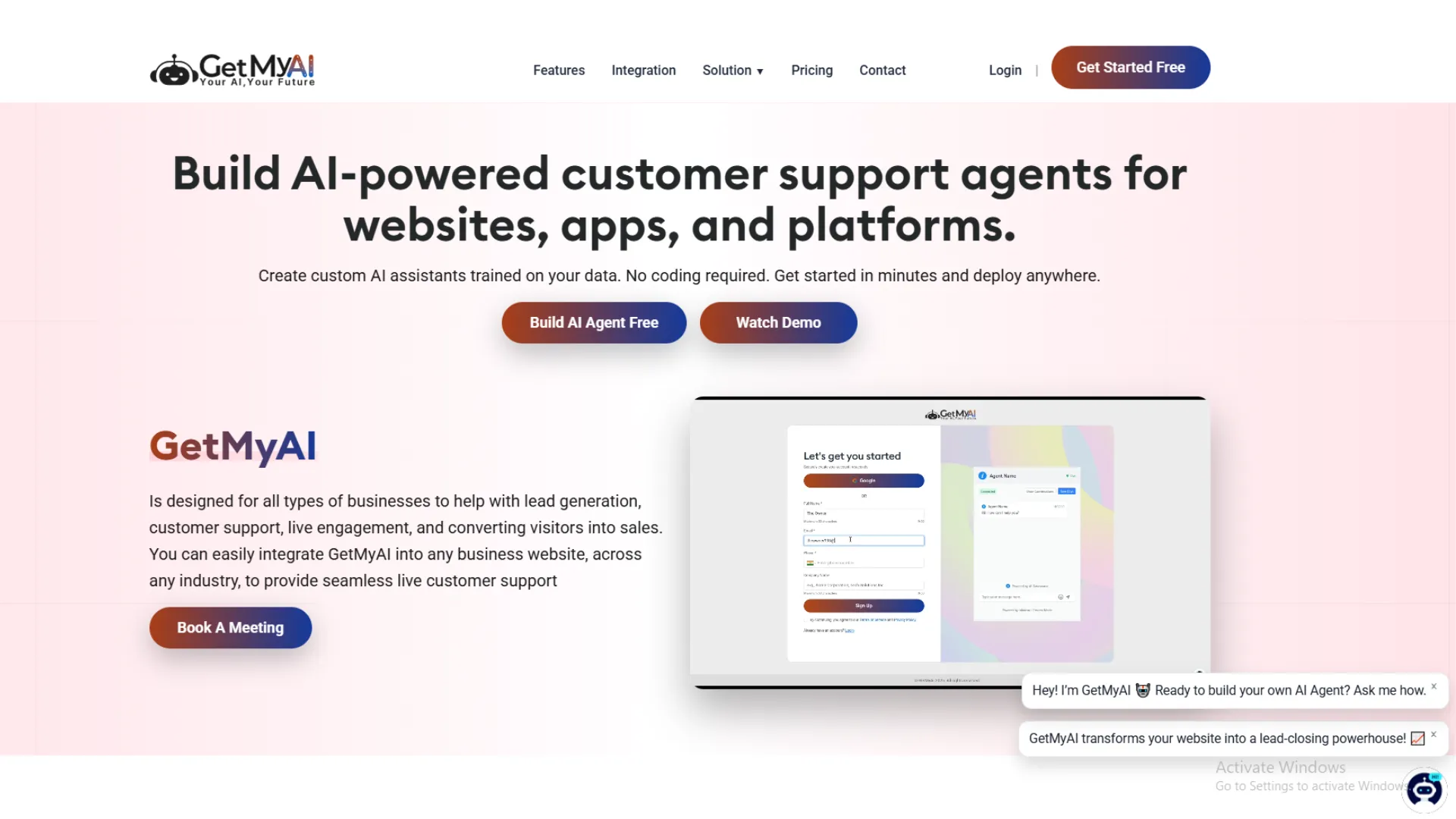
GetMyAI is an AI agent platform built for stores that rely on clear answers. Teams manage agents from the Dashboard and train them using store documents, pages, and files. Responses rely on meaning, not keywords.
- Trains on documents and links
- Uses meaning-based responses
- Provides activity and analytics
- Allows model selection by plan
It is an AI agent platform trained on business documents and site content. Teams manage agents from the Dashboard and improve answers using real conversations.
Robylon
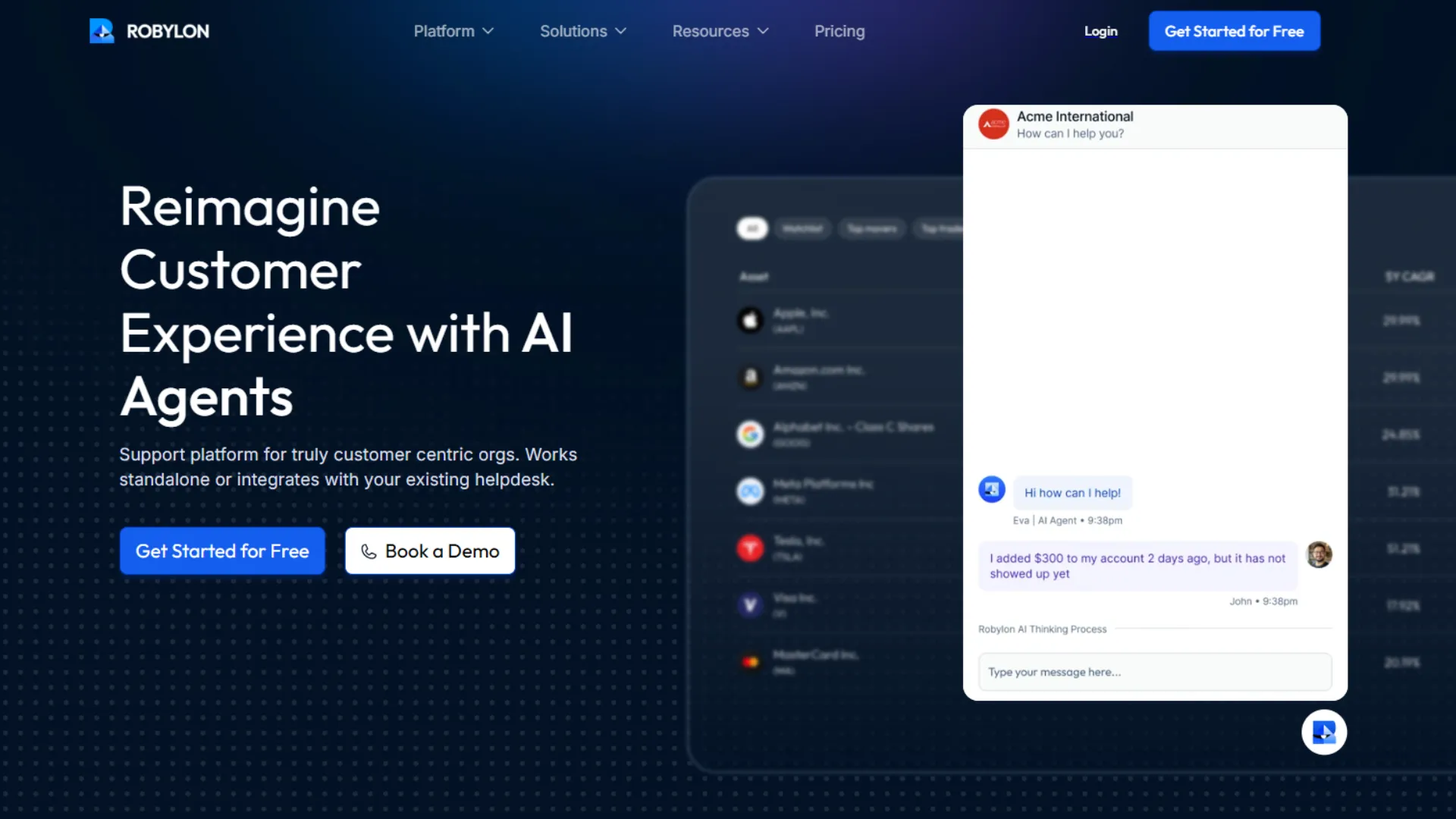
Robylon is used by e-commerce teams that want to reduce routine support work. It relies on AI to answer common store questions using business content rather than fixed rules.
- Trains on store pages and documents
- Handles order status and return questions
- Supports high message volume
- Works without manual flow building
This option works best for stores with clear policies and consistent traffic. It is often used by teams that want to reduce repeat support questions while keeping their current tools and internal processes unchanged.
Tidio (Lyro AI)
It combines live chat with AI answers to help smaller teams manage daily questions. Its AI responds using prepared knowledge rather than open generation.
- Fast setup for new stores
- Answers FAQs and delivery questions
- Escalates complex chats to staff
- Includes live chat fallback
Tidio works well as a chatbot for an e-commerce website that needs quick setup and basic support coverage. It fits teams with limited resources who mainly answer routine customer questions each day.
Intercom (Fin AI)
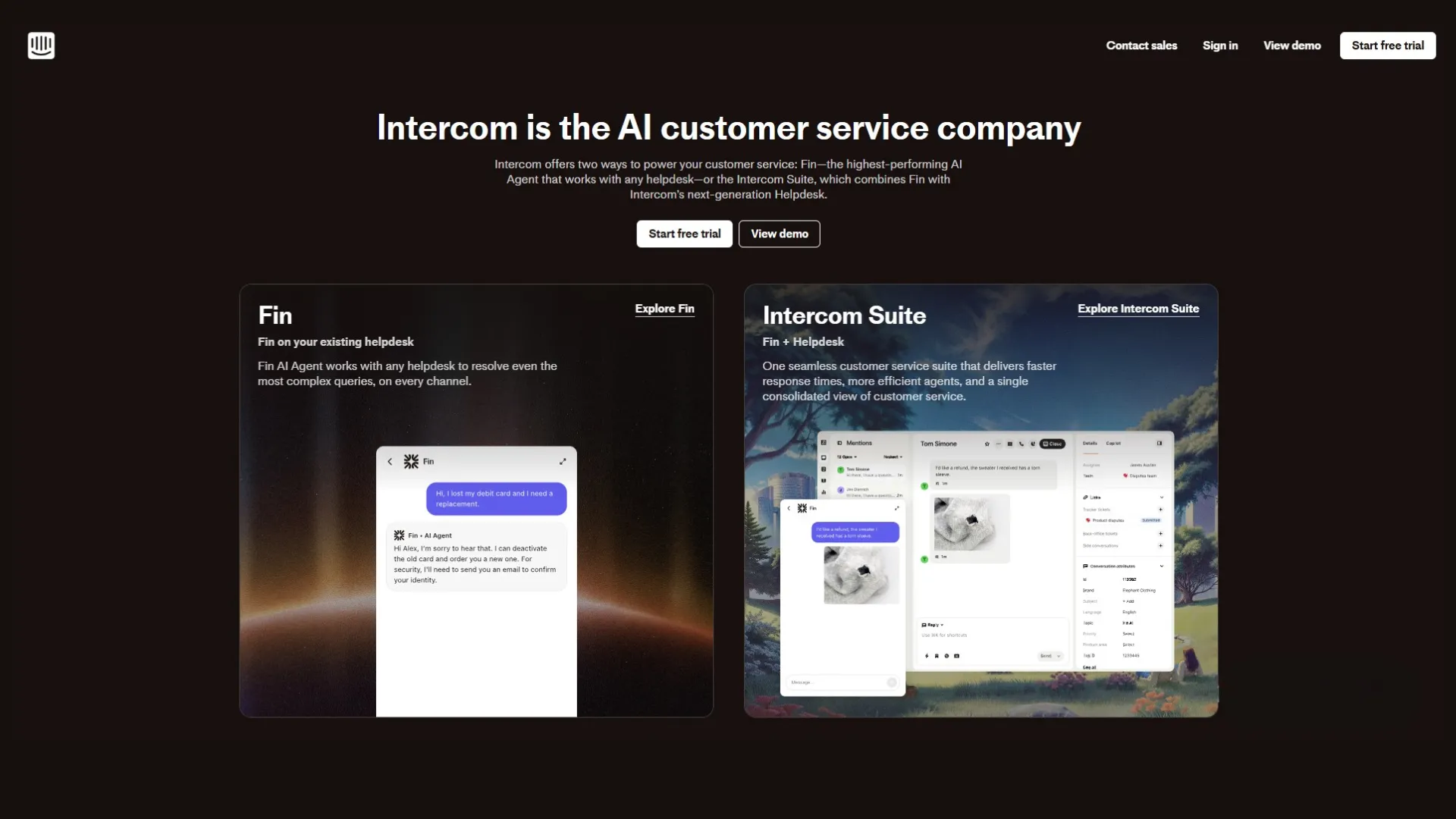
Intercom’s AI is designed for teams handling large support volumes. It uses help content to answer questions and shares context with agents.
- Pulls answers from help centers
- Keeps conversation context
- Routes complex cases to humans
- Fits large support teams
Intercom is often chosen as an e-commerce chatbot by mature organizations. It is best used when support processes are already structured and clearly documented.
Gorgias
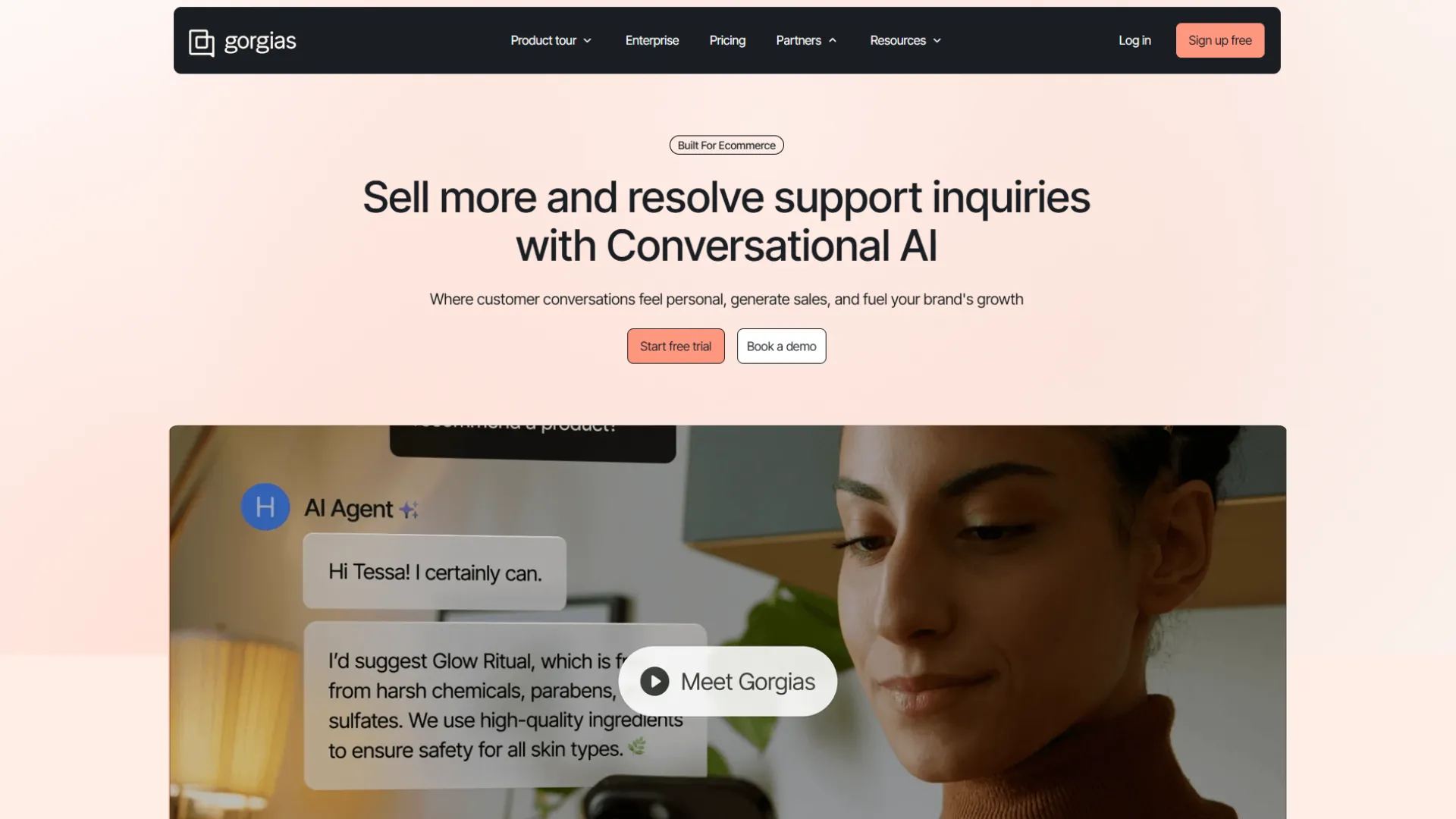
Gorgias focuses on commerce actions inside support conversations. Its AI helps answer questions tied to orders and store operations.
- Supports refunds and order updates
- Reduces repeat support tickets
- Built for commerce workflows
- Integrates with store systems
It is widely used among e-commerce chatbots for operational support. This approach works well for stores where support staff manage orders alongside customer communication.
Ada
Ada supports global businesses that need consistent answers across regions. It emphasizes policy control and language coverage.
- Supports multiple languages
- Central control over responses
- Handles large knowledge sets
- Designed for enterprise scale
This option fits businesses where structure and automation go hand in hand. Ada is typically used when companies need reliable, uniform responses across multiple locations and customer groups.
Zendesk (Advanced AI)
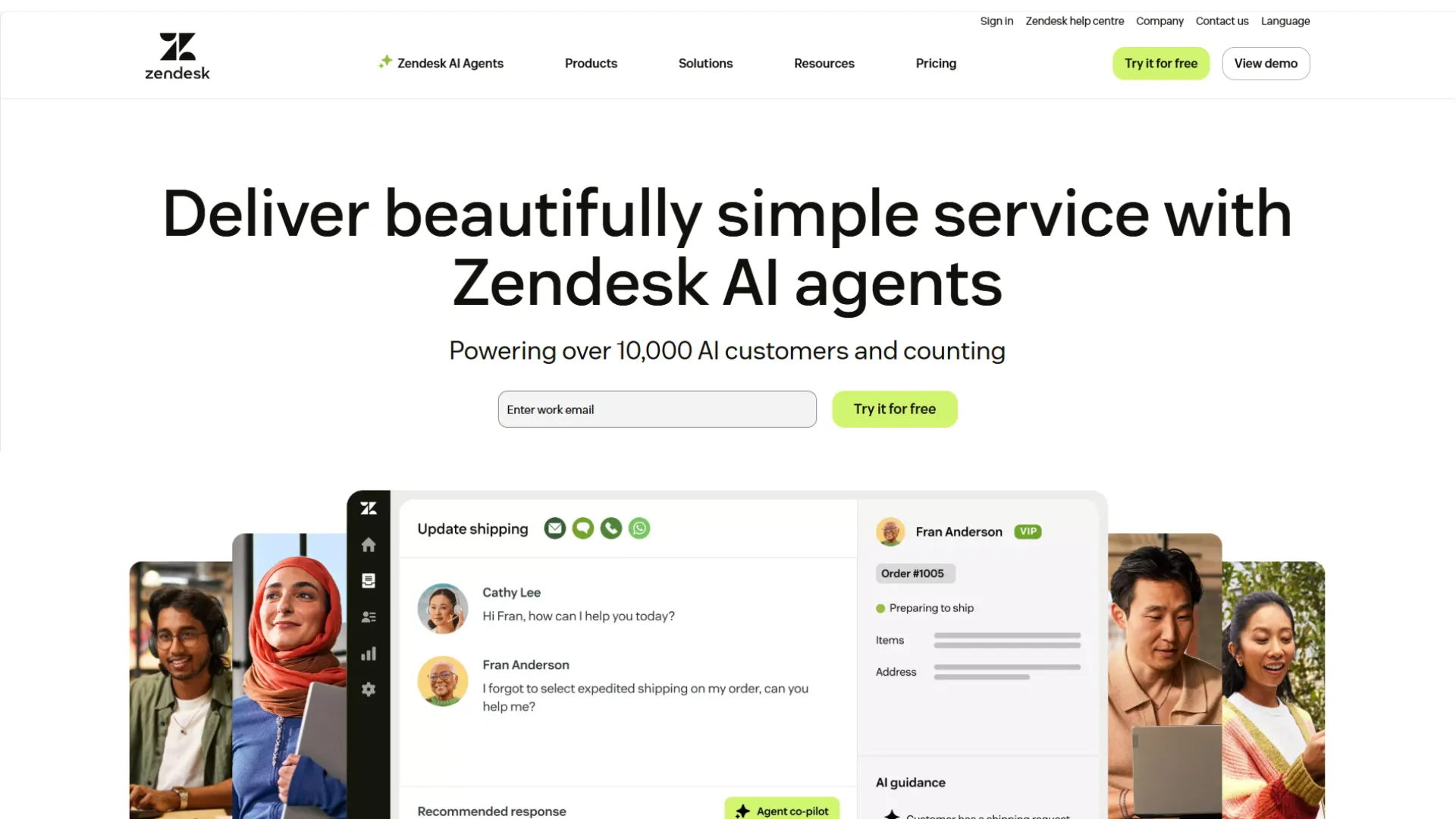
It adds AI features to its support platform. The chatbot answers from stored knowledge and assists agents during conversations.
- Uses existing knowledge bases
- Helps reduce agent workload
- Strong ticket management
- Fits existing Zendesk users
Zendesk is a stable e-commerce AI chatbot option for established teams. This setup benefits teams that want automation without changing their existing support environment.
LivePerson
It connects messaging and voice into a single AI experience. It is used by brands with high traffic and sales-led support.
- Supports chat and voice
- Enables proactive messaging
- Handles large volumes
- Used by enterprise brands
LivePerson fits teams that combine sales and support interactions. It is typically adopted by businesses managing large customer volumes across multiple communication channels.
YourGPT
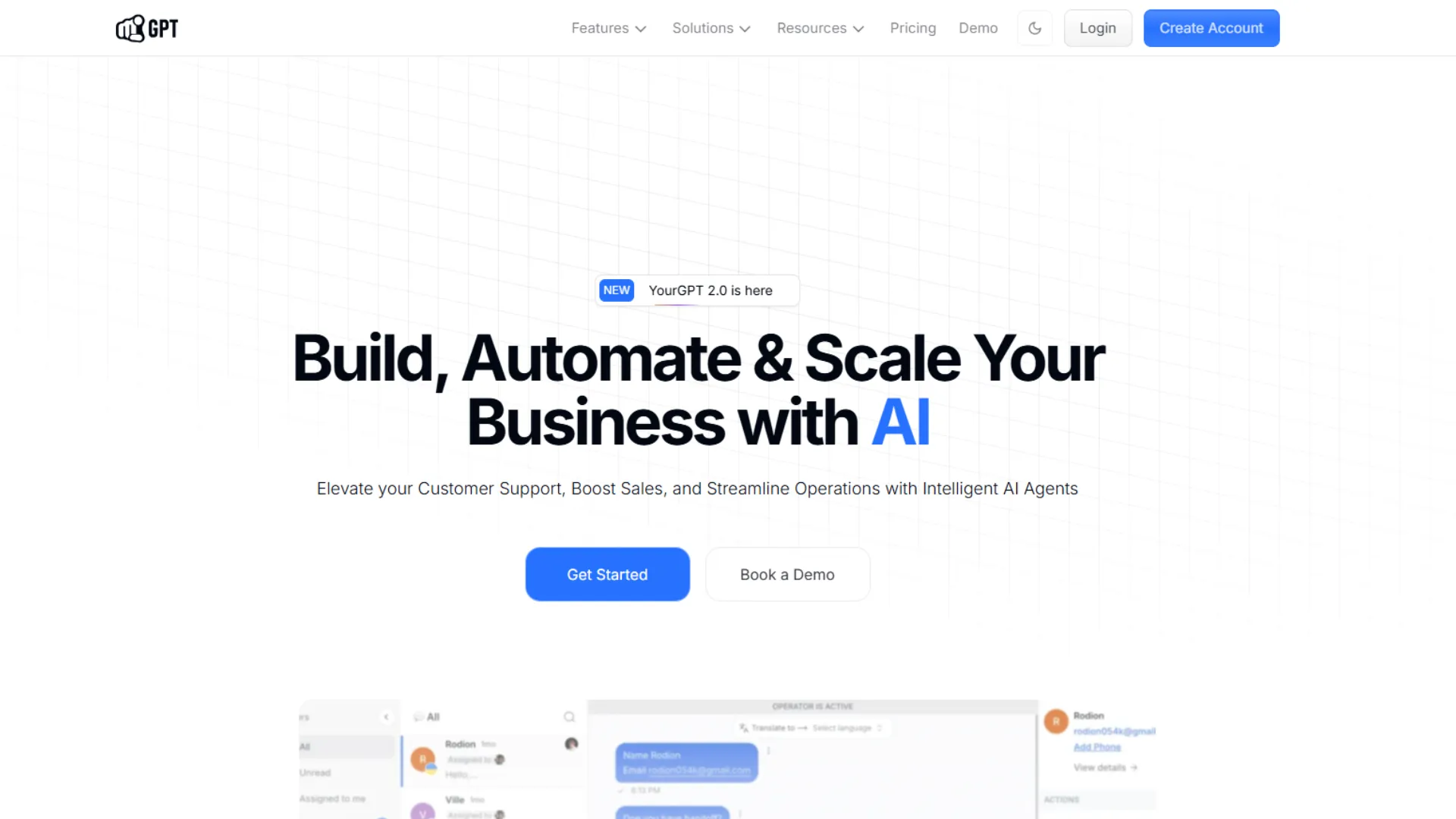
It centers on document-trained AI responses. It is used by teams that want answers tied closely to internal files.
- Trains on PDFs and documents
- Supports multiple channels
- Keeps replies aligned to content
- Requires regular content updates
YourGPT works as an AI chatbot for e-commerce, where policy accuracy is key. Its effectiveness depends on how well teams maintain and update their internal documentation.
ManyChat
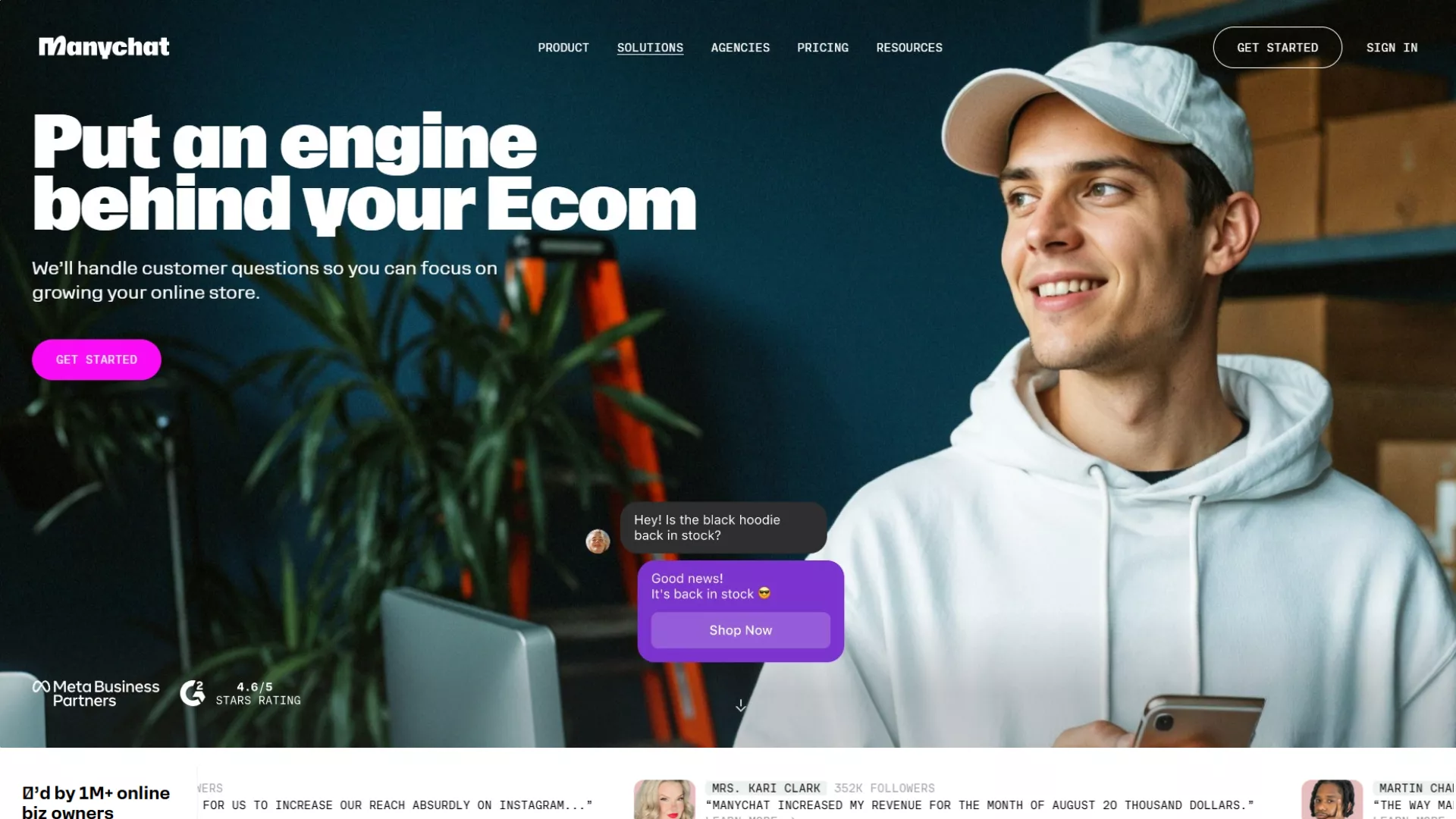
ManyChat is built around structured chat flows for campaigns and promotions. AI is used mainly as fallback support.
- Visual flow builder
- Handles lead capture
- Used for promo messaging
- Limited reasoning depth
It is a good fit for stores that use automation mainly for messaging and promotions. Many teams pick it when marketing conversations take priority over full customer support.
How to Choose the Right Platform
Picking the right tool depends on store size and support style.
- Choosing the right tool depends on how your store operates day to day.
- Stores with many orders usually need stronger automation
- Smaller teams often look for quicker setup and easier tools
- Global brands need support in multiple languages
- Review analytics before expanding usage
- Check how each chatbot for an e-commerce website improves over time
Conclusion
AI chatbots now handle the pause before a purchase, the moment when a shopper decides to stay or leave. Each platform approaches that pause differently. Some respond quickly, others manage higher volume, and some offer tighter control. There is no single pattern that fits every store or support team.
Choosing the right platform depends on how your store answers questions today and how those answers may need to change. Team size, product range, support load, and update frequency all matter. What works well for one business may feel limiting or excessive for another.
A well-chosen best ecommerce chatbot reduces wait time, supports staff during busy hours, and keeps conversations on track. It does not replace teams; it fills gaps. When answers are clear and consistent, shoppers feel helped, stay confident, and are more likely to finish their purchase without delays.
FAQs
1. What is the best e-commerce chatbot platform?
The best e-commerce chatbot platform depends on your business size, budget, and automation needs. A good platform should offer AI-powered customer support, product recommendations, order tracking, abandoned cart recovery, multilingual support, and seamless integration with platforms like Shopify, WooCommerce, Magento, and popular CRM systems. Businesses should also look for easy setup, analytics, and scalable automation capabilities.
2. How does an AI chatbot help an e-commerce business?
An AI chatbot helps e-commerce businesses by answering customer questions instantly, recommending products, tracking orders, recovering abandoned carts, capturing leads, and providing 24/7 customer support. This improves the shopping experience while reducing manual support workload and increasing conversion rates.
3. What features should I look for in an e-commerce chatbot platform?
When choosing an e-commerce chatbot platform, consider features such as:
- AI-powered conversations
- Product recommendations
- Order tracking
- Cart abandonment recovery
- Multilingual support
- CRM and helpdesk integrations
- Analytics and reporting
- Omnichannel deployment
- No-code chatbot builder
- Human agent handoff
These features help improve customer experience and streamline online store operations.
4. Can an AI chatbot increase e-commerce sales?
Yes. AI chatbots can increase sales by helping shoppers discover products, providing personalized recommendations, answering purchase-related questions instantly, and reducing checkout friction. They also recover abandoned carts and guide customers through the buying journey, which can improve conversion rates and average order value.
5. Which e-commerce platforms support AI chatbots?
Most modern AI chatbot platforms integrate with leading e-commerce solutions, including Shopify, WooCommerce, Magento, BigCommerce, Wix, and custom-built online stores. Many also connect with CRM, payment, marketing automation, and customer support tools to create a unified shopping experience.
6. Are AI chatbots suitable for small e-commerce businesses?
Yes. AI chatbots are suitable for businesses of all sizes. Small and medium-sized online stores can use them to automate customer support, answer frequently asked questions, generate leads, and assist shoppers without hiring large support teams. Many chatbot platforms also offer scalable pricing for growing businesses.
7. Can an e-commerce chatbot provide personalized product recommendations?
Yes. AI-powered e-commerce chatbots analyze customer behavior, browsing history, product preferences, and purchase intent to recommend relevant products in real time. Personalized recommendations help customers find products faster and can increase customer satisfaction and sales.
8. How long does it take to implement an e-commerce chatbot?
Implementation time depends on the chatbot platform and business requirements. No-code AI chatbot platforms can often be deployed within a few hours or days, while advanced implementations involving custom integrations, workflows, and large product catalogs may take longer. Proper training and testing help ensure accurate responses and better customer experiences.
9. Can AI chatbots integrate with CRM and customer support software?
Yes. Most modern e-commerce chatbot platforms integrate with CRM systems, helpdesk software, email marketing tools, and messaging channels. These integrations allow businesses to manage customer conversations, automate workflows, synchronize customer data, and provide more personalized support across multiple touchpoints.
10. How do I choose the right AI chatbot platform for my online store?
To choose the right AI chatbot platform, evaluate your business goals, store size, required integrations, AI capabilities, ease of use, scalability, security, analytics, multilingual support, and pricing. It's also important to consider customer support quality and whether the platform can grow with your business as your customer base expands.