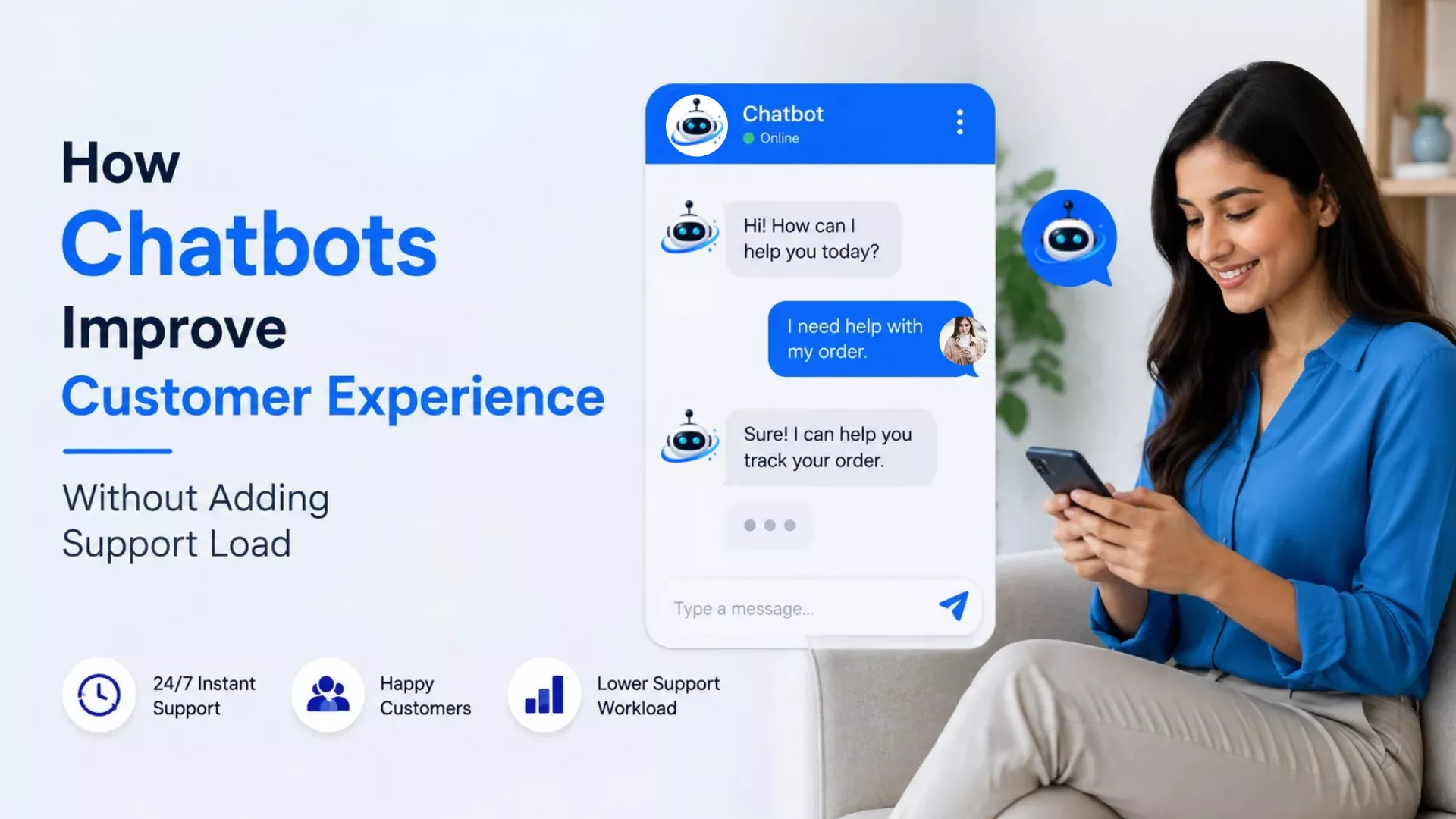
How Chatbots Improve Customer Experience Without Adding Support Load

Key Takeaways
- Customer experience often breaks down because help is missing at the moment customers need it. A simple unanswered question about pricing, delivery, login, or product details can cause a customer to pause or leave.
- A useful AI chatbot should understand meaning and context, not just match keywords. The article highlights the ability to interpret differently worded questions, use business content, and maintain context throughout a conversation.
- Consistency can matter as much as response speed. Customers are more likely to trust support when answers remain consistent with the information provided elsewhere, regardless of when or where they ask.
- Context-based personalization reduces customer effort. Remembering earlier messages, considering the page a customer is viewing, and continuing a paused conversation can prevent customers from repeatedly explaining their situation.
- 24/7 chatbot availability does not eliminate human support. Instead, it filters support demand by handling common questions, collecting information upfront, and helping urgent cases become easier for human teams to identify.
Most customer problems do not start with anger.
They start with a pause.
A buyer is on a page, reading details, comparing options, or checking delivery terms. A small question appears. There is no clear answer. The page stays open, but the decision stalls. This moment happens thousands of times every day across websites, apps, and support portals.
A shipping doubt, a login issue or a pricing check. When answers are slow, those small moments turn into frustration. This is where Chatbots improve customer experience in a way teams can actually measure.
This is where customer experience is either protected or quietly lost.
Businesses often think experience fails when something goes wrong. In reality, it fails when help is missing at the exact moment it is needed. That gap is why chatbots have become a serious tool for experience teams, not a novelty add-on.
What an AI Chatbot Actually Is and How Chatbots Improve Customer Experience
An AI chatbot is a software system that talks with customers using everyday language. It answers questions, shares information, and helps users move forward without needing human support right away.
Unlike older bots that follow fixed rules, modern chatbots understand meaning instead of matching exact words. This allows them to respond to real customer questions, even when those questions are unclear or phrased differently.
This is where customer experience chatbots become practical. When a chatbot understands context and responds clearly, customers spend less time searching and more time getting answers.
Key traits of a real AI chatbot include:
- Understands meaning instead of exact phrasing
- Uses documents, websites, text and Q&A, etc
- Keeps context during the conversation
- Answers instantly, any time
When these basics are in place, the experience feels clear and reliable.
Why Customers Leave When Support Is Slow
Most customers do not complain loudly. They leave quietly.
They leave when:
- Pages do not answer basic questions
- Support lines take too long
- Emails feel one-sided
- Answers change between agents
The impact of chatbots on customer experience becomes clear at this point. A strong chatbot customer experience comes from consistency. The chatbot provides the same answer each time, using the most up-to-date information. It stays patient, keeps context, and does not require customers to repeat themselves.
For many businesses, the biggest win is not speed alone. It is consistency. Customers trust answers when they match what they see elsewhere.
How Chatbots Personalize Customer Experience Using Context
Personalization does not mean using names or friendly phrases. It means responding based on what the customer already said.
A chatbot can:
- Remember earlier messages in the same chat
- Adjust replies based on the page the user is on
- Continue a paused conversation without resetting
This is how chatbots personalize the experience of your customers in real terms. A returning customer does not need to explain the issue again. The chatbot continues where things left off.
For example:
- A user asks about pricing
- Then asks about the setup
- Then asks about support hours
The chatbot connects these questions instead of treating them as new. That flow lowers effort and builds trust.
Always-On Support Without Always-On Staff
Customers do not follow business hours. Problems appear at night, on weekends, and during holidays. Waiting until morning often means lost sales or churn.
Chatbots for customer experience solve this by staying available all the time. They answer common questions, share links, and capture details for follow-up.
This does not remove human support. It filters it.
Teams benefit because:
- Fewer repeat tickets reach agents
- Clear details are captured upfront
- Urgent cases stand out faster
Customers benefit because:
- Answers arrive right away
- There is no waiting line
- Help feels immediate
This balance improves the overall experience on both sides.
Reducing Errors Through Controlled Knowledge
Human teams change. New hires join. Old policies get updated. Mistakes happen.
One of the biggest causes of poor support experiences is inconsistent information. Different agents give different answers, and customers lose trust.
Chatbots reduce this problem by using a single, approved source of information. When the knowledge behind the chatbot is updated, all future conversations reflect that change.
This consistency plays a major role in the impact of chatbots on customer experience. Customers receive the same answer every time, no matter when or where they ask.
This prevents:
- Conflicting answers
- Outdated policy replies
- Guesswork during busy hours
Accuracy plays a big role in the contribution of the customer experience chatbot. Correct answers build confidence. The wrong ones break it fast.
Learning From Conversations Without Extra Tools
Every chatbot conversation creates useful signals. Over time, businesses can see which questions appear most often, where customers get stuck, and which replies need improvement.
Most modern chatbot systems include reporting tools that show conversation volume, response speed, and customer feedback. These insights help teams adjust answers and improve coverage over time.
This feedback loop is one of the simplest ways to improve customer experience with chatbots without adding more staff or complexity.
This creates a simple improvement cycle:
- A customer's question does not receive a clear answer
- The conversation is reviewed later
- Teams update the chatbot’s responses or supporting content
- Future conversations become more accurate
Most chatbot systems also provide performance data such as:
- Number of conversations
- Message volume
- Average response time
- Customer engagement levels
- Chat activity across regions and channels
These signals help teams refine chatbot responses based on real usage instead of assumptions. Over time, this steady adjustment helps build customer experience in a consistent and measurable way.
Real Use Cases That Show Value
Here are examples that appear often across industries:
- A software site answers setup questions at midnight and captures demo requests
- An online store explains returns and delivery before checkout
- A service business collects booking details before handing them off to staff
- An internal team answers HR questions without email threads
In each case, the chatbot removes friction at the moment it matters. That moment is where customer experience is won or lost.
Why This Approach Scales Without Breaking
As traffic grows, support load usually grows faster. Chatbots break that pattern.
A single chatbot can handle hundreds of chats at the same time. It does not slow down. It does not lose quality. It does not need training sessions.
This scalability is a key reason businesses adopt customer experience chatbot systems. Growth no longer means adding pressure to support teams.
Conclusion
Customer experience improves when answers arrive at the right time, stay consistent, and make sense. That is the core reason chatbots work.
The goal is not to impress users with technology. The goal is to remove effort from simple interactions so customers can move forward.
When chatbots are trained well, reviewed often, and improved through real conversations, they become a reliable part of support. That reliability is what customers remember.
If you want to see how this approach works in practice, platforms like GetMyAI focus on clarity, control, and continuous improvement. That focus is what turns chatbots into a real customer experience tool instead of just another widget.
Frequently Asked Questions
1. How do chatbots improve customer experience?
Chatbots improve customer experience by providing immediate answers, maintaining conversation context, and helping customers move forward without waiting for human support. They can address common questions when customers need help rather than forcing them to search through pages or wait for an agent.
2. What makes an AI chatbot different from an older rule-based chatbot?
The article explains that modern AI chatbots can understand the meaning behind questions rather than relying only on exact words or fixed rules. They can also use business information and maintain context during conversations, allowing them to respond more naturally to customer questions.
3. Why is consistency important for chatbot customer experience?
Customers can lose trust when different agents or channels provide conflicting information. A chatbot using a controlled and approved knowledge source can provide consistent answers and reflect updated information when the underlying knowledge is changed.
4. Can chatbots personalize the customer experience?
Yes. The article explains that useful personalization is about understanding context rather than simply using a customer's name. A chatbot can remember earlier messages, consider the page a customer is viewing, and continue a conversation without making the customer start again.
5. Can chatbots provide customer support outside business hours?
Yes. Chatbots can remain available at night, on weekends, and during holidays. They can answer common questions, share relevant information, and capture details for follow-up, giving customers immediate assistance when human teams are unavailable.
6. Do chatbots replace human customer support?
No. The article presents chatbots as a way to filter and support human teams rather than eliminate them. Chatbots can handle common questions and collect information upfront, while human employees can focus on cases that require additional attention.
7. How can businesses reduce incorrect chatbot answers?
The article recommends using a single, approved source of information and keeping that knowledge updated. This helps reduce conflicting answers, outdated policy information, and guesswork during busy periods. Regularly reviewing conversations can also reveal areas where the chatbot needs better supporting content.
8. What can businesses learn from chatbot conversations?
Businesses can identify frequently asked questions, areas where customers get stuck, and responses that need improvement. The article also highlights metrics such as conversation volume, message volume, average response time, customer engagement, and activity across regions and channels.
9. What are some practical examples of chatbots improving customer experience?
The article gives several examples: a software company answering setup questions and capturing demo requests outside business hours, an online store explaining returns and delivery before checkout, a service business collecting booking information, and an internal team answering HR questions without relying on email threads.
10. How can businesses continuously improve chatbot customer experience?
Businesses can review conversations where customers did not receive clear answers, update the chatbot's responses or supporting content, and then use future conversations to assess whether those improvements work. This creates an ongoing feedback loop based on real customer interactions rather than assumptions.