GDPR and AI Chatbots: What Compliance Means Here Explained

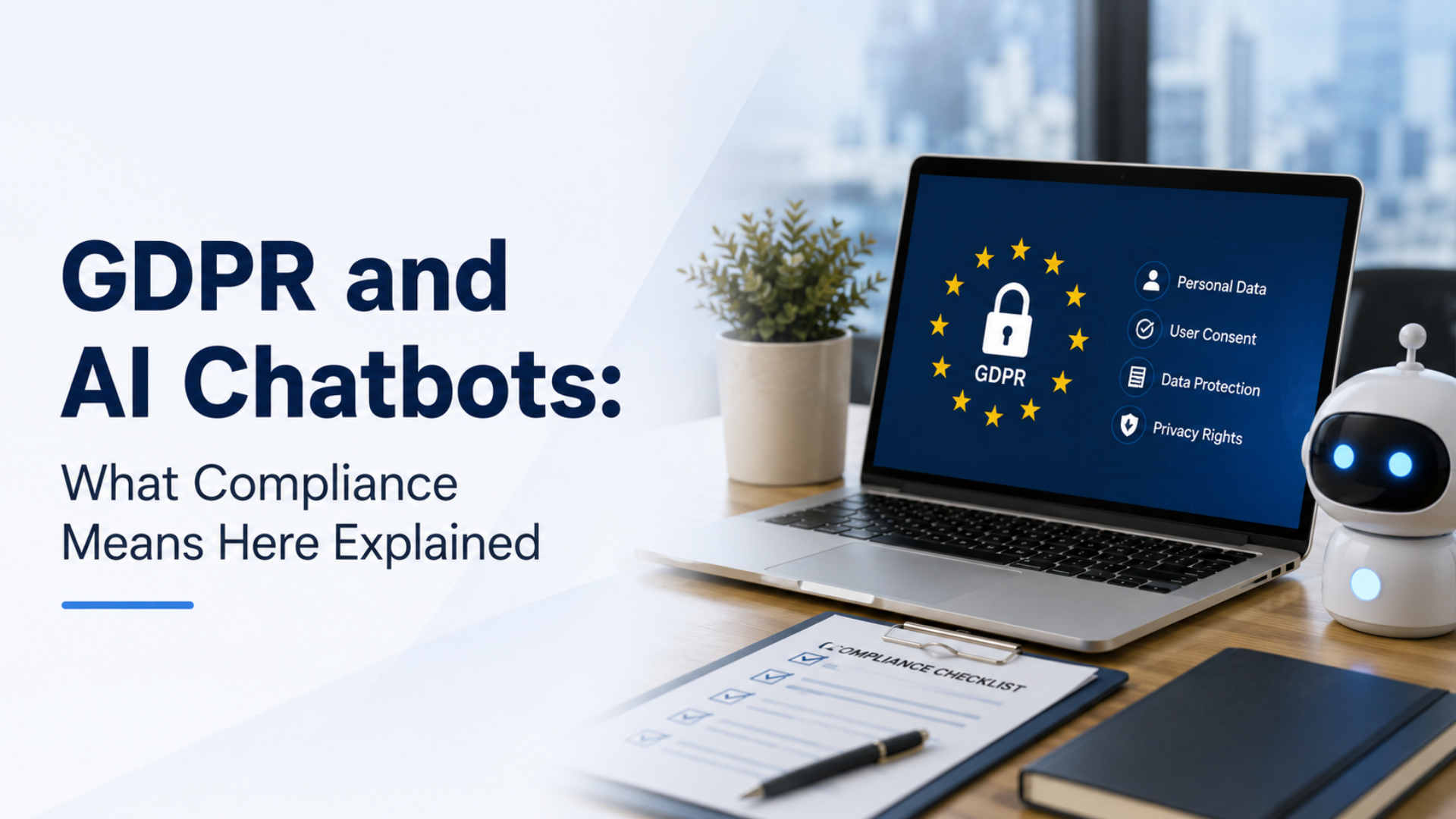
AI chatbots are no longer simple tools that follow buttons or fixed scripts. Today, they talk. They listen. They respond in full sentences. That change may feel small on the surface, but it has a big impact on how data is handled. When a chatbot holds a real conversation, it can receive names, email addresses, job roles, problems, opinions, and sometimes very personal details. That is where GDPR enters the picture.
GDPR was not written with AI chatbots in mind. It was created before conversational systems became common in business. Still, the law is clear about one thing: if a system processes personal data, GDPR applies. A chatbot does exactly that when it interacts with people in natural language. This is why the topic of a GDPR AI chatbot has become important for teams across marketing, support, HR, and IT.
Many businesses assume that using a modern tool automatically makes them safe. Others believe GDPR only matters if data is stored forever. Both ideas are incomplete. A chatbot can process personal data even if it does not “remember” it long-term. The moment data is read, analyzed, or routed, GDPR relevance begins.
There is also confusion around labels. Terms like “GDPR compliant AI chatbot” or “GDPR-ready” are often used without explaining what they actually mean in daily operations. Compliance is not a badge. It is a way of designing, using, and managing systems over time.
This article removes legal language and focuses on real chatbot behavior. It explains why conversations are treated as data, where risks appear, and how AI chatbot GDPR compliance should be understood in practical terms. The goal is clarity, not fear. By the end, GDPR should feel less abstract and more like a shared responsibility that can be handled thoughtfully.
Why AI Chatbots Change the GDPR Conversation
Traditional forms collect data in a fixed way. A user sees fields, decides what to enter, and submits the form. Ticket systems work similarly. They guide users into predefined boxes. AI chatbots work differently. They invite open conversation. That single difference changes everything from a privacy point of view.
In a chat, users often share more than they planned. They type naturally, the same way they would speak to a human. A simple support question can turn into a story that includes names, locations, or internal business details. This is why AI chatbot data privacy needs more attention than older systems.
Another issue is flow. In a form, data collection is static. In a chatbot, each answer can shape the next question. Even if the chatbot is “just answering questions,” it may still process personal data to understand intent or context. GDPR applies because conversations themselves are data, not because the chatbot saves them forever.
Free-text input also increases risk. Unlike dropdowns, text can include anything. Limiting access to the system is one consequence of this. Many times the reason for GDPR chatbot solutions to fail is a lack of good design, not bad intent, which is an area that gets most attention from the companies' side.
Key differences that matter:
- Conversations evolve in real time
- Personal data may appear unexpectedly
- Context matters more than structure
- Processing happens even without storage
When teams understand these differences, the idea of a GDPR AI chatbot becomes clearer. The issue is not whether the chatbot is helpful. The issue is how it handles human language responsibly. Once this shift is understood, compliance discussions become more grounded and realistic.
What GDPR Applies to in an AI Chatbot Environment
GDPR does not apply to every chatbot interaction. It applies when personal data is involved. Understanding this boundary helps teams avoid both panic and negligence. A weather question is not personal data. A question that includes a name, an email, or a work issue usually is.
Personal data is defined by context, not format. A job title alone may not trigger GDPR, but combined with a company name, it often does. This is why AI chatbot GDPR compliance depends on how conversations are used, not just on keywords.
GDPR can be triggered in several environments:
- Customer-facing support bots
- Sales or lead qualification chats
- Internal employee assistants
- HR or IT helpdesk chatbots
Internal use is often overlooked. Employee conversations still involve personal data. A chatbot helping with leave policies or payroll questions must follow the same principles. This is where AI chatbot privacy compliance often breaks down quietly.
Intent also matters. If a chatbot is designed to guide users toward sharing details, responsibility increases. If personal data appears incidentally, the obligation is still there, but the risk profile changes. This is why blanket statements about being a GDPR compliant chatbot platform can be misleading.
Practical understanding helps:
- GDPR is about data, not intent
- Context defines sensitivity
- Internal chats count too
- Processing matters, even briefly
Clear scoping helps teams design better systems. It also prepares them to work effectively with tools like GetMyAI without assuming the platform alone carries responsibility.
The Core GDPR Principles That Matter for Chatbots
GDPR includes many principles, but only some directly shape how chatbots should be designed and used. When teams focus on these, compliance becomes practical instead of theoretical. A GDPR AI chatbot should reflect these ideas in everyday behavior.
Transparency is first. Users should know they are talking to a chatbot and understand what happens to their data. Hidden processing damages trust quickly. Clear notices and simple language go a long way in supporting AI chatbot data privacy.
Purpose limitation means data should only be used for a clear reason. If a chatbot is for support, it should not quietly feed sales analytics. Mixing purposes is a common compliance mistake in growing systems.
Data minimisation is especially important. Chatbots should not ask for more information than needed. Over-collection increases risk without adding value. Many GDPR chatbot solution issues start with unnecessary questions.
Other key principles include:
- Accuracy: keeping responses aligned with current data
- Storage limitation: not keeping logs longer than needed
- Access control: limiting who can view conversations
These are not legal checkboxes. They are design and usage choices. A chatbot can technically function while violating all of them. That is why AI chatbot GDPR compliance must be discussed during setup, not after launch.
When these principles guide decisions, tools like GetMyAI can be used more safely and effectively. The goal is not perfection. The goal is responsible, explainable use that respects users and employees alike.
Who Is Responsible? Platform vs Business vs User
Responsibility is the most misunderstood part of GDPR in chatbot systems. Many businesses assume that using a GDPR compliant chatbot platform transfers responsibility away from them. It does not. GDPR clearly separates roles, and understanding those roles is essential for managing risk, trust, and long-term compliance in conversational systems.
Platform
The technical basis is supplied by chatbot platforms, which come with things like secure infrastructure, access controls, and system-level safeguards. They facilitate adherence to regulations but do not dictate data purposes or collection reasons. Platforms are not the proprietors of conversation data, nor can they take on the burden of exercising in business-specific scenarios.
Business
The business is the primary decision-maker under GDPR. It chooses what content is uploaded, which data sources are connected, who can access conversations, and how the chatbot is deployed. Because it defines purpose and usage, the business carries responsibility for how personal data is processed within the chatbot.
User
Users influence outcomes through what they choose to share in conversations. Their input directly affects the data processed by the system. However, user behavior never removes business responsibility. The chatbots need to be constructed in such a way that they can treat unexpected or delicate input safely, and this is the main point of the AI chatbot being compliant with privacy regulations.
Clear role separation in short looks like this:
- Platform: provides secure infrastructure and controls
- Business: defines use, content, and access
- User: interacts within the given design
A GDPR AI chatbot works well when all three roles are understood. Overpromising compliance creates risk. Honest boundaries build trust. This is why responsible platforms avoid legal guarantees and focus on enabling good practice.
When businesses use tools like GetMyAI, success depends on how thoughtfully they manage content, permissions, and updates. GDPR compliance is shared, but it is never outsourced completely.
Where AI Chatbot GDPR Compliance Usually Breaks Down
Most GDPR problems do not come from bad intentions. They come from neglect. Chatbots evolve quickly, but governance often does not. This gap is where AI chatbot GDPR compliance fails.
One common issue is outdated content. Policies change, but chatbots still answer based on old documents. This creates accuracy problems and misleads users. Another issue is duplicate data. Conflicting sources confuse both the chatbot and compliance audits.
Training is often forgotten. After updates, many teams fail to retrain or review chatbot behavior. This is especially risky in regulated environments. Over-collection is another quiet problem. Asking for “just in case” data weakens AI chatbot data privacy.
Analytics also cause trouble. Teams assume usage data is anonymous, but conversation logs often contain identifiers. Treating them casually can violate GDPR expectations.
Frequent breakdown points include:
- No regular content reviews
- Unclear data retention rules
- Too many internal viewers
- Weak access control
A GDPR Chatbot Solution is not set-and-forget. It requires operational care. When teams accept this, compliance becomes manageable. When they ignore it, risk grows silently.
What “GDPR-Ready” Means for an AI Chatbot Platform
No platform can be “GDPR certified” in a universal sense. GDPR depends on use. This is why the term AI chatbot GDPR ready is more honest and useful. It focuses on capability, not promises.
The access control of such a platform should be very robust so that only authorized users can read dialogues. Moreover, it should give visibility to the teams so that they can trace the data flow in the system. Without this, compliance talks are mere guesswork.
Improvement workflows matter too. Teams need simple ways to update content, restrict access, or remove outdated information. Controlled deployment is another key factor. Public and private bots should be clearly separated.
Key readiness features include:
- Role-based permissions
- Clear activity logs
- Flexible data handling options
- Controlled sharing
Once the basic requirements are fulfilled by the platforms, the businesses will be able to construct reliable AI chatbot GDPR compliant systems. An illustration of this is GetMyAI, which prioritizes empowering the teams instead of asserting legal rights. Such a strategy acknowledges the joint aspect of regulation.
How GDPR, Trust, and Adoption Are Connected
GDPR is often seen as a barrier. In reality, it is closely tied to trust. Users are more open to systems that explain themselves clearly. Employees adopt internal chatbots faster when privacy rules are visible and consistent.
Transparency builds confidence. When people know what happens to their data, they worry less. This directly affects adoption and long-term value. A GDPR AI chatbot aligned with clear principles is easier to scale.
Trust also improves return on investment. Fewer complaints, fewer reworks, and smoother audits save time and money. AI chatbot data privacy becomes a strength, not a cost.
Strategic benefits include:
- Faster internal adoption
- Stronger user confidence
- Reduced compliance risk
- Sustainable growth
Compliance is not a blocker. It is a foundation. When teams treat it that way, conversational systems become assets instead of liabilities.
Compliance as a Practical, Shared Responsibility
GDPR is not optional for AI chatbots. If a system processes personal data, it falls under GDPR. This is true whether the chatbot is public, internal, simple, or advanced. Avoiding this reality creates risk. Ignoring it often leads to reactive fixes instead of clear, stable processes.
Compliance is also shared. Platforms provide tools. Businesses define use. Users shape conversations. Understanding these roles removes confusion and unrealistic expectations around a GDPR compliant AI chatbot. Clear role ownership helps teams make better decisions before problems appear.
Most importantly, compliance is operational. It lives in daily choices: what data is collected, who can see it, how often content is reviewed, and how clearly systems are explained. This is where real AI chatbot GDPR compliance exists. Policies alone do not protect data unless they are reflected in everyday use.
When done right, GDPR does not slow teams down. It builds trust, supports adoption, and strengthens long-term outcomes. Tools like GetMyAI work best when used within this mindset, not as shortcuts. A thoughtful approach turns compliance into a foundation rather than a limitation.
FAQs
1. What does GDPR mean for AI chatbots?
GDPR applies to AI chatbots whenever they collect, process, or store personal data. This includes customer conversations containing names, email addresses, phone numbers, or other identifiable information. Businesses must ensure chatbot interactions follow GDPR principles such as transparency, data minimization, and security.
2. Are AI chatbots required to comply with GDPR?
Yes. If an AI chatbot processes personal data of individuals in the European Union, GDPR applies regardless of the company's location. Both customer-facing and internal AI chatbots must handle personal information responsibly and support users' privacy rights.
3. Can an AI chatbot be fully GDPR compliant?
No. GDPR compliance is not a certification that an AI chatbot can achieve on its own. A chatbot platform can provide GDPR-ready features, but the business using the chatbot is responsible for configuring, managing, and using it in a compliant manner.
4. What personal data can AI chatbots collect?
AI chatbots may collect names, email addresses, phone numbers, customer account details, support requests, uploaded documents, and conversation history. Any information that can identify an individual is considered personal data under GDPR and should be protected accordingly.
5. What are the biggest GDPR risks when using AI chatbots?
The most common risks include collecting unnecessary personal information, storing conversations longer than required, weak access controls, outdated knowledge sources, and failing to explain how customer data is processed. These issues can increase both compliance and security risks.
6. Who is responsible for GDPR compliance in an AI chatbot?
GDPR compliance is a shared responsibility. The chatbot platform provides privacy and security capabilities, while the business acts as the data controller and decides how personal data is collected, processed, retained, and deleted. Employees using the chatbot also have a responsibility to handle data appropriately.
7. How can businesses improve AI chatbot GDPR compliance?
Businesses should collect only the data they need, provide clear privacy notices, define data retention policies, restrict access to conversation history, encrypt sensitive information, and regularly review chatbot content and workflows. These practices help reduce compliance risks while protecting customer data.
8. Why is data minimization important for AI chatbot GDPR compliance?
Data minimization is a core GDPR principle that requires businesses to collect only the information necessary for a specific purpose. Limiting unnecessary personal data reduces privacy risks, strengthens security, and makes compliance easier to maintain over time.
9. Does GDPR apply to internal AI chatbots used by employees?
Yes. Internal AI chatbots that process employee information, HR requests, payroll questions, or IT support conversations are also subject to GDPR if they handle personal data. Organizations should apply the same privacy and security standards used for customer-facing chatbots.
10. Why is GDPR compliance important for AI chatbot adoption?
Strong GDPR practices help businesses protect customer data, build user trust, reduce regulatory risks, and encourage wider adoption of AI chatbots. Organizations that prioritize privacy are more likely to earn customer confidence and support long-term business growth.