GDPR Compliance for AI Chatbot Platforms: What Development Companies Must Get Right

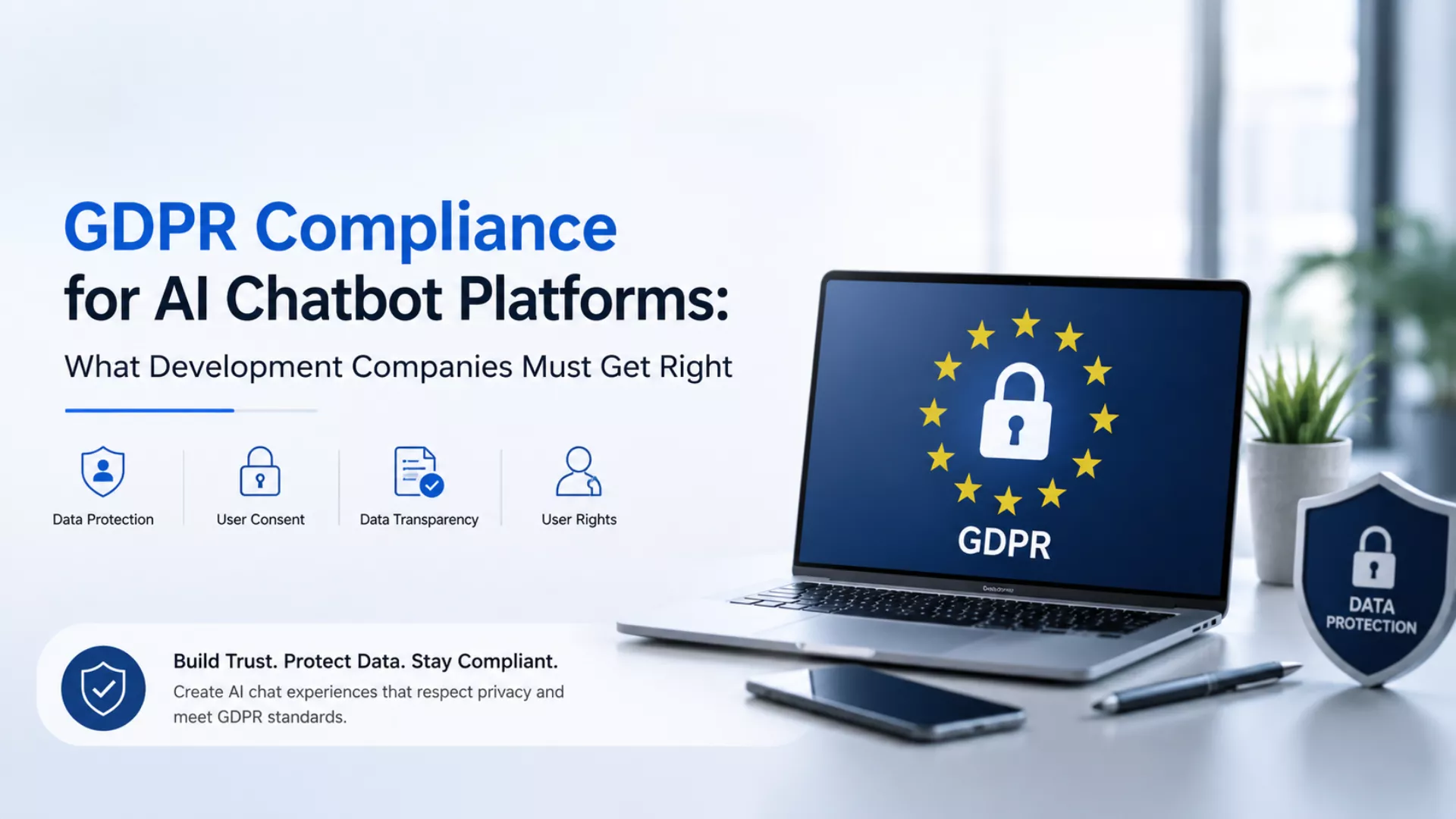
GDPR compliance is one of the most misunderstood topics in the AI chatbot space. Many people still believe that a chatbot platform can be fully “GDPR compliant” on its own, as if compliance were a badge a product could simply earn and pass along to customers. That belief creates confusion, risk, and unrealistic expectations for both platform builders and the companies using those platforms.
The reality is simpler, but also more serious. GDPR is not about features alone. It is about responsibility. It defines who controls data, who processes it, and who is accountable when something goes wrong. AI chatbot platforms play an important role in this process, but they do not replace the responsibility of the business that owns the data or serves the end user.
This misunderstanding becomes even more dangerous with conversational AI. Chatbots handle live questions, personal details, internal documents, and ongoing conversations. When platforms promise “full compliance,” they often cover real risks with marketing words instead of building clear limits and controls into the system.
For development teams, SaaS companies, and solution providers, this is a serious issue. Claiming too much can cause contract problems, audit failures, and loss of trust. Weak compliance design often leads to security gaps that customers notice later.
GDPR compliance at the platform level is often misunderstood. Legal interpretation and checklist-based claims do little to explain how responsibility is actually distributed in real AI systems. What matters instead is how a GDPR compliant chatbot platform defines its boundaries, enables control, and avoids overstating compliance through marketing language.
A clear, practical view of AI chatbot GDPR compliance depends on understanding platform behaviour, shared responsibility, and operational limits. Control mechanisms, transparency in data handling, and clearly defined roles consistently matter more than compliance slogans when evaluating a GDPR compliant chatbot platform.
Why GDPR Responsibility Is Different for AI Chatbot Platforms
AI chatbot platforms sit in a very different position compared to normal software tools. The organization maintains data storage. The system delivers real-time user interactions while providing information retrieval and answer generation capabilities. The European Union General Data Protection Regulation creates a new framework for determining organizational responsibility.
The chatbot platform does not possess ownership rights to its data. The business using the chatbot decides what documents are uploaded, what answers are allowed, and how the chatbot is used. That business is the data controller. The platform processes the data based on those instructions. That makes the platform a processor, not the owner.
This distinction matters because GDPR obligations are not equal for both sides. Controllers decide purpose and use. Processors must support safe handling, but cannot override business intent. When platforms blur this line, they expose themselves and their customers to unnecessary risk.
Conversational AI increases that risk if the platform is poorly designed. A chatbot can surface outdated documents, mix internal and public data, or answer questions it should not answer. These are not legal failures alone. They are product design failures.
Platforms that understand their role focus on enabling safe use rather than claiming blanket compliance. They give customers tools to control data, limit exposure, and see what the chatbot is doing. They do not promise to “handle GDPR” on behalf of the business.
Key reasons responsibility works differently for chatbot platforms include:
- The platform processes data, but does not decide why the data exists
- The business controls what content is uploaded and shared
- Chatbots create dynamic responses, increasing misuse risk
- Platform design directly affects how safely data is handled
The core takeaway is simple. A platform cannot guarantee GDPR compliance. What it can do is reduce risk, enforce boundaries, and give customers visibility and control. That is where real responsibility begins.
The Role of an AI Chatbot Platform Under GD
Under GDPR, roles matter more than labels. An AI chatbot platform is typically a data processor, while the business using it is the data controller. This distinction defines responsibility, contracts, and audit outcomes.
The platform’s job is not to decide what data should be collected or how long it should be kept. That responsibility belongs to the controller. The platform’s job is to process data securely, predictably, and only as instructed. When platforms cross this line, they create confusion that shows up later during compliance reviews.
A responsible platform focuses on control, not decisions. It provides settings, restrictions, and visibility so businesses can act responsibly. It does not auto-correct content, hide data sources, or quietly reshape user information.
This clarity is critical during audits. Regulators and enterprise buyers look for clear role separation. If a platform markets itself as “fully compliant,” it may accidentally claim controller responsibility it cannot actually fulfill.
Operationally, this means platforms must:
- Clearly define processor responsibilities in documentation
- Avoid making content decisions on behalf of users
- Provide tools for businesses to manage access and data flow
- Support transparency around how data is processed
Contracts and data processing agreements depend on this clarity. When roles are well defined, trust increases. When they are blurred, both sides are exposed.
A GDPR aligned chatbot platform respects boundaries. It gives businesses the ability to comply without pretending to replace their legal or operational duties. That approach may sound less impressive in marketing copy, but it stands up far better in real-world use.
What GDPR-Compliant Design Looks Like at the Platform Level
GDPR compliance at the platform level is not about legal certificates or loud claims. It is about quiet, thoughtful design choices that reduce risk and support responsible use. The strongest platforms rarely advertise compliance loudly. They build it into how the product behaves.
Secure data handling is the starting point. Documents and conversations must be stored safely, with predictable behavior. That does not mean promising absolute security. It means applying reasonable safeguards and avoiding unnecessary data exposure.
Access control is another core design responsibility. Not everyone inside a company should see the same data. A good platform allows role-based access so teams can limit who can upload content, deploy chatbots, or view conversations. This is operational GDPR support, not a legal shortcut.
Clear separation between public and private chatbots matters more than most people realize. When internal documents are mixed with public-facing agents, mistakes happen. A strong platform forces this separation instead of relying on user discipline alone.
Visibility is equally important. Businesses should be able to see what their chatbot is doing, what questions are being asked, and which documents are being used. Hidden systems create hidden risks.
This is where platforms like GetMyAI position themselves carefully. The organization demonstrates its compliance through controlled deployment methods which enable visibility and allow users to control their data boundaries that safeguard AI chatbot privacy.
None of these elements guarantees compliance on their own. Together, they create an environment where compliance is possible. That distinction is critical. Design supports responsibility, but it does not replace it.
Document Training, Retrieval, and GDPR Risk
Document handling is one of the most overlooked risk areas in AI chatbots. What teams are really concentrating on is interfaces and response quality, but GDPR exposure usually first kicks in via the documents their chatbot relies on for preparing answers.
Document Training: Where Compliance Begins
AI chatbots are only as reliable as the documents they are trained on. When businesses upload policies, guides, or internal material, they are defining what the chatbot is allowed to say. If sensitive, outdated, or incomplete documents are included, the risk is introduced at the training stage itself.
A chatbot cannot judge whether a document is appropriate or current. It assumes everything it is trained on is valid. The situation requires both accurate uploads and continuous system updates to function properly. The automatic document distribution system will show outdated content when users handle documents without proper document management procedures.
Retrieval: Why Meaning-Based Systems Increase Responsibility
Modern AI chatbots rely on meaning-based retrieval rather than simple keyword matching. They interpret user intent and surface content that appears relevant. This makes conversations more natural, but it also raises responsibility.
When multiple documents cover similar topics, retrieval may pull from the wrong source if outdated or conflicting files remain in the system. The chatbot does not know which version is correct unless the content is curated properly. In a GDPR context, this can lead to incorrect or inappropriate information being shared with confidence.
Platforms should rely strictly on user-provided content. Any form of hidden enrichment, silent correction, or blending of external data introduces serious compliance concerns and makes system behavior harder to explain during reviews or audits.
GDPR Risk: Transparency Over Automation
The highest GDPR risk appears when platforms try to hide complexity. Automatically fixing answers, guessing intent beyond available content, or masking document sources may improve surface-level experience, but it weakens accountability.
Responsible platforms expose this complexity instead of hiding it. They allow users to review documents, update or remove files, and understand how answers are formed. They do not attempt to correct or supplement data without visibility.
This approach supports AI chatbot GDPR compliance in practice. The system maintains accountability by assigning responsibility to its rightful place while it upholds the data controller's authority and maintains the platform's operational status as a data processor instead of an untraceable decision-making system. The process of achieving transparency requires more time to complete, yet it protects against major problems that would occur at a later time.
Why “GDPR Compliant” Is the Wrong Promise for Platforms
The phrase “GDPR compliant” sounds reassuring, but for AI chatbot platforms, it is usually the wrong promise. No platform can guarantee compliance because compliance depends on how the system is used, not just how it is built.
When platforms overclaim, they shift expectations unfairly. Customers may believe they no longer need internal processes, consent management, or data governance. That belief collapses the moment something goes wrong.
Regulators understand this distinction. They do not expect processors to control business decisions. They expect them to support lawful processing. Marketing claims that blur this line invite scrutiny rather than trust.
A more accurate framing is “GDPR-ready” or “GDPR-aligned.” This signals that the platform is designed to support compliance without pretending to replace responsibility. It also aligns better with how enterprise buyers evaluate risk.
An enterprise GDPR compliant chatbot is not defined by slogans. It is defined by boundaries, documentation, and predictable behavior. Platforms that communicate this honestly build stronger long-term relationships.
This is why experienced teams look past claims and examine how a product behaves under pressure. They ask what happens when data changes, when access must be restricted, or when something needs to be removed quickly.
Clarity beats confidence every time. Platforms that admit limits tend to earn more trust than those that promise certainty.
Chatbot GDPR Compliance Features That Actually Matter
Not all features reduce compliance risk. Some just look good in sales decks. The features that matter are the ones that support real control and visibility.
Access control is foundational. Teams must be able to decide who can upload data, who can deploy chatbots, and who can see conversations. Without this, even secure systems become risky.
Activity visibility matters just as much. Businesses need to see what users are asking, how the chatbot responds, and which content is being used. This visibility supports review, correction, and accountability.
Improvement workflows are often overlooked. When a chatbot gives a wrong or risky answer, teams should be able to fix the source content or adjust responses without rebuilding everything. This supports ongoing AI chatbot GDPR readiness rather than a one-time setup.
Deployment controls also play a role. Platforms should allow businesses to decide where and how chatbots appear. Public and internal use cases should not share the same risk profile.
GetMyAI approaches these features as risk-reduction tools, not marketing checkboxes. By focusing on controlled access, transparent behavior, and user-driven updates, the platform supports a GDPR chatbot solution without overstating its role.
These features do not guarantee compliance. They make responsible use possible. That difference is where serious platforms stand apart.
How Responsible Platforms Build Long-Term Trust
Enterprise buyers do not trust platforms that promise everything. They trust platforms that explain limits clearly and design around them. Trust grows when systems behave predictably, not when they claim perfection.
- Boundaries matter. When platforms define what they do and do not control, customers can build processes around them. This is especially important for regulated environments where accountability must be traceable.
- Transparency builds confidence. When teams can see how data flows, where answers come from, and who has access, adoption improves. Hidden systems slow decisions and raise internal concerns.
- Compliance-first design also scales better. As organizations grow, complexity increases. Platforms that rely on manual discipline break down. Platforms that enforce structure continue to work.
- Responsible platforms understand that compliance is not a one-time decision. It is an ongoing practice. They design products that support review, correction, and learning over time.
This approach positions platforms as long-term partners rather than short-term tools. It also sets the stage for business-focused discussions, which is where the next conversation belongs.
Conclusion
GDPR compliance in AI chatbots is often framed the wrong way. It is treated as a feature instead of a responsibility. This leads to overpromising, underdesigning, and confusion when real-world use begins.
The truth is clear. AI chatbot platforms enable compliance. They do not own it. Businesses remain responsible for how data is collected, used, and governed. Platforms must respect that role and support it through thoughtful design.
GDPR is operational, not cosmetic. It shows up in access control, document handling, visibility, and deployment boundaries. These details matter far more than certification language.
Trust comes from clarity, not claims. Platforms that explain limits, enforce structure, and provide control earn confidence from informed buyers and regulators alike.
As conversational AI continues to expand, this distinction will only become more important. The platforms that last will be the ones that resist shortcuts and build for responsible use from the start.
FAQs
1. What is a GDPR-compliant AI chatbot platform?
A GDPR-compliant AI chatbot platform is designed with features that help businesses meet GDPR requirements when processing personal data. These features may include encryption, access controls, audit logs, consent management, secure data storage, and configurable data retention policies. However, the business using the platform remains responsible for GDPR compliance.
2. Can an AI chatbot platform guarantee GDPR compliance?
No. No AI chatbot platform can guarantee complete GDPR compliance because compliance depends on how the platform is configured and used. The platform provides compliance-supporting features, while the business determines how customer data is collected, processed, stored, and deleted.
3. What is the difference between a data controller and a data processor in AI chatbots?
Under GDPR, the business using the chatbot is usually the data controller because it decides why and how personal data is processed. The AI chatbot platform acts as the data processor, handling data only according to the controller's instructions. Understanding these roles is essential for GDPR compliance.
4. What features should businesses look for in a GDPR-ready AI chatbot platform?
Businesses should look for encryption, role-based access control, consent management, secure data hosting, audit trails, configurable data retention policies, user data export and deletion tools, and Data Processing Agreement (DPA) support. These capabilities help reduce compliance risks while protecting customer information.
5. Why shouldn't chatbot platforms claim to be "fully GDPR compliant"?
GDPR compliance is a shared responsibility, not a product certification. A platform can support compliance through secure design and privacy features, but it cannot control how each business collects or uses customer data. Claims of being "fully GDPR compliant" can create unrealistic expectations.
6. How does document training affect GDPR compliance in AI chatbot platforms?
When businesses upload documents or knowledge bases to train an AI chatbot, those files may contain personal or confidential information. A GDPR-ready platform should provide secure document management, access controls, and deletion options to reduce privacy risks and ensure proper data governance.
7. Is conversation history collected by AI chatbot platforms covered under GDPR?
Yes. If chatbot conversations include personally identifiable information (PII), the conversation history is considered personal data under GDPR. Businesses should define retention periods, restrict access, and securely delete conversation logs when they are no longer needed.
8. How can AI chatbot platforms help businesses protect customer data?
AI chatbot platforms can help by offering encrypted communication, secure infrastructure, permission-based access, audit logging, configurable data retention, and tools for handling user requests such as data access or deletion. These features strengthen privacy and support regulatory compliance.
9. What are the biggest GDPR risks for AI chatbot platforms?
Common risks include excessive data collection, weak access controls, storing conversations indefinitely, unclear data processing practices, insecure document handling, and lack of transparency about how customer information is used. Addressing these issues helps build customer trust and reduce compliance risks.
10. Why is GDPR compliance important when choosing an AI chatbot platform?
Choosing a platform with strong privacy and security capabilities helps businesses protect customer information, reduce regulatory risks, improve enterprise trust, and support long-term compliance efforts. A platform built with GDPR principles in mind also makes it easier to implement responsible AI governance.