AI Chatbot for Automotive Businesses: Answer Before Showroom Visits

Buying a car today starts long before someone steps into a showroom. Most buyers begin their journey online. They read reviews. They compare models. They check prices. They ask questions quietly, often late at night or between work breaks. This shift has changed how automotive businesses must communicate.
Customers are not looking for sales pressure in these early moments. They want clear answers. Simple explanations. Honest information. Many leave dealership websites because they cannot find quick responses. Forms feel slow. Phone calls feel uncomfortable. Waiting feels outdated.
This is where an AI Chatbot for Automotive Businesses fits naturally. It meets buyers at the exact moment curiosity turns into intent. Not to sell, but to inform. Not to push, but to guide. Buyers can ask about features, pricing ranges, or availability without feeling judged. They stay in control of the conversation.
Automotive teams face real pressure here. Enquiries are rising. Questions repeat daily. Staff time is limited. A single missed response can mean a lost buyer. Traditional systems struggle to keep up with this early research phase. That gap creates frustration on both sides.
An AI Chatbot for Automotive Businesses helps bridge this gap quietly and consistently. It answers common questions instantly. It works after hours. It supports buyers without demanding commitment. Over time, this builds trust before a sales conversation ever begins.
This matters because informed buyers make better decisions. They arrive prepared. They ask smarter questions. They respect the process more. Automotive brands that support this phase see stronger engagement and smoother journeys. The showroom visit becomes a confirmation, not a confrontation.
Common Communication Challenges in Automotive Businesses
Automotive businesses deal with constant communication pressure. Every day brings new questions, many of them repeated. Buyers ask about models, trims, mileage, pricing ranges, and availability. Service customers want maintenance details, costs, and booking slots. These conversations matter, but they take time.
Most dealerships still rely on calls, emails, and website forms. These channels create delays. A customer submits a form and waits. They call during busy hours and get placed on hold. By the time someone responds, interest may already be gone. This hurts trust early.
Staff availability is another challenge. Sales teams are focused on in-person customers. Service teams manage schedules and repairs. Answering basic enquiries often becomes a distraction rather than a priority. Over time, this causes quick replies or missed follow-ups.
Common pain points automotive teams face include:
- High volume of similar pre-sales questions every day
- Service and maintenance enquiries overwhelming phone lines
- Booking requests coming in after business hours
- Website visitors leaving without getting answers
- Limited staff time for early-stage conversations
These challenges are not caused by low effort. They are structural. Automotive businesses were not built for always-on digital conversations. Yet buyers now expect instant responses.
An automotive website chatbot helps reduce this pressure by handling routine questions automatically. It creates space for teams to focus on meaningful conversations. Buyers feel supported. Teams feel less stretched. Communication becomes smoother without adding complexity.
How AI Chatbots Support Automotive Buyer Journey
The automotive buyer journey moves through clear stages, not a single decision point. Buyers progress step by step, and their questions evolve at each stage. When businesses understand this journey as a sequence, it becomes easier to see why chatbots fit so naturally into automotive communication.
Early Discovery and Research Stage
At the start, buyers are gathering information quietly. They compare models, trims, features, safety options, fuel efficiency, and rough price ranges. There is interest, but no urgency. An AI chatbot for vehicle enquiries helps buyers early by sharing instant and simple answers. It avoids pushing forms or sales calls. Buyers can explore details, compare models, and learn in peace. Their focus stays on learning options, not making fast choices.
Evaluation and Shortlisting Stage
As buyers narrow their options, their questions become more specific. They ask about model differences, daily use, availability, and delivery time. Chatbots give clear replies and help buyers stay engaged while comparing options slowly.
Decision and Readiness Stage
When buyers are nearly ready, they seek clarity around financing, test drives, trade-ins, and next actions. A chatbot explains each step simply and supports bookings only when buyers choose to move forward, keeping the experience relaxed and pressure-free.
Ownership and Ongoing Support Stage
Once a vehicle is purchased, new questions appear. Customers ask about servicing, warranties, maintenance schedules, and rules. A car dealership chatbot responds fast and connects customers to the right support or booking path without delays.
Human Support Where It Matters
Throughout the journey, chatbots share information while people focus on relationships. This approach respects buyer timing and allows smooth transitions from digital research to face-to-face discussions.
Practical Use Cases of AI Chatbots in Automotive
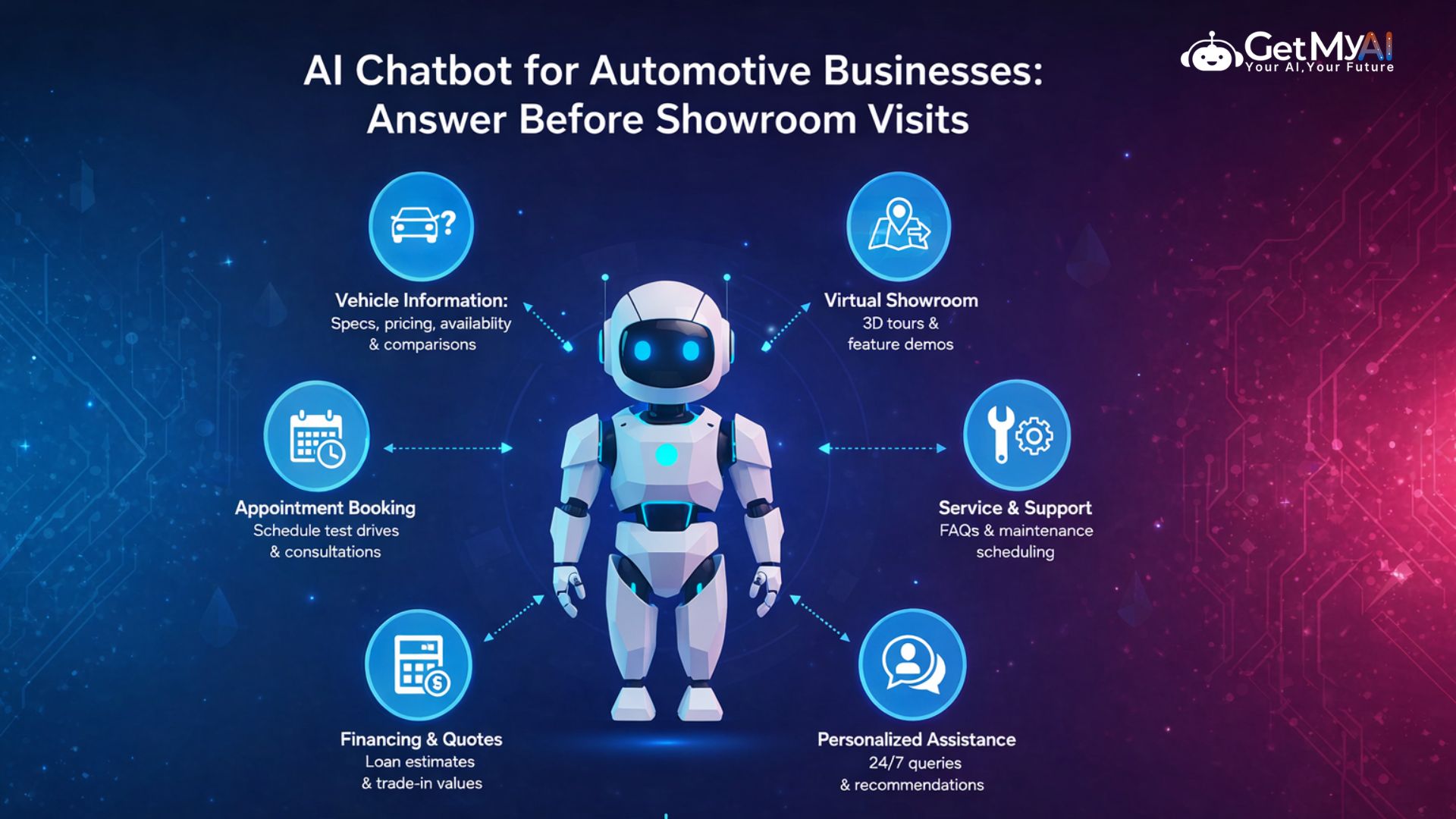
AI chatbots deliver the most value when they handle everyday automotive tasks that slow teams down and frustrate buyers. In real-world automotive environments, their use cases fall into clear categories, each solving a specific operational problem while improving customer experience.
Vehicle Information and Pre-Sales Enquiries
This category focuses on early buyer questions where quick and correct answers matter most.
- Answering vehicle features, specifications, and trim-level differences
- Explaining engine options, mileage, safety systems, and infotainment features
- Sharing pricing ranges and model comparisons without sales pressure
- Responding instantly to repeated website enquiries using verified documents
Financing, Insurance, and Policy Explanations
Buyers often pause here because the details feel confusing, not because interest is low.
- Explaining financing options in simple and clear language
- Clarifying insurance coverage and optional add-ons
- Breaking down warranty terms and limits clearly
- Answering policy questions without pushing decisions
Service, Maintenance, and Booking Support
After purchase, clear communication remains just as important.
- Handling common service and maintenance questions
- Explaining service timing, costs, and required checks
- Guiding customers through booking steps using an AI chatbot for service booking enquiries
- Reducing phone calls by solving service FAQs instantly
Internal Team Knowledge and Documentation Access
Chatbots also help teams work better behind the scenes.
- Helping staff find brochures, manuals, and policy files fast
- Providing the same answers across sales and service teams
- Reducing mistakes caused by old or unclear information
- Saving time during busy showroom and service hours
Together, these category-based use cases show how chatbots support automotive operations by improving clarity, reducing friction, and helping to have better conversations without replacing human teams.
Why Non-Judgmental AI Chatbots Work Well for Automotive Buyers
Many automotive buyers hold back their questions. They worry their questions may sound too simple. Some fear being pushed into a sales conversation before they are ready. This hesitation creates distance between the buyer and the business. When questions go unanswered, trust weakens, and decisions take longer than needed.
AI chatbots remove this pressure completely. They do not judge how basic a question is. They do not rush the buyer or push offers. Buyers can ask freely, whether it is about mileage, features, or service costs. An automotive customer support chatbot creates a safe space where curiosity feels normal and welcome.
Because of this comfort, buyers ask more questions. They explore details they may have skipped earlier. Each answer helps buyers feel clearer and more confident. When they talk to a sales or service team, they already know their choices. Conversations feel helpful and direct, not repeated or confusing.
This calm and simple experience matches how buyers prefer to shop today. Buyers want to choose their pace and make decisions comfortably. They look for information before any sales push begins. Chatbots support learning without pressure. That is why an automotive customer support chatbot often performs better early on and helps buyers move forward with confidence.
How Automotive Teams Use GetMyAI in Practice
Automotive teams using GetMyAI start with the content they already trust. Brochures, service manuals, pricing sheets, and FAQs are uploaded to train AI agents. This keeps answers clear and correct. Teams do not need to change workflows or rewrite content. The chatbot learns from approved materials and represents the business accurately.
Training AI Agents With Existing Knowledge
- Upload vehicle brochures, service manuals, and policy documents
- Train AI agents on pricing guides and frequently asked questions
- Ensure answers stay aligned with official dealership information
- Update content easily when models, pricing, or policies change
Once trained, chatbots are placed on dealership websites with very little setup. They start answering buyer and service enquiries right away without delay. Visitors ask questions at any time of day. Each conversation is captured automatically, creating a clear record of customer intent, concerns, and interests without adding extra work for staff.
Deploying and Managing Website Conversations
- Place chatbots directly on dealership or service pages
- Handle enquiries instantly, even outside business hours
- Log all conversations automatically for later review
- Reduce missed enquiries caused by forms or phone delays
Teams then review chatbot conversations through the dashboard. They notice popular questions, information gaps, and how buyers interact. Answers are updated using real user conversations. Slowly, the chatbot becomes more helpful, while teams continue to control tone, accuracy, and future changes.
Reviewing Insights and Improving Answers
- Monitor frequently asked buyer and service questions
- Refine responses based on real conversation data
- Maintain control over tone and messaging
- Improve performance without technical complexity
This steady cycle makes adoption simple and outcomes predictable for automotive teams.
Benefits for Dealerships, Service Teams, and Customers
Automotive operations involve many moving parts, and value is created only when customers, teams, and businesses all benefit together. This is where structured, well-placed automation makes a measurable difference.
Dealerships
Dealerships benefit from clearer and more focused talks. An AI Chatbot for Automotive Businesses handles early questions and shares correct details before buyers visit. Sales teams repeat less basic information and focus more on serious interests. Lead quality gets better, showroom visits feel planned, and online to in-person handovers become smoother and easier.
Service Teams
Service teams see immediate relief from repetitive enquiries. Common questions about maintenance, service intervals, pricing, and booking steps are handled automatically. Phone lines stay open for complex cases. Enquiries arrive with a better context. Conversations are shorter and clearer. Teams stay organized when work is busy and focus more on delivery instead of answering the same questions.
Customers
Customers get quicker answers without pressure. They ask questions easily and learn at their own pace. There is no rush and no judgment. Clear information builds confidence early. When they speak to a human, they feel prepared instead of uncertain. This sense of control leads to stronger trust and a better overall experience.
Scaling Automotive Support Responsibly With the Right AI Chatbot
As automotive enquiry volumes grow, many businesses assume hiring more staff is the only solution. In reality, this often increases cost and coordination challenges without fixing early-stage communication gaps. Most incoming questions are repetitive and informational. An AI Chatbot for Automotive Businesses handles this volume efficiently while keeping sales pressure out of the conversation.
Chatbots scale naturally across locations and brands. They support multiple dealerships using the same knowledge base and tone. Buyers receive consistent answers whether they visit one website or another. This level of consistency is important for dealer groups and growing automotive networks where message control and experience quality matter.
Scaling support in this way helps human teams focus on meaningful conversations. Sales and service staff engage when buyer intent is clearer. Customers arrive informed. The result is smoother handovers and better use of time across the organization.
Choosing the right chatbot helps this approach last long-term. Automotive businesses should choose tools that answer only from approved documents, not guesses. Easy updates are important because models, pricing, and policies change often. Conversation visibility helps teams understand buyer intent and improve responses over time.
Security and data handling must be included from the start. Deployment should stay simple and avoid long setup processes.
Most importantly, control should stay with your team. A well-designed automotive customer service automation system supports growth without risking trust or consistency, allowing businesses to scale confidently while protecting the buyer experience.
AI Chatbots Are Becoming Part of Modern Automotive Operations
Automotive buying no longer starts in the showroom. It starts online, quietly, with questions asked long before a conversation happens. Buyers want clear information without pressure. When they feel pushed too early, they leave. When they find clarity, they stay engaged and move forward with confidence. This change has reshaped how modern automotive operations must communicate.
An AI Chatbot for Automotive Businesses supports this shift by meeting buyers where they are. It provides accurate answers at every stage, from early research to ownership support. By removing friction and judgment, chatbots help build trust before human interaction begins. At the same time, they help support growth without putting pressure on sales or service teams, while keeping experiences steady across channels.
Businesses that adopt this approach early gain more than efficiency. They welcome better-prepared customers, clearer conversations, and stronger relationships that last over time. Teams focus on meaningful interactions instead of repetitive explanations. As expectations continue to rise, operations that rely only on traditional communication struggle to keep up. The transition is already underway. The real question is whether your automotive operation is ready to support buyers the way they now expect to be supported.