10 Best AI Chatbot Solution Providers for Enterprise in 2026

Enterprise organizations no longer question whether chatbots are useful. That discussion has already ended. In 2026, chatbots and AI agents will be part of everyday work across support, IT, HR, sales, and internal knowledge sharing. The real challenge now is choosing the right chatbot solution that can scale, stay accurate, and work inside complex enterprise systems.
For large teams, a chatbot is more than a simple add-on. It becomes a shared space where employees, customers, and systems connect. Because of this, selecting the right chatbot provider is a business decision, not just a technical one. Choosing the wrong platform can lead to low adoption, rising costs, and frustration across teams.
This guide highlights the top 10 AI chatbot solution providers for enterprise in 2026, explains why they fit large organizations, and helps decision makers understand how different vendors approach chatbot services and long-term deployment.
What Enterprises Should Expect From a Chatbot Solution in 2026
The expectations of enterprises regarding chatbots have remarkably transformed. Initially, chatbots were mainly implemented for handling straightforward FAQs or providing basic customer support. Nowadays, companies anticipate that AI agents will be able to cover entire business knowledge, recognize the situation, and support the users without making them open tickets or look for documents.
A modern chatbot solution should work across departments, not just in customer support. IT teams use chatbots for service desk requests, HR teams use them for policy questions, and operations teams rely on them for internal guidance. This means the chatbot must be reliable, easy to update, and capable of handling sensitive or role-based information.
In addition, enterprises expect visibility. They want to know what users are asking, where the chatbot succeeds, and where it fails. Strong analytics, clear improvement workflows, and predictable scaling are no longer optional features. They are basic requirements for any enterprise-ready chatbot service.
Modern enterprises expect chatbots to:
- Handle real business knowledge, not just FAQs
- Work across teams like support, IT, HR, and operations
- Scale without losing accuracy or performance
- Offer clear analytics and improvement workflows
- Fit into existing websites, apps, and internal tools
A true chatbot service is not just a widget. It is part of how information flows across an organization.
Why the “Top 10 AI Chatbot” Lists Often Miss the Point
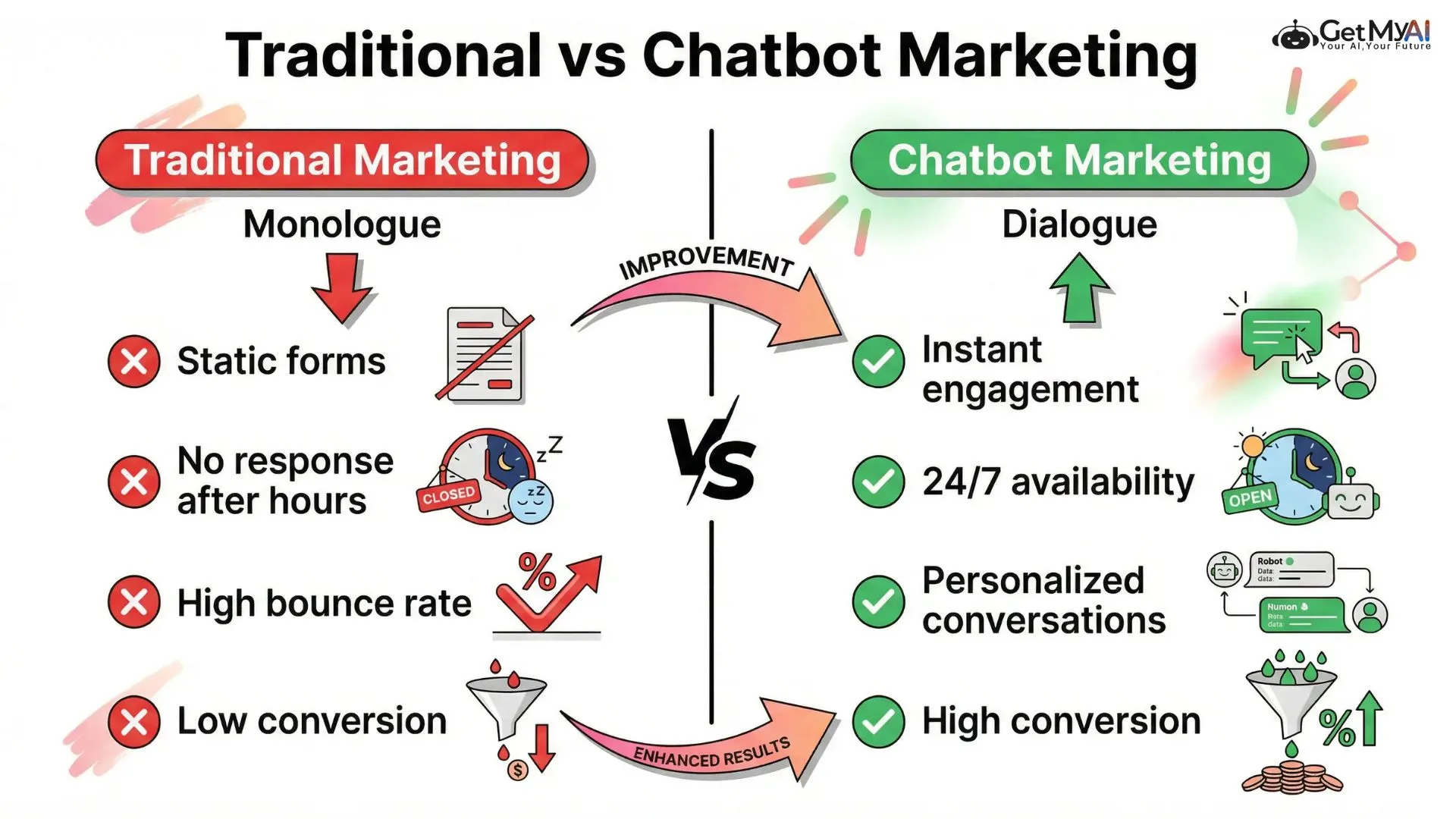
A lot of written material that purports to enumerate the "top 10 AI chatbot" platforms puts great emphasis on the surface-level functions. They showcase demonstrations that glitter, witty replies, or uses that are focused on consumers. Although they may be impressive, these features seldom represent the true requirements of big companies.
Control is the main concern of big corporations, not novelty. They want clarity on who is allowed to make changes to the chatbot, how the knowledge is managed and what the impact of the usage is on the cost. Moreover, they want platforms that integrate with the current workflow rather than change the way the teams work.
They care about:
- Governance and control
- Predictable scaling
- Security and access control
- Clear pricing and usage limits
- Ongoing improvement, not one-time setup
So that is the reason why a number of renowned chatbot suppliers find it difficult in corporate settings. They could be effective in small team and marketing use case scenarios but when used throughout the organization they do not deliver. The platforms listed here are the ones that can support actual enterprise needs, such as enterprise chatbot consulting, governance, and long-term scalability.
1. GetMyAI: Practical Enterprise AI Agents Without Complexity
GetMyAI stands out as a chatbot solution provider built specifically for teams that want control without technical overhead. It focuses on real operational use cases rather than novelty features.
Enterprises use GetMyAI to build AI agents trained on internal documents, policies, and knowledge bases. Teams manage everything from a central Dashboard, including training, customization, Activity review, and Analytics.
What makes GetMyAI strong for enterprise:
- Clear agent-level cost controls
- Meaning-based retrieval from a real document
- Strong analytics tied to real conversations
- Simple improvement workflows using Q&A
- Deployment across websites, WordPress, WhatsApp, Slack, and Telegram
GetMyAI is especially well-suited for organizations that want chatbot services to scale across departments without requiring engineering teams for daily maintenance.
2. IBM Watson Assistant: Heavy Enterprise Consulting Focus
Among the large enterprise vendors selling chatbot solutions, IBM Watson Assistant is a well-known name that is frequently selected by big companies that are already closely intertwined with IBM’s consulting ecosystem.
Watson Assistant, while being a very strong tool, is still very complicated. A lot of deployments depend on IBM or partner consultants turning it into enterprise chatbot consulting rather than a self-service platform.
Strengths include:
- Deep enterprise integrations
- Strong NLP capabilities
- Enterprise security standards
For organizations with complex legacy systems and large budgets, Watson Assistant can be effective. For teams seeking agility or faster time to value, the heavy consulting model can slow progress and increase costs.
3. Google Dialogflow: Developer-First Chatbot Platform
Dialogflow is a well-known flow AI chatbot platform focused on developers. It is flexible and powerful but assumes technical expertise.
Enterprises with strong engineering teams use Dialogflow to build custom chatbots tightly integrated with internal systems. For non-technical teams, however, it can feel inaccessible.
Dialogflow works best when:
- Custom workflows are required
- Engineering teams manage the chatbot lifecycle
- Flexibility matters more than speed
Dialogflow works best when chatbots are part of a broader custom application strategy. For enterprises seeking ready-to-use chatbot services, it can feel complex and resource-heavy.
4. Microsoft Copilot Studio: Enterprise Ecosystem Alignment
Microsoft Copilot Studio (formerly Power Virtual Agents) fits well inside Microsoft-centric enterprises. It integrates naturally with Microsoft tsaleools and workflows.
This platform appeals to organizations already committed to the Microsoft ecosystem. However, customization outside that ecosystem can be limiting.
It is a solid chatbot provider for:
- Microsoft-first enterprises
- Internal support and workflows
- Structured business processes
The platform is designed for internal applications like answering HR queries or automating processes effectively. Meanwhile, limitations to tailor the platform outside Microsoft environments may result in teams feeling restricted by the platform’s limits.
5. Salesforce Einstein Bots: CRM-Centric Chatbot Services
Salesforce Einstein Bots have been developed mainly for customer relationship management and customer service automation. Should the chatbot have a strong connection with Salesforce data, it will perform very well.
On the other hand, this connection makes the service for customer support teams quite strong but less flexible for enterprise-wide use in general.
Strengths include:
- Native CRM integration
- Strong customer support automation
- Structured case handling
For enterprises needing cross-department chatbots, scope can feel limited.
6. Intercom: Customer Support Focused Chatbot Vendor
Intercom is widely known for customer messaging and support automation. Its chatbot capabilities are strong for customer-facing use cases.
Nonetheless, Intercom is not the best option for applications related to internal enterprise knowledge bots or IT service desk scenarios. It is considered a specialized chatbot provider rather than a general AI agent development company.
Best for:
- Customer support automation
- Sales and onboarding chat
- External-facing chatbots
Intercom is most efficient when its chatbots are closely linked with customer dialogues, but companies that have internal automation or sharing of knowledge across departments as their goal, may consider its capabilities as confined.
7. Zendesk AI: Ticket-Driven Chatbot Services
Zendesk AI focuses on automating ticket deflection and customer service workflows. It integrates well with Zendesk’s support tools.
As with Intercom, its strength is external support rather than internal enterprise knowledge.
Zendesk works well when:
- Ticket management is central
- Support workflows are standardized
- CRM-style support dominates
8. Rasa: Open-Source AI Agent Development Company
Rasa is an open-source chatbot framework often chosen by enterprises that want full control and customization.
Rasa offers flexibility but requires significant technical investment. It is closer to building an AI agent than using a chatbot service.
Best suited for:
- Highly customized use cases
- Strong in-house engineering teams
- Long-term AI investments
Rasa is closer to building an AI agent from scratch than using a chatbot service. It suits organizations with strong AI teams and long-term development plans.
9. Kore.ai: Enterprise-Grade Conversational AI
Kore.ai positions itself as a full enterprise conversational AI platform. It supports complex workflows, integrations, and multi-channel deployment.
- Cross-department automation
- Enterprise system integration
- Multi-channel conversations
- Enterprise governance controls
This is a very powerful platform; in most cases, it needs onboarding and consulting support. It is excellent for big companies that have complicated requirements.
Kore.ai is very strong but still onboarding, and consultations need to be supplied in most cases. It is a perfect match for large companies with complex requirements, and AI costs allocated.
10. Yellow.ai: Global Enterprise Chatbot Vendor
Yellow.ai focuses on large-scale conversational AI deployments, especially for global enterprises.
It offers strong automation features but can feel heavy for teams looking for fast, self-managed chatbot services.
- Multi-language deployments
- High-volume automation
- Centralized team management
- Enterprise scalability reliability
The platform is robust but can feel heavy for teams seeking simple, self-managed chatbot services.
How to Choose the Right Chatbot Provider for Enterprise
The choice of a chatbot vendor for a large company is not about opting for the most famous brand or the one with the most extensive feature list. Rather, it is about finding a solution that is in line with the real-life functioning of the organization. The purpose of a chatbot is to reinforce the staff rather than creating new dependencies or introducing another system that needs to be constantly monitored.
One of the first things enterprises should consider is ownership. So if the internal teams want, they can handle the chatbot completely by themselves or is it that every little change demands the input of outside consultants or technical experts? A chatbot solution that is heavily reliant on external assistance will most probably be a slow one due to the constant need to consult outsiders, and consequently will cost more to maintain in the long run. Business organizations are better off using the solutions that involve the skills and knowledge of the staff who are directly involved in the training, updates, and improvements of the chatbot.
Another key factor is how easy it is to update knowledge. Business information changes constantly. Policies are revised, tools are updated, and processes evolve. A strong chatbot provider makes it simple to keep information current so the chatbot stays accurate and useful. When updates are difficult, chatbots quickly lose trust and adoption drops.
Analytics also play an important role. Organizations demand transparent, practical insights about the chatbot usage, the queries raised, and the areas of inadequate responses. Lack of such visibility, in turn, leads to the difficulty of improving the performance or assessing the value.
To sum up, pricing has to escalate in a foreseeable manner. With the increase in usage, the charges should gradually and transparently rise, not through abrupt increases or unnoticeable limits. An excellent chatbot solution is a growing partner of the organization; it will change along with the introduction of different teams and use cases, thus not becoming another system that will need constant management and explanation.
Why GetMyAI Fits Modern Enterprise Needs
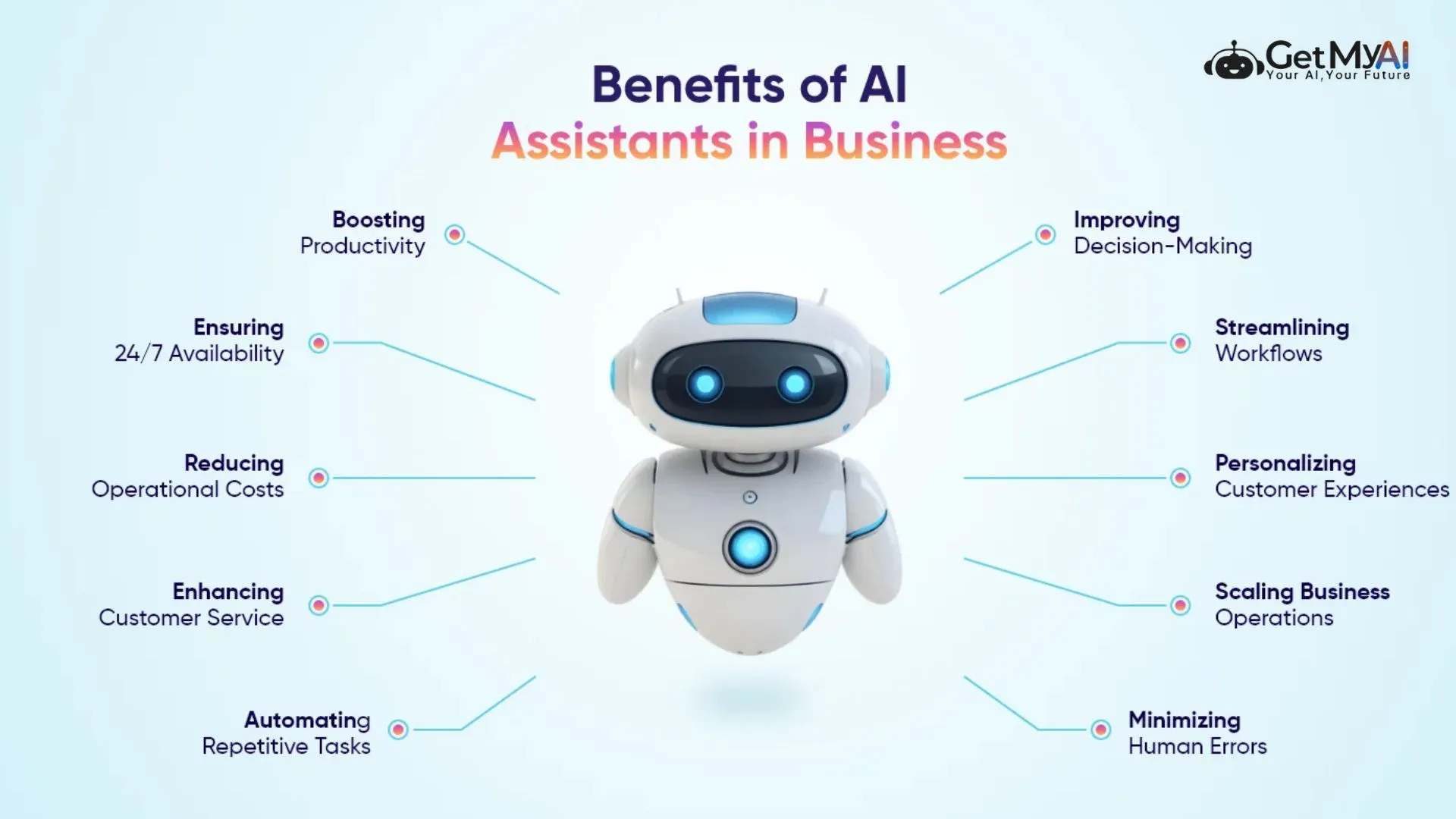
GetMyAI is designed for enterprises that want AI agents to solve real problems, not run experiments that never move beyond testing. Teams use GetMyAI to deploy practical AI agents that answer real questions, support real users, and improve day-to-day operations without unnecessary complexity.
- Organizations can roll out and supervise AI agents all by themselves, that do not need developers' engagement all the time, operational groups will have paramount control over the changes, education, and improvements as the requirements change.
- Clear and transparent cost visibility ensures that the teams are fully aware of the volume of the usage growth throughout the period, which consequently assists them in making their budget plans without the worry of sudden AI agent consumption increase.
- The improvement workflows that come with the package enable the teams to find out which questions are still not answered and to work on the replies, thus making the chatbot even more accurate and helpful with actual usage.
- Analytics that are actionable give a picture of the way the users are communicating with the AI agents, bringing the chatbot activity directly to the business outcomes rather than mere superficial engagement metrics.
The platform gives enterprises clear visibility into cost and usage, helping teams understand how AI agents are performing and what is driving consumption. The use of basic improvement workflows ensures that it is easy to fine-tune the responses gradually, while the implementation of real analytics makes it possible to relate chatbot intervention immediately to business results. GetMyAI, as a provider of modern chatbots and as a company engaging in AI agent development, is thus a solution that caters to long-term operational success by striking a balance between control and ease of use.
Choosing Enterprise Chatbots That Actually Scale
The enterprise chatbot market is crowded, but not every chatbot service is built for real-world operations. Many tools look impressive on paper but struggle when deployed across teams, departments, and growing user bases. Enterprises need solutions that work reliably beyond demos and pilots.
In 2026, what would be the criteria for choosing the best chatbot solution providers? They would facilitate teamwork and at the same time hold it in the right direction. In the case of customer support automation, internal knowledge agents, or IT service desk chatbots, the platform should smooth out the process and not add more systems to manage.
GetMyAI is a next-generation enterprise chatbot solution that prioritizes the three Cs: clarity, control, and customer lifetime value. It allows for expansion without compromising on user-friendliness, thereby enabling the enterprise to grow responsibly with total control by its staff.