Telecom environments involve millions of concurrent interactions across billing, network issues, and plan management, where delays directly impact customer retention. A telecom chatbot implementation solution functions as an operational layer that connects sys…
Experience Boost
Create. Deploy. Engage. With GetMyAI
Launch GPT-powered conversations that engage, support, and convert — all in one platform.
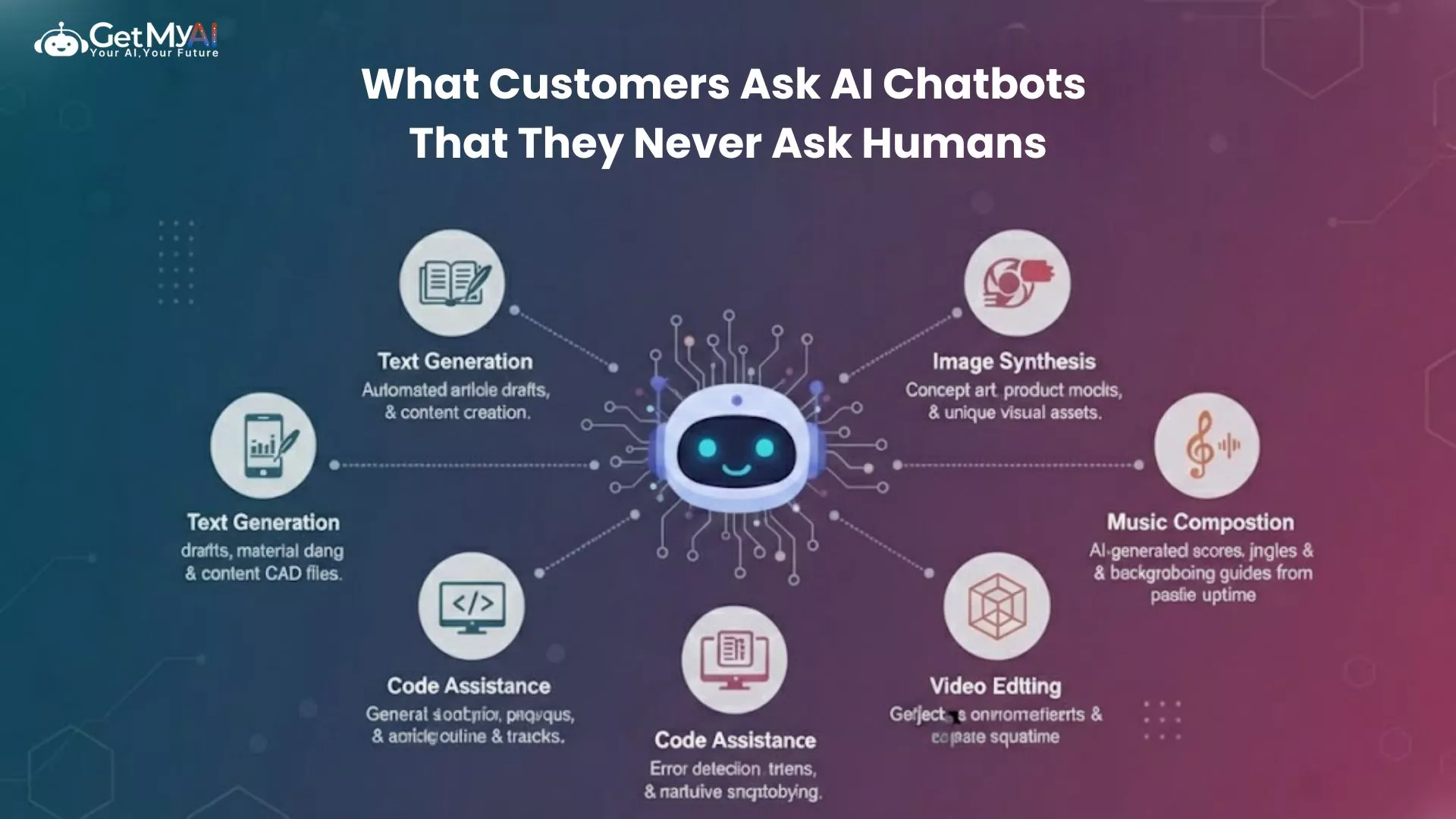
What Customers Ask AI Chatbots That They Never Ask Humans
GetMyAI
Jan 15, 2026
AI Chatbots
user intent in chatbots
chatbot user behavior
AI chatbot insights
AI chatbot for website
Key Takeaways
Customers ask AI chatbots questions they would never ask human agents, revealing real doubts and decision-making behavior.
“Simple” or repetitive questions often highlight gaps in content clarity, not user misunderstanding.
Exploratory and comparison questions show how users think before making decisions, not just after problems occur.
Chatbot conversations capture hesitation, confusion, and intent in real time, offering insights that traditional support channels miss.
Reviewing patterns inside the GetMyAI Dashboard helps teams improve content, reduce friction, and prevent future support issues.
Many customer questions never reach a support agent or appear in any report, yet they still influence real decisions. These quiet moments often decide whether someone moves forward, waits for clarity, or leaves entirely. When customers speak to a website chatbot, they reveal thoughts and doubts that human teams rarely hear.
They still decide whether someone buys, waits, or leaves.
When people talk to an AI chatbot on a website, they speak differently. There is no pressure to sound smart. No fear of asking the wrong thing. No sense of wasting someone’s time. That change unlocks a layer of customer thinking that human support teams rarely hear.
This article looks at user intent in chatbots, why it looks different from human conversations, and why those hidden questions matter more than most teams realize.
Why Customers Talk Differently to AI Chatbots
People behave based on context. A human agent feels like a person with time limits, opinions, and expectations. A chatbot feels neutral. It does not judge. It does not rush. It does not remember tone mistakes.
Because of that, customers ask things they normally hold back.
They ask short questions.
They ask unsure questions.
They ask half-formed thoughts.
This shift changes chatbot user behavior in a way that exposes gaps that human support never sees.
A customer may never tell an agent, “I don’t get this plan.”
They will ask a bot, “Is this for small teams or big ones?”
A buyer may avoid asking sales, “Which option is bad?”
They will ask a chatbot, “Which one should I skip?”
These moments are quiet, but they are signals.
This is where user intent in chatbots starts to show its real value.
The “Dumb” Questions That Are Not Dumb at All
Some questions may seem basic. They repeat information already on the page or ask about things that appear obvious. These questions are often dismissed as noise, but they reveal gaps in wording, unclear explanations, and help content written from an internal view instead of real customer needs.
These questions show where language fails. They show where help pages assume knowledge that users do not have. They show where teams wrote content for themselves instead of customers.
Examples include:
“Can I use this if I am not technical?”
“Do I need to set this up myself?”
“Is this included or extra?”
Customers avoid asking humans these questions because they fear looking careless. With an AI chatbot for website use, that fear disappears.
When teams study user intent in chatbots, these basic questions often appear in patterns. Patterns point to friction. Friction leads to drop-offs.
Ignoring these questions means ignoring silent exits.
Exploratory Questions That Never Become Tickets
Many customers are not stuck. They are thinking.
They ask:
“What happens if I do this later?”
“Can this work for my case?”
“Is this meant for me?”
These questions rarely reach human support because the user has not committed yet. There is no issue to report. No problem to solve.
Chatbots capture these moments.
This is where AI chatbot insights start to matter more than ticket counts. Exploratory questions show how people reason before decisions. They reveal doubts before objections form.
Most teams only hear from users after a problem appears. Chatbots hear from users while choices are still open.
That difference changes how businesses learn.
Comparison Questions Customers Avoid Asking People
Comparison questions often feel uncomfortable in human conversations. Customers may worry about sounding doubtful or difficult when asking someone to compare options. With a chatbot, that hesitation fades. People ask freely, explore differences, and seek clarity without feeling judged or pressured during the exchange.
Customers ask:
“Which plan fits a small team?”
“What is the difference between these?”
“Why would someone choose the other one?”
These questions are rich. They show value gaps. They show confusion in positioning. They show where messaging fails to guide choices.
Human agents often summarize or redirect these questions. Chatbots record them as they are.
When teams analyze user intent in chatbots, comparison questions often point to sales friction that content teams never notice.
These are not support questions. They are decision questions.
What Chatbots Reveal That Humans Miss
Human support conversations usually surface problems after something has already gone wrong. Chatbot conversations capture hesitation before that point. They show where people pause, question, or doubt. Those early signals highlight weak explanations, unclear choices, and small gaps that often turn into real issues later if ignored.
This is the shift many teams miss:
Where users hesitate
Where they second-guess
Where they need reassurance
Where they do not trust their own understanding
This data rarely appears in surveys. People do not remember these moments later. They happen in real time.
Chatbot user behavior shows thinking in progress.
That is why AI chatbots are not just response tools. They are listening systems. They capture questions that humans never hear and would never think to ask.
When teams treat chatbot conversations as insight, not noise, they start fixing the right problems.
How Businesses Can Learn From These Hidden Questions
Many teams deploy a chatbot and stop there. They look at volume and response speed. They miss the real value.
The real value sits in patterns.
To learn from these conversations:
Review repeated basic questions
Look for phrasing that does not match documentation
Track comparison questions over time
Watch for hesitation language
This is where AI chatbot insights become practical. They guide updates to content, pricing pages, and onboarding flows.
With GetMyAI, website chatbot conversations become a clear source of feedback, helping teams spot confusion early and improve content based on what customers actually ask.
Why This Matters for Growth and Support Teams
Support teams focus on resolution. Growth teams focus on conversion. These goals often feel separate.
Chatbots connect them.
The same hidden questions that delay buying often turn into support tickets later. Solving them early reduces load later.
Understanding user intent with the help of chatbot analytics helps teams:
Reduce confusion before tickets appear
Improve clarity without adding steps
Support users without pushing sales
This is not about replacing humans. It is about hearing what humans never get the chance to hear.
Chatbots Hear What Customers Hold Back
Customers behave differently when they interact with an AI-powered chatbot for website support. Without pressure or judgment, they share doubts, ask basic questions, and explore options more openly than they would with a human representative.
A chatbot conversation captures quiet signals that guide real decisions. These questions rarely become tickets, yet they influence whether users move forward, pause, or leave. Listening closely reveals how customers actually process information.
When teams review conversations inside the GetMyAI Dashboard, clear patterns begin to surface around hesitation, comparison, and unanswered questions. These patterns explain confusion, hesitation, and comparison thinking that humans never hear. Businesses that study these signals improve clarity, while others continue guessing why users disengage.
Frequently Asked Questions
1. Why do customers ask different questions to AI chatbots compared to humans?
Customers feel no pressure or judgment when interacting with chatbots. This allows them to ask basic, uncertain, or exploratory questions they might avoid in human conversations.
2. What is meant by user intent in chatbots?
User intent refers to the underlying reason behind a customer’s question. In chatbot conversations, it reveals what users are trying to understand, decide, or clarify at different stages of their journey.
3. Are repetitive or basic chatbot questions useful for businesses?
Yes. These questions often expose unclear messaging, missing information, or assumptions in content that can lead to user confusion and drop-offs.
4. How do chatbot conversations help improve customer experience?
By analyzing patterns in questions, businesses can identify friction points, improve clarity, and address concerns before they turn into support tickets or lost opportunities.
5. How does GetMyAI help businesses use chatbot insights effectively?
GetMyAI allows teams to review conversations, track unanswered questions, and refine responses directly from the Dashboard, helping them continuously improve content and customer interactions.
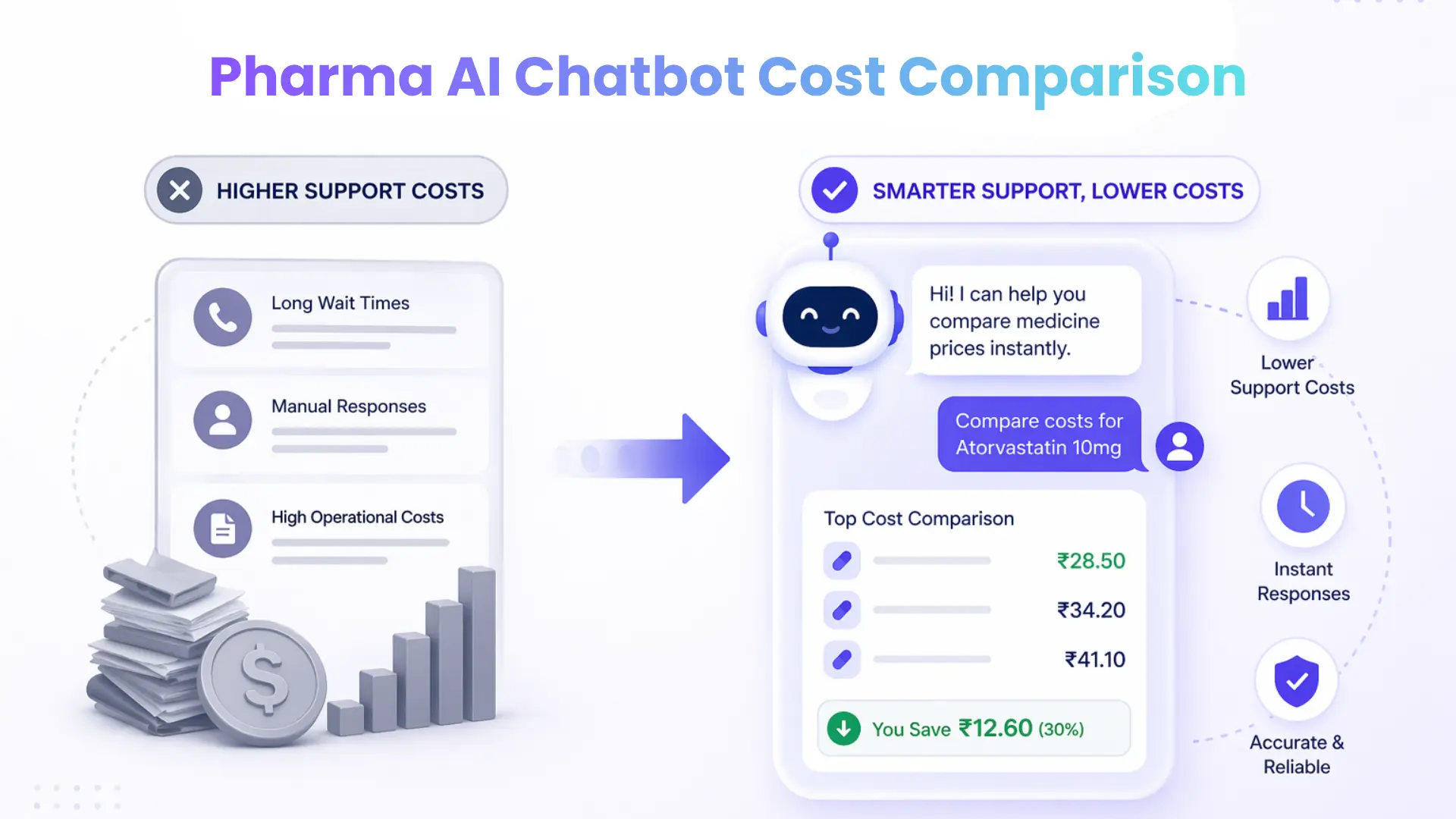
Pharmaceutical organizations now face rising support costs, increasing data volume, and growing demand for real-time engagement. Traditional human-led support models struggle to scale efficiently, while AI-driven systems offer automation, speed, and consistenc…
Interview scheduling is no longer a coordination task managed through emails and manual follow-ups. It has become an automated workflow where AI agents handle availability matching, booking, reminders, and rescheduling in real time. Instead of recruiters manag…