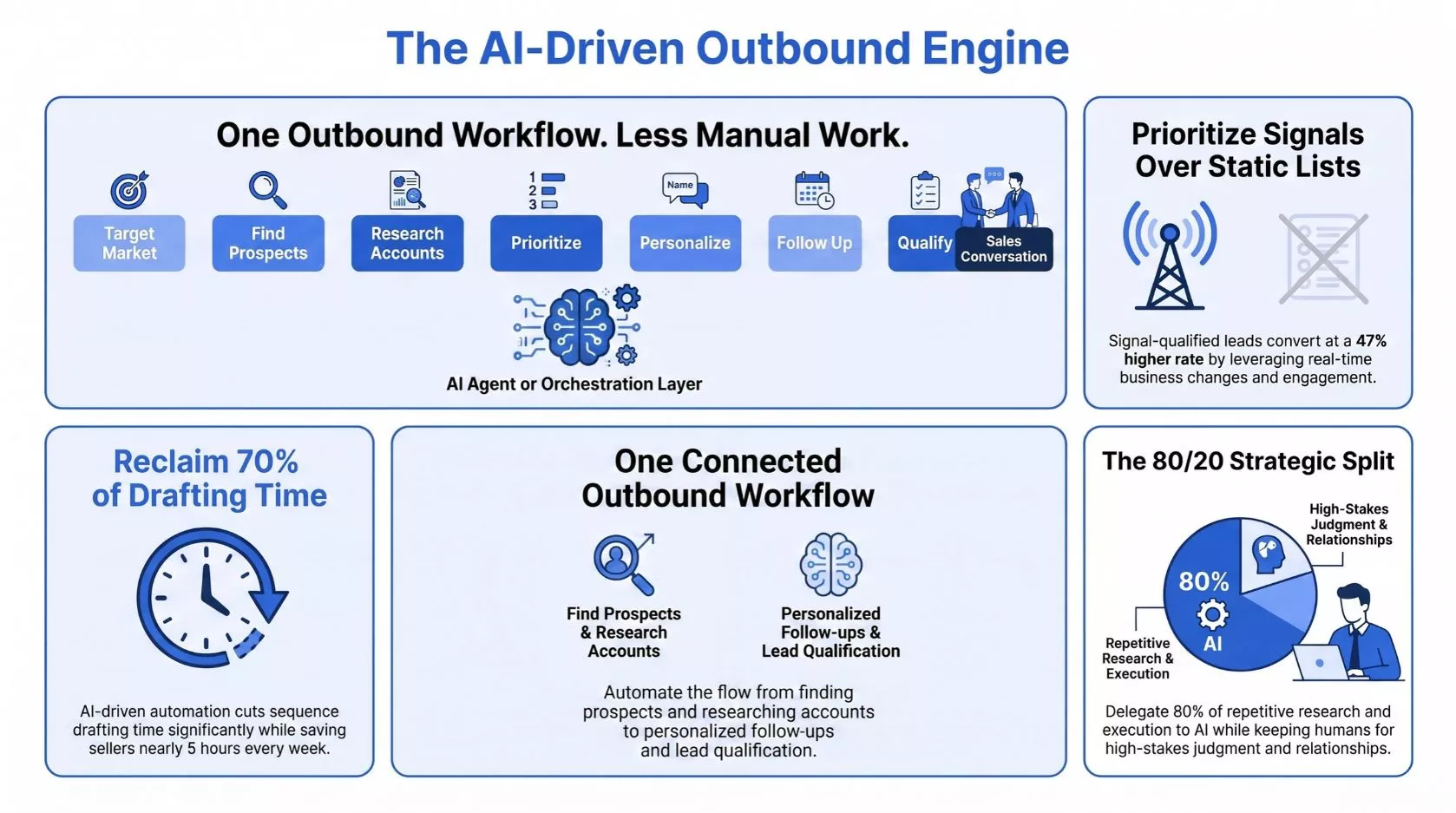
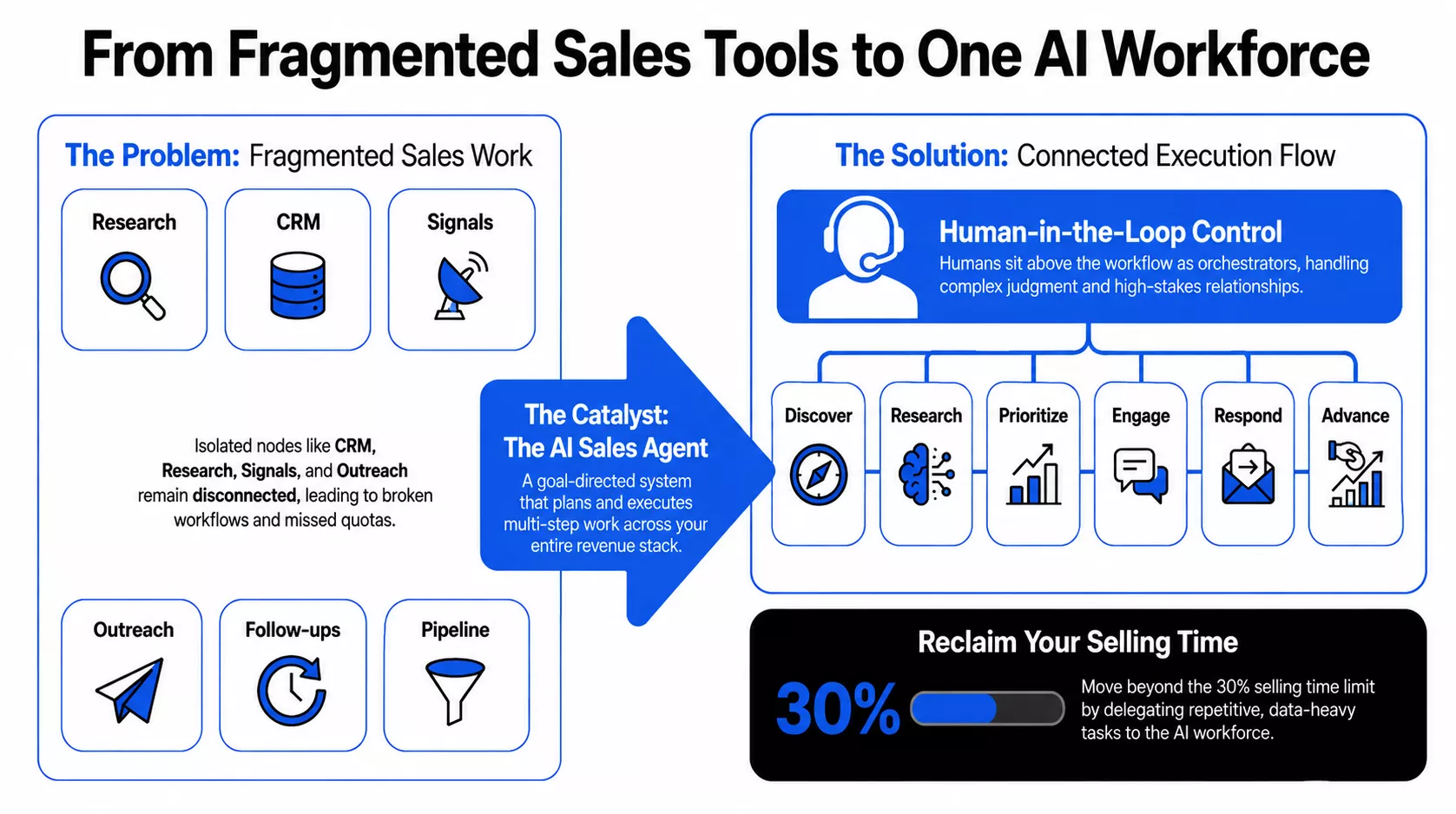
B2B outbound sales is becoming harder to manage manually. Sales teams still spend hours finding prospects, researching accounts, identifying decision-makers and keeping up with follow-ups. Benefits of AI in Sales go beyond saving time: better prospect research…
Experience Boost
Create. Deploy. Engage. With GetMyAI
Launch GPT-powered conversations that engage, support, and convert — all in one platform.
How AI Chatbots Are Transforming Financial Institutions
getmyai
May 6, 2026
AI chatbots for banks
AI chatbot for financial services
conversational AI banking
Key Takeaways
Financial institutions now use AI systems across customer support, fraud monitoring, onboarding, compliance review, and internal operational assistance workflows.
Modern banking AI systems retrieve information from financial documents and maintain contextual conversations beyond traditional rule-based chatbot limitations.
AI-assisted fraud detection, onboarding, and operational support significantly reduce manual workloads while improving response speed and customer experience quality.
Financial institutions must continuously monitor conversations, unanswered queries, compliance updates, and operational accuracy after deploying AI systems.
Banking AI platforms are evolving toward execution-based assistance, including multilingual support, financial guidance, scheduling workflows, and automated operational coordination.
Financial institutions now manage millions of digital interactions across websites, mobile apps, messaging channels, and customer portals. As transaction volume and customer expectations increase, banks are investing in virtual assistant solutions for bank to improve response speed, reduce operational workload, and provide continuous support across customer and internal workflows.
AI chatbots for banks help financial institutions automate customer support, fraud alerts, onboarding guidance, loan assistance, and internal knowledge access. Modern banking AI systems retrieve information from financial documents, monitor customer interactions in real time, support multilingual conversations, and assist teams across websites, messaging channels, and mobile banking environments.
How are AI Chatbots used in Banking?
AI chatbots for financial services are used to manage high-volume customer interactions, improve response times, and reduce manual support workloads. Banks now use AI systems for account queries, transaction assistance, onboarding workflows, fraud monitoring, and internal employee support. Many institutions also connect AI through chatbot integration for banking systems across websites, mobile apps, and messaging channels.
Large financial institutions use virtual assistant solutions to answer customer questions in real time, guide users through onboarding steps, verify suspicious transactions, retrieve information from internal banking policies, and assist teams during customer interactions. Klarna reported that its AI assistant now handles two-thirds of customer support chats. Many banks also use chatbot integration for banking systems to support payments, appointment booking, and multilingual customer communication across digital channels.
How Financial Teams and Customers Use AI Systems Daily
Financial institutions now use AI systems across both customer-facing operations and internal banking workflows. These AI chatbot use cases in banking assist customers during routine activities while also helping financial teams review conversations, retrieve policy information, and monitor operational gaps. NatWest’s own AI chatbot handled 11.2 million customer conversations, showing how widely chatbot automation for financial services is now used in daily banking operations.
Customer-Side Usage
Instant Account Assistance: Customers use AI systems to check balances, review transactions, verify account activity, and receive immediate responses without waiting for support teams.
Loan Application Guidance: AI assistants guide users through eligibility checks, document submission requirements, onboarding steps, and loan application status updates.
Fraud Notification Handling: Banks use AI systems to notify customers about suspicious activity, verify transactions, and help users secure accounts during fraud-related incidents.
Credit Card and Payment Support: Customers receive assistance with card issues, payment verification, transaction queries, and billing support across websites and messaging channels.
Personalized Spending Insights: AI-driven financial customer engagement tools analyze transaction behavior to provide spending summaries, budgeting alerts, and recurring payment reminders.
Appointment Booking with Advisors: An Appointment booking AI Chatbot helps customers schedule meetings with financial advisors through websites, WhatsApp, or mobile banking channels.
Internal Team Usage
Compliance and Policy Lookup: Internal teams use AI systems to retrieve information from compliance documents, operational policies, and financial procedures without manual searching.
Reviewing Customer Conversations: Support and operations teams review chat activity to understand customer concerns, identify service gaps, and monitor response quality.
Identifying Unanswered Financial Queries: AI systems help teams detect unanswered or incomplete customer questions that may require updated documentation or additional Q&A training.
Internal Team Support: Banks use AI assistants inside Slack and internal platforms to help employees access operational information, product details, and workflow guidance faster.
Faster Access to Product or Policy Documentation: Financial teams use AI systems to retrieve product information, regulatory details, and policy documentation from uploaded knowledge sources in seconds.
Reviewing Conversation History and Customer Activity: Teams monitor customer interactions, timestamps, and activity records to understand engagement patterns and improve operational decision-making.
Support Customers Faster
Provide instant account assistance, onboarding guidance, and fraud notifications through connected AI systems.
Why Financial Institutions are Moving Beyond Rule-Based Banking Bots
Traditional banking chatbots relied on fixed scripts and predefined response paths. These systems struggled when customers asked follow-up questions, used different wording, or needed help across multiple steps. Modern conversational AI in banking systems now understands intent, maintains conversation context, and retrieves information directly from uploaded documents, internal policies, and financial knowledge sources. This allows financial institutions to support more complex workflows such as onboarding, fraud verification, payment assistance, and policy guidance.
An AI chatbot for a financial services provider also supports human escalation when the AI cannot confidently answer a query. As AI capabilities improve, fraud detection systems now reach 90–99% accuracy in many financial environments, helping institutions respond faster while reducing manual review workloads.
Situation
Before AI Systems
After AI Systems
Customer asked about account activity
Customers waited in queues or navigated multiple menus before reaching support teams
AI agents provide instant account assistance and transaction details
Customer applied for a loan
Bankers manually reviewed forms, documents, and eligibility requirements
AI systems guide onboarding steps and assist with eligibility verification
Suspicious transaction detected
Fraud teams reviewed alerts after transactions were flagged
AI systems monitor activity in real time and notify customers immediately
Customer asked follow-up questions
Rule-based bots failed when queries changed outside scripted flows
Modern virtual assistant maintain conversational continuity
Employees searched internal policies
Teams manually checked compliance documents and operational files
AI retrieves information from uploaded banking documents within seconds
Multi-step financial support requests
Customers were transferred between departments repeatedly
AI systems manage connected workflows before escalating to human teams
Where AI Delivers the Highest Impact in Financial Institutions
1. Customer Service Teams Handling Thousands of Daily Queries
A customer opens a banking app at midnight after noticing an unfamiliar transaction. Instead of waiting for support hours, the AI assistant immediately explains the charge, verifies recent activity, and escalates the issue if fraud indicators appear.
Financial institutions are using chatbot integration for banking systems to reduce wait times, improve response consistency, and maintain continuous support availability across channels. AI assistants are now capable of managing two-thirds of customer support conversations while reducing repeat inquiries by 25%.
2. Fraud Detection Teams Monitoring Transactions in Real Time
Modern fraud operations no longer depend only on static rules that trigger alerts after damage occurs. AI systems continuously evaluate transaction behavior, device patterns, login activity, and payment anomalies to identify suspicious behavior within seconds. This helps fraud teams reduce false positives while responding faster to genuine threats.
According to IBM, 90% of banks now use AI specifically for fraud detection and transaction monitoring.
3. Loan and Onboarding Teams Reducing Processing Delays
A customer applying for a business loan uploads financial documents through a banking portal. The AI system organizes paperwork, verifies missing information, checks eligibility conditions, and guides the applicant through the next steps without repeated back-and-forth communication. This reduces manual review pressure on onboarding teams while improving processing speed for applicants.
4. Internal Banking Teams Accessing Policies and Operational Knowledge Faster
Support staff, compliance officers, and relationship managers often spend significant time searching internal documentation before responding to customers. Some banking AI deployments now resolve internal operational queries in as little as 44 seconds.
AI systems now retrieve policy information, summarize operational procedures, and surface relevant banking documentation instantly during active conversations. This improves internal coordination while supporting chatbot compliance for the financial industry.
5. Wealth Advisory Teams Delivering More Personalised Financial Guidance
A wealth management client receives an automated notification warning about unusual portfolio exposure after a market shift. The AI system also suggests potential allocation adjustments and reminds the advisor about upcoming review discussions. Financial institutions are increasingly using AI to support portfolio monitoring, financial engagement, and proactive client communication.
Industry analysis shows AI-powered financial engagement systems have contributed to a 31.5% increase in customer satisfaction across banking and advisory experiences.
What to Evaluate Before Choosing an AI Chatbot Platform for Banking
Choosing the best AI chatbot platform for banks in 2026 requires more than comparing automation features or response quality. Financial institutions must evaluate how the platform handles security, operational visibility, compliance workflows, customer interactions, and long-term AI management across banking environments. The real value often depends on how well the platform fits existing operational and regulatory requirements.
Evaluation Checklist for Financial Institutions
Role-based access controls for sensitive banking and customer information
Visibility into customer conversations and AI-generated responses
Monitoring for unanswered financial queries and knowledge gaps
Support for chatbot integration for banking systems and internal tools
Deployment across websites, mobile apps, and messaging channels
Analytics and reporting for operational review and customer engagement
Ability to train AI systems using financial policies and documentation
Meeting booking support through platforms like Google Calendar
Human escalation workflows for complex financial or compliance-related conversations
Multilingual support for regional banking operations and customer assistance
Auditability and conversation history tracking for compliance review
Cost Evaluation Depends on Operational Requirements
The cost of an AI chatbot for the banking sector usually depends on deployment complexity, integration requirements, compliance needs, supported channels, training data volume, and operational visibility features. Financial institutions evaluating platforms should compare long-term operational value instead of only initial deployment pricing.
GDPR and Financial Data Compliance Requirements
Financial institutions operating across global markets must evaluate whether the platform supports regulatory requirements such as the General Data Protection Regulation (GDPR) and the California Consumer Privacy Act (CCPA).
A GDPR-Compliant AI chatbot should support role-based access controls, customer data protection, auditability, consent management, and secure handling of financial conversations across customer-facing and internal banking environments. Strong chatbot compliance in financial industry operations also requires visibility into conversation history, controlled data access, and secure management of customer information across connected systems.
What Financial Institutions Must Monitor After AI Deployment
Deploying an enterprise AI chatbot for financial services providers is not a one-time technology rollout. Financial institutions must continuously review conversation quality, policy accuracy, unanswered customer questions, and operational behavior after deployment. As banking regulations, product terms, and compliance requirements change, outdated information can directly affect response reliability. Effective chatbot automation for financial services depends on continuous monitoring, operational visibility, and controlled updates across customer-facing and internal AI systems.
Outdated onboarding documents, lending criteria, or policy files can cause AI systems to generate inaccurate financial guidance, creating operational risk and compliance concerns for institutions.
Conflicting financial policies across departments may lead to inconsistent customer responses, especially when multiple knowledge sources are connected through chatbot compliance in the financial industry workflows.
Unanswered customer queries often reveal missing documentation, weak training coverage, or recurring financial concerns that institutions failed to anticipate during initial deployment planning.
Reviewing customer conversations helps financial teams identify repeated escalations, operational bottlenecks, and areas where customers still require human support despite AI implementation.
Institutions that regularly evaluate feedback, interaction quality, and response accuracy improve long-term AI performance while maintaining stronger customer trust and operational consistency.
Review Banking Conversations Continuously
Track customer interactions and operational activity across connected banking communication channels efficiently.
The Next Phase of Digital Banking Is Already Taking Shape. Imagine opening your banking app in 2026 and receiving a warning about suspicious transaction behavior before the payment is even completed. Instead of reacting after fraud occurs, conversational AI in banking systems continuously monitors transaction patterns, device behavior, and account activity in real time to prevent financial risk earlier.
At the same time, AI systems are moving beyond customer support into execution-based roles. A customer applying for a mortgage no longer waits days for updates. AI agents guide document collection, verify application details, schedule advisor meetings, and assist underwriting teams simultaneously. For wealth management clients, AI-driven financial customer engagement now includes automated portfolio reminders, personalized savings recommendations, and investment insights once limited to private banking clients. Industry projections estimate that robo-advisors could manage $3.2 trillion in assets globally by 2033.
Inside financial institutions, compliance teams increasingly rely on AI-generated summaries to review regulations, policies, and customer conversations faster. Meanwhile, the Multilingual AI chatbot is becoming essential for banks operating across global markets, enabling real-time support across languages, regions, and digital banking channels.
Why Financial Institutions Choose GetMyAI
Financial institutions use GetMyAI to create and deploy an AI chatbot for banks across customer support, onboarding, internal operations, and financial engagement workflows. The platform supports deployment across websites, WordPress, WhatsApp, Slack, Telegram, and mobile applications, allowing businesses to manage customer and operational conversations from a centralized environment.
Financial teams can train AI agents using PDFs, DOCX, XLSX, PPTX, and TXT files, structured Q&A datasets, and internal documentation. This allows institutions to connect the AI chatbot for financial services with operational policies, onboarding procedures, product information, compliance documents, and internal banking knowledge without depending on rigid scripted flows.
GetMyAI also helps institutions manage AI systems after deployment through Activity, Improvement, Q&A, and Analytics. Teams can review conversations, identify unanswered queries, monitor engagement trends, and refine AI responses continuously. The platform also supports meeting booking through Calendly, Google Calendar, and Cal.com, alongside website preview testing inside Playground before deployment.
Deployment and Training Capabilities
Website AI deployment
WhatsApp banking support
WordPress chatbot integration
Internal document training
Multi-format file support
Operational Management Features
Activity-based conversation review
Improvement-driven optimization
Q&A knowledge refinement
Analytics for performance tracking
Human escalation workflows
For financial institutions evaluating an enterprise AI chatbot for financial services providers, GetMyAI focuses on operational visibility, deployment flexibility, and ongoing AI management across customer-facing and internal financial environments.
Explore AI Deployment for Banking
See how financial institutions manage customer support and operational workflows using connected AI systems
Yes. Modern banking AI systems use role-based access controls, encrypted communication, authentication protocols, and audit tracking to protect sensitive financial information. Financial institutions also monitor conversations, permissions, and compliance workflows continuously to reduce operational and security risks.
Can AI chatbots replace bank customer support?
AI chatbots for banks can automate routine support tasks like balance checks, onboarding guidance, payment assistance, and fraud notifications. However, human teams still remain essential for sensitive financial discussions, dispute resolution, and complex compliance-related interactions requiring oversight.
How do chatbots improve customer experience in banking?
AI chatbot for financial services improves customer experience by reducing wait times, providing continuous support availability, handling multilingual communication, and delivering faster responses across websites, messaging channels, and mobile banking applications.
What are the benefits of AI chatbots in finance?
The benefits of chatbot automation in banking services include faster customer assistance, reduced operational workload, improved fraud monitoring, quicker onboarding workflows, better policy access for employees, and stronger visibility into customer interaction patterns across financial operations.
How do banks train AI chatbots with financial information?
Banks train AI systems using internal policies, onboarding documents, compliance files, product information, customer support material, and structured Q&A datasets to improve response accuracy across operational and customer-facing workflows.
What should banks monitor after deploying AI systems?
Financial institutions should monitor unanswered customer questions, outdated documentation, conversation quality, operational inconsistencies, compliance updates, and customer feedback regularly to maintain long-term AI accuracy and reliable banking assistance.
We’ve noticed that a surprising amount of a sales rep’s day is still spent preparing to sell rather than actually selling. Building lists, researching accounts, finding the right contacts, writing outreach and chasing follow-ups can consume hours before a mean…
Sales teams have more AI than ever, yet the productivity problem remains. Sales AI Agents can take repetitive work off your team's plate, but adding another tool does not automatically improve execution. In 2026, 78% of B2B sellers missed quota in 2025, w…