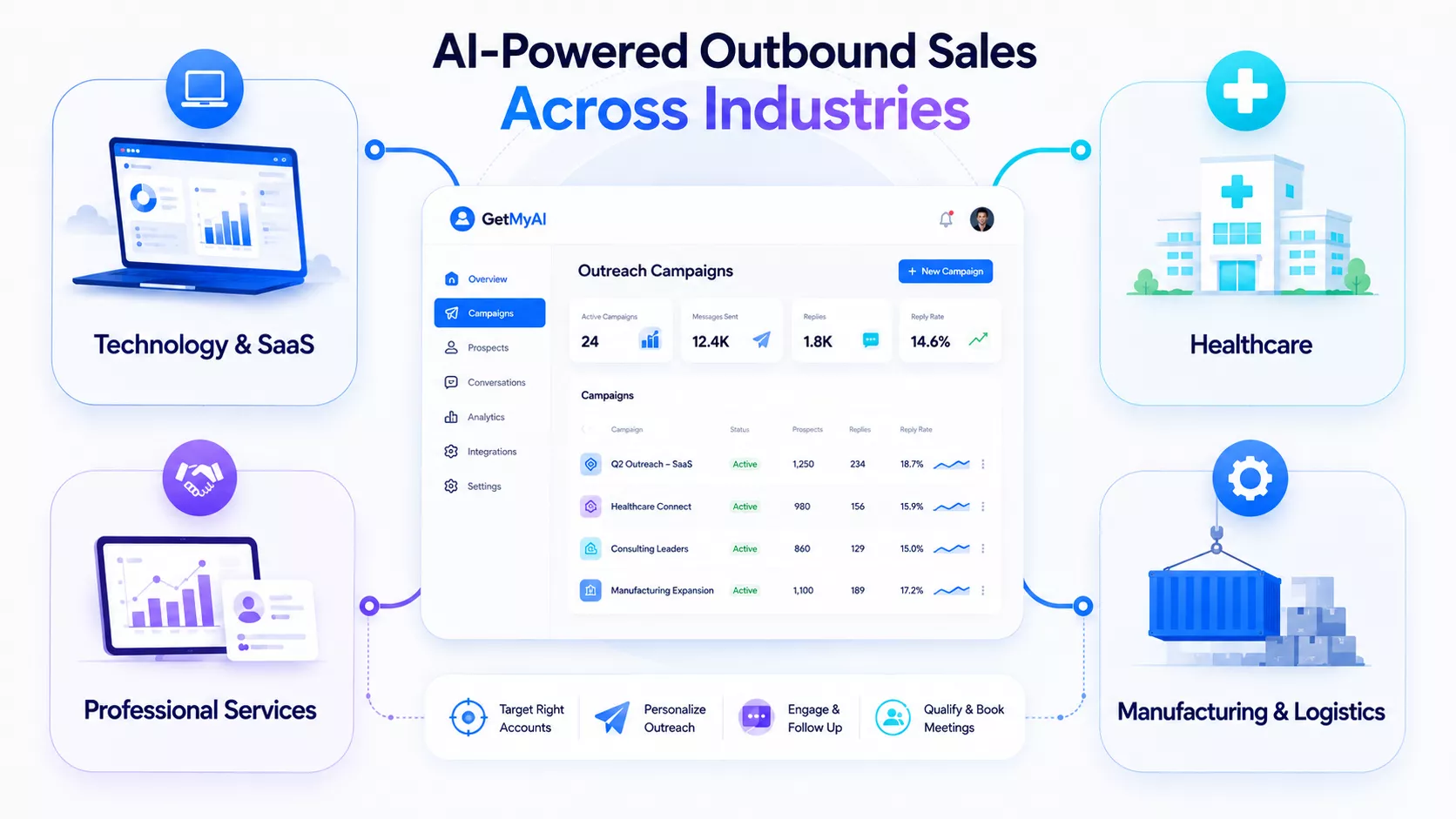
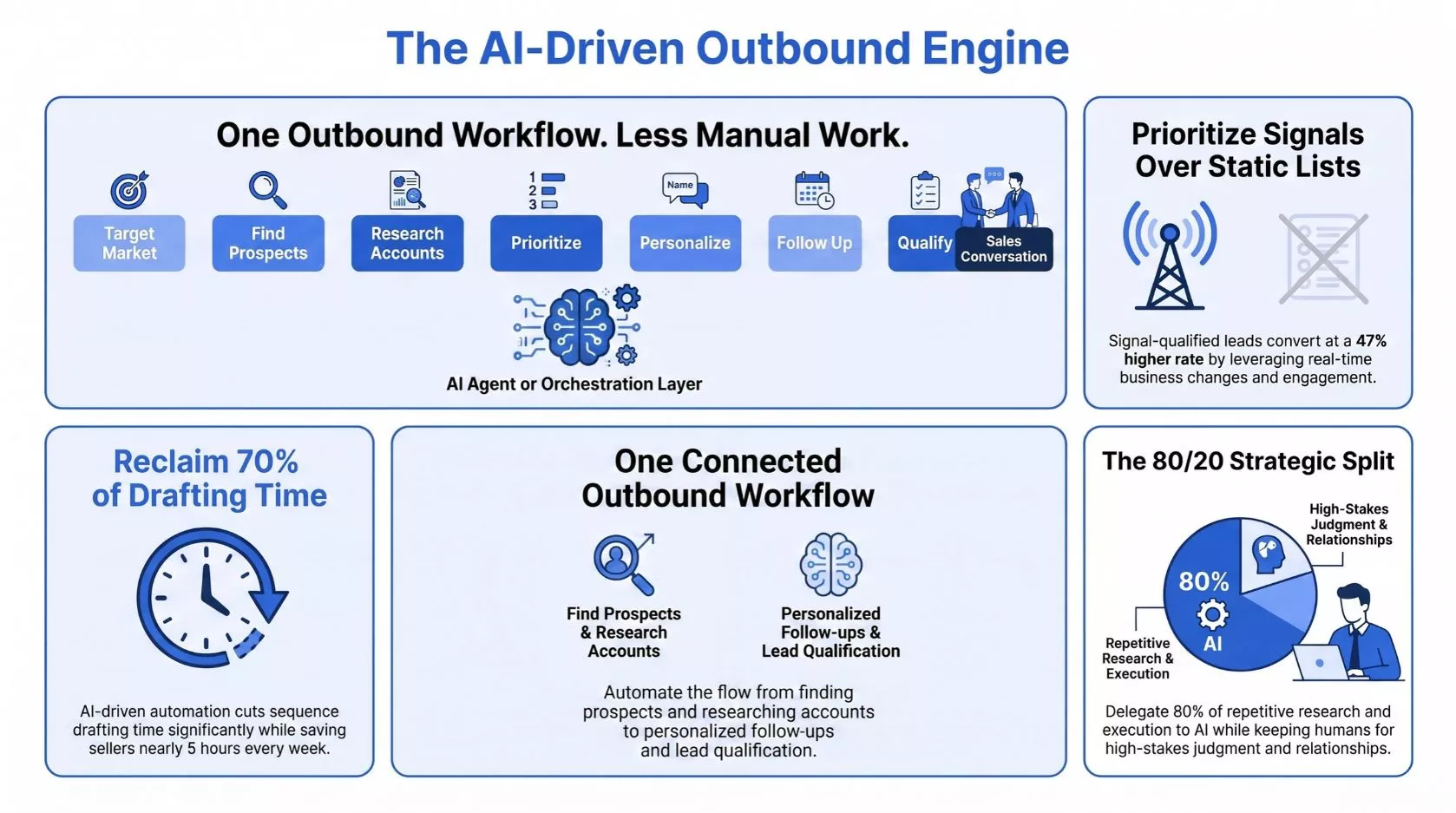
B2B outbound sales is becoming harder to manage manually. Sales teams still spend hours finding prospects, researching accounts, identifying decision-makers and keeping up with follow-ups. Benefits of AI in Sales go beyond saving time: better prospect research…
Experience Boost
Create. Deploy. Engage. With GetMyAI
Launch GPT-powered conversations that engage, support, and convert — all in one platform.
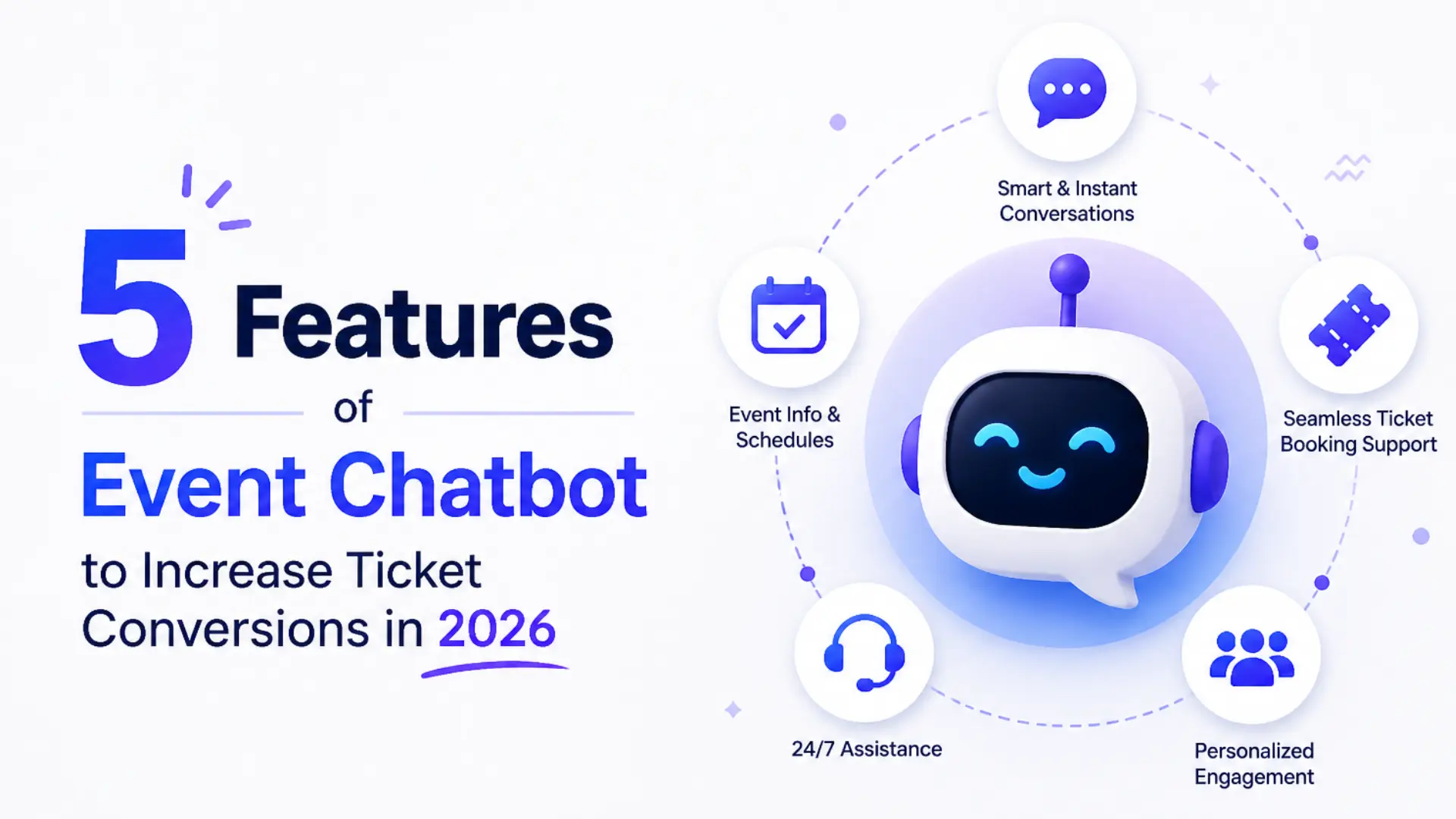
5 Features Your Event Chatbot Must Have to Increase Ticket Conversions in 2026
GetMyAI
May 4, 2026
AI Chatbot
AI chatbot for events
AI Chatbot for Event Management
chatbot for event ticket booking
Key Takeaways
Event chatbots convert more visitors by guiding decisions in real time instead of relying on static navigation.
Features like personalization, instant responses, and recovery flows directly impact ticket sales and reduce drop-offs.
Drop-offs occur at predictable stages, and structured conversational flows can actively prevent user abandonment.
Multi-agent systems improve scalability and accuracy by distributing tasks across specialized roles in complex events.
Post-booking engagement through guidance, updates, and feedback strengthens attendee experience and long-term event revenue.
Event organizers are under pressure to convert interest into action faster than ever. An event chatbot for ticket sales guides users through questions, recommendations, and booking steps in real time. Instead of relying on static pages, businesses now deploy AI agents to manage conversations, qualify intent, and move users toward confirmed registrations. This shift allows faster decision-making, reduces drop-offs during the buying journey, and ensures that every visitor interaction has a clear path toward conversion.
An AI chatbot for events increases ticket conversions by answering questions instantly, recommending relevant ticket options, recovering drop-offs, supporting multiple languages, and guiding users through booking flows. These capabilities improve engagement and help turn interest into completed registrations across websites and messaging platforms.
How can an AI Chatbot Improve Event Ticket Conversions?
Conversational AI for events improves ticket conversions by turning passive browsing into guided, real-time decision-making. It moves users from questions to completed bookings through a structured interaction loop.
The system captures user queries, preferences, and context instantly. It replaces static navigation with dynamic interaction, reducing confusion around pricing, schedules, or ticket types.
An automated ticket sales assistant asks targeted questions to assess urgency, budget, or interest level. This step filters high-intent users and prepares them for relevant offers.
Conversational AI in event engagement recommends suitable ticket tiers or event options based on behavior. Personalization at this stage can increase conversions by 20–30%.
AI-powered event registration keeps users engaged until completion, preventing abandonment during key decision moments.
Conversion improves when guidance replaces navigation. AI agents act as execution layers that actively move users toward decisions instead of waiting for them to act.
5 Must-Have Features of an Event Chatbot That Directly Impact Ticket Sales
An event chatbot for ticket sales drives conversions when it actively guides users from interest to action. The right features reduce hesitation, clarify choices, and keep users engaged during decision moments. Each capability below directly influences how quickly and confidently a visitor moves from browsing to booking.
1. Instant 24/7 Contextual Q&A
Users abandon ticket purchases when they cannot find clear answers. Instant contextual responses remove this uncertainty by addressing queries about schedules, pricing, or availability in real time. This is critical for conferences with complex agendas. Research shows that instant responses can increase conversions by 10–18%.
Reduces dependency on static FAQ pages that often miss user-specific questions
Handles high query volume during peak traffic without delays
Keeps users engaged during off-hours when support teams are unavailable
Maintains consistency in responses across all channels
Supports last-minute decision-making, especially close to event dates
2. Personalized Ticket Recommendations
Generic options slow decisions. Personalized recommendations guide users toward the most relevant ticket tier based on behavior, preferences, or intent signals. This is especially effective for festivals or events with multiple pricing levels. Behavior-triggered recommendations can deliver 3–5x higher conversion rates.
Personalized recommendations continuously adapt based on how users interact with the event content, not just initial inputs. This allows more relevant ticket options to surface as intent becomes clearer. It also creates natural opportunities to introduce premium or bundled tickets without forcing upsells.
By narrowing choices and aligning options with user behavior, the system reduces decision fatigue and increases confidence, helping users move forward without hesitation or second-guessing their selection.
3. Proactive Cart Recovery
Many users drop off after showing strong intent. Proactive chatbot engagement re-initiates conversations at key moments, helping users complete their purchase. This matters most for high-ticket events where hesitation is common. Data indicates that chatbot-driven recovery can reclaim around 35% of abandoned carts.
Detects inactivity signals such as page exit intent or long idle time
Re-engages users with contextual prompts instead of generic reminders
Addresses last-minute concerns like pricing or availability
Supports follow-up interactions without manual intervention
Converts delayed decisions into completed bookings through timely nudges
4. Multilingual Conversations
Language barriers directly impact buying decisions. Multilingual chatbots allow users to interact in their preferred language, improving clarity and trust. This is essential for global or virtual events attracting international audiences. Findings show that 76% of users prefer purchasing in their native language.
Expands reach into new regions without additional support teams
Reduces misunderstandings in critical booking-related information
Supports culturally relevant communication styles
Improves accessibility for non-native speakers
Enables consistent experience across diverse audience segments
5. Chat-Based Ticket Conversion Path
Every additional step reduces completion rates. A guided in-chat flow helps users move from inquiry to booking without unnecessary navigation. An AI chatbot that handles event registration can capture user details, suggest next steps, and assist with sign-ups in a single conversation. Research highlights that streamlined chatbot flows can achieve up to 4x higher conversions compared to unassisted journeys.
A conversational booking path keeps the entire process within a single interaction, removing the need to switch between pages, forms, or systems. This consistency is especially effective for mobile users who prefer quick, uninterrupted flows. By aligning the booking journey with how people naturally communicate, it simplifies completion and reduces friction caused by complex interfaces. The result is a faster, more intuitive experience that encourages users to complete registrations without distraction or confusion.
These capabilities represent the best features of an event chatbot to boost ticket sales because they directly influence how users move from interest to action. When each stage of the journey is supported with clarity, guidance, and timely engagement, event organizers can consistently convert more visitors into confirmed attendees.
Fix Drop-Offs at Every Stage
Identify where users leave and guide them back to conversion.
Before vs After AI Agents: How Event Teams Operate Differently
Before AI Agents
Once the event is planned, the focus is on keeping communication flowing across multiple touchpoints. Queries begin coming in from different channels at the same time, often overlapping with internal coordination. Teams move between tools to track conversations, check information, and respond in sequence. During live events, this layer becomes harder to manage as incoming queries continue while on-ground responsibilities demand attention.
Teams manually handled repetitive attendee queries across email and chat, leading to delays and inconsistent responses.
Late-night ticket inquiries often went unanswered, resulting in missed conversion opportunities and lost potential revenue.
Staff faced high pressure during live events while managing directions, schedules, and attendee confusion simultaneously.
Cart recovery depended on manual emails and follow-ups, which were slow, inconsistent, and often missed high-intent users.
Scaling global events required hiring multilingual support teams, increasing operational costs and management complexity significantly.
After AI Agents
With AI agents in place, communication no longer depends on how quickly teams can respond across channels. Interactions are handled as they arrive, and information remains aligned without constant switching or manual tracking. This creates a more stable communication layer, allowing teams to stay focused on coordination and execution while interactions continue in parallel.
Routine queries are handled instantly by an event management chatbot, reducing inbox load and improving response consistency.
Ticket inquiries convert 24/7, ensuring no potential buyer is lost due to delayed responses or time-zone gaps.
Attendees receive real-time guidance during events, helping them navigate schedules, locations, and updates without staff dependency.
Cart recovery happens automatically through timely prompts, re-engaging high-intent users, and improving overall conversion rates.
One system supports multiple languages, enabling global audience engagement without the need for additional support teams.
How Event Chatbots Reduce Ticket Drop-Off at Each Stage
An event chatbot for ticket sales improves conversions by addressing drop-offs at each stage of the user journey. Visitors do not leave randomly; they exit when clarity, confidence, or timing is missing. Conversational ticketing solutions guide users step by step, ensuring questions are answered, options are simplified, and decisions move forward without interruption across the booking process.
Awareness Stage: Remove Confusion Early
At the awareness stage, users explore event details such as pricing, schedules, and availability. The chatbot provides instant answers, removing the need to search across pages. This clarity reduces early exits and ensures visitors stay engaged instead of leaving due to incomplete or unclear information.
Consideration Stage: Guide Decision Making
During consideration, users compare ticket tiers, sessions, or event options. The system recommends relevant choices based on user preferences and behavior. This reduces decision fatigue, simplifies comparisons, and keeps users moving forward instead of delaying or abandoning the process due to too many options.
Decision Stage: Recover and Convert
At the decision stage, hesitation becomes the biggest barrier. Users may pause, exit, or abandon the process after showing strong intent. The chatbot re-engages users through timely prompts and guidance, helping them complete their booking. Drop-offs are predictable at this stage and can be actively managed through structured interaction.
Turn Conversations Into Conversions
Deploy a platform built to guide, engage, and convert event audiences.
A chatbot for event ticket booking delivers better results when features align with the event model. Different event types require different capabilities based on audience behavior, ticket complexity, and decision speed. This mapping helps organizers prioritize the features that directly influence conversions for their specific event.
Event Type
Most Critical Feature
Why It Matters
Conferences
Contextual Q&A
Attendees navigate complex agendas, sessions, and speaker details before booking
Music Festivals
Personalization
Multiple ticket tiers, passes, and add-ons require guided recommendations
Business Summits
Cart Recovery
High ticket prices lead to hesitation, requiring re-engagement to convert
Global Events
Multilingual Conversations
International audiences prefer interacting and buying in their native language
Local Shows
Guided Booking Journey
Quick decisions and impulse buying benefit from fast, assisted booking flows
Event Chatbot Use Cases after Tickets are Sold
An AI chatbot continues to influence conversions even after the ticket is booked. Engagement during and after the event shapes attendee satisfaction, retention, and future revenue. These use cases extend the value of the chatbot beyond pre-sale interactions into the full event lifecycle.
Attendee Guidance
During large events, attendees often struggle to find session rooms, schedules, or key locations. Instead of searching manually or asking staff, they interact with a conversational AI for events to get instant directions and updates, reducing confusion and improving overall experience.
Real-Time Event Support
When sessions overlap or changes happen on-site, attendees need quick answers. Instead of locating help desks, they ask the chatbot directly. An event management chatbot ensures responses are immediate, helping attendees stay on track without disrupting staff operations or event flow.
Feedback Collection
After sessions or interactions, attendees are more likely to share feedback when prompted instantly. A chatbot for feedback collection captures responses in real time, making it easier to gather insights while experiences are fresh, improving engagement quality and future event planning.
Reminders and Updates
Before and during the event, attendees may forget schedules or miss important sessions. Automated reminders and updates delivered through the chatbot keep them informed and engaged, reducing no-shows and ensuring better participation across sessions and activities.
Session and Content Navigation
With multiple tracks and sessions, attendees often miss relevant content. The chatbot helps users discover sessions based on their interests, ensuring they engage with the most relevant content, which increases perceived event value and improves the overall experience.
Single-Agent vs Multi-Agent Systems in Event Chatbots
Conversational AI for events is evolving from single, all-purpose bots to coordinated systems with multiple specialized agents. Large-scale events operate like teams, not individuals. A single chatbot can handle basic queries, but complex events often require multiple agents working together to manage different responsibilities efficiently.
Capability
Single-Agent Chatbot
Multi-Agent System
Task Handling
Handles all queries in one flow
Splits tasks across specialized agents
Accuracy
Limited by one knowledge layer
Higher accuracy via role-based processing
Scalability
Slows with complexity
Handles large-scale events efficiently
Use Case Fit
Small events, simple queries
Large events, complex workflows
Decision Support
Basic responses
Context-aware, multi-step execution
Multi-agent systems reflect how event teams actually operate. Instead of relying on one overloaded system, multiple agents handle specific roles, improving coordination, accuracy, and overall event execution.
Example: How Multi-Agent Systems Work in a Real Event Scenario
Consider a large business conference with multiple tracks, speakers, and ticket tiers. A single-agent chatbot would handle all queries in one flow, often switching context between pricing, schedules, and attendee support, which can reduce clarity and response precision.
In a multi-agent setup, each agent handles a specific role. One agent answers ticket-related questions and guides bookings. Another manages agenda queries and session recommendations. A third supports on-site navigation and real-time updates. This separation ensures faster responses, clearer context, and more accurate interactions.
As attendee volume increases, each agent continues handling its function without overlap, allowing the system to scale smoothly while maintaining consistent support across all stages of the event.
Selecting the Right AI Chatbot for Event Ticket Sales
Choosing the best AI chatbot for event ticket sales requires evaluating how well it fits your event model, not just its feature list. The right system should support real-time interactions, guide decisions, and adapt to your audience and event complexity without adding operational overhead.
Checklist:
Handles real-time queries without delays, ensuring users get instant answers during decision moments
Guides users to the right ticket tier using behavior-based recommendations
Supports multiple languages for global or virtual audiences
Recovers abandoned ticket journeys through timely re-engagement
Works across key channels like websites and messaging platforms
Is easy to deploy and manage without technical complexity
The best chatbot aligns with your event structure, audience behavior, and scale, not just advanced capabilities.
Why Event Teams Use GetMyAI
Event conversions do not depend on features alone. They depend on how smoothly conversations turn into actions. GetMyAI is designed to sit directly in that flow, helping event teams move from scattered interactions to structured, real-time engagement.
Where GetMyAI makes the difference:
From Questions to Bookings: Conversations are not left open-ended. Each interaction is guided toward a clear next step, whether it is selecting a ticket or requesting details.
Always-On Event Communication: Attendee queries are handled instantly, across time zones, without waiting for manual responses.
Works Where Your Audience Is: Deploy across your website and messaging platforms to keep interactions consistent and continuous.
Built for Event Complexity: Handle schedules, ticket tiers, and attendee queries without switching tools or workflows.
Improves Over Time: Unanswered questions feed directly into Q&A, making the system more accurate with real usage.
GetMyAI does not just support conversations. It helps event teams convert them into confirmed registrations consistently and at scale.
Turn Conversations Into Conversions
Deploy a platform built to guide, engage, and convert event audiences.
Yes. Event chatbots improve conversions by delivering instant answers, guiding users to relevant ticket options, and reducing delays during decision-making. Faster responses and personalized interactions keep users engaged and increase the likelihood of completed bookings.
2. What is the best AI chatbot for event ticket sales?
The best AI chatbot for event ticket sales focuses on conversation-driven workflows. It should guide users through queries, recommend suitable ticket options, and support decision-making instead of only answering basic questions or static FAQs.
3. Can a chatbot handle event registration and booking?
Yes. A chatbot can manage event registration by collecting user details, guiding users through booking steps, and integrating with tools like Calendly and Google Calendar to streamline scheduling and confirmations.
4. How does an AI chatbot reduce cart abandonment?
An AI chatbot reduces cart abandonment by identifying hesitation points and re-engaging users with timely prompts. It provides additional information, answers concerns, and encourages users to complete their booking before leaving the process.
5. Are event chatbots useful for small events?
Yes. Event chatbots help small events automate attendee queries, reduce manual workload, and ensure consistent communication. They improve efficiency and allow smaller teams to manage interactions without needing additional support staff
6. How do I improve chatbot performance after deployment?
Review conversation logs in Activity to identify gaps, update Q&A with accurate responses, and retrain the system regularly. Continuous improvements based on real user interactions help maintain accuracy and increase overall chatbot performance over time.
We’ve noticed that a surprising amount of a sales rep’s day is still spent preparing to sell rather than actually selling. Building lists, researching accounts, finding the right contacts, writing outreach and chasing follow-ups can consume hours before a mean…
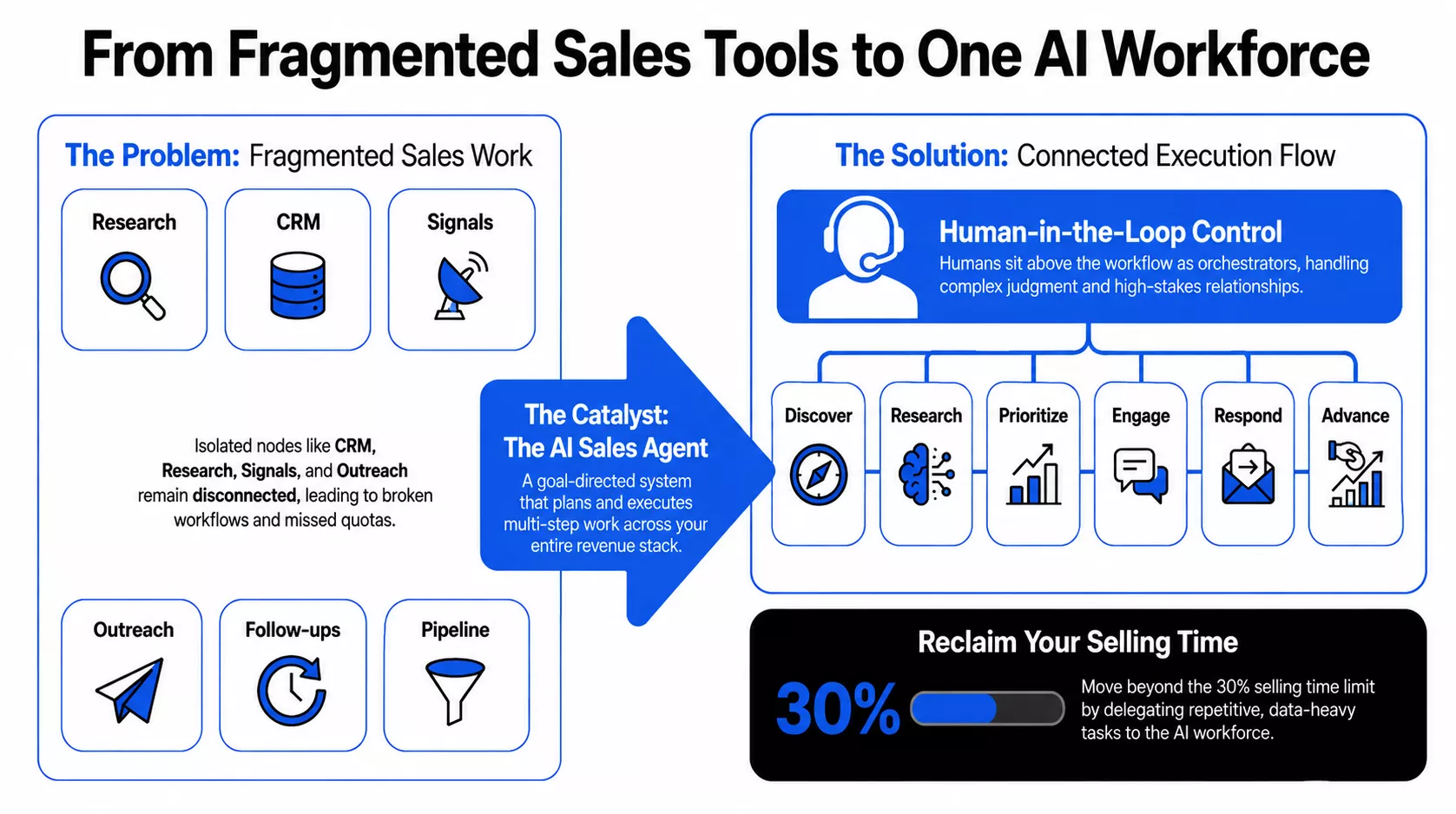
Sales teams have more AI than ever, yet the productivity problem remains. Sales AI Agents can take repetitive work off your team's plate, but adding another tool does not automatically improve execution. In 2026, 78% of B2B sellers missed quota in 2025, w…