Enterprise AI Chatbot vs ChatGPT: Key Differences Businesses Need to Know

Key Takeaways
- ChatGPT accelerates employee productivity but cannot access internal systems, trigger workflows or execute business operations independently.
- Enterprise AI chatbots connect to CRMs, ERPs and support platforms to complete structured tasks not just generate responses.
- Regulated industries require audit logs, role-based access and compliance-safe deployment that general-purpose AI tools do not provide architecturally.
- Businesses combining conversational AI with operational chatbots cover both employee productivity and customer-facing execution without choosing between them.
- The right AI decision depends on whether your business needs faster knowledge work or reliable workflow execution at scale.
You've probably been in a meeting where someone suggests using a proper enterprise AI chatbot, and someone else speaks up, "can't we just use ChatGPT? We're already on it." Fair point. ChatGPT is fast, impressive, and your team is already using it. So why would you need anything else?
Because there's a difference between a tool your employees use and a system your business runs on. ChatGPT is brilliant at answering questions but it doesn't know your internal policies, it can't pull from your CRM, it won't stay inside your compliance boundaries, and every conversation your team has on it is training someone else's model. Enterprise AI chatbots are built for exactly what ChatGPT isn't. Your data, your workflows, your security rules, your customers. The confusion between the two isn't just a technicality. It leads to real decisions. This post breaks down what actually separates them, so you know what you're getting with ChatGPT, and what you're missing without an enterprise solution.
Enterprise AI chatbot or ChatGPT comes down to ownership, integration, and operational control. ChatGPT helps employees research, write, summarize, and brainstorm faster. Enterprise AI chatbots are designed to run business workflows using internal data, CRM integrations, automation rules, and compliance controls. Businesses use ChatGPT for productivity, while enterprise chatbots support customer operations, workflow execution, and secure enterprise-scale automation.
What is ChatGPT?
ChatGPT is a general-purpose conversational AI built on large language models (LLMs). It is designed to generate, reason through, and respond to natural language across almost any topic, for almost any user.
It is not an enterprise chatbot platform. It is a productivity tool.
ChatGPT excels at tasks that require language generation and reasoning:
- Drafting emails, proposals, SOPs, and communications
- Brainstorming ideas, frameworks, campaign angles
- Summarization of long documents, meeting notes and reports
- Coding support, debugging, boilerplate generation, code explanation
- Internal research, quick synthesis, competitive landscape overviews
- Productivity acceleration, the team spends less time staring at a blank page.
How Businesses Actually Use ChatGPT
Most enterprise teams use ChatGPT to get work done faster, not to run their business activities.
| Department | Common Use |
| Marketing | Content generation, ad copy, campaign briefs |
| HR | Job description drafting, policy documentation |
| Operations | Meeting summarization, internal comms |
| Engineering | Developer productivity, code reviews |
| Strategy | Research support, report synthesis |
The critical distinction: ChatGPT is exceptionally good at accelerating knowledge work. Teams use it to draft content, summarize reports, analyze information, generate code, brainstorm ideas, and support faster decision-making across departments. It improves how employees work with information, which is exactly why so many businesses started adopting it long before building dedicated AI infrastructure.
It has no access to your internal systems. It does not know your business data. It cannot trigger workflows, enforce compliance rules, or serve your customers at scale. That gap is exactly where a custom enterprise chatbot begins.
What is an Enterprise AI Chatbot?
An enterprise AI chatbot is a purpose-built business automation system. It is designed to execute workflows, connect to business systems and serve customers or employees at scale. It is not a general-purpose AI tool. It is an operational infrastructure.
Your Team Uses ChatGPT. But Does Your Business?
There is a difference between employee tools and operational systems. Close the gap.
A custom enterprise chatbot is built around how your business actually works:
- Reads and updates customer records in real time in CRM
- ERP, triggers and tracks business transactions
- APIs connect to any external or internal service
- Ticketing systems to create, route and resolve support tickets automatically
- With database access, queries live business data to answer accurately
- Pulls from your actual documentation and policies
- Works across chat, email, WhatsApp and web without switching systems
What Enterprise AI Chatbots Are Built For
An AI chatbot platform for enterprises is designed to automate structured business operations across customer support, internal workflows, lead management, scheduling, and transactional processes by connecting AI conversations with enterprise systems, business rules, databases, and operational workflows that require reliable execution at scale.
| Function | What It Does |
| Customer support automation | Resolves customer queries without human involvement |
| Appointment scheduling | Books, reschedules and confirms appointments automatically |
| Employee support | Answers HR, IT and policy questions using internal data |
| Transactional workflows | Processes orders, refunds and requests inside the conversation |
| Omnichannel automation | Delivers consistent responses across every channel your business uses |
The defining difference: Enterprise AI chatbots are built around business logic, integrations, and operational workflows. They connect with CRMs, ticketing systems, databases, internal knowledge bases, and enterprise applications to handle structured tasks, maintain context across interactions, and support reliable execution within defined business rules and compliance requirements.
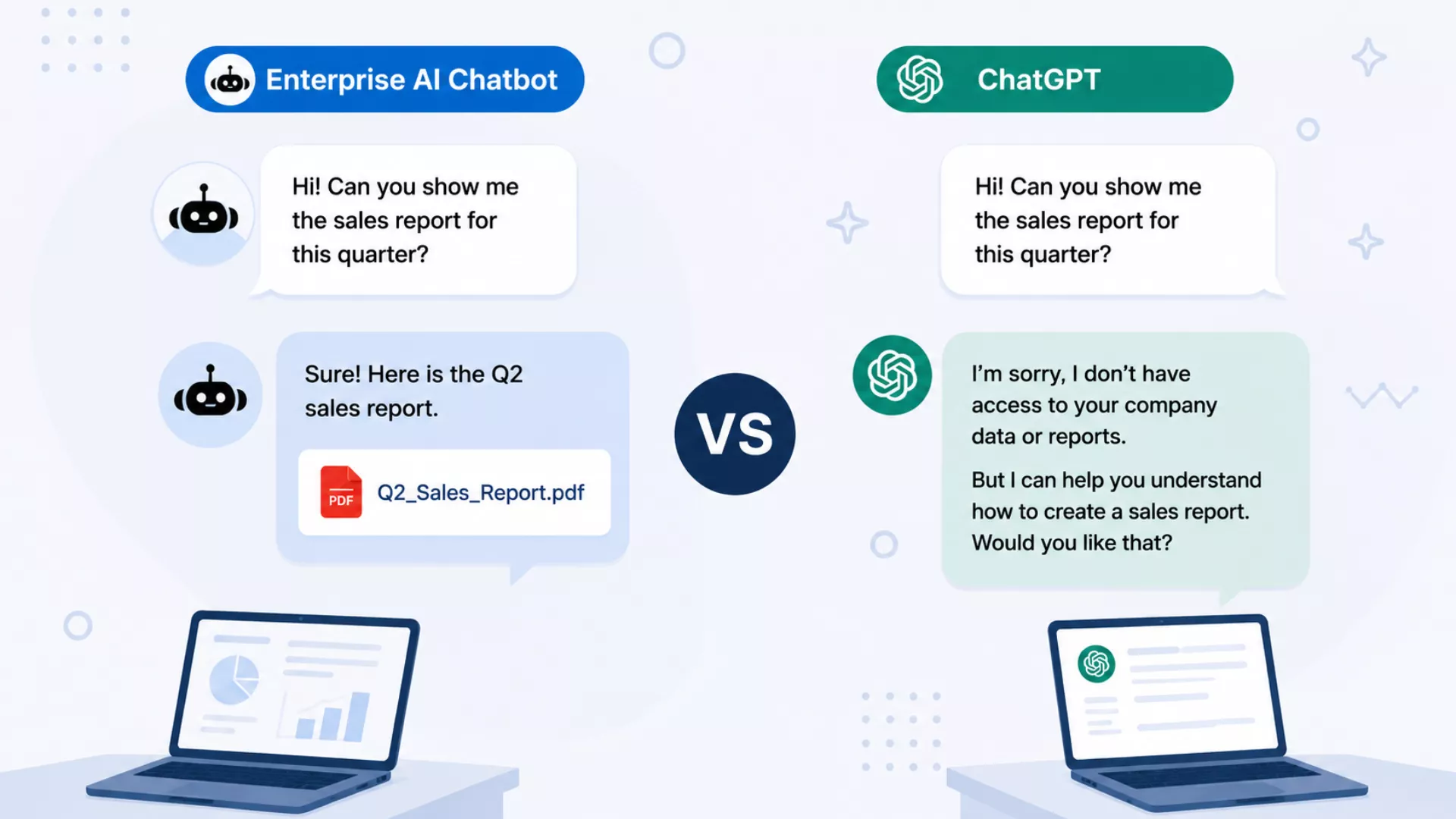
ChatGPT produces an answer. An enterprise AI chatbot takes an action. That distinction determines which one your business actually needs.
Enterprise AI Chatbot vs ChatGPT: Core Differences
Both can hold conversations, answer questions and generate human-like responses. The difference shows up the moment a business moves from experimentation to actual deployment.
| Comparison Area | ChatGPT | Enterprise AI Chatbot |
| Purpose | Productivity, drafting, research and reasoning support | Business workflow automation and operational execution |
| Data Access and Architecture | Pretrained public knowledge and uploaded context within a session | Connected to internal CRMs, ERPs, databases, APIs and knowledge bases |
| Integrations and Workflow Execution | Limited to conversation without external orchestration | Triggers workflows, updates records, routes tickets and processes requests natively |
| Security, Compliance and Governance | Admin controls available in business plans but operational governance remains limited | Role-based access, audit logs, compliance workflows and deployment controls built in |
| Customization and Business Logic | Custom GPTs and prompts for lightweight team-level tailoring | Deeply configured around company policies, escalation rules and operational logic |
| Scalability and Deployment | Workspace-based conversational platform | Omnichannel deployment across websites, apps, CRMs, Slack, Teams and internal systems |
| Accuracy and Hallucination Control | Can generate outdated or inaccurate responses without grounded business context | Uses retrieval systems and approved knowledge sources to reduce misinformation in operations |
| Analytics, Escalation and Ownership | Basic usage tracking and workspace visibility | Operational analytics, escalation routing, conversation tracking and full workflow observability |
What These Differences Actually Mean for Your Business
The gap between ChatGPT and an enterprise AI chatbot platform becomes real once AI moves beyond internal productivity use.
A marketing team using ChatGPT to draft campaign ideas is a different problem from a customer support system that verifies users, processes refunds and accesses sensitive account data. One is a writing assistant. The other is a business system.
- ChatGPT is built for conversational intelligence: It helps employees move faster on knowledge work, summarizing reports, generating content, analyzing information and brainstorming ideas. That is why teams in marketing, HR, operations and engineering adopt it quickly.
- An enterprise chatbot platform operates closer to the business infrastructure. It not only generates a response. It connects to operational systems and completes structured tasks within predefined business rules, checking order status from a CRM, routing a support ticket, scheduling an appointment or escalating a conversation to a human agent automatically.
One Conversation. One Resolved Ticket.
GetMyAI connects to your CRM and completes workflows inside a single customer conversation.
- This distinction changes how businesses should evaluate scalability. An LLM vs enterprise chatbot comparison is not about which AI is smarter. It is about reliability, governance, compliance, exposure and operational control.
- The gap widens further in regulated industries. Healthcare, finance, insurance and ecommerce businesses often require audit trails, role-based access controls and data retention policies. Conversational capability alone does not cover that.
The clearest way to frame it: ChatGPT answers questions. An enterprise AI chatbot participates in business operations.
Where ChatGPT Falls Short in Enterprise Operations
ChatGPT is a capable productivity tool. But productivity and operations are different problems.
No Real-Time Business Context
- ChatGPT cannot access your CRM, ERP or internal databases during a conversation. It works only with what it was trained on or what a user manually pastes in.
- Businesses relying on it for customer-facing or data-dependent tasks risk serving outdated or incomplete information.
Limited Workflow Execution
- ChatGPT can describe how to process a refund. It cannot process one. Backend workflows require integrations and orchestration that ChatGPT does not natively provide.
- Enterprise automation tools need to complete tasks inside business systems. ChatGPT stops at the response.
Hallucination and Compliance Risk
- Without grounded business data, ChatGPT can generate confident but inaccurate answers. In regulated industries, this creates real compliance exposure.
- A secure enterprise AI chatbot platform controls what the system can say and what sources it draws from.
Security and Operational Observability
- Employees using ChatGPT with sensitive business data create shadow AI risks that most IT and compliance teams cannot monitor or govern.
- Enterprise operations require audit trails, role-based access and deterministic controls. ChatGPT's current architecture was not built around those requirements.
When Businesses Should Use ChatGPT
ChatGPT delivers real business value before a company ever needs a full enterprise chatbot platform. It works best as a human productivity layer, accelerating thinking, writing, analysis and decision support in workflows where an employee reviews and applies the output.
Marketing and Content Teams
An MIT Economics study found professionals using ChatGPT for writing tasks completed work 37% faster and BCG research found 90% of employees improved performance on creative tasks with AI assistance.
- First draft generation for blogs, ad copy and campaign briefs
- Research summarization and competitive landscape overviews
- Faster ideation cycles without adding headcount
HR and Internal Documentation
AI-assisted drafting reduces structured documentation time by 40% to 50% according to OpenAI's economic studies.
- Job description drafting and policy formatting
- Onboarding content and internal communication templates
- Consistent documentation without rewriting repetitive material
Developers and Engineering Teams
GitHub and Microsoft research found developers completed coding tasks 55% faster with generative AI assistance and merged 60% more pull requests.
- Debugging support and boilerplate code generation
- Code documentation and onboarding for new engineers
- Faster prototyping without replacing engineering judgment
Analysts and Strategy Teams
A Harvard Business School and BCG study found AI-assisted teams completed 12.2% more tasks and finished analysis work 25.1% faster.
- Report synthesis and market research summarization
- Presentation structuring and trend identification
- Decision support for faster strategic planning cycles
ChatGPT performs exceptionally well when a human remains part of the workflow. The limitations begin once it is expected to access systems independently, execute workflows or handle customers.
When Businesses Should Use Enterprise AI Chatbots
Most companies start with AI for productivity. The shift toward an enterprise chatbot platform happens when businesses need AI to participate in actual operations rather than only assist employees. The priority is better answers along with workflow execution, system connectivity, compliance and large-scale customer resolution.
Customer Service and High-Volume Support
Forrester’s research found customers are 2.4 times more likely to stay loyal to brands that resolve issues immediately without queue delays. An AI-powered customer support chatbot becomes necessary when support volume outpaces what human teams can handle.
- Instant response times during peak periods and product launches without adding headcount
- CRM-connected conversations that already know customer history and open tickets before the chat begins
- Consistent support quality across time zones and high-volume events
Zendesk CX Trends research found 70% of consumers expect automated systems to know their account history upfront.
Transactional Workflows and Operational Execution
ChatGPT can describe how to process a refund. An enterprise chatbot can process it.
Modern enterprise chatbots complete refunds, subscription updates, order modifications, ticket creation, user verification and appointment scheduling inside a single conversation. Research on transactional AI deployments shows businesses can achieve up to a 75% containment rate for complex customer interactions. That directly reduces live-agent backlogs and resolution time.
Omnichannel Customer Engagement
A customer may start on website chat, continue on WhatsApp and follow up over email. Enterprise AI chatbot with various integrations preserves full context across every channel so customers never repeat themselves.
- 40% higher customer engagement from unified conversational AI deployments, according to McKinsey research
- Nearly 2x larger digital sales pipelines from consistent omnichannel execution
- No context loss when customers switch platforms mid-conversation
Compliance-Sensitive Operations
Healthcare, banking, insurance and government organizations cannot rely on general-purpose AI for customer-facing workflows. They need infrastructure built around governance from the start.
Industry research shows 82% of banks consider regulatory compliance the primary factor in AI adoption decisions. Enterprise AI frameworks with proper governance report compliance adherence rates approaching 89% across audits. Role-based access controls, audit logs, data retention policies and private deployment environments are not optional features here. They are deployment requirements.
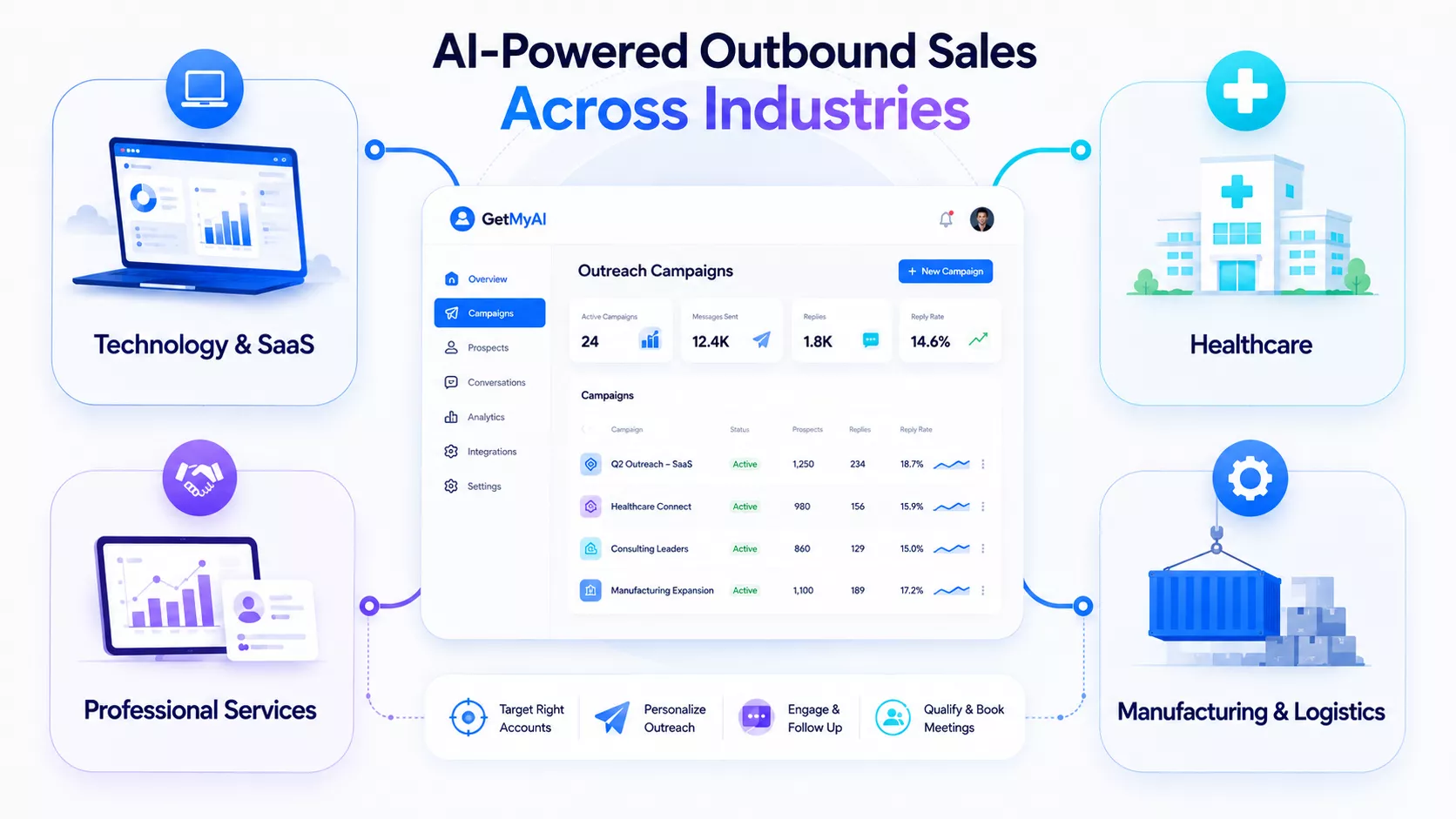
Industry-Specific Use Cases
Healthcare
Hospitals and clinics handle patient intake, insurance verification and appointment scheduling through conversational AI. Organizations deploying AI-powered chatbots in healthcare have reduced scheduling workflows to under 60 seconds and improved patient satisfaction scores by up to 67%.
BFSI
Banks use conversational AI for fraud alerts, transaction verification, account inquiries and customer onboarding. Institutions building on an AI chatbot for financial services handle 70% to 85% of retail banking inquiries end-to-end, according to McKinsey research.
E-commerce
Enterprise chatbots recover abandoned carts, automate returns and personalize product recommendations at scale. Businesses using an enterprise AI chatbot solution for e-commerce see AI-assisted conversion rates of 12.3% compared to 3.1% for traditional browsing.
SaaS
SaaS companies automate onboarding, technical troubleshooting and ticket deflection through conversational AI. Teams running an AI chatbot for SaaS customer support report a 45% reduction in engineering escalations.
Education
Universities and institutions use conversational AI for admissions guidance, financial aid assistance and enrollment support. Schools that have adopted an AI chatbot for student support report a 30% reduction in dropped applications.
Manufacturing
Manufacturers connect conversational AI directly into ERP systems for inventory visibility, equipment troubleshooting and supply chain coordination. Deploying AI-driven agents in the manufacturing industry improves operational productivity by approximately 30%.
Real Estate
Agencies use conversational AI for lead qualification, tour scheduling and listing inquiries. The demand for a chatbot for real estate websites is growing fast, with over 72% of major property owners actively increasing AI investment across their portfolios.
Your Industry Is Already Moving on This.
Businesses across every sector are deploying operational AI before their competitors close the gap.
Security and Compliance: Why Architecture Matters More Than Policy
A secure enterprise ai chatbot platform is not built on privacy promises. It is built on architecture that makes data exposure structurally impossible.
Data Governance and Privacy Control
Enterprise platforms use zero-data retention APIs with anonymization proxies that automatically scrub PII before it reaches the LLM. Your customer conversations never train public models.
Encryption at Every Layer
AES-256 encryption protects data at rest. TLS 1.3 secures data in transit. Field-level encryption covers sensitive columns like health IDs and payment records.
Audit Logs and Access Control
Tamper-proof logs stream in real time into existing SIEM systems like Splunk or Datadog. Role-based permissions integrated via SAML 2.0 or OIDC ensure every user sees only what their role permits.
Compliance Standards Built Into the System
A private ai chatbot for enterprises operating in regulated industries requires SOC 2 Type II certification, GDPR-compliant data deletion workflows and signed HIPAA Business Associate Agreements. These are not checkboxes. They are contractual and architectural commitments.
Private Cloud and VPC Deployment
Enterprise-grade AI can be deployed inside an AWS VPC, Google Cloud or Azure Private Link environment. Zero data touches the public internet.
Security in enterprise AI is not a feature tier or a settings toggle. AI Chatbot Security & Privacy covers data governance, encryption, access control, compliance standards and deployment environment. Businesses that treat these as afterthoughts inherit the liability that comes with them.
Which One is Right for Your Business?
The enterprise AI chatbot vs ChatGPT decision gets simpler once businesses stop evaluating both as the same category of tool. ChatGPT solves a productivity problem. Enterprise AI chatbots solve an operational problem. The wrong choice happens when businesses deploy one when the other is actually required.
Choose ChatGPT If
- Your teams are spending too much time on first drafts, research and repetitive knowledge work that AI can accelerate immediately.
- You want productivity wins across marketing, HR, sales and development without building complex integrations or changing existing systems.
- Employees are already using AI informally and you want to standardize that into something structured and measurable.
- The work your teams do does not require the AI to access live business data or trigger anything inside your systems.
- You need results quickly and a lightweight productivity layer is the right starting point before committing to larger AI infrastructure.
Choose an Enterprise AI Chatbot If
- Your customer support team is overwhelmed and you need AI that can actually resolve issues rather than just answer questions.
- You are losing revenue to slow response times, inconsistent support or workflows that still require too much human coordination.
- Your business operates in healthcare, finance or any regulated industry where governance and compliance are non-negotiable requirements.
- Customers are contacting you across multiple channels and your team is struggling to maintain context and consistency across all of them.
- You have outgrown productivity tools and need AI that connects to your systems and executes workflows without human intervention at every step.
Why Many Businesses Combine ChatGPT with Enterprise AI Chatbots
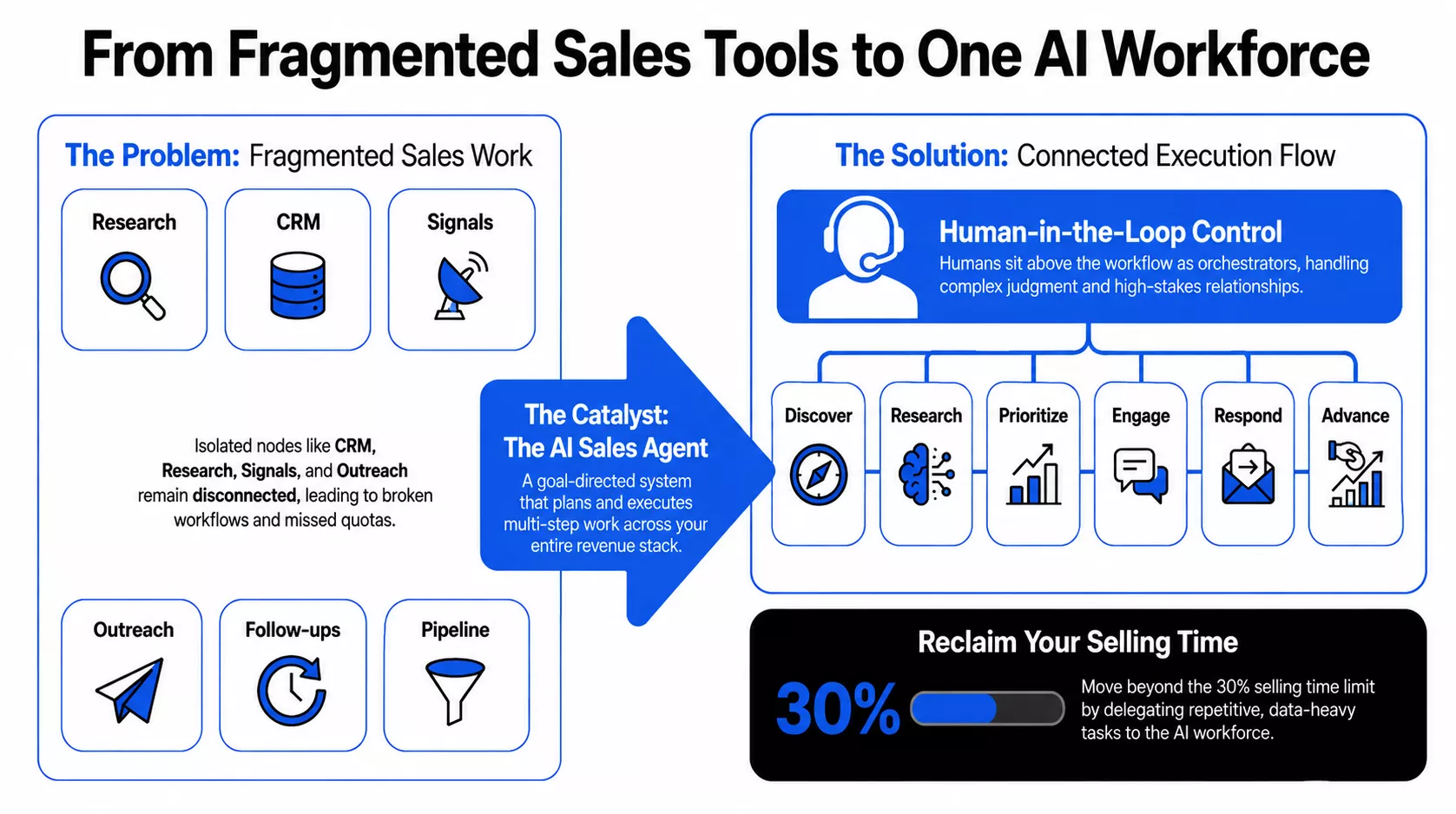
Most organizations reach a point where ChatGPT is not enough on its own but replacing it entirely does not make sense either. The smarter move is combining both. ChatGPT handles the thinking. The enterprise chatbot handles the doing.
This is why the custom AI chatbot vs ChatGPT conversation is shifting away from "which one" toward "how do both fit together." Conversational intelligence and operational execution are different capabilities and most mature enterprise AI stacks need both.
How the Layered Architecture Works
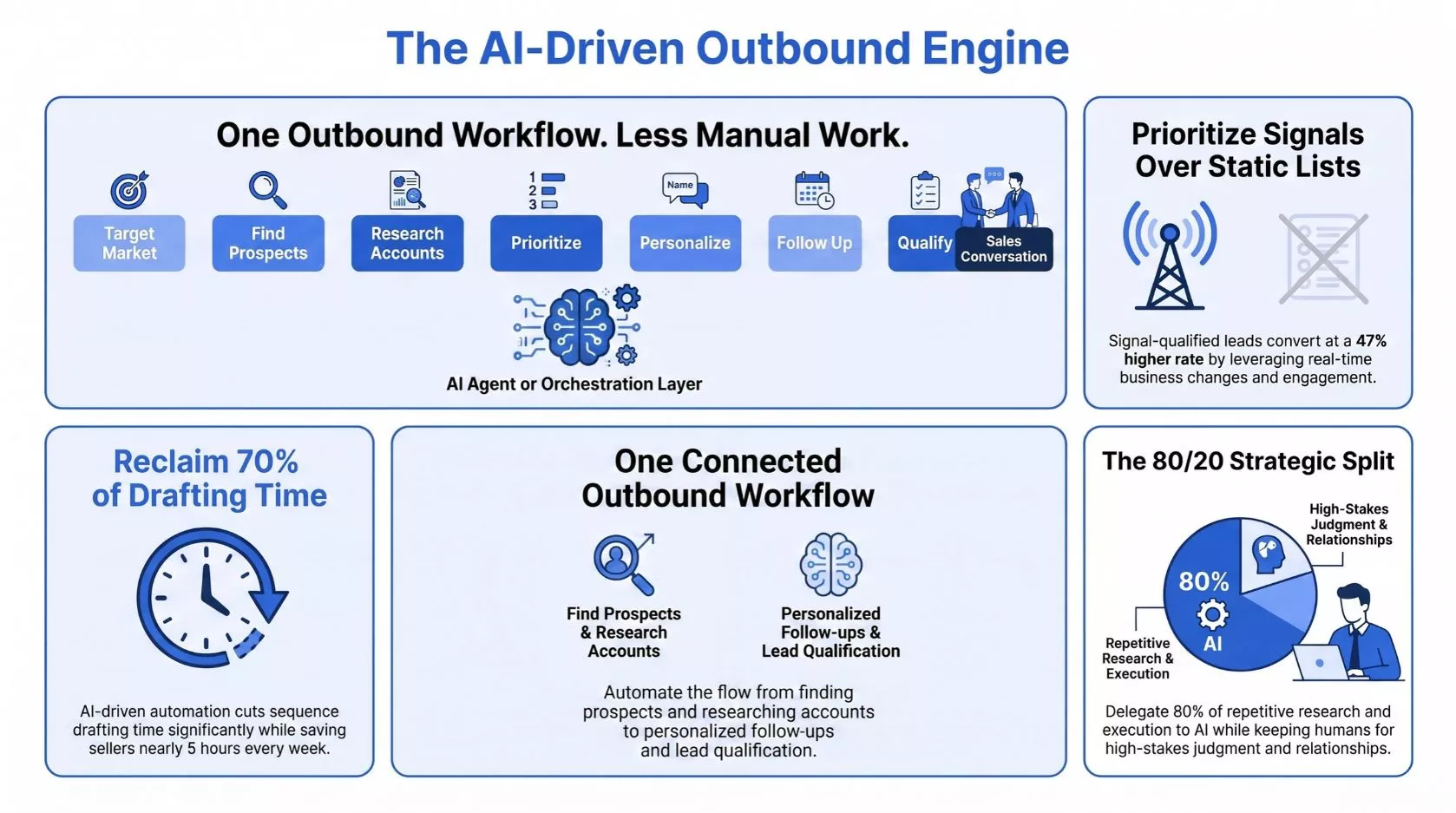
Businesses use ChatGPT for reasoning-heavy work like drafting, summarization, internal research and decision support. The enterprise chatbot runs underneath as the execution layer connected to CRMs, ERPs, ticketing systems and internal workflows.
- ChatGPT: Helps employees draft, research, summarize and make faster decisions
- Enterprise AI Chatbot: Connects to business systems and executes workflows end to end
- Your Customers: Get faster, accurate and context-aware responses across every channel
- Your Support Teams: Focus on complex cases while the chatbot handles routine interactions
- Your Operations: Run with full visibility, audit trails and governance built in
Why Businesses Are Moving in This Direction
The numbers reflect how fast this shift is happening. Industry forecasts show nearly 40% of enterprise applications will include task-specific AI agents by the end of 2026, compared to less than 5% in 2025.
Organizations combining both systems need AI that helps employees work smarter and executes business operations reliably. One without the other leaves a gap that slows down the entire AI investment.
ChatGPT improves how employees think and work. An AI business automation platform improves how the business actually operates. Together, they cover both.
Key Questions to Ask Before Choosing an AI Solution
The right AI choice becomes obvious once you are honest about what your business actually needs to operate.
| Question | What Your Answer Reveals |
| What systems does AI need to connect to and how much of the workflow should it handle automatically? | If CRMs, ERPs or support platforms are involved, you need an enterprise chatbot platform not a productivity tool |
| Will AI interact directly with customers and does it need to work consistently across multiple channels? | Customer-facing operations at scale require omnichannel execution and system-connected responses not just conversational ability |
| Do you operate in a regulated industry and does the AI need private or custom deployment options? | If compliance is non-negotiable, the platform needs audit logs, role-based access and private cloud deployment built into its architecture |
| When does AI hand off to a human and what visibility do you need over those conversations? | If escalation and oversight matter, you need operational analytics and deterministic handoff controls not basic usage tracking |
| Does the AI need to work across languages and how closely must it follow your specific business logic? | Global operations and complex workflows require deep customization that goes beyond prompt engineering or off-the-shelf configuration |
GetMyAI: Built for Enterprise Operations, Not Just Conversations
Most businesses eventually realize that conversational intelligence alone does not create operational AI. ChatGPT is exceptional at language generation, reasoning and summarization. It helps employees think faster and work more efficiently. But once AI needs to participate in customer operations, support resolution, lead capture or omnichannel communication, a different layer becomes necessary.
GetMyAI is an AI chatbot platform for enterprises built around that execution layer. It connects conversational intelligence to the systems a business actually runs on rather than functioning as a standalone chat interface.
What GetMyAI offers:
- AI agents deployed across websites, WhatsApp, Slack, Telegram and Instagram with consistent context across every channel
- Customer support assistants are connected to your business knowledge sources and documentation
- Ecommerce assistants with product catalogs, comparisons and add-to-cart workflows built into the conversation
- Conversational lead capture with intelligent forms and automatic lead prioritization
- Appointment booking connected to Calendly, Google Calendar and Cal.com without manual coordination
- Analytics covering adoption, engagement, channel performance and operational visibility
- Human escalation controls, role-managed access and secure deployment settings built into the architecture
A language model generates responses. GetMyAI manages deployment, workflow orchestration, integrations, governance and continuous improvement around those responses. It operationalizes it across the systems and channels your business depends on.
Ready to Operationalize Your AI Stack?
Talk to the GetMyAI team and see how it fits your business operations from day one.
FAQs
What is chatbot AI compared to ChatGPT?
Chatbot AI covers any system built to automate conversations, whether that means answering customer questions, routing support tickets or executing business workflows. ChatGPT is one type of conversational AI focused on reasoning, drafting and summarization. Enterprise chatbot platforms go further by connecting AI directly to business operations.
What is the main difference between ChatGPT and an enterprise AI chatbot?
ChatGPT generates responses. Enterprise AI chatbots take actions. ChatGPT helps employees write faster, think through problems and summarize information. An enterprise chatbot connects to your CRM, support systems and internal workflows to complete tasks, not just describe them.
How do enterprise AI chatbots prevent making up false information?
They do not rely on general training data alone. GetMyAI pull responses from approved business documents, internal knowledge bases and live operational systems. When the answer is outside that scope, escalation rules hand the conversation to a human agent instead of guessing.
When should a business use ChatGPT versus an AI agent?
Use ChatGPT when the goal is to help employees work faster on drafting, research, summarization and analysis. Use an AI agent when the business needs autonomous execution, such as updating records, verifying users, routing tickets or automating customer-facing workflows without manual intervention.
Can ChatGPT connect directly with enterprise systems like CRMs and ERPs?
It can connect through APIs and custom integrations but it was not built to manage that orchestration natively. Enterprise AI chatbot platforms are purpose-built to handle structured integrations, automate workflows and maintain reliable execution across business systems at scale.
Why are businesses combining ChatGPT with enterprise AI chatbot platforms?
Because they solve different problems. ChatGPT makes employees more productive. Enterprise AI platforms make business operations more efficient. Combining both means your teams get better at knowledge work while your customer operations, workflows and governance run independently without requiring human coordination at every step.