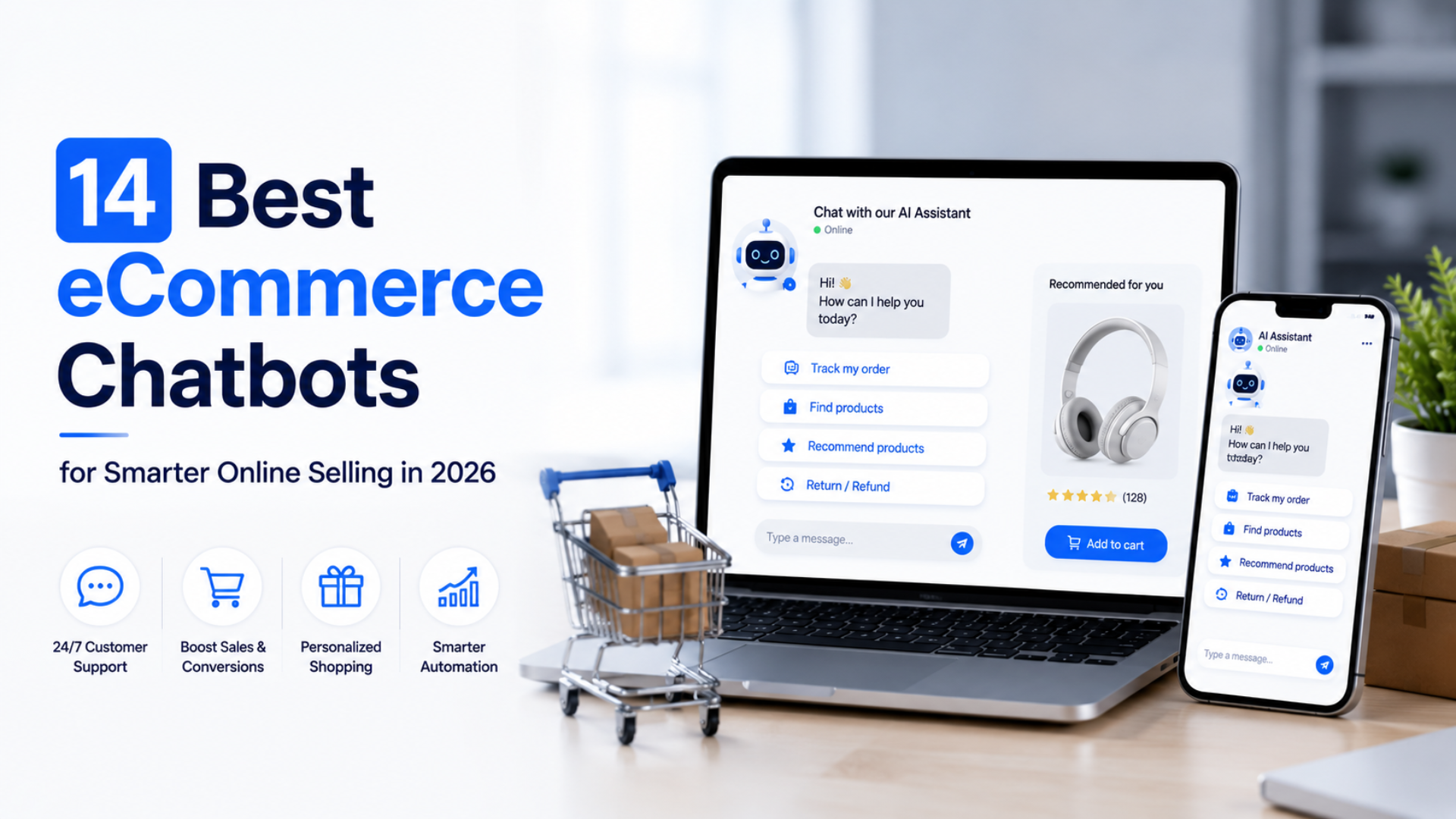
14 Best eCommerce Chatbots for Smarter Online Selling in 2026

Online shopping never sleeps. Customers browse at midnight, ask questions during lunch breaks, and expect answers right now. This shift has changed how online stores work. Email replies that take hours are no longer enough. Live chat teams struggle to keep up. This is where an AI chatbot for e-commerce platform adoption becomes less of a choice and more of a requirement.
Chatbots are no longer simple pop-ups that answer basic questions. Today, they guide shoppers, explain products, track orders, recover abandoned carts, and even help close sales. For many brands, chat is now the first conversation, not the last step.
But not all chatbots are built the same. Some focus on customer support. Others focus on selling. A few try to do both. Picking the wrong tool can slow teams down instead of helping them. This guide compares 14 top platforms to help eCommerce businesses see what truly matters, what to check for, and which tools match different needs without the noise.
Benefits of an E-commerce Chatbot
Before reviewing tools, it helps to know what makes a chatbot useful instead of frustrating. A strong eCommerce chatbot should feel helpful, not mechanical. It should reduce effort, not create extra tickets.
Here are the main things that matter most:
- Product discovery and catalog understanding: The chatbot should know products, options, prices, and stock. It should help shoppers choose instead of confusing them.
- Order and shipping query handling: Order tracking, delivery updates, returns, and refunds should be easy and quick to resolve.
- Integration with eCommerce platforms: Native connections to platforms like Shopify, WooCommerce, or custom stores are critical.
- Human handoff capability: When things get complex, the chatbot should pass the conversation to a human smoothly.
- Analytics and optimization insights: Good bots show what customers ask, where they drop off, and how conversations affect sales.
When these elements come together, businesses don’t just reduce tickets. They improve conversions, response time, and customer trust.
Top Best eCommerce Chatbots: Comparison and Examples
This list focuses on platforms with genuine eCommerce DNA, rather than generic bots. Every tool here fills a specific niche based on your brand's size, sales approach, and support needs. In this market, there is no "best" overall, only the best fit for your specific operations.
GetMyAI
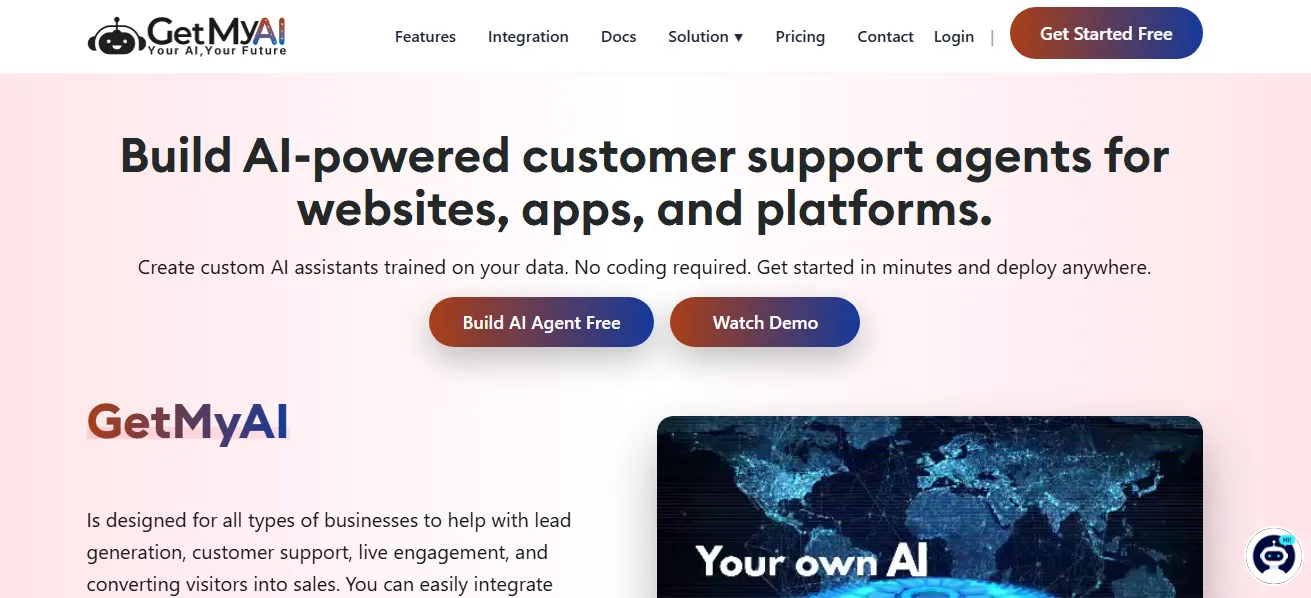
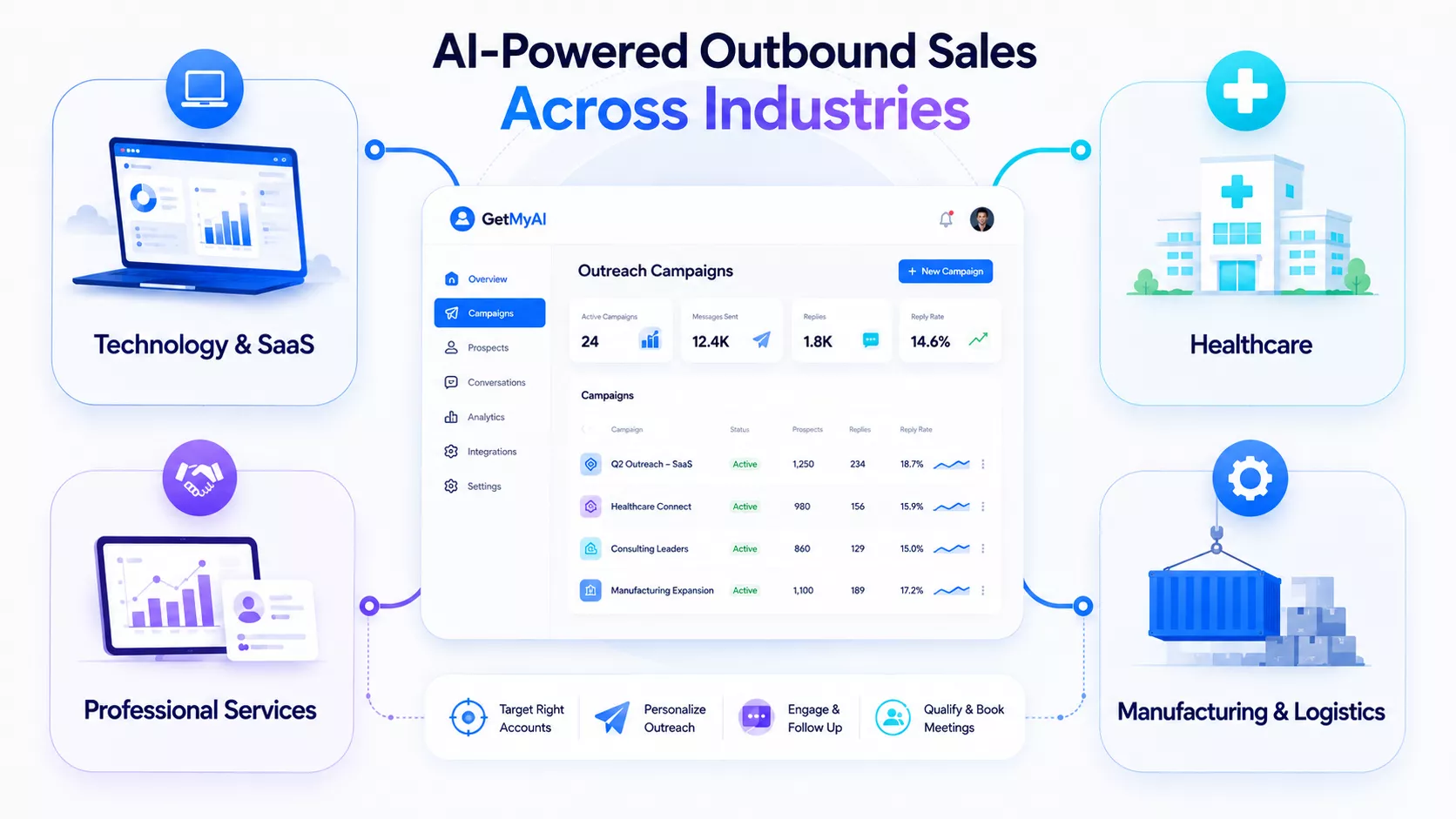
GetMyAI helps turn quiet visitors into real shoppers using smart and friendly conversations. It watches actions like staying too long on product pages or moving toward the exit button to start useful chats at the right time. The platform shines at guided selling and lead sorting, showing how AI chatbots for selling in e-commerce cut problems just before a shopper decides to leave.
It works well for D2C brands that want more sales without growing their support team. While it connects easily with modern tools, stores using older and deeply customized legacy systems may need extra developer help to unlock full automation.
Tidio
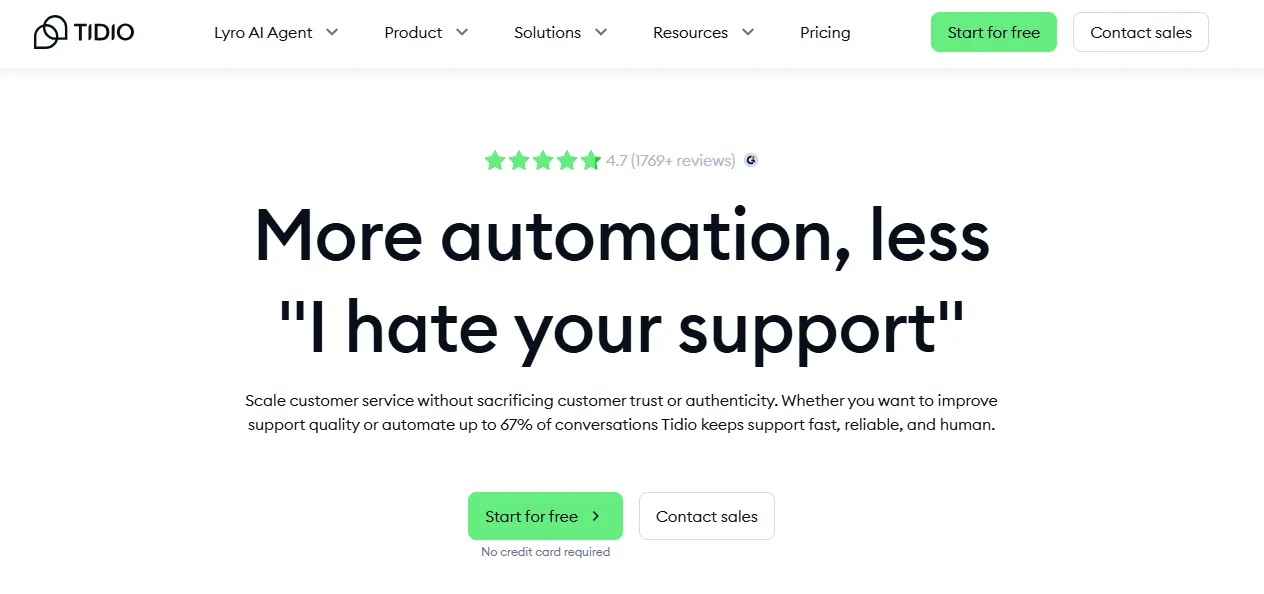
Tidio pairs live chat with accessible AI to manage the day-to-day grind of eCommerce support. Its visual, no-code builder is a lifesaver for non-technical teams who want to map out custom flows. Their Lyro AI agent handles the "where is my order" (WISMO) basics and FAQs, keeping the vibe friendly while speeding up response times.
Small-to-mid-sized Shopify and WooCommerce sellers will find Tidio incredibly easy to launch. Just keep in mind it’s lighter on backend actions; you’ll likely still need a human to step in for things like processing refunds or checking granular inventory levels.
YourGPT

YourGPT combines customer support, sales automation, and operations into a single omnichannel AI platform. Its agents learn continuously from customer interactions, improving response accuracy without manual retraining. This makes YourGPT especially effective for teams that prioritize automation quality and want AI that gets smarter over time.
Growing SaaS companies and e-commerce teams love YourGPT for its no-code deployment and 150+ integrations. However, credit-based pricing scales with usage volume and model selection, and it is the right choice if you need advanced MFA security for highly regulated industries.
AeroChat

AeroChat is an omnichannel AI agent platform that helps e-commerce brands run customer service on autopilot and turn customer conversations into revenue. Its native Shopify integration syncs live product data, inventory, pricing, discounts, and order details so the AI can handle product questions, recommend items, surface active promotions, recover abandoned carts, and provide order updates automatically - helping customers buy more and buy faster. It connects web chat, WhatsApp, Instagram, Facebook Messenger, Telegram, and email in a single platform, eliminating the need to manage separate tools for each channel.
AeroChat's self-learning AI helps merchants fine-tune and improve answers over time - particularly for gaps in their knowledge base - so that subsequent similar questions never need a manual response again. It also supports webhook integrations that extend conversations into other parts of the business, triggering workflows in external systems for order management, CRM updates, or custom automations.
Gorgias
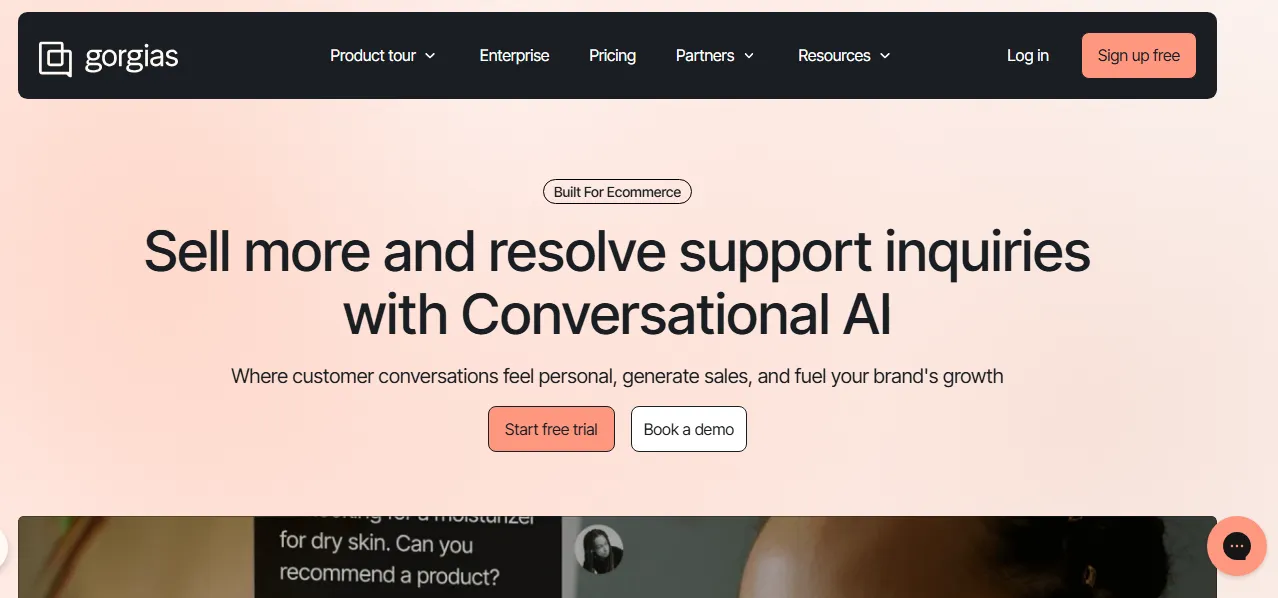
Gorgias is the gold standard for support-heavy brands living in the Shopify ecosystem. It pulls email, chat, and social DMs into one view, giving agents a 360-degree look at the customer. Because it has a direct line to your order data, it can autonomously update shipping addresses or issue discount codes on the fly.
High-growth Shopify stores get the most ROI here thanks to that deep integration. However, the ticket-based pricing can get pricey as you scale, and if you aren't on Shopify, you might find the features a bit more restrictive.
Zendesk

Zendesk is the heavyweight champion of enterprise-grade support. Built for massive scale, it offers sophisticated routing, omnichannel management, and robust automation. Its Answer Bot is excellent at deflecting high-volume, repetitive queries, while the broader system connects seamlessly to complex internal databases and ERPs.
Global retailers use Zendesk to keep massive, multi-region teams in sync. For a small startup, however, the sheer complexity and per-agent pricing can feel like overkill, often requiring a dedicated admin just to keep the lights on.
Intercom
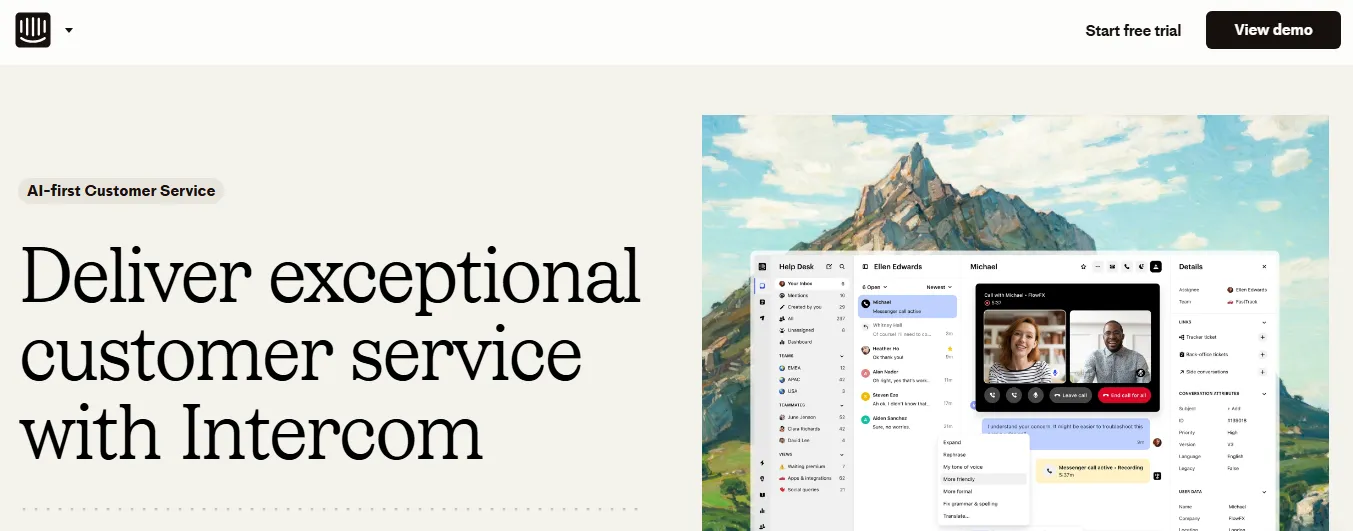
Intercom combines customer support, onboarding, and marketing into a single conversational platform. Its AI agent, Fin, generates responses directly from verified help center content, ensuring accuracy and consistency. This makes Intercom especially effective for brands that prioritize clear documentation and structured knowledge delivery.
Intercom suits tech-forward eCommerce brands and SaaS-retail hybrids. Pricing is often tied to conversation resolutions, which means costs can rise quickly if automation is not carefully monitored and optimized.
ManyChat

ManyChat isn't for your website; it’s for winning at social commerce. It automates the "DM to buy" experience on Instagram, Facebook, and WhatsApp. Whether you’re running a comment-to-automation campaign or guiding someone through a WhatsApp funnel, its visual builder makes social engagement feel effortless.
If your brand lives on Instagram or relies on influencer marketing, ManyChat is essential. Just remember it’s not a full-service helpdesk; most stores use it for the front-end sales funnel and use another tool for long-term customer support.
Chatfuel
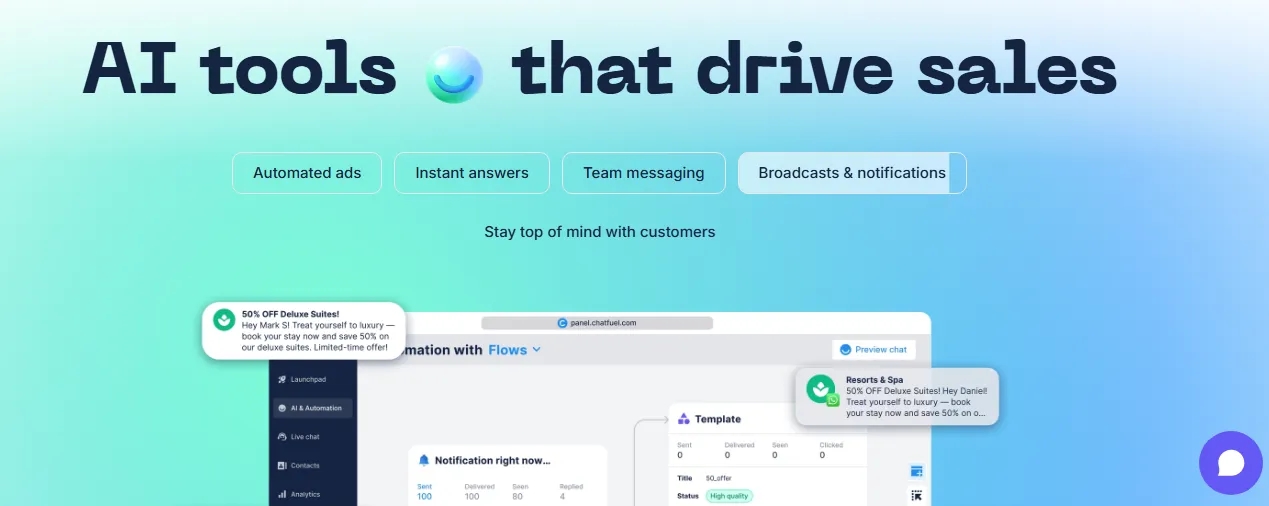
Chatfuel offers a straightforward, "get it done" approach to Meta-based automation. It’s perfect for setting up basic lead capture, automated replies, and product inquiries on Facebook and Instagram without needing a developer. It’s built for speed and getting your social messaging off the ground quickly.
Solo founders and small shops love Chatfuel for its low barrier to entry. However, its web chat features are fairly thin, and it isn't the right choice if you need a bot to handle complex post-purchase logistics or deep backend integrations.
Ada
Ada is built for enterprises that can’t afford to play fast and loose with data. It focuses heavily on governance and security, allowing large-scale retailers to build complex, multilingual AI workflows that stay within brand guidelines. Its low-code environment lets non-dev teams manage sophisticated, intent-aware automations safely.
Global brands with strict compliance needs will find Ada’s stability worth the price. Because of the high cost and long setup time, it’s usually not the right fit for early-stage eCommerce teams looking for a quick win.
Zowie
Zowie is a specialized powerhouse for high-volume retailers who want to automate the "boring" stuff. It’s focused specifically on post-purchase cycles like returns and exchanges. Since the AI is trained on millions of retail-specific interactions, it’s incredibly accurate and rarely suffers from the "hallucinations" common in generic bots.
Established brands with a mountain of support tickets will see a massive drop in agent workload here. Smaller shops might find the feature set too niche and the enterprise pricing too steep for their current stage of growth.
Octane AI

Octane AI focuses on conversational quizzes that help shoppers find the right products quickly. Instead of a traditional chat, it uses conversational quizzes to help customers find their perfect match. This allows brands to collect valuable zero-party data and serve up personalized recommendations that significantly lift average order values.
Beauty and wellness brands, where "finding the right shade" is everything, thrive with Octane AI. Since it’s primarily a pre-purchase tool, you’ll almost certainly want to pair it with a dedicated support bot to handle your shipping and billing questions.
LivePerson
LivePerson is an expansive conversational AI cloud built for the Fortune 500. It manages massive volumes across voice and text, integrating directly into heavy-duty CRM and ERP systems. Its real strength lies in its orchestration tools, which manage the handoff between AI and humans across global departments.
Massive retailers with complex internal structures rely on LivePerson for high-level visibility. It’s a resource-heavy platform, though, requiring a dedicated team of experts to keep the automation optimized and the data flowing correctly.
Tolstoy
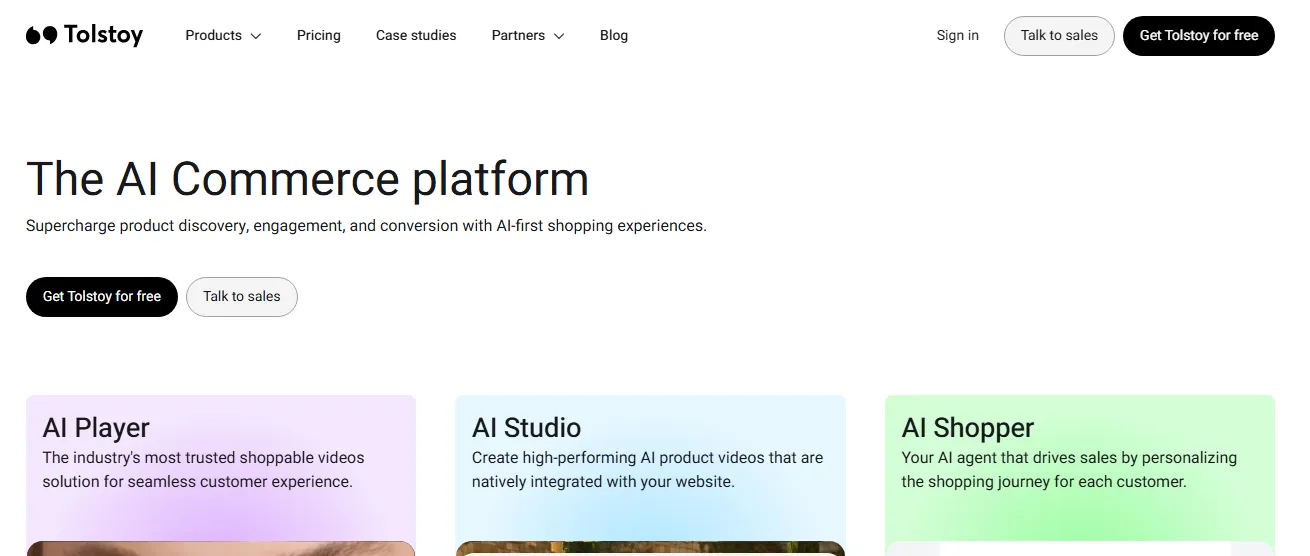
Tolstoy turns the traditional chatbot on its head by adding video. It’s all about visual discovery, letting customers watch shoppable videos and interact with an AI assistant to get their questions answered. This builds trust and mimics the in-store experience much better than text ever could.
For lifestyle and fashion brands where "the look" is everything, Tolstoy is a modern tool for conversion. Its focus is firmly on the top of the funnel, so don't expect it to handle complex ticket routing or order management tasks.
Feature Comparison Table
| Platform | Best For | Key e-commerce Strength |
| GetMyAI | Lead management | Proactive sales conversations |
| Tidio | SMB growth | Easy no-code setup |
| YourGPT | Automated Customer Support | Automate support and improve product discovery |
| AeroChat | E-commerce sales and support | Shopify-native revenue automation |
| Gorgias | Shopify support | Direct order actions |
| Zendesk | Enterprise scale | Omnichannel routing |
| Intercom | SaaS + retail | Content-grounded AI |
| ManyChat | Social commerce | Campaign automation |
| Chatfuel | Meta channels | Simple social bots |
| Ada | Compliance | Secure enterprise automation |
| Zowie | Support resolution | Post-purchase workflows |
| Octane AI | Personalization | Quiz-based discovery |
| LivePerson | Orchestration | Voice + chat scale |
| Tolstoy | Visual selling | Shoppable video |
How to Choose the Right eCommerce Chatbot
Choosing the right chatbot is like adding a 24/7 sales and support agent to your store. The goal is not to pick the most popular tool, but the one that fits how your business operates today and how it will scale in the future.
1. AI Capabilities & Understanding
At the core of any chatbot is its ability to understand customers. A strong solution should go beyond keywords and accurately interpret real queries, even when phrased differently. Whether a customer asks about order tracking or product details, the chatbot should respond naturally and with high accuracy.
It should also handle multiple languages and adapt to different user intents. Advanced AI systems can even anticipate needs, making interactions feel more intuitive rather than reactive.
2. E-commerce Integrations
A chatbot should never operate in isolation. It needs to connect seamlessly with your existing systems, such as your eCommerce platform, CRM, and inventory tools. This ensures that responses are based on real-time data rather than static information.
The best solutions can go a step further by performing actions, such as checking stock, updating orders, or initiating refunds. This turns the chatbot from a simple support tool into an operational asset.
3. Personalization & Product Recommendations
Modern chatbots are not just for answering questions; they also play a key role in driving sales. A well-designed system can recommend products based on user behavior, previous purchases, or browsing patterns.
Instead of generic suggestions, the experience should feel tailored and relevant. This level of personalization helps increase engagement, improve conversions, and boost average order value.
4. Omnichannel Support
Customers interact with brands across multiple channels, and your chatbot should be able to follow them seamlessly. Whether the conversation starts on your website, social media, or messaging apps, the experience should remain consistent.
A unified conversation flow ensures that customers do not have to repeat themselves, creating a smoother and more connected journey.
5. Analytics & Performance Tracking
Behind every effective chatbot is strong data visibility. You should be able to track what customers are asking, where conversations drop off, and how well the system is resolving queries.
Clear analytics help identify gaps in support and opportunities for improvement. Over time, this data becomes essential for optimizing both customer experience and business performance.
6. Scalability, Ease of Use & Cost
The right chatbot should be easy to implement and manage, especially for teams without technical expertise. At the same time, it should be capable of scaling as your business grows, handling higher volumes of conversations without compromising quality.
Cost structure is equally important. A transparent and scalable pricing model ensures that the tool remains sustainable as usage increases.
7. Alignment with Your Business Goals
Every business has different priorities. Some need to reduce support workload, while others focus on increasing sales and conversions. The chatbot you choose should align with your primary objective.
A support-focused business will benefit from automation and fast query resolution, while a growth-focused brand should prioritize engagement, recommendations, and revenue-driving interactions.
The best eCommerce chatbot is not just a support tool; it becomes part of your customer experience and growth strategy. Choosing the right one means finding a balance between functionality, usability, and long-term scalability.
Conclusion
There is no single chatbot that works best for all businesses. Each platform serves a different job in the e-commerce space. The right choice depends on goals, growth stage, and customer needs. A smart chatbot improves reply speed, cuts support load, and raises revenue. A quick choice can cause problems. Taking time to compare saves money, effort, and frustration later. As online shopping changes, chat tools will stay important for growth. Smart choices today lead to stronger results tomorrow.
FAQs
1. How does GetMyAI Shopping Agent work?
GetMyAI Shopping Agent monitors user behavior in real time, such as time spent on product pages or exit intent, and triggers relevant conversations at the right moment. It answers questions, recommends products, and guides users through the buying process, helping convert interest into action without requiring manual intervention.
2. How do AI shopping assistants increase sales?
AI shopping assistants increase sales by engaging customers at key decision points. They recommend products based on behavior, answer objections instantly, and guide users toward completing purchases. By reducing hesitation and improving product discovery, they help boost conversion rates and average order value.
3. How does the Shopping Agent reduce cart abandonment?
The Shopping Agent identifies when users are about to leave or hesitate during checkout and intervenes with timely prompts. This can include answering last-minute questions, offering discounts, or simplifying decision-making. These real-time interactions help recover carts that would otherwise be lost.
4. How is an AI shopping assistant different from a chatbot?
A basic chatbot focuses on answering questions, often in a reactive way. An AI shopping assistant goes further by understanding user intent, predicting needs, and actively guiding the customer journey. It combines support, personalization, and sales into one continuous experience.
5. What metrics measure AI shopping assistant success?
Success is typically measured through metrics such as conversion rate, engagement rate, cart recovery rate, and average order value. Businesses also track response accuracy, resolution time, and the number of support queries reduced through automation.
6. How do automation tools impact e-commerce efficiency?
Automation tools reduce manual workload by handling repetitive tasks such as answering FAQs, tracking orders, and managing basic support queries. This allows teams to focus on higher-value activities while improving response speed and consistency across customer interactions.
7. Which processes are most beneficial to automate in e-commerce?
The most impactful areas to automate include order tracking, customer support queries, product recommendations, lead qualification, and cart recovery. Automating these processes improves efficiency, reduces response time, and creates a smoother customer experience.