How to Choose the Best AI Personal Assistant for Your Needs

Key Takeaways
- AI chatbots fail when they lack context, training, and real business integration
- Personalized AI agents improve conversions by understanding user intent and behavior
- Automation works best when it combines real-time responses with actionable workflows
- Businesses can deploy and scale AI agents without technical complexity
- Continuous improvement through analytics and Q&A is critical for long-term success
Choosing the right AI assistant is no longer just about automation; it is about how effectively your business communicates, engages, and converts users in real time. As customer expectations continue to rise, businesses need systems that can respond instantly, understand intent, and guide conversations toward meaningful outcomes.
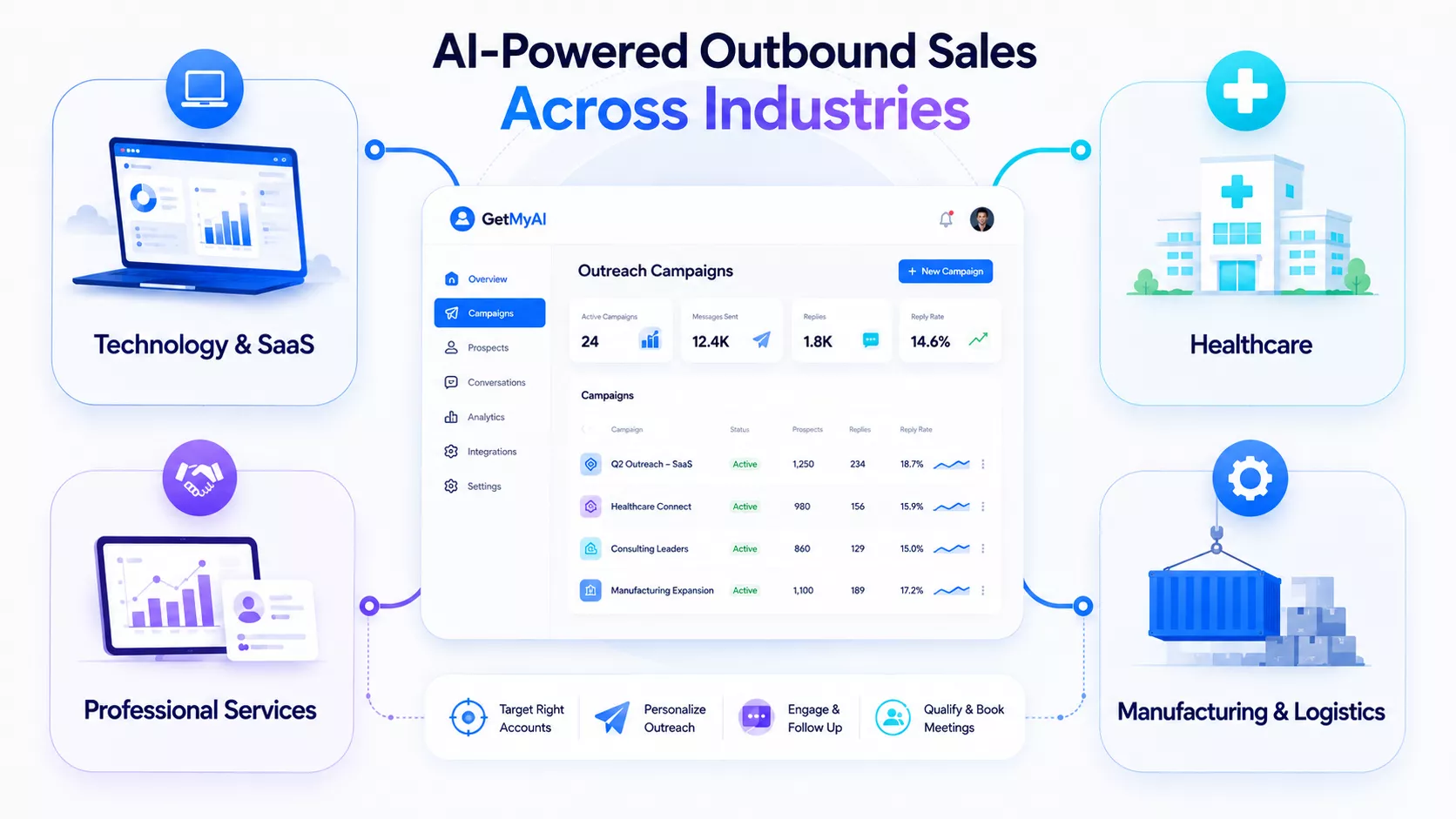
This is where the AI agent chatbot for business becomes essential. Unlike traditional chatbots that rely on scripted responses, modern AI agents are built to understand context, learn from business data, and handle real interactions at scale. They do not just answer questions; they assist users, qualify leads, support customers, and help move conversations forward.
However, not all solutions deliver the same results. Many businesses still struggle with tools that feel disconnected, generic, or difficult to manage. Choosing the right system requires understanding what actually drives performance, from personalization and data training to scalability and ease of deployment.
In this guide, we break down how AI agent chatbots work, why traditional systems fall short, and what to look for when selecting a solution that aligns with your business goals. Whether you are focused on support, sales, or overall engagement, the right approach can transform how your business interacts with its audience.
Why Most Chatbots Fail to Convert Customers
Most chatbots were built to answer questions, not to drive outcomes. They rely on rigid scripts, limited logic, and disconnected systems. As a result, conversations feel repetitive, generic, and often frustrating.
Customers today expect fast, relevant, and meaningful interactions. When a chatbot cannot understand context or provide accurate answers, it creates friction instead of removing it. This is where many traditional systems fail; they focus on automation but ignore personalization.
The Rise of Personalized AI Agent Chatbots
Businesses are now shifting toward systems that do more than respond, they understand, adapt, and assist. This shift has led to the adoption of the AI agent chatbot for business, which acts as a dynamic layer across customer communication rather than a static support tool. This change is driven by rising expectations for instant, relevant, and seamless interactions. Traditional chatbots struggle to meet these demands due to limited context and rigid workflows.
In contrast, AI agent chatbots are designed with key capabilities:
- Context-aware conversations that maintain flow
- Meaning-based understanding of user intent
- Responses trained on real business data
- Ability to guide users toward actions like booking or lead capture
For example, instead of redirecting users, these systems provide direct answers while guiding next steps.
This evolution is transforming chatbots into systems that not only support users but also actively contribute to engagement and conversion outcomes.
Why Traditional Chatbots Don’t Drive Conversions
Traditional chatbots struggle because they lack three key capabilities:
- No contextual understanding
- Limited knowledge beyond pre-written flows
- No ability to handle real tasks
Without these, conversations become transactional instead of helpful. Customers disengage quickly when they feel the system is not providing value.
Most traditional systems rely on rigid decision trees, which break the moment a user asks something outside predefined paths. This creates friction, increases bounce rates, and weakens trust during critical decision-making moments. Instead of guiding users forward, these bots often repeat generic responses or fail to adapt, causing visitors to abandon the interaction altogether.
For instance, when a user asks about pricing, a traditional chatbot may provide a fixed answer. But when the conversation becomes more specific, such as asking about suitability or use cases, the bot often cannot adjust. This disconnect interrupts the journey and prevents users from moving closer to conversion.
How Personalized AI Agent Chatbots Increase Conversions
Real-Time Personalized Responses
When a user is about to leave because they can’t find an answer, an intelligent AI agent chatbot steps in with instant, context-aware responses. Instead of making users search or wait, it delivers exactly what they need in the moment, reducing drop-offs and keeping them engaged.
Better Lead Qualification
When a potential customer is exploring options but hasn’t committed, an AI agent chatbot for lead generation asks the right questions at the right time. By understanding intent through conversation, it filters serious prospects from casual visitors, ensuring your team focuses on high-quality opportunities.
24/7 Sales & Support Automation
When a user needs help outside business hours, an AI chatbot agent for customer support ensures they are not left waiting. Immediate assistance removes delays, captures high-intent users at any time, and prevents missed opportunities that would otherwise be lost.
Improved Customer Engagement
When a visitor is browsing but unsure of the next step, an AI-driven conversational agent keeps the interaction moving. By guiding the conversation with relevant prompts and responses, it maintains interest and increases the likelihood of progression toward conversion.
Data-Driven Conversations
When a user hesitates due to uncertainty, an AI automation agent for business uses insights from past interactions to provide clearer, more accurate responses. This reduces friction, builds confidence, and supports better decision-making at critical moments.
Real Ways Businesses Use AI Agent Chatbots to Increase Conversions
It starts the moment a visitor lands
An AI agent chatbot for a website engages users instantly, preventing early drop-offs and guiding them toward relevant information before they lose interest.
Questions are answered without friction
An AI chatbot agent for a helpdesk handles common queries in real time, removing delays and helping users find solutions without interrupting their journey.
Interest is identified and captured
An AI agent chatbot for sales automation recognises intent through conversation, asks qualifying questions, and captures valuable user data as the interaction progresses.
Decisions are supported at the right moment
An AI agent chatbot for sales and marketing automation provides contextual information, addresses objections, and helps users move confidently toward conversion.
The result: a continuous, guided journey
Instead of fragmented interactions, businesses create a seamless path from first visit to final action, where every step is supported, and every opportunity is captured.
What Results Can Businesses Expect from AI Agent Chatbots?
With the right setup, the impact of an AI agent chatbot is not isolated; it builds progressively across the entire customer journey. Faster response times create immediate engagement, ensuring users receive answers before they lose interest. This increased engagement keeps visitors interacting longer, which naturally leads to better-qualified leads as conversations become more meaningful and intent-driven.
As lead quality improves, sales teams spend less time filtering and more time closing, while automation reduces the operational workload associated with repetitive queries and manual processes. Over time, this consistency and efficiency lead to improved customer satisfaction, as users experience faster, clearer, and more reliable interactions.
These outcomes are connected; each improvement strengthens the next, creating a system that continuously enhances performance rather than delivering one-off gains.
What does this mean for your business?
Your website evolves from a passive touchpoint into an active conversion channel. Your teams operate more efficiently without increasing headcount. And instead of reacting to customer needs, you guide them with structured, intelligent interactions powered by GetMyAI.
Personalized AI Agent Chatbots vs Traditional Chatbots
The difference lies in capability and execution, not just in how responses are delivered, but in how conversations are understood and guided.
| Traditional Chatbots | Personalized AI Agent Chatbots |
| Script-based replies | Context-aware responses |
| Fixed, linear flows | Adaptive, dynamic conversations |
| Limited to predefined inputs | Trained on business data |
| Reactive responses | Proactive guidance |
| Task-restricted | Capable of handling real actions |
This difference becomes clear in real interactions.
User: “I’m looking for a solution for my team, but I’m not sure what I need.”
Traditional Chatbot: “Here are our available plans.”
AI Agent Chatbot: “I can help with that. Could you tell me your team size and what you're trying to achieve? I’ll recommend the best option.”
Instead of simply responding, the AI agent chatbot moves the conversation forward, understanding intent, asking relevant questions, and guiding the user toward a decision.
This is the model GetMyAI is built on. Rather than relying on static workflows, it enables businesses to create AI agents that learn from real interactions, adapt over time, and continuously improve how they support and convert users.
How GetMyAI Helps You Build High-Converting AI Agent Chatbots
Building an effective AI agent chatbot is not about complexity; it’s about having the right system in place from the start. GetMyAI simplifies this process by turning setup into a structured path from configuration to live deployment.
Step 1: Train your AI on business data
GetMyAI allows you to build an AI agent chatbot for customer support by training it on documents, FAQs, and internal knowledge.
- Outcome: Responses become accurate, consistent, and aligned with your business, reducing misinformation and improving trust.
Step 2: Set up without technical barriers
You can create an AI agent chatbot without coding, giving full control to non-technical teams.
- Outcome: Faster deployment, no reliance on developers, and easier iteration as your needs evolve.
Step 3: Deploy across key channels
With support for websites, WordPress, Slack, WhatsApp, and Telegram, your chatbot reaches users wherever they engage.
- Outcome: Consistent communication across touchpoints, reducing drop-offs between channels.
Step 4: Go live and start optimising
GetMyAI streamlines how teams approach building an AI agent chatbot for business workflows, enabling rapid implementation and continuous improvement.
- Outcome: Faster time-to-value, with a system that improves as it handles real interactions.
From initial setup to live conversations, GetMyAI turns what is often seen as a technical challenge into a clear, scalable process, one designed to deliver results from day one and improve over time.
How to Build Your Personalized AI Agent Chatbot in Minutes
With GetMyAI, building an AI agent chatbot is not just a setup process; it is a structured progression where each step unlocks a new capability.
Create your AI agent: This is where the foundation is established. Your agent is ready to engage, forming the base for all future interactions.
Upload documents and knowledge sources: Once trained on your business data, the chatbot becomes ready to answer with accuracy and context, moving beyond generic responses.
Customize tone and interface: At this stage, the agent becomes ready to represent your brand, aligning with your communication style and user expectations.
Deploy using embed or integrations: With deployment, the chatbot becomes ready to interact at scale, engaging users across your website and connected platforms in real time.
Monitor performance and improve through Q&A: This final step makes the system ready to evolve. By reviewing conversations and refining responses through Q&A, the chatbot continuously improves its accuracy and effectiveness.
Unlike traditional chatbot setups, where deployment marks the end of the process, this approach treats it as the starting point. Once live, the system grows stronger through real interactions, adapting to user behavior and improving over time without requiring complex reconfiguration.
Do You Need Technical Skills to Use AI Agent Chatbots?
No. Modern platforms like GetMyAI are built for usability, allowing businesses to deploy and manage autonomous AI agents for business directly from a centralized dashboard without coding.
This shift is not just about simplicity; it is about accessibility across teams. Today, AI agent chatbots are managed by:
- Marketing teams optimizing lead flows and engagement
- Customer support teams handling queries and improving response quality
- Operations teams maintaining knowledge and workflows
- Founders and decision-makers monitoring performance and outcomes
Instead of relying on developers, these teams can take full control of how conversations are structured and improved over time.
What makes this possible is the removal of traditional complexity. There is no need to script conversation trees, configure backend systems manually, or depend on technical teams for updates. The platform is designed around intuitive workflows, where actions like training the chatbot, refining responses, and deploying updates happen through a simple interface.
As a result, control shifts from technical teams to the people who understand the business best. Updates can be made instantly, knowledge can be refined in real time, and performance can be improved continuously without waiting for development cycles.
Common Mistakes Businesses Make with AI Chatbots
Many chatbot implementations fail not because of the technology itself, but because of how it is used. These mistakes often go unnoticed, yet they quietly reduce engagement, lower conversion rates, and create poor user experiences.
Using outdated or incomplete training data
When a chatbot is trained on inaccurate or outdated information, it delivers incorrect responses that erode trust. Over time, users disengage because they cannot rely on the answers. This is resolved by continuously updating knowledge sources and refining responses through structured improvement workflows.
Not reviewing unanswered questions
Unanswered queries are missed opportunities. If these gaps are ignored, the chatbot never improves, and the same issues repeat. Reviewing and converting these into structured Q&A ensures the system becomes more accurate with every interaction.
Overcomplicating conversation flows
Rigid, overly designed flows often break when users ask unexpected questions. This leads to frustration and early drop-offs. A more effective approach is to rely on AI-driven understanding rather than predefined paths, allowing conversations to adapt naturally.
Ignoring analytics and performance insights
Without visibility into conversations, businesses cannot identify what is working or where users struggle. This results in stagnant performance. Tracking engagement, response quality, and user behavior enables continuous refinement and better outcomes.
Treating chatbots as static tools instead of evolving systems
The biggest mistake is viewing a chatbot as a one-time setup. In reality, performance improves only when the system evolves through real interactions. Continuous learning, data-driven updates, and ongoing optimization are what transform a chatbot into a high-performing asset.
This is where GetMyAI changes the approach. By combining real-time visibility with structured improvement through Q&A, it ensures that chatbot performance is not fixed at launch but continuously refined. Instead of remaining static, the system grows stronger over time, aligning with user intent and delivering better results with every interaction.
Conclusion
Choosing the right AI assistant is not about adding another tool; it is about improving how your business communicates at every stage of the customer journey. As expectations evolve, businesses need systems that go beyond basic automation. GetMyAI provides a structured approach to building AI agents that understand context, deliver accurate responses, and continuously improve through real interactions.
From customer support to lead generation and engagement, the platform enables businesses to create scalable, high-performing communication systems without technical complexity.
In the end, the goal is not just to automate conversations, but to make them more effective. Businesses that adopt this approach will be better positioned to deliver consistent, high-quality interactions that drive measurable results.
Frequently Asked Questions
1.How does an AI agent chatbot work?
It processes user queries using natural language understanding and retrieves answers from trained data sources, allowing it to respond accurately and contextually.
2.Can AI agent chatbots automate customer support?
Yes, they can handle repetitive queries, guide users, and provide instant assistance, reducing the need for manual intervention.
3.How to build an AI agent chatbot without coding?
You can use platforms like GetMyAI to upload knowledge, configure settings, and deploy your chatbot without any technical expertise.
4.How do AI agent chatbots increase conversions?
They engage users in real time, provide relevant responses, qualify leads, and guide customers toward completing actions.
5.What is the best AI agent chatbot for customer support?
The best AI agent chatbot for customer support is one that combines contextual understanding, accurate training data, and real-time performance tracking.