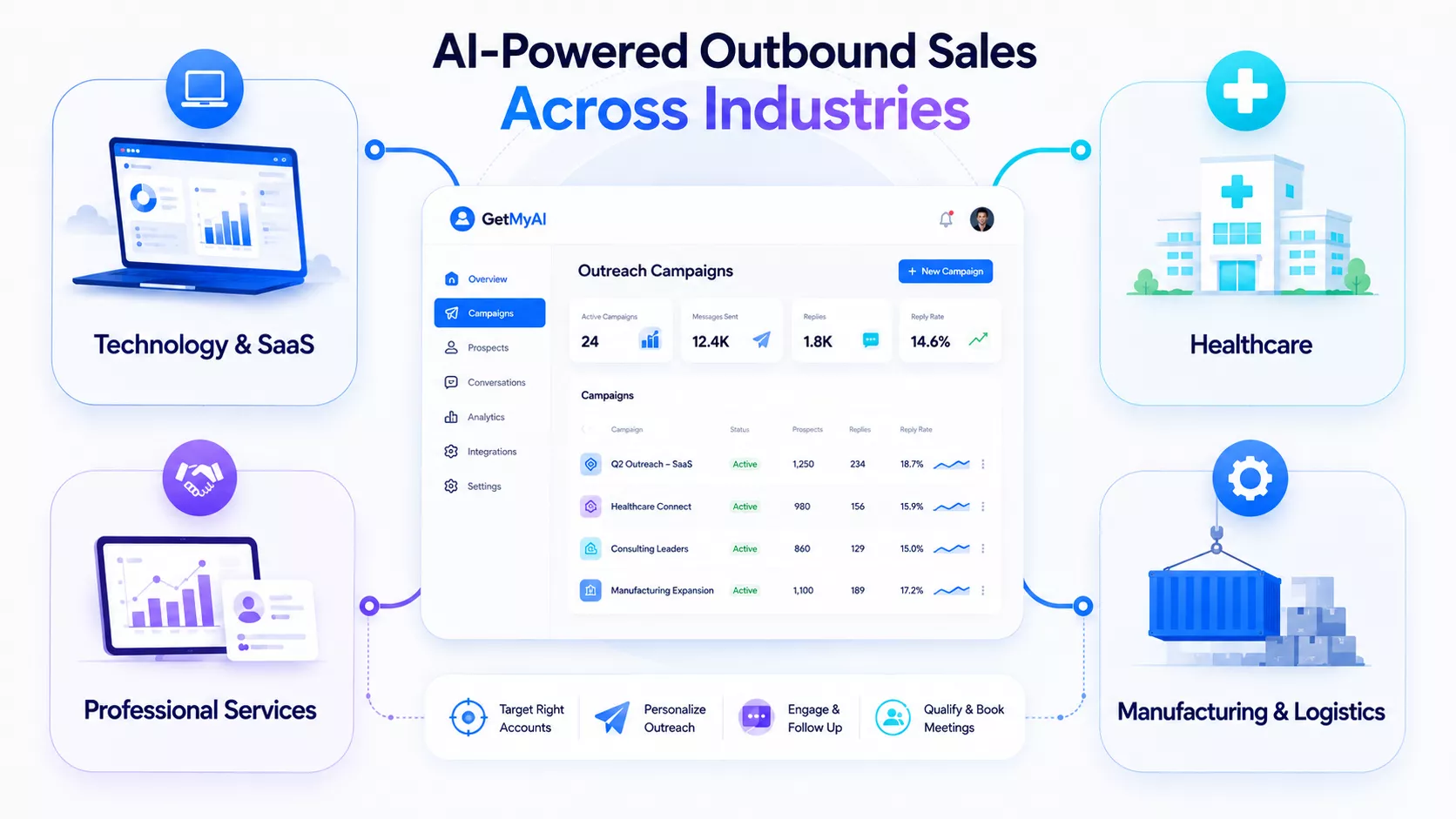
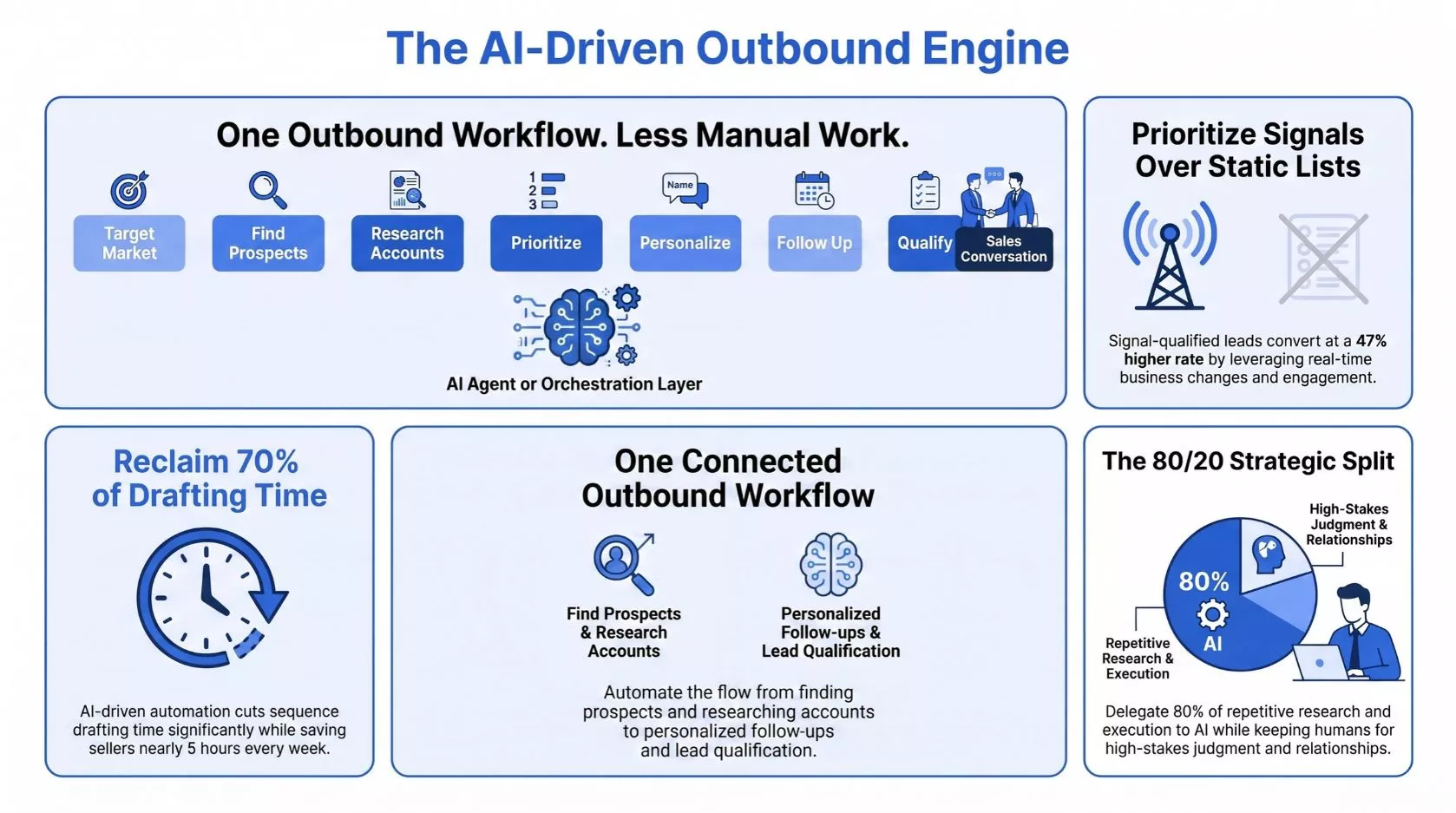
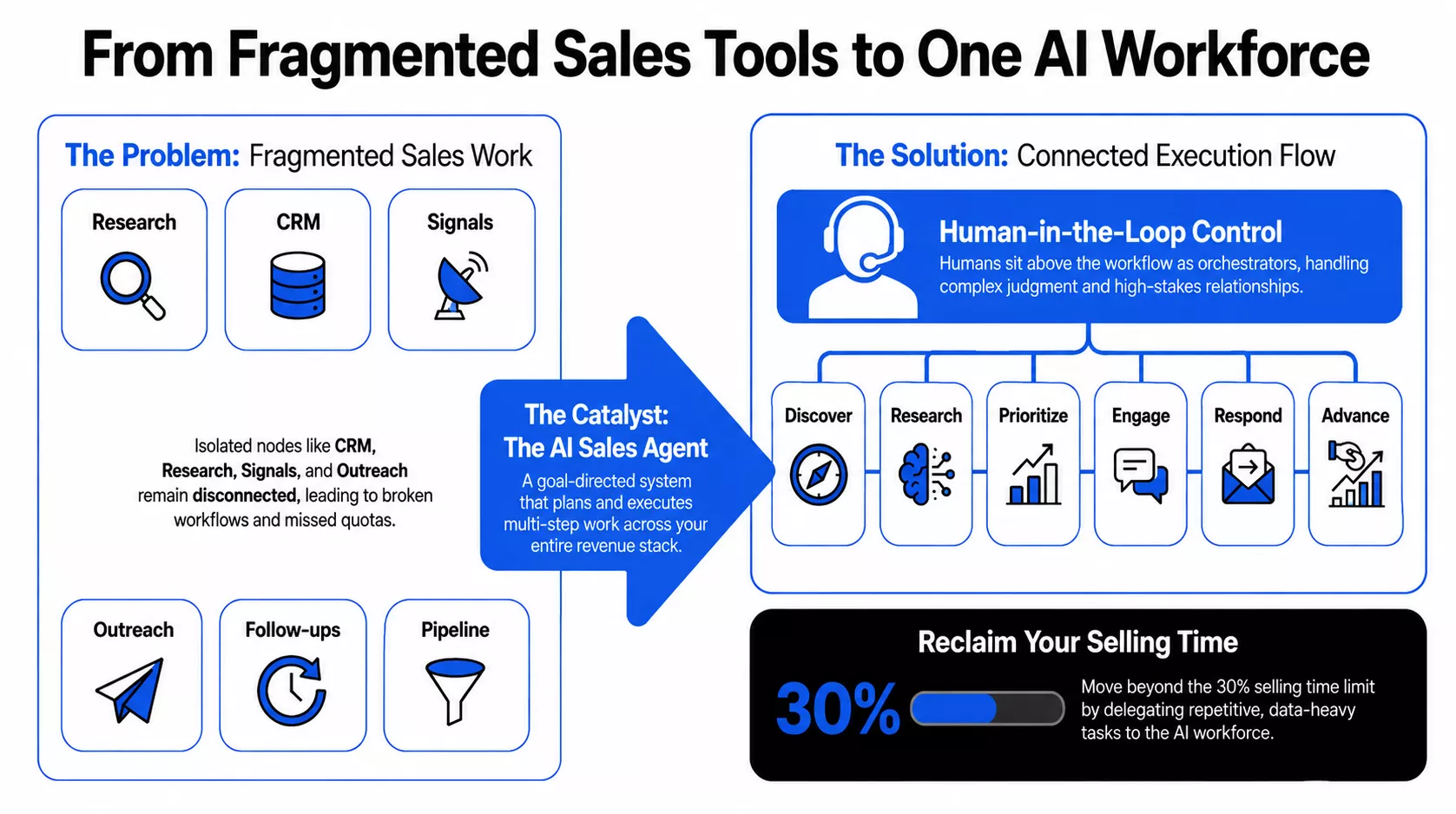
B2B outbound sales is becoming harder to manage manually. Sales teams still spend hours finding prospects, researching accounts, identifying decision-makers and keeping up with follow-ups. Benefits of AI in Sales go beyond saving time: better prospect research…
Experience Boost
Create. Deploy. Engage. With GetMyAI
Launch GPT-powered conversations that engage, support, and convert — all in one platform.
How AI Agents Are Transforming SaaS Platforms in 2026
getmyai
Mar 10, 2026
AI Chatbot in Saas
Chatbot automation SaaS
AI chatbot transformation
Key Takeaways
AI agents are moving from experimental tools to operational infrastructure across modern AI-powered SaaS tools.
Automation will redefine customer support, onboarding, and internal workflows across SaaS companies.
Conversational interfaces will replace many traditional dashboards and product navigation systems.
SaaS teams will rely on AI agents as operational partners rather than standalone productivity tools.
Companies adopting SaaS automation with AI early will gain measurable advantages in cost efficiency and customer experience.
For years, companies added chatbots to their websites, hoping to answer customer questions faster. It worked… a little. The typical AI Chatbot in SaaS handled simple tasks like pointing users to help articles or answering basic questions.
But something bigger is happening now.
The new wave of AI inside software does not just chat. It works. These systems complete tasks, guide users, automate processes, and even help teams make decisions. Instead of being a feature, AI is becoming part of the operating system of modern software.
That shift is transforming how SaaS products behave.
Imagine opening a SaaS tool and simply telling it what you want.
“Show me last month’s churn report.”
“Help me set up onboarding emails.”
“Find customers who have not logged in for 30 days.”
No digging through menus. No searching through settings. The system understands. Then it does the work.
This is the new reality many SaaS companies are preparing for. According to Gartner, about 40% of enterprise applications will include AI agents by 2026, performing tasks directly inside software products. They will assist users, support teams, sales teams, and even operations teams. For SaaS leaders, this is not just a technology shift. It changes product design, team structure, and customer experience.
The era of passive software is ending. Active software is beginning.
From Chatbots to Autonomous Systems: The Rise of AI Chatbot Transformation
The first generation of chatbots solved a small problem. Companies had too many support tickets and not enough support agents.
So chatbots stepped in. They answered common questions. They helped customers find documentation. Sometimes they reduced the support workload. But they were limited. Most early bots followed scripts. If a question fell outside those scripts, the conversation broke down quickly. Users still needed human help. Today’s systems are different. The industry is moving through a major AI chatbot transformation. Modern AI models can understand context, follow complex instructions, and connect directly with product systems.
That means they can do more than talk. They can act.
Instead of replying with “Here is a help article,” AI agents can now perform tasks such as:
Guiding users through onboarding
Fixing configuration issues
Generating reports
Helping customers discover product features
In other words, the AI becomes an operator inside the product. Software used to wait for users to click buttons. Now, AI systems help users complete tasks faster and with less effort. This shift may seem small on the surface. But inside SaaS platforms, it changes everything.
AI chatbots SaaS: Adoption Is Accelerating
Not long ago, AI adoption in SaaS moved slowly. Many companies experimented with automation, but few relied on it. That hesitation is fading quickly. Across the industry, AI chatbot SaaS adoption is rising for a simple reason: the pressure to scale. Customer expectations have changed dramatically. People expect instant answers. They want help inside the product, not in long documentation pages.
When a user gets stuck, they want guidance right away. At the same time, SaaS platforms keep growing more complex. New features appear every month. Integrations multiply. Configuration options expand. This creates friction for users. Without guidance, many customers never discover valuable features. Others abandon the product because onboarding feels confusing.
AI changes this dynamic. Instead of leaving users alone to explore the interface, AI systems guide them through the product experience. They answer questions instantly and help people reach value faster. There is also a cost factor. Support teams, onboarding teams, and customer success teams all require resources. As SaaS companies grow, these teams must grow as well.
AI offers a different path. Automation helps companies support more customers without increasing operational overhead at the same pace. That is why adoption is accelerating across the SaaS industry.
How AI automation for SaaS is Reshaping Internal Operations
The biggest impact of AI may not be customer-facing at all. It may happen inside SaaS companies themselves. More organizations are embedding AI automation for SaaS directly into their daily workflows. Instead of teams performing every operational task manually, AI systems now assist with routine work.
These changes are already visible across several areas. Customer support teams use AI to answer common questions before they turn into support tickets. Onboarding teams depend on AI guidance tools to help new users learn the product faster. Sales teams use AI tools to check leads and prepare simple outreach messages.
Customer success teams analyze usage data automatically to identify accounts that may need help. All of this adds up to a powerful shift. Research from DataGrid shows that teams using AI agents save 2 to 5 hours of work every week through automation. In some cases, it happens automatically.
Below is a simple comparison showing how SaaS workflows are evolving.
Traditional SaaS Workflow
AI-Driven Workflow
Result
Support agents answer repetitive tickets
AI agents resolve routine issues instantly
Faster support response
Users learn the product through documentation
AI onboarding assistants guide users inside the product
Higher product adoption
Sales teams manually qualify leads
AI systems analyze engagement and score prospects
Better sales focus
Customer success teams review dashboards
AI alerts identify at-risk customers automatically
Proactive retention
These improvements may seem small at first. But across a SaaS company, AI chatbot automation creates big gains in speed and efficiency. Instead of spending time on repetitive tasks, teams focus on strategy, growth, and product improvement.
The Expanding Role of AI Agents in SaaS
AI systems inside software are evolving rapidly. They are no longer just support bots.
Today, AI agents in SaaS are starting to perform multiple roles inside the product and the organization. Some assist users directly. Others support internal teams. Together, they create a new layer of digital coworkers embedded inside SaaS platforms.
Product Copilots
Many SaaS products now include AI chatbot copilots. These tools live inside the product interface and help users finish tasks quickly. Instead of clicking through menus, users can ask the chatbot what they need. The AI chatbot creates reports, studies data, or helps set up features. This makes complex software much easier to learn.
Operational Assistants
Inside companies, AI agents support teams in handling internal workflows. They summarize conversations, route support tickets, generate reports, and monitor customer activity. Instead of manually reviewing dashboards, teams receive insights automatically. This allows organizations to react faster to problems and opportunities.
Customer Engagement Agents
AI systems can also guide users toward features they may not have discovered yet. For example, if a customer has not used an advanced capability, the AI Chatbot can suggest it and explain how it works. These small nudges improve product adoption and long-term retention. Over time, these digital assistants will become standard components inside most SaaS platforms.
The New Support Model: AI customer support for SaaS
Customer support is one of the clearest areas where AI is already changing how SaaS companies operate. Support teams often receive the same questions over and over again. Users ask about billing details. They need help navigating the interface. They want to understand how certain features work. Handling these requests manually consumes large amounts of time.
AI customer support for SaaS can respond to thousands of common customer questions instantly. It can guide users step by step while solving problems inside the software. They can also retrieve information from product documentation and knowledge bases. The result is a new support structure. Routine issues are handled automatically. Human agents step in only when problems become complex.
This hybrid model improves both efficiency and customer experience. Customers receive answers faster. Support teams spend more time solving meaningful problems rather than repeating the same instructions. Over time, this approach will become the standard support model across the SaaS industry.
The Shift Toward Conversational AI for SaaS Interfaces
For decades, software interfaces followed a simple pattern. Menus. Buttons. Dashboards. Users clicked through layers of navigation to find what they needed. But AI is beginning to change how people interact with software.
Instead of navigating dashboards, users can now simply ask questions. This is where Conversational AI for SaaS begins to reshape the user experience. Think about how people already interact with AI assistants. They type a request. Or they speak it. The system responds with information or acts. Inside SaaS platforms, the same pattern is emerging.
Users may ask the product to:
Generate analytics reports
Configure integrations
Build automated workflows
Troubleshoot system issues
The AI processes the request and completes the task. This method removes many of the problems users face when learning complex SaaS software. Instead of remembering menu paths, users simply talk with the AI chatbot using natural language. As conversational systems improve, many SaaS dashboards may turn into AI-powered workspaces.
The Strategic Importance of AI tools for SaaS companies
For SaaS leaders, adopting AI is quickly becoming a strategic decision rather than a technical experiment. Businesses deploying AI tools for SaaS companies successfully see strong advantages in several key operational areas.
First, they improve product usability. AI guidance helps users understand complex features faster.
Second, they reduce operational costs. Automation handles routine tasks that previously required human effort.
Third, they improve customer retention. When users experience fewer obstacles inside the product, they are more likely to continue using it.
These advantages grow stronger over time. A SaaS company that builds an AI chatbot deep inside its product can offer faster support, easier onboarding, and better automated workflows. Competitors without similar AI chatbot capabilities may struggle to provide the same experience. That is why many industry leaders now see AI as infrastructure rather than just a feature.
Software platforms are turning into smart systems where an AI chatbot continuously helps both users and internal teams.
The Hidden Challenges SaaS Companies Face When Implementing AI Agents
While AI agents are transforming SaaS products rapidly, scaling them successfully is far more difficult than adding basic generative AI features into software platforms. Most SaaS companies are still struggling with operational, technical, and governance-related barriers that slow large-scale deployment.
Data Quality and Infrastructure Gaps
AI agents rely on connected, accurate, real-time data to execute tasks properly. But many SaaS businesses still operate with fragmented systems, inconsistent records, and disconnected workflows. Even small gaps in data quality can lead to failed automations, inaccurate outputs, or workflow disruptions inside the product.
Security and Permission Risks
Unlike traditional chatbots, AI agents actively interact with APIs, databases, and operational systems. This creates serious security concerns. Over-permissioned agents, weak governance controls, and unmanaged “shadow AI” tools can significantly increase compliance and cybersecurity risks across enterprise SaaS environments.
The Growing Trust Problem
Many organizations still hesitate to allow fully autonomous execution because AI agents can hallucinate, misunderstand instructions, or trigger cascading workflow failures, often referred to as “agent slop.” As a result, human oversight remains critical for most AI-driven operations.
Integration and Skill Challenges
Legacy infrastructure, integration complexity, and shortages in AI orchestration expertise continue to slow adoption. For many SaaS companies, implementing AI agents is no longer just a software upgrade. It requires a complete operational transformation.
How GetMyAI Makes Generative AI in SaaS Useful for Businesses
Generative AI is creating new possibilities inside SaaS products. But turning those possibilities into real, usable features requires the right infrastructure. That is where platforms like GetMyAI come in.
GetMyAI helps SaaS companies apply Generative AI in SaaS environments in ways that directly improve how customers interact with products. Instead of treating AI as an experimental add-on, the platform embeds AI capabilities into everyday product workflows.
At its core, we focus on one clear goal: helping users understand, navigate, and use software through AI chatbot guidance.
With GetMyAI, SaaS platforms can run AI chatbot assistants that analyze product knowledge, support content, and user behavior to create helpful responses quickly. When a customer asks something, the AI chatbot does not only send a help article. It explains features, walks users through steps, and responds using product data.
What GetMyAI Enables for SaaS Platforms
Instant contextual responses: The AI chatbot reads product documentation and user activity to give accurate answers instantly.
Conversation summaries for support teams: The AI chatbot reviews long customer conversations and provides short summaries for support teams.
Adaptive onboarding guidance: The AI chatbot adjusts onboarding instructions depending on how each user explores the product.
Feature discovery support: If users do not know what step to take, the AI chatbot recommends useful product features.
Smarter product insights: Instead of raw data sitting in dashboards, AI converts usage signals into meaningful guidance for product teams.
These capabilities make the product easier to use from start to finish. Support teams no longer spend large amounts of time answering the same AI chatbot questions again and again. New users find value in the product much faster. Product teams see more clearly how customers use different features.
For SaaS companies trying to scale support and engagement without dramatically increasing headcount, this kind of AI layer becomes extremely valuable. The software itself begins helping users succeed. That is the real opportunity behind generative AI. Not just smarter technology, but smarter software experiences. GetMyAI is helping SaaS companies move toward that future by turning AI capabilities into practical tools that work directly inside the product.
Conclusion
The shift toward AI agents represents one of the most important changes the SaaS industry has experienced in years. What began as simple chatbot automation is evolving into a new generation of intelligent software. AI systems now guide onboarding, automate workflows, support customers, and assist internal teams. They run quietly in the background, guiding users through software and helping companies handle daily operations better.
By 2026, many SaaS platforms will rely on embedded AI agents to handle routine operations at scale. Human teams will still lead strategy, product development, and complex decision-making. But the day-to-day operational workload will increasingly be shared with AI systems. For SaaS companies preparing for the future, the real question is not whether AI will reshape the industry. The real question is how fast organizations will adjust to this new model of AI chatbot-driven software.
FAQs
What is an AI chatbot for SaaS companies?
An AI chatbot for SaaS companies is an automated assistant that helps users navigate software, solve issues, and use product features with natural language.
How do AI agents for SaaS customer support automation improve service?
AI chatbots handle routine support tasks, answer common questions instantly, and send complex issues to human teams, improving response speed and support efficiency.
What are the benefits of an AI chatbot in SaaS platforms?
AI chatbots improve customer engagement, reduce support workload, guide product onboarding, and provide faster assistance to users interacting with SaaS applications.
How are AI-powered SaaS automation examples shaping software products?
Examples include automated onboarding assistants, AI support agents, sales engagement bots, and workflow automation tools embedded directly inside SaaS platforms.
What is the future of AI chatbots in the SaaS industry?
AI chatbots will evolve into autonomous agents capable of performing tasks, automating workflows, and acting as intelligent assistants within SaaS products.
We’ve noticed that a surprising amount of a sales rep’s day is still spent preparing to sell rather than actually selling. Building lists, researching accounts, finding the right contacts, writing outreach and chasing follow-ups can consume hours before a mean…
Sales teams have more AI than ever, yet the productivity problem remains. Sales AI Agents can take repetitive work off your team's plate, but adding another tool does not automatically improve execution. In 2026, 78% of B2B sellers missed quota in 2025, w…