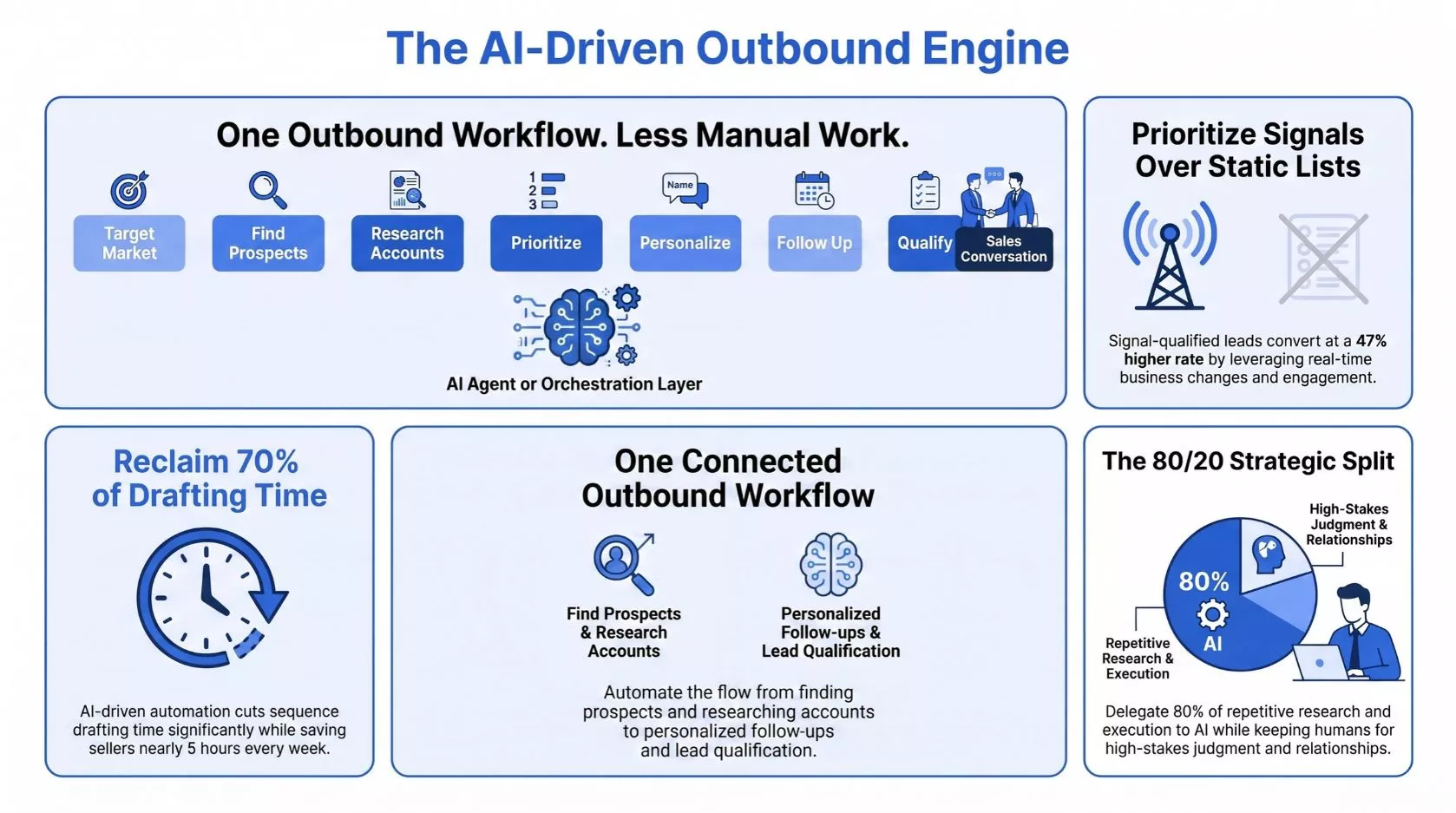
B2B outbound sales is becoming harder to manage manually. Sales teams still spend hours finding prospects, researching accounts, identifying decision-makers and keeping up with follow-ups. Benefits of AI in Sales go beyond saving time: better prospect research…
Experience Boost
Create. Deploy. Engage. With GetMyAI
Launch GPT-powered conversations that engage, support, and convert — all in one platform.
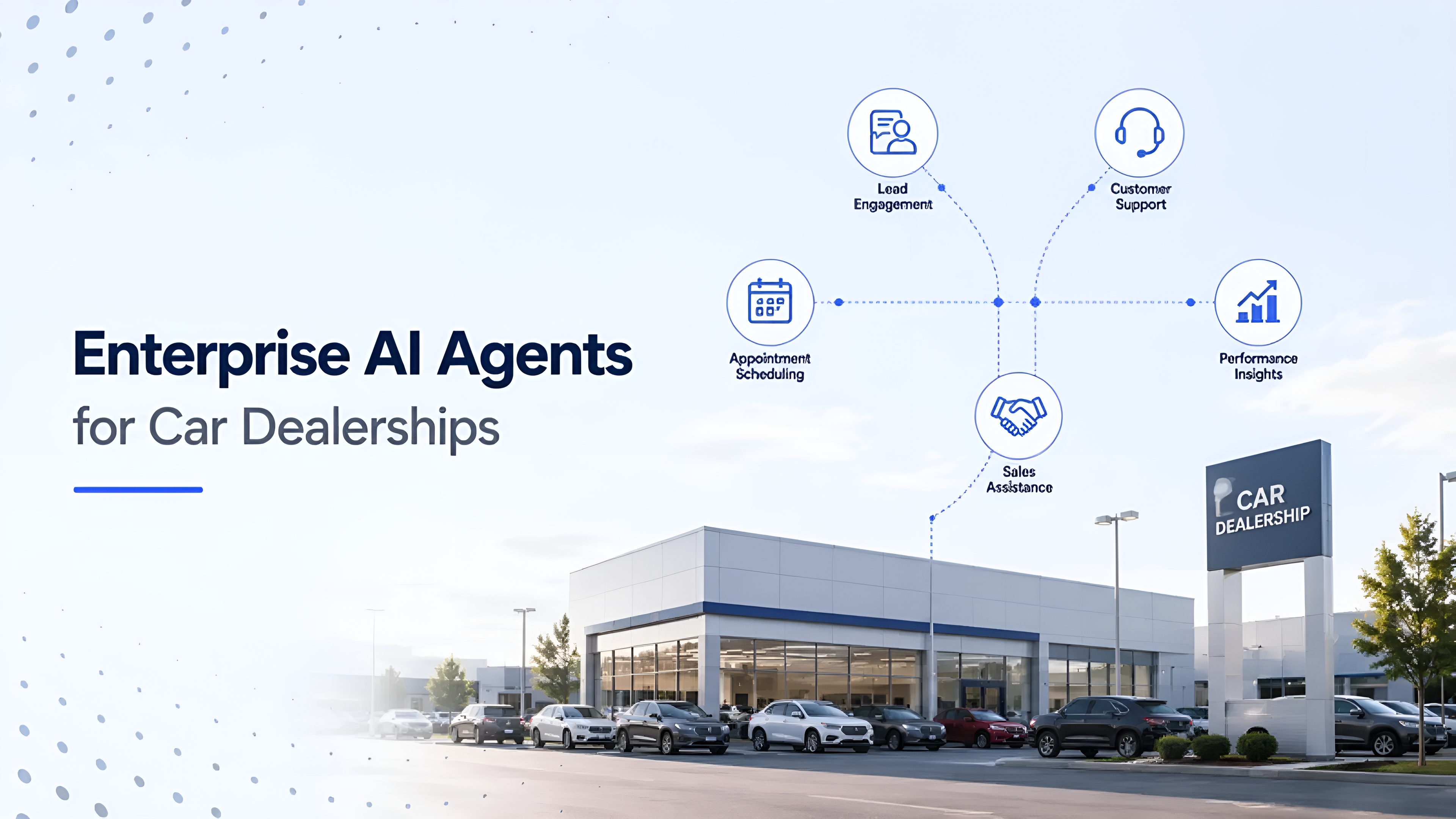
Enterprise AI Agents for Car Dealerships: A Guide for Multi-Location Dealer Groups
getmyai
Jun 12, 2026
enterprise AI agents for car dealerships
AI automation for dealership groups
automotive AI agents
conversational AI for dealerships
Key Takeaways
Deploying one shared AI agent across multiple dealership locations creates knowledge contamination, brand inconsistency, and OEM compliance risks that compound across every rooftop.
Dedicated AI agents per location, each trained on store-specific promotions, hours, and inventory, are what make accurate customer interactions possible at enterprise scale.
Knowledge management determines deployment success: assigning clear ownership at corporate, regional, and GM levels prevents outdated information from reaching customers across any location.
Inconsistent AI experiences across locations directly drive customer defection, with 20 out of 38 tracked automotive brands already reporting year-over-year retention declines.
Enterprise dealer groups that build a continuous conversation review and knowledge update cycle in their first 90 days maintain AI accuracy and staff confidence long-term.
Somewhere in your dealer group right now, a customer is asking an AI agent about a service promotion that expired two weeks ago. At another location, a different customer is getting information pulled from the wrong store entirely. These are not edge cases. They are what happens when an enterprise group deploys AI without the structure to support it. Across 20, 30, or 40 rooftops, every gap in your AI-driven workflows gets exposed at the customer level, across every location, every day.
Enterprise dealer groups deploying automotive AI agents across multiple locations need dedicated agents per rooftop, each configured with location-specific knowledge, branding and customer context. A single shared AI cannot accurately serve locations with different inventories, promotions and original equipment manufacturer requirements. The groups that get this right treat AI as an operational system, not a one-time deployment.
Why Managing AI Across Multiple Dealerships Is Harder Than It Looks
A single dealership and a 25-rooftop group are not the same operational challenge. Each location runs its own inventory, its own seasonal promotions, its own service pricing and in many cases its own DMS. AI automation solutions for multi-location dealer groups have to account for all of that complexity before a single customer conversation goes live.
Data that does not travel cleanly between locations
Most dealer groups run different systems across their rooftops. Inventory, customer records and pricing data sit in separate platforms that rarely sync perfectly. An AI pulling from a shared or poorly structured database will cross-contaminate listings, surface outdated pricing, or reference vehicles that are not available at that location.
OEM compliance requirements that vary by brand
A group operating Ford, BMW and Toyota stores is operating under three separate sets of manufacturer rules. Each OEM has its own co-op advertising guidelines, approved vendor lists and compliance standards. An AI that cannot be configured per brand puts co-op funding and franchise agreements at risk.
Promotions and pricing that change faster than most AI setups can keep up with
Rebates, lease specials and finance offers change monthly and vary by region. A service promotion running at one location may not apply at another store three miles away. Without a clear process for updating each location's AI separately, customers get inaccurate information and staff lose confidence in the tool.
Local workflows that do not match corporate expectations
One store operates a fully digital purchase process. Another requires the AI to focus entirely on booking in-person appointments. A third has a BDC team that handles all follow-up manually. Delivering enterprise AI customer support for automotive dealerships at that level of variation requires configuration flexibility that a single shared agent cannot provide.
Enterprise dealer groups managing multiple locations face an additional challenge: maintaining accurate, location-specific AI knowledge across every dealership. Learn how enterprise dealer groups should deploy AI across multiple dealerships.
Why Every Dealership Location Needs Its Own AI Agent
To a customer, your brand is not the corporate group. It is the specific store they are interacting with and they expect that store's AI to know its own promotions, hours, services and inventory. A group-wide AI shared across 30 locations cannot do that accurately.
While every dealership location needs its own AI agent, the day-to-day responsibilities remain similar. Each location still needs to answer customer questions, capture leads, schedule appointments, and support buyers throughout their journey. Explore the most common AI chatbot use cases for car dealerships to see how these interactions work in practice.
Here is what a location-specific agent handles that a shared agent cannot:
What Changes Per Location
Why It Matters
Active promotions and service specials
A customer quoted an expired offer loses trust immediately
Service bay availability and booking
Real-time scheduling requires location-level data
Language and regional preferences
A bilingual market needs an agent configured for it
OEM compliance and brand guidelines
Brands like Ford and BMW operate under entirely different manufacturer rules
Local facilities and operating hours
Store-specific details cannot be pulled from a shared knowledge base
A location-specific agent responds to every customer inquiry instantly, across the website and WhatsApp, at 2 pm and at 2 am, without a BDC rep needing to be available. According to McKinsey, generative AI deployed across sales and customer operations can increase sales productivity by 3 to 5 per cent of global sales expenditure. That figure assumes the AI is giving customers accurate, relevant information. A shared agent pulling from the wrong location's data works against that outcome from day one. Dedicated agents per location are what make accuracy possible at enterprise scale
5 Features Every Location-Specific AI Agent Must Have
Customer Support Automation: Covers sales inquiries, finance questions, warranty claims and service requests without human involvement. Each location's agent handles its own customer conversations independently, across every shift, every day, without pulling from another store's data. Every sales inquiry gets an immediate response, every service question gets an accurate answer, and no customer reaches a dead end because the dealership is closed.
Appointment Booking: Each location's scheduling system connects directly to the agent. AI appointment scheduling for dealerships means customers book test drives and service slots at any hour, with no BDC involvement. A 5% satisfaction increase drives up to 25% additional dealership profit.
Lead Capture: Name, contact details and vehicle interest are captured in real time and routed to the right store. Using AI-powered lead qualification for dealership groups, intent signals are read instantly, reducing conversion drop-off by up to 40% at bottom-of-funnel moments. A lead that comes in at 11 pm on a Sunday gets captured, qualified, and routed before your BDC opens Monday morning.
Multi-Channel Deployment: Website chat and WhatsApp are covered from a single deployment. Customers engaging through automotive customer experience automation channels get responses in their preferred language, without toggling between platforms or repeating themselves to a different agent.
OEM and Brand Compliance: Each agent stays locked to its own location's approved data. Cross-location errors and compliance violations are blocked before they reach the customer, protecting co-op funding and franchise agreements across every rooftop.
What Each Dealership's AI Agent Needs to Know
An industry survey by Lotlinx found that 84% of dealers say general-purpose AI tools fail to meet their needs and 66% lack confidence that generic AI understands their daily operations. The cause is consistent across groups, as the AI was trained on broad corporate data instead of store-specific knowledge.
The Mistake: Feeding every location the same knowledge base. When a customer at your Houston Ford store gets information that reflects your Dallas BMW store's pricing or promotions, the sale is lost and OEM compliance is at risk.
The Fix: Each agent operates from its own isolated knowledge base covering that store's hours, active promotions with hard expiration dates, manufacturer compliance rules and available inventory. When a weekend promotion ends, it disappears from that agent automatically. No other location is affected.
Who Keeps It Current:
Corporate IT: System security, brand guardrails, core integrations
Local GMs: Weekly service specials, holiday hours, active inventory focus
For enterprise AI agents for car dealerships, this structure is what separates a controlled rollout from one that creates more problems than it solves. If a knowledge error occurs at one location, it stays there. The rest of your group keeps running.
Branding and Customer Experience Consistency Across Locations
Every enterprise group faces the same tension. Lock down AI configuration at the corporate level and local GMs push back because the agent does not reflect their store. Give every GM full control and brand consistency fractures across 30 locations simultaneously.
The fix is a two-layer architecture: corporate sets the guardrails, local stores operate within them.
Corporate controls across every location:
Brand voice, tone and communication standards
Compliance boundaries around financing, warranties and trade-in language
Escalation protocols for when a conversation moves to a human
Visual interface and branding standards per OEM
Each location is configured within those guardrails:
Agent name and persona reflecting the specific store
Language preferences based on local demographics
Active promotions, service specials and store-specific FAQs
The business case for getting this right is clear. Accenture research shows 65% of consumers report frustration from inconsistent brand experiences across locations. The 2026 Reynolds Retention Report found that 20 out of 38 tracked automotive brands saw year-over-year declines in customer retention.
When Ramey Auto Group implemented centralized multi-location digital controls while preserving local flexibility, they achieved a 2x increase in BDC lead quality during slow sales cycles.
For AI-powered customer engagement for dealerships, this structure is what separates groups that scale confidently from those that lose brand control one rooftop at a time.
Deploying AI Is Not the Finish Line: The Improvement Cycle
Most enterprise groups treat AI deployment as a project with an end date. It is not. The groups seeing the strongest results from conversational AI for dealerships treat it as an operational cycle that runs continuously after launch.
The improvement cycle has five steps:
Step 1: Review Conversations
Every week, someone at the corporate or regional level should be reading through AI conversations across locations. Not all of them, but enough to spot patterns. Where are customers dropping off? What questions is the agent struggling to answer?
Step 2: Identify Knowledge Gaps
Unanswered or poorly answered questions are not failures. They are a direct signal of what needs to be added to that location's knowledge base. A pattern of questions about weekend service hours means that information is missing or unclear.
Step 3: Update the Knowledge Base
The relevant location's GM or regional manager pushes the update. It goes to that location's agent only. No other store is affected.
Step 4: Compare Performance Across Locations
Which location is booking the most appointments through AI? Which one has the highest rate of unanswered questions? Analytics across the group surface these gaps. A location consistently underperforming is almost always a knowledge problem, not a technology problem.
Step 5: Repeat
Promotions change. Staff changes. Service menus change. The cycle does not stop because the AI was deployed six months ago.
The groups that build this review process into their operations in the first 90 days are the ones that still trust their AI two years later.
Multi-Agent AI Across Your Dealerships with GetMyAI
GetMyAI is built for enterprise dealer groups that need dedicated, independent AI agents across every rooftop, not a single shared deployment stretched across locations it cannot accurately serve.
Multi-Location Challenge
GetMyAI Feature
What It Does
Cross-location data contamination
Isolated AI Agents Per Location
Each dealership gets its own agent with its own knowledge base, branding and deployment. What one location knows never affects another.
Outdated promotions and local inaccuracies
Location-Specific Knowledge Sources
Train each agent using that store's website pages, service menus, PDFs, FAQs and internal documents. Update one location without touching any other.
No visibility into what AI gets wrong
Continuous Improvement Workflow
Chat logs and unanswered questions surface automatically per location. GMs and regional managers update knowledge and retrain without rebuilding the agent.
No way to compare locations
Cross-Deployment Analytics
Track total conversations, response times, positive rates and peak activity across every location from one dashboard.
Inconsistent branding across stores
Custom Branding Per Agent
Every agent carries its own name, profile, color scheme and opening message. Preview before deployment so corporate and local management approve before going live.
Leads lost after hours
Lead Capture and Appointment Booking
Captures name, contact and vehicle interest with smart triggers. Books test drives and service appointments via Calendly, Google Calendar, or Cal.com, around the clock.
Customers on different channels
Website and WhatsApp Deployment
Each agent runs across website chat and WhatsApp in the customer's preferred language.
Ready to Deploy AI Across Your Dealership Group?
Most enterprise groups spend months evaluating AI vendors and still launch with a single shared agent that breaks down within the first quarter. The structure this article outlines, dedicated agents per location, isolated knowledge bases, continuous improvement workflows and group-wide analytics, is exactly what GetMyAI is built to support.
FAQs
How do AI agents improve dealership customer service?
Location-specific AI agents respond instantly across the website and WhatsApp, at any hour, with accurate information about that store's promotions, services, and availability, eliminating the wait times and inaccurate answers that cost dealerships customer trust.
How do AI agents integrate with dealership CRM systems?
AI agents capture lead details in real time and route them directly to the right store's CRM. For deeper DMS and CRM automation, integration requirements vary by platform and should be evaluated during the vendor selection process.
What are the benefits of AI customer support in automotive retail?
Enterprise AI customer support for automotive dealerships delivers 24/7 inquiry handling, consistent response quality across locations, and measurable improvements in lead capture and appointment booking without increasing BDC headcount.
How does AI improve lead response times in dealerships?
AI-powered lead qualification for dealership groups captures and qualifies inquiries the moment they arrive, including after hours, reducing the response gap that causes online shoppers to contact competing dealer groups before Monday morning.
How should enterprise dealer groups roll out AI across multiple locations?
Start with a single pilot location, validate knowledge accuracy and workflow fit, then expand rooftop by rooftop. Each location's agent is deployed independently, so a new rollout never affects locations already live.
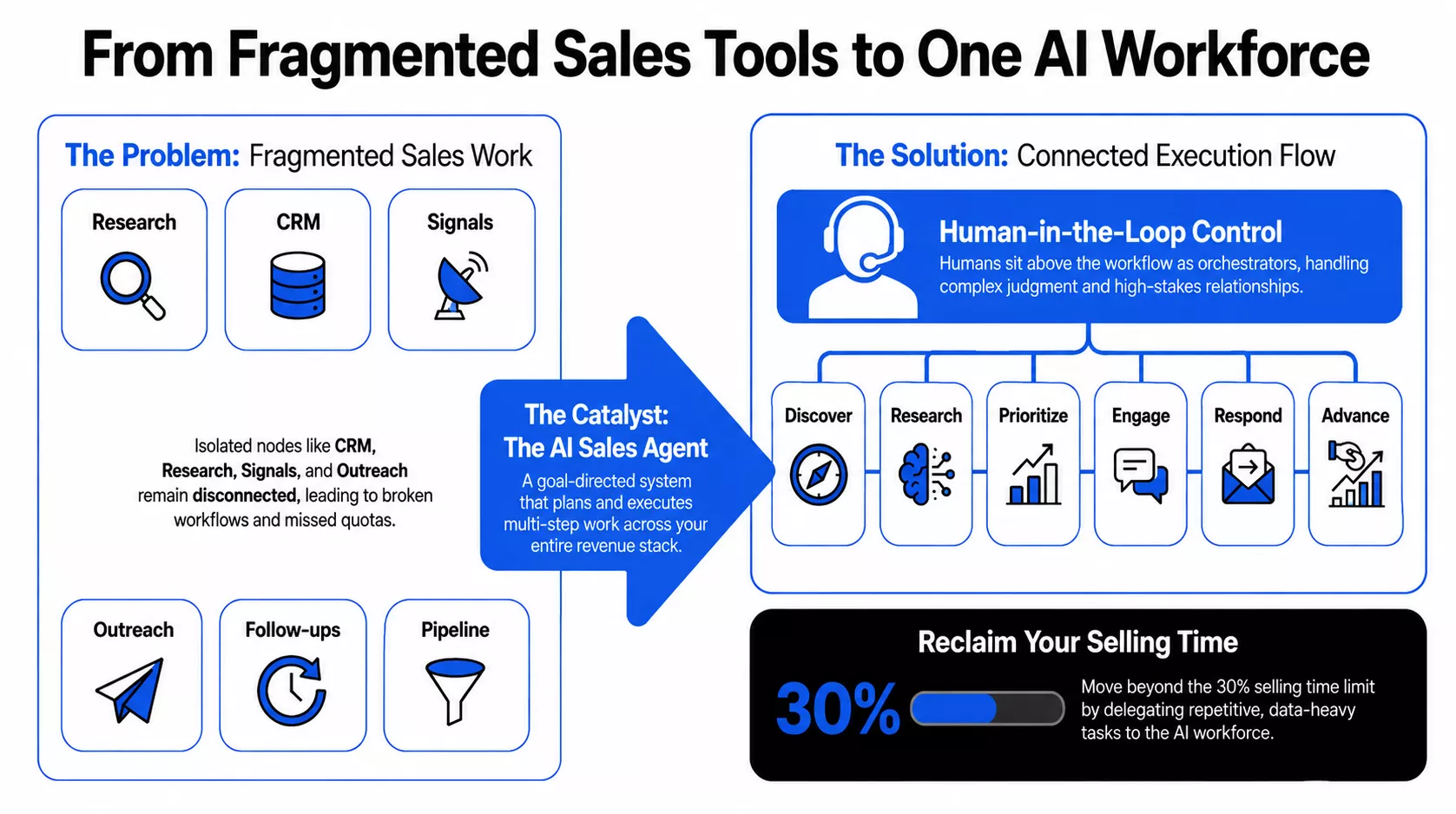
We’ve noticed that a surprising amount of a sales rep’s day is still spent preparing to sell rather than actually selling. Building lists, researching accounts, finding the right contacts, writing outreach and chasing follow-ups can consume hours before a mean…
Sales teams have more AI than ever, yet the productivity problem remains. Sales AI Agents can take repetitive work off your team's plate, but adding another tool does not automatically improve execution. In 2026, 78% of B2B sellers missed quota in 2025, w…