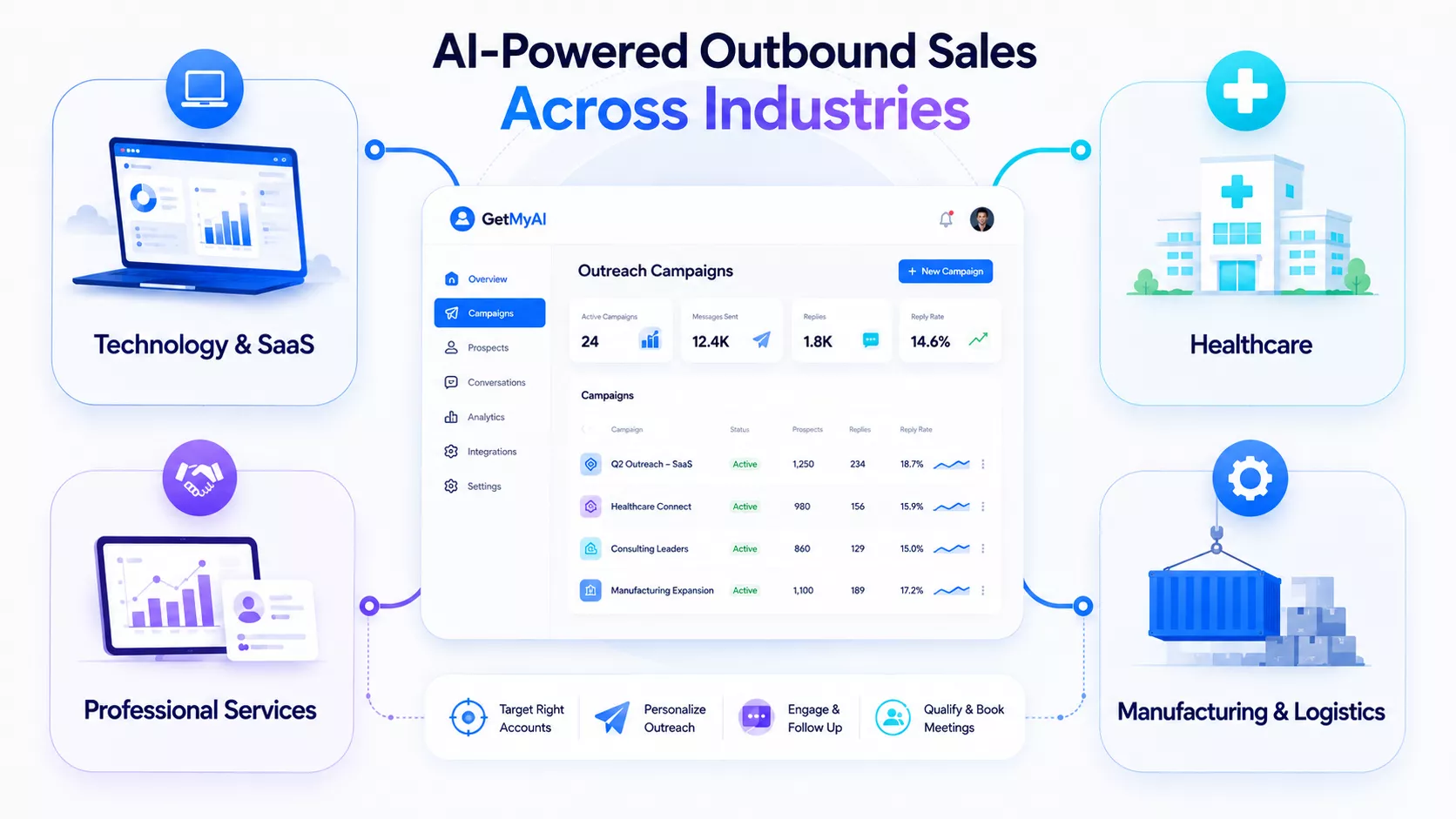
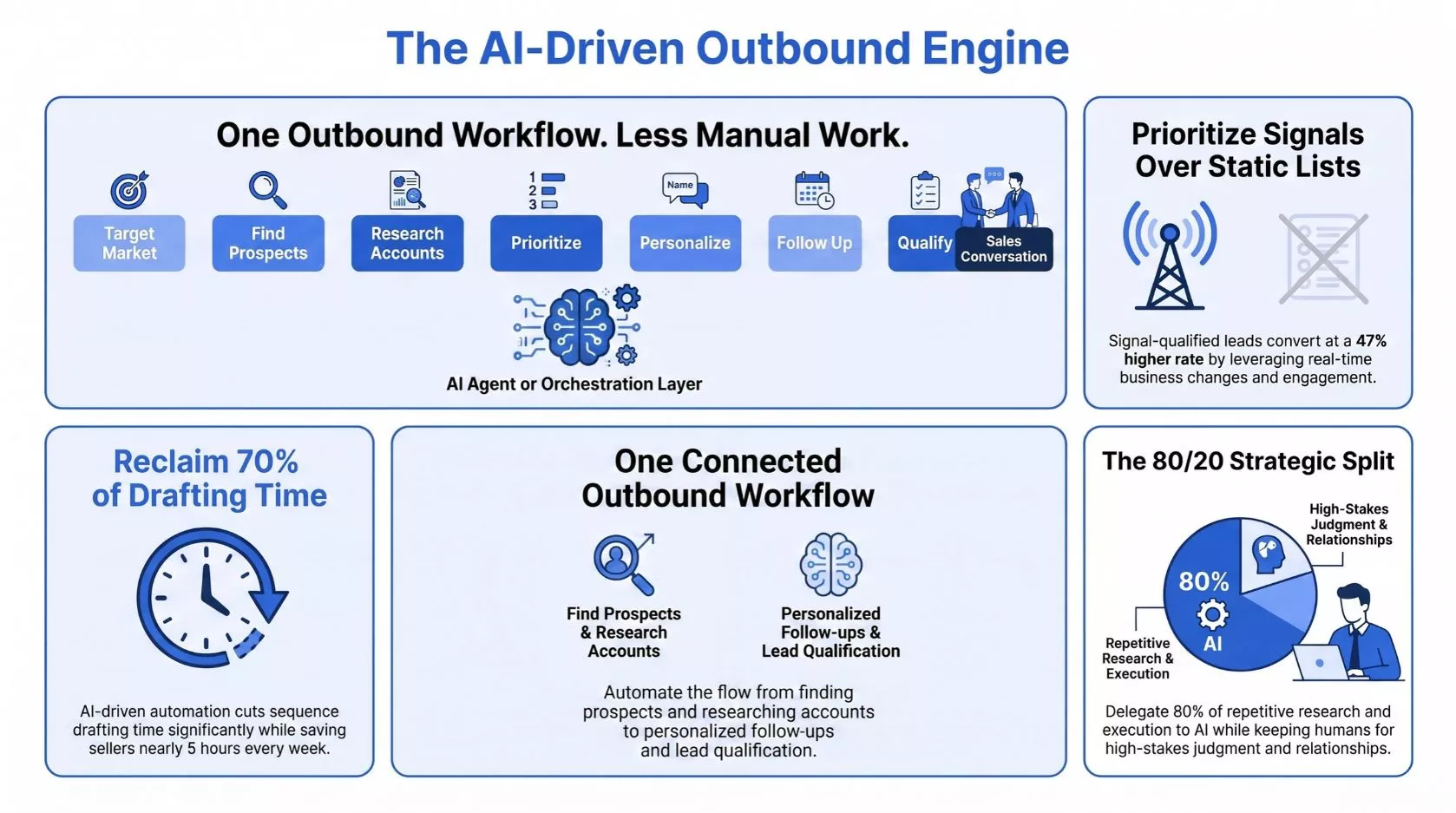
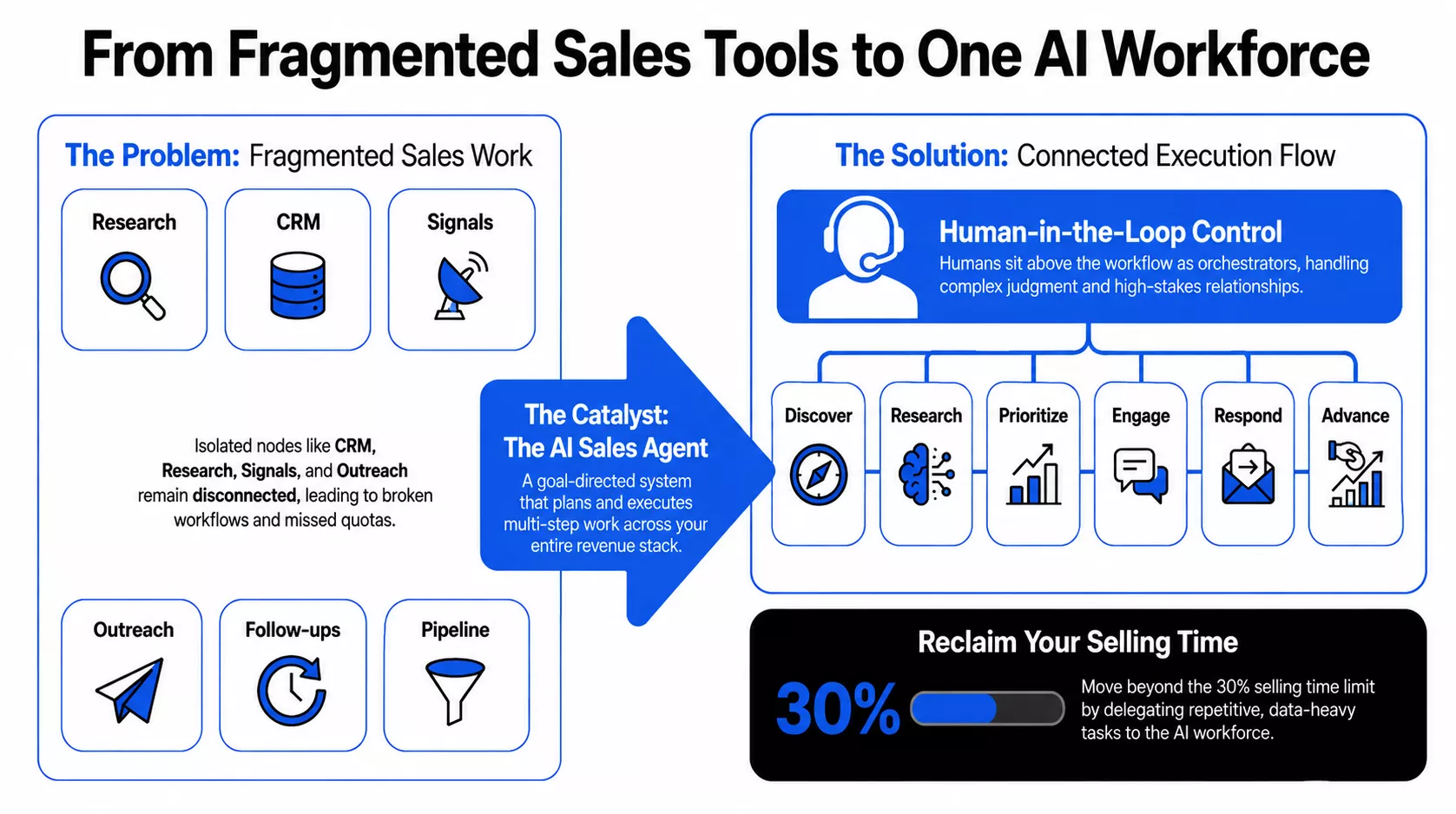
B2B outbound sales is becoming harder to manage manually. Sales teams still spend hours finding prospects, researching accounts, identifying decision-makers and keeping up with follow-ups. Benefits of AI in Sales go beyond saving time: better prospect research…
Experience Boost
Create. Deploy. Engage. With GetMyAI
Launch GPT-powered conversations that engage, support, and convert — all in one platform.
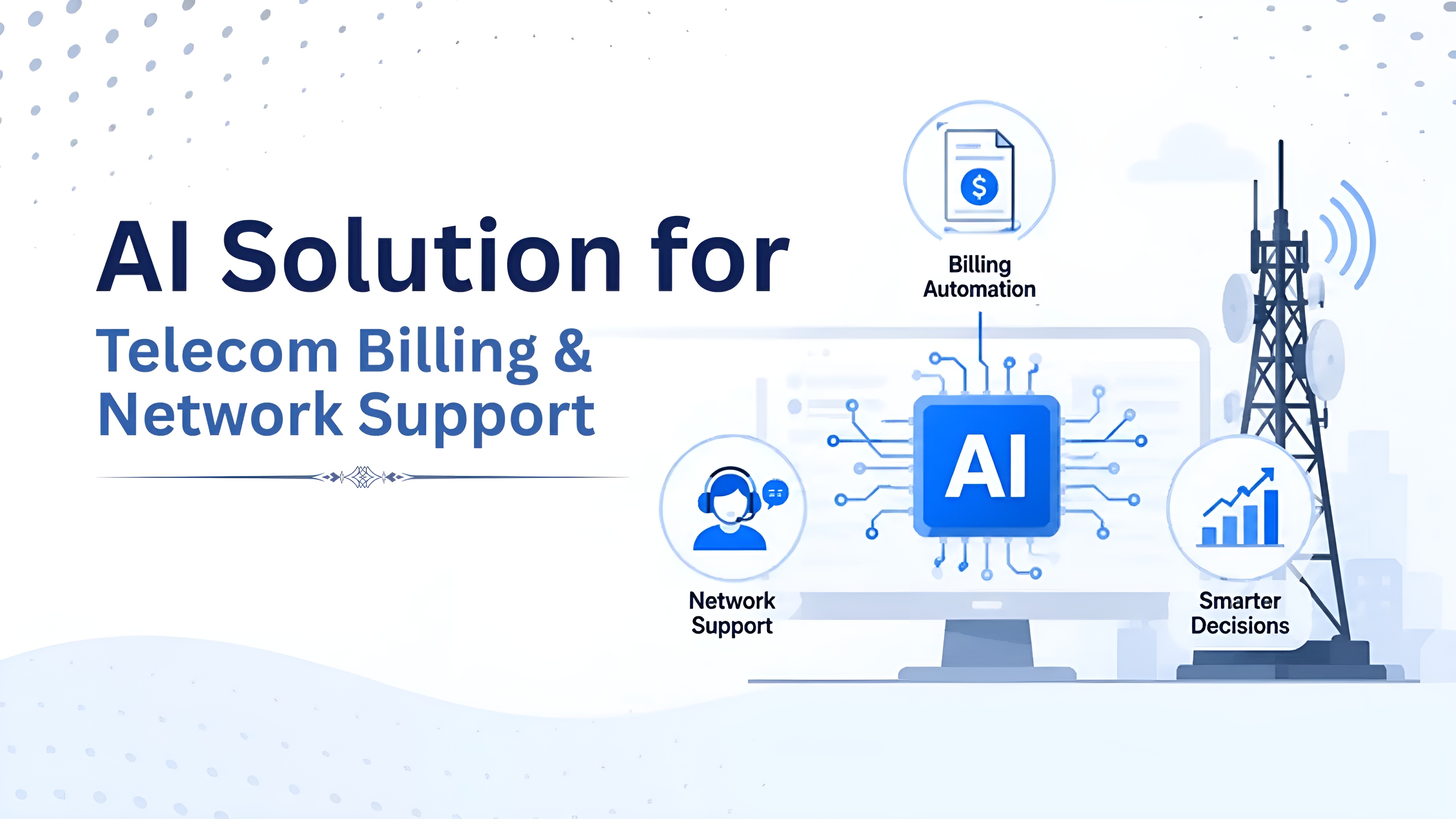
The Buyer’s Guide to Choosing an AI Solution for Telecom Billing & Network Support
getmyai
Jun 11, 2026
AI agent for telecom billing
Telecom AI agent solution
AI-powered telecom support automation
Telecom customer support AI agent
Key Takeaways
Telecom AI agents handle billing inquiries, network troubleshooting, and account support instantly across web, app, WhatsApp, and other channels without increasing headcount.
The right telecom AI agent solution reduces cost-per-contact from $13.50 to under $2.00 while improving first-contact resolution and customer retention simultaneously.
Reduce telecom AI procurement failure risk by assigning veto conditions to each buying committee role before vendor evaluations begin.
Validate billing AI agents against multi-topic, real-documentation scenarios. Production performance gaps appear immediately when you load your own content instead of vendor samples.
Structure pilots around two workflows maximum, with pre-defined success metrics and 30-day baseline data, or you cannot prove ROI to anyone.
Telecom providers are no longer asking whether an AI agent for telecom billing and network support is viable. That question has been answered. Choosing the right telecom AI agent solution requires more than evaluating features. It requires validating workflows, aligning stakeholders, structuring a pilot, and building a business case that executives will actually approve. This guide covers all of it, without the filler.
A telecom AI agent solution should be evaluated on workflow validation depth, BSS/OSS integration architecture, governance controls, and pilot performance, not on demo quality or feature lists. The strongest buying decisions are grounded in operational evidence.
Why Telecom AI Buyers Struggle to Reach Consensus
A typical procurement involves at least five stakeholder groups, and each evaluates the same vendor differently. Customer operations wants lower handle times and faster resolutions. Billing teams want accurate query handling and clean escalation paths. Network support teams want reliable troubleshooting guidance and consistent self-service containment. Compliance wants audit visibility and data governance. Executives want measurable cost impact within a defined window.
McKinsey research from early 2026 found that 51% of telecom executives identify employee and team adoption as the single biggest barrier to capturing AI value. That is an organizational problem, not a technology one. And it takes root during procurement, not after deployment.
The fix is a defined ownership before evaluation begins. As telecom digital transformation accelerates, buying committee misalignment has become the primary deployment risk.
Who Should Own Each Part of the Vendor Evaluation
Role
Primary Responsibility
Approval Criteria
Executive Sponsor (CEO / CFO)
Budget approval, business case sign-off
Cost reduction impact, defined payback period
Operational Owner (VP CX / Support)
Workflow validation, KPI definition
Query containment rate, resolution quality in pilot
Setup timeline, training requirements, handoff quality
Assign each role a veto condition before vendor presentations begin. Not a wish list, a specific condition that would end the process. This surfaces real concerns early, before a vendor has invested time building a custom environment for your team.
What Billing Teams Need to Validate Before Approving an AI Agent
Billing inquiries account for up to 60% of all customer support calls. If an AI-powered telecom support automation solution cannot handle the full range of those queries accurately, it does not meaningfully reduce contact volume or dispute handling time.
Billing teams should validate four things specifically:
Query coverage, not demo selection: Ask the vendor to demonstrate handling of a realistic billing scenario. An overage charge question combined with a promotional discount inquiry and a payment deadline question in the same conversation. The agent should draw on uploaded billing documentation, FAQs, and plan information to answer accurately. If it only handles clean, single-topic queries, it will not contain high billing call volumes in production.
Automate Telecom Support Without Complexity
GetMyAI handles billing queries, network troubleshooting, and account support across every channel your customers use.
Escalation design. When a customer disputes a charge the agent cannot resolve, what happens next? The handoff should be clean, contextual, and directed to the right team. Collecting the customer's details, summarizing the issue, and routing appropriately is the baseline. A dead-end response or a generic "contact us" redirect is a red flag.
Knowledge management flexibility. Billing documentation changes frequently. Plan fees, promotional terms, and payment policies update regularly. Ask the vendor how knowledge sources are updated, how quickly changes propagate, and whether non-technical staff can manage updates without developer involvement.
Multi-channel consistency. Billing questions arrive across websites, apps, WhatsApp, and customer portals. The AI Agent integration should deliver consistent, accurate responses regardless of channel. Ask the vendor to demonstrate the same billing query handled across two different channels.
TM Forum Catalyst data puts achievable outcomes for mature billing AI deployments at 80% reduction in billing errors and a 35% reduction in billing-driven churn. These are the benchmarks billing teams should use to measure pilot success.
What Network Operations Teams Need to Validate Before Approving an AI Agent
Network support is one of the highest-volume request categories in telecom. Customers contact support about connectivity issues, outages, device configuration, and service activation constantly. The question is not whether an AI agent can handle these queries. The question is how well.
Network support teams should test three scenarios specifically:
Guided troubleshooting depth
Ask the vendor to demonstrate a step-by-step connectivity troubleshooting flow for a common scenario such as slow mobile data or a Wi-Fi calling setup issue. The agent should walk the customer through structured diagnostic steps drawn from uploaded support documentation, not provide a generic "restart your device" response. The quality of the troubleshooting guidance reflects directly the quality of the knowledge management and content design behind the agent.
Outage and service status communication
When trained on service status resources, the agent should be able to explain a known outage, provide estimated restoration context, and direct customers to the right resources. Test this by asking the vendor to show what the agent does when a customer asks about a service disruption. An agent that simply says it cannot answer outage questions is not ready for network support deployment.
Device configuration assistance
Customers regularly need help with APN settings, SIM activation, eSIM setup, and VoLTE activation. Ask the vendor to demonstrate how the agent handles a device configuration question using uploaded technical documentation. The response should be specific, accurate, and structured in a way that a non-technical customer can follow.
The metric that matters for network support teams is self-service containment rate on troubleshooting queries. Operators who deploy well-configured AI agents on network support workflows report meaningful reductions in inbound ticket volume for routine connectivity and device queries, freeing support staff for complex cases.
How to Structure a Pilot Before Signing a Contract
This is the highest-value step in any telecom AI procurement process. Most failures trace back to skipping structured validation or running a pilot too broad to prove anything.
Choose two workflows, not ten. Start with high-volume, well-defined query types. Billing charge explanations and basic network troubleshooting are ideal entry points. Complex, exception-heavy scenarios belong to a later phase.
Define success metrics before launch. Agree on containment rate targets, resolution accuracy expectations, escalation quality standards, and response time benchmarks before the pilot begins. Metrics defined after the fact are impossible to act on.
Test with realistic content. Load the agent with your actual billing documentation, support FAQs, and troubleshooting guides. A pilot running on vendor-provided sample content does not reflect production performance.
Run queries your team knows the answers to. Have billing and network support staff submit real queries they handle regularly and evaluate the agent's responses against what a trained human agent would say. This is the fastest way to identify knowledge gaps and escalation failures.
Measure escalation quality, not just containment. A high containment rate on easy queries while failing on complex ones is not a success. Track how the agent handles edge cases and whether escalations arrive with enough context for the receiving agent to continue without starting over.
Document setup effort, not just outcomes. Track how long knowledge configuration took, how many iterations were needed to reach acceptable accuracy, and how much ongoing maintenance the content requires. This determines real total cost of ownership.
Red Flags That Signal an AI Agent Solution Is Not Ready for Telecom Deployment
Every vendor presentation looks credible until you push on the specifics.
"The demo was impressive."
It was their content, their queries, their environment. Ask them to answer a question using your billing documentation. The result is usually different.
"They said escalation is handled."
Handled how? An agent that hits a dead end and says "please contact support" is not an escalation path. Ask to see a contextual handoff with the conversation summary included.
"The platform is easy to manage."
Easy for whom? If a plan price changes next week and updating it requires a developer ticket, your support team cannot keep the agent accurate. Ask who makes that update and how long it takes.
"They support all our channels."
Support and deploy are different things. Ask for a live demonstration on WhatsApp or your customer portal, not a feature checklist.
"Analytics are included."
Volume dashboards are standard. What matters is whether the platform shows what the agent could not answer. That is the report that drives improvement.
"Data is secure."
Secure is not the same as yours. Ask whether conversation data is used for model training by default and what the opt-out process is.
Built for Telecom Support Operations
Explore the features telecom providers use to automate billing, network, and account support at scale.
Executives approve based on direct cost impact and acceptable deployment risk.
Operational Cost Reduction
Human-handled support interactions cost between $6 and $13.50 per contact, depending on geography and complexity. AI-resolved interactions cost $0.50 to $2.00. For an operator handling 10 million annual interactions and shifting 50% to AI self-service, the annual P&L impact is calculable and significant. Build the arithmetic explicitly for the CFO rather than presenting it as an estimate.
Customer Retention Impact
This is the ROI of AI agents in telecom customer service that executives actually respond to. Monthly churn runs between 1.5% and 4% globally, and acquiring a replacement subscriber costs $300 to $700. AI-driven billing query resolution and consistent network support reduce two of the most common voluntary churn triggers. For large operators, even a fractional churn reduction represents substantial avoided acquisition spend.
Support Capacity Impact
Telecom workforce automation with AI allows support teams to absorb volume growth without proportional headcount increases. This matters most during billing cycles, network incidents, and product launches when inbound volume spikes unpredictably. AI-driven customer experience improvements are most measurable in billing resolution time and first-contact resolution rate.
The business case should also be honest about the timeline. Deployment and content configuration take time. Knowledge quality improves with iteration. Presenting a realistic time-to-value range, rather than an optimistic first-month projection, builds more durable executive confidence than overpromising.
Why GetMyAI Works for Telecom Billing and Network Support
GetMyAI enables telecom providers to deploy AI agents across customer-facing and internal support operations without custom development.
Use Case
What GetMyAI Handles
Billing support
Charge explanation, plan queries, payment guidance, dispute escalation
Network support
Connectivity troubleshooting, outage information, device configuration, service activation
Agents are trained on your existing documentation, FAQs, and Q&A content. Non-technical teams manage knowledge updates independently. Deployment spans websites, apps, customer portals, WhatsApp, Telegram, Slack, and other supported channels.
If your evaluation is approaching a decision, we can walk through your specific workflows and deployment requirements.
See It Before You Evaluate Vendors
Start a free trial and test GetMyAI against your actual billing and support workflows today.
How do AI agents improve telecom customer support?
AI agents handle billing queries, network troubleshooting, device configuration, and account questions instantly across every channel. They reduce handle time, improve first-contact resolution, and free support staff for complex cases that genuinely require human judgment.
What are the benefits of AI in telecom operations?
The measurable benefits are cost reduction, containment rate improvement, and churn mitigation. Human-handled contacts cost $6 to $13.50 each. AI-resolved contacts cost $0.50 to $2.00. Beyond cost, consistent 24/7 availability across billing and network support reduces the friction that drives voluntary churn.
What features should telecom AI agents have?
At minimum: accurate query handling across billing, network, and account topics; clean escalation paths with contextual handoffs; multi-channel deployment across web, app, and messaging platforms; non-technical knowledge management; and analytics that surface unanswered questions, not just conversation volume.
How do telecom AI agents integrate with OSS/BSS systems?
Integration depth depends on the platform. Knowledge-based agents connect through existing documentation, FAQs, and support content without requiring direct OSS/BSS API access. For operators needing live account data or real-time network status, verify what the vendor supports natively versus through third-party middleware before committing.
We’ve noticed that a surprising amount of a sales rep’s day is still spent preparing to sell rather than actually selling. Building lists, researching accounts, finding the right contacts, writing outreach and chasing follow-ups can consume hours before a mean…
Sales teams have more AI than ever, yet the productivity problem remains. Sales AI Agents can take repetitive work off your team's plate, but adding another tool does not automatically improve execution. In 2026, 78% of B2B sellers missed quota in 2025, w…