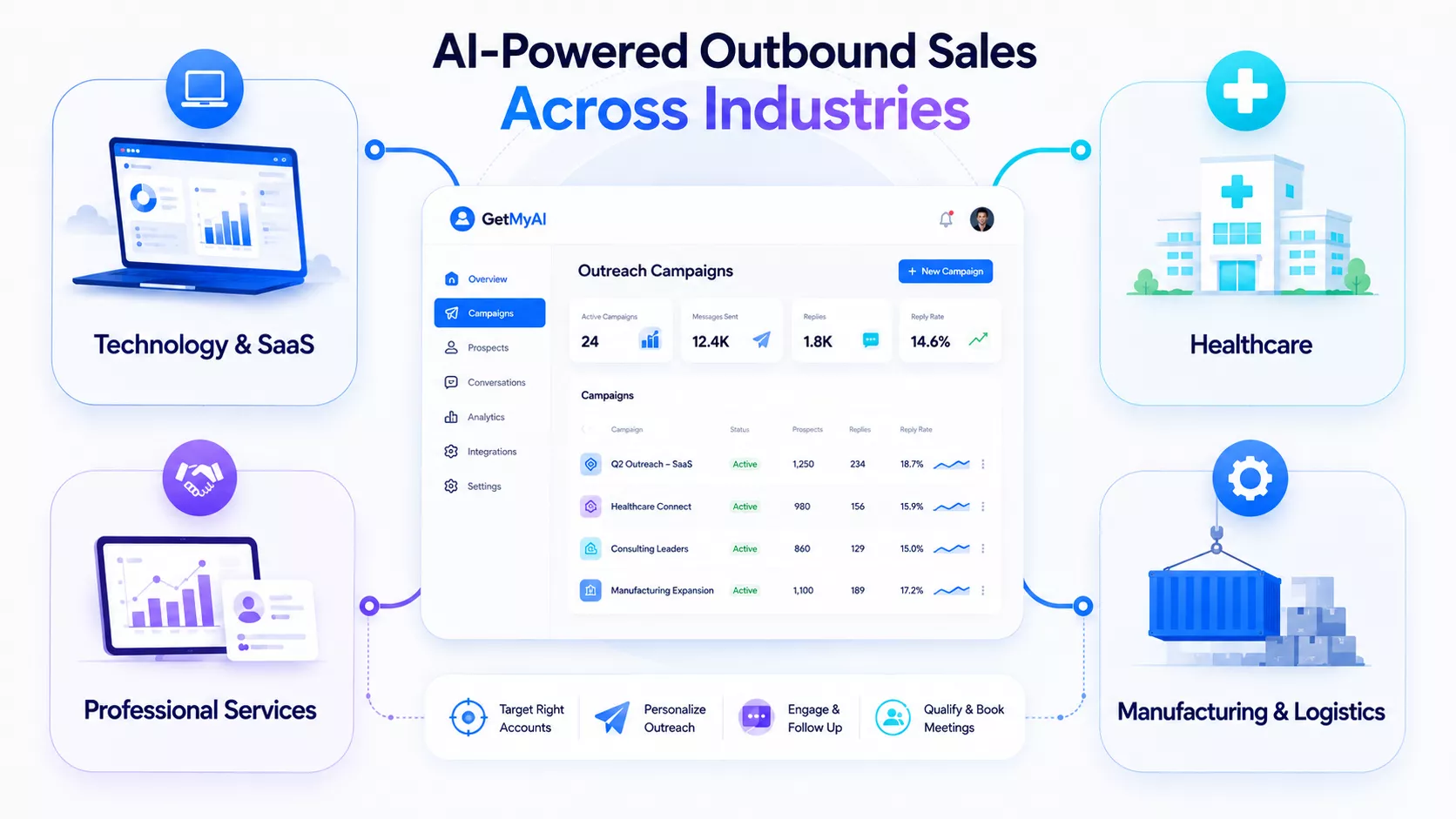
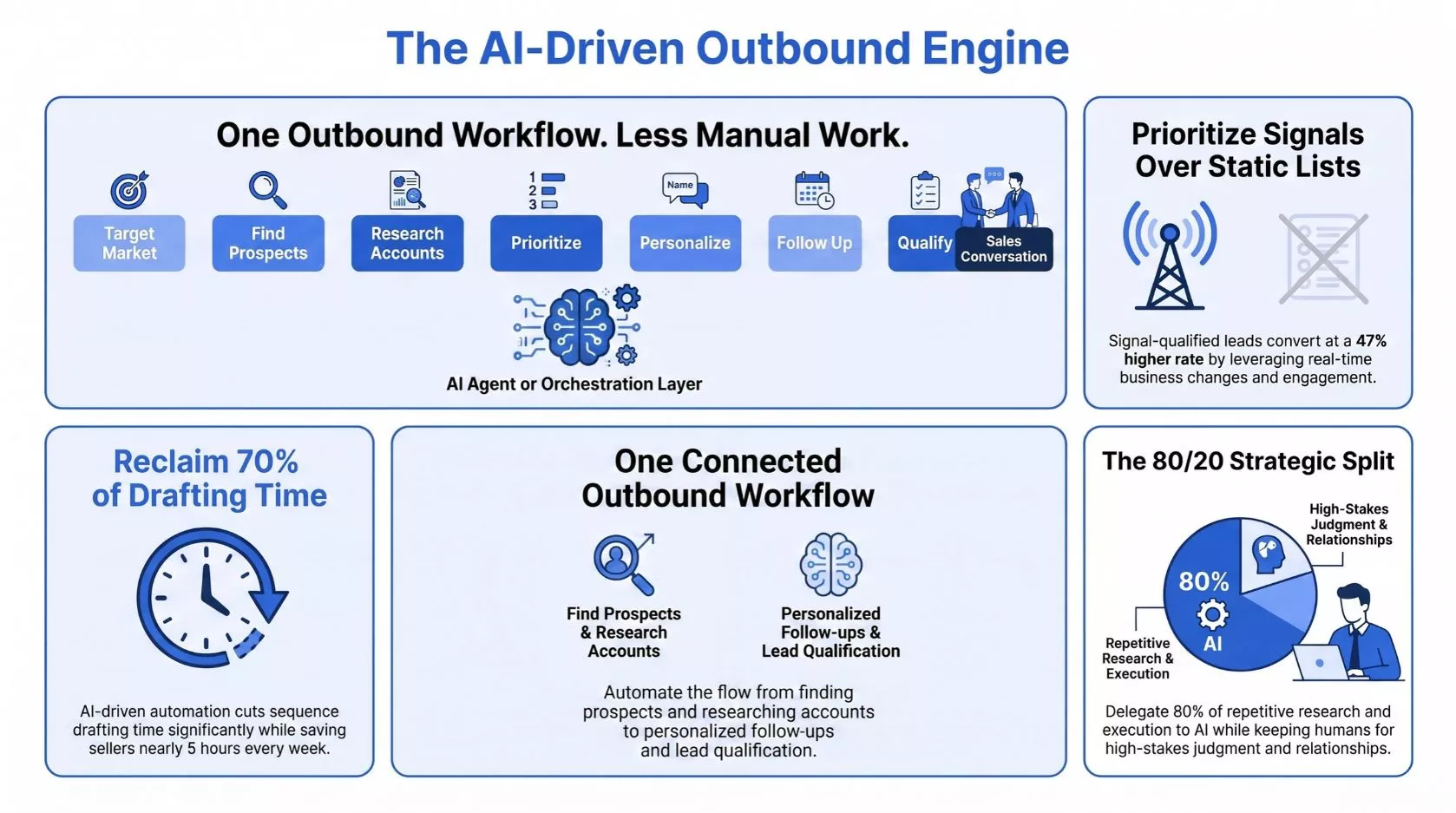
B2B outbound sales is becoming harder to manage manually. Sales teams still spend hours finding prospects, researching accounts, identifying decision-makers and keeping up with follow-ups. Benefits of AI in Sales go beyond saving time: better prospect research…
Experience Boost
Create. Deploy. Engage. With GetMyAI
Launch GPT-powered conversations that engage, support, and convert — all in one platform.
AI Agents for Student Support: How Universities Are Replacing Traditional Chatbots
getmyai
Mar 30, 2026
AI agents for education
AI agents in higher education
student support AI chatbot
Key Takeaways
Universities are moving beyond chatbots toward AI agents that manage workflows and deliver complete outcomes
AI agents handle complex, multi-step processes, enabling institutions to move from reactive support to guided execution
Institutions adopting AI agents achieve faster responses, reduced costs, and stronger student engagement across interactions
AI is evolving into a core infrastructure layer that supports consistent, scalable, and personalized student experiences
Chatbots remain useful for basic queries, but advanced workflows increasingly require more capable AI agent systems
Higher education is under pressure. Every university has systems for admissions, support, and communication. The problem is that they don’t operate as one. Students move through disconnected processes, while institutions expect consistency from fragmented infrastructure. Traditional support systems are not built for this environment. Email queues slow things down. Call centers do not scale. Even AI chatbots, once considered innovative, are now struggling to meet expectations.
That’s where AI agents for education come in. Unlike chatbots that simply answer questions, AI agents understand intent, take action, and complete tasks across systems. Universities are now adopting these systems to transform admissions, engagement, and student support.
The Shift: From Chatbots to AI Agents in Universities
What Traditional Chatbots Actually Do
Most university chatbots today operate as automated FAQ systems.
They are useful for handling repetitive queries, but their limitations are clear. They rely on predefined responses, meaning they can only answer what they have been explicitly trained to recognize.
They lack memory, so each interaction is treated as a new conversation. They cannot maintain context across sessions, which leads to fragmented user experiences. More importantly, they cannot perform actions beyond delivering information.
This makes them reactive tools. They wait for a question, respond, and stop there. For simple use cases, this works. For modern student journeys, it does not.
What AI Agents Do Differently
AI agents redefine the role of automation in higher education. They are not just conversational tools. They function as digital operators that can plan, execute, and complete workflows across systems such as student portals, internal databases, and communication platforms.
Instead of simply answering questions, AI agents guide students through entire processes. They understand intent, maintain context across interactions, and execute multi-step actions. This allows them to handle complex scenarios such as application guidance, document verification, and personalized recommendations.
The result is a shift from isolated interactions to continuous, goal-driven experiences.
Comparison: Chatbots vs AI Agents
Capability
Chatbots
AI Agents
Function
Answer queries
Execute tasks
Context
Limited
Persistent memory
Integration
Surface-level
Deep system integration
Automation
Basic
End-to-end workflows
Experience
Reactive
Proactive
The difference is clear. Chatbots respond. AI agents resolve.
How Universities Are Using AI Agents Today
AI agents are already being deployed across multiple areas of student support and operations.
Admissions & Enrollment Support
Admissions is one of the most critical stages in the student lifecycle. AI agents help universities reduce drop-offs by guiding students from initial inquiry to completed application. They provide real-time answers about courses, eligibility, and deadlines. AI for university admissions support assists students in completing forms, uploading documents, and understanding next steps. This level of guidance reduces confusion and increases conversion rates.
24/7 Student Support Automation
Students do not operate within fixed hours, and neither should support systems. AI agents provide always-on assistance, ensuring students get instant answers on fees, schedules, and IT support. 74% of students expect real-time support from their institution, making AI essential for reducing wait times and easing pressure on human support teams. The result is faster resolution and improved satisfaction.
Personalized Student Engagement
Modern students expect personalized interactions. By using behavioral data and past interactions to tailor responses and recommendations, an AI chatbot for student engagement can suggest relevant courses, provide reminders, and guide students. This transforms the experience from generic to personalized.
Retention & Success Tracking
Retention is a major challenge for institutions. AI agents proactively identify students who may be disengaged or at risk. They can trigger timely interventions, send reminders, and provide support before issues escalate. This shifts the approach from reactive problem-solving to proactive engagement.
Campus Operations Automation
AI agents also streamline internal workflows. They handle routine operational queries such as timetable access, hostel allocation, and event updates. This reduces administrative workload and improves efficiency across departments. More importantly, it ensures consistency in how information is delivered.
Benefits of AI Agents in Higher Education
The adoption of AI agents delivers measurable improvements across key areas.
Faster Response & Resolution
A student support AI chatbot gives answers instantly. This reduces decision-making delays and allows them to move forward without delay. Faster responses directly impact satisfaction and engagement.
Scalable Student Support
AI agents can handle thousands of interactions simultaneously without performance degradation. This allows universities to scale support without increasing headcount.
Improved Student Experience
Personalization and context-aware interactions create a more engaging and supportive journey. Students feel understood and guided rather than redirected.
Cost Efficiency for Institutions
AI reduces the cost of handling support interactions significantly. Institutions can lower operational expenses while maintaining high-quality support. This creates a strong ROI case for AI adoption.
Stats Snapshot
For institutions evaluating ROI, the numbers are clear.
AI-driven support can reduce costs by up to 80% per interaction
Routine queries are resolved instantly, eliminating the backlog
This shifts support from a cost center to a scalable system that improves both efficiency and student satisfaction.
Where Chatbots Still Can Work (And Where They Don’t)
Chatbots are not obsolete. They are simply limited in scope.
Where Chatbots Still Work
Chatbots remain effective for:
Basic FAQs
Simple navigation queries
Static information delivery
These are low-complexity use cases where structured responses are sufficient.
Where Chatbots Fall Short
Chatbots struggle with:
Multi-step workflows
Personalized guidance
System integrations
Decision-making processes
These require context, intelligence, and execution capability.
Institutions designing long-term support systems are recognizing a clear divide. Chatbots improve efficiency at the interaction level, but they do not address process fragmentation. AI agents enable end-to-end automation across workflows, making them a more scalable and future-ready solution. Research from McKinsey & Company shows that the real impact of automation comes from transforming entire processes, not just individual tasks.
AI Agents vs Chatbots: A Strategic Decision for Universities
Choosing the right system is about alignment with the problem. Universities often adopt chatbots first, then realize their limitations when processes become more complex. The real decision comes down to how much of the student journey you want to automate and how much control you need over outcomes.
When to Use Chatbots
Chatbots are effective when the goal is to handle predictable, repetitive interactions at scale. They work best in environments where questions are clearly defined and do not require follow-up actions or deeper context.
In many university systems, this includes front-line support where speed matters more than complexity. Chatbots reduce pressure on teams by filtering simple queries, allowing staff to focus on higher-value tasks without being interrupted by routine questions.
Chatbots are suitable for:
High-volume, low-complexity queries
Static information delivery
Basic support tasks
When to Adopt AI Agents
As institutions expand beyond basic support, the limitations of chatbots become more visible. At this stage, the use cases of AI agents in universities become clearly defined. They move from handling conversations to managing workflows that involve context, decision-making, and system-level actions.
AI agents are essential when support is no longer a single-step interaction but a journey. They allow universities to connect systems, guide users through processes, and ensure that interactions lead to outcomes rather than dead ends.
AI agents are essential when institutions need:
Workflow automation
Personalized student journeys
Scalable support systems
Integrated operations
Decision Table
Use Case
Best Fit
FAQs
Chatbot
Admissions workflow
AI Agent
Student engagement
AI Agent
IT support
AI Agent
Knowledge base queries
Chatbot
Why Universities Are Choosing GetMyAI
Automation solves surface-level problems. Universities need systems that impact outcomes. From admissions conversion to student retention, the focus is now on measurable results, not just faster responses or reduced manual effort.
Built for End-to-End Student Support
GetMyAI is designed to handle the full student journey. It enables institutions to manage conversations, guide users, and complete workflows within a single platform.
Key Capabilities
Multi-agent workflow automation
Integration across systems
Personalized student journeys
Real-time analytics and insights
Outcome-Driven Approach
GetMyAI focuses on results, not just interactions. Instead of measuring conversations, it helps institutions improve enrollment, engagement, and retention.
Enterprise-Ready Infrastructure
It provides a secure and scalable system that supports high-volume interactions without compromising performance. It is built for institutions that need reliability at scale.
Security and Compliance
GetMyAI is designed with data protection and regulatory alignment in mind.
Our platform follows:
GDPR compliance for handling and processing user data responsibly
SOC 2-aligned practices for secure system operations and access control
EU AI Act compliance considerations based on use-case risk levels
This ensures institutions can deploy AI agents confidently while maintaining privacy, security, and regulatory alignment.
Future of AI in Higher Education Support
AI is moving beyond a support layer and becoming part of how universities operate at a system level. It is no longer limited to answering questions, but is beginning to influence decisions across admissions, engagement, and internal processes.
AI agents will guide both academic and operational workflows across departments
Student journeys will become continuous, covering admission, learning, and alumni engagement
Institutions will reduce reliance on disconnected tools and fragmented communication systems
This shift reflects a broader trend across industries, where 66% of organizations report measurable efficiency gains from AI adoption, with many moving toward redesigning entire workflows around it
Conclusion
The shift from chatbots to AI agents is not just a technical improvement. It is a structural change in how universities manage student interactions and support systems. Institutions adopting AI agents early are building more responsive, scalable, and outcome-driven environments. This directly impacts student satisfaction, improves operational efficiency, and strengthens enrollment and retention through consistent, real-time engagement.
The conversation has moved beyond whether AI should be used. Universities are now evaluating how advanced their systems need to be to stay competitive. AI agent chatbot platforms are enabling institutions to handle complex workflows, not just queries. The real advantage lies in deploying systems that guide, act, and continuously improve, rather than simply respond.
FAQs
1.How are universities using AI agents?
Universities use AI agents for admissions guidance, student engagement, 24/7 support, and automating workflows across enrollment, queries, and internal campus operations.
2.Can AI replace university support staff?
AI reduces repetitive tasks and handles routine queries, but human staff remains essential for complex issues, emotional support, and decision-making requiring judgment and empathy.
3.How do AI agents improve student experience?
AI agents improve student experience by delivering instant responses, personalized recommendations, proactive guidance, and seamless support across multiple touchpoints without delays or confusion.
4.Are AI chatbots still relevant?
Yes, for basic FAQs and simple queries, personalized student support AI is still very useful. But advanced workflows, personalization, and system integrations require more capable AI agents.
5.What are the benefits of AI in student services?
AI in student services enables faster responses, scalable support, reduced operational costs, improved engagement, and consistent service quality across large volumes of student interactions.
We’ve noticed that a surprising amount of a sales rep’s day is still spent preparing to sell rather than actually selling. Building lists, researching accounts, finding the right contacts, writing outreach and chasing follow-ups can consume hours before a mean…
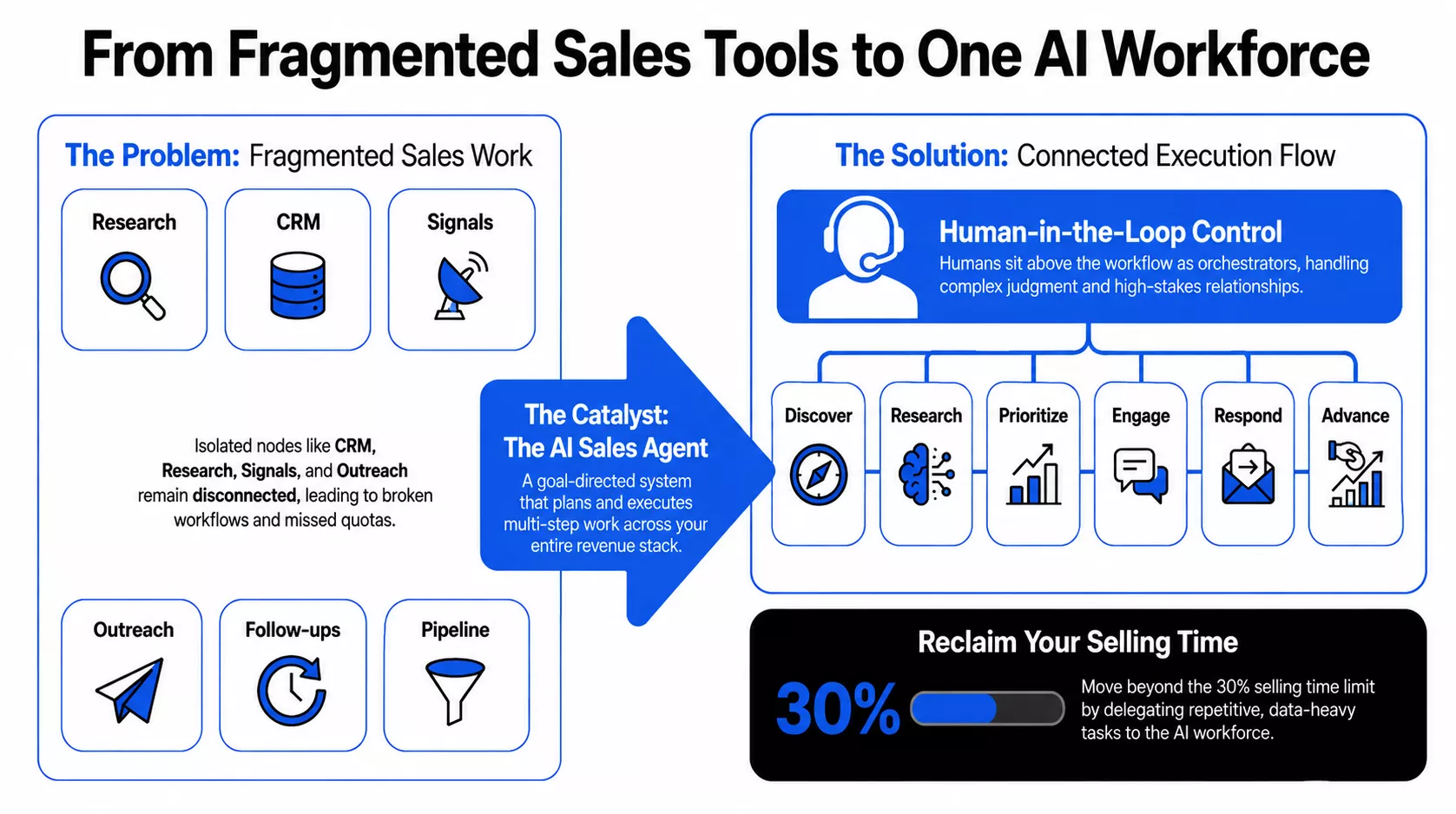
Sales teams have more AI than ever, yet the productivity problem remains. Sales AI Agents can take repetitive work off your team's plate, but adding another tool does not automatically improve execution. In 2026, 78% of B2B sellers missed quota in 2025, w…