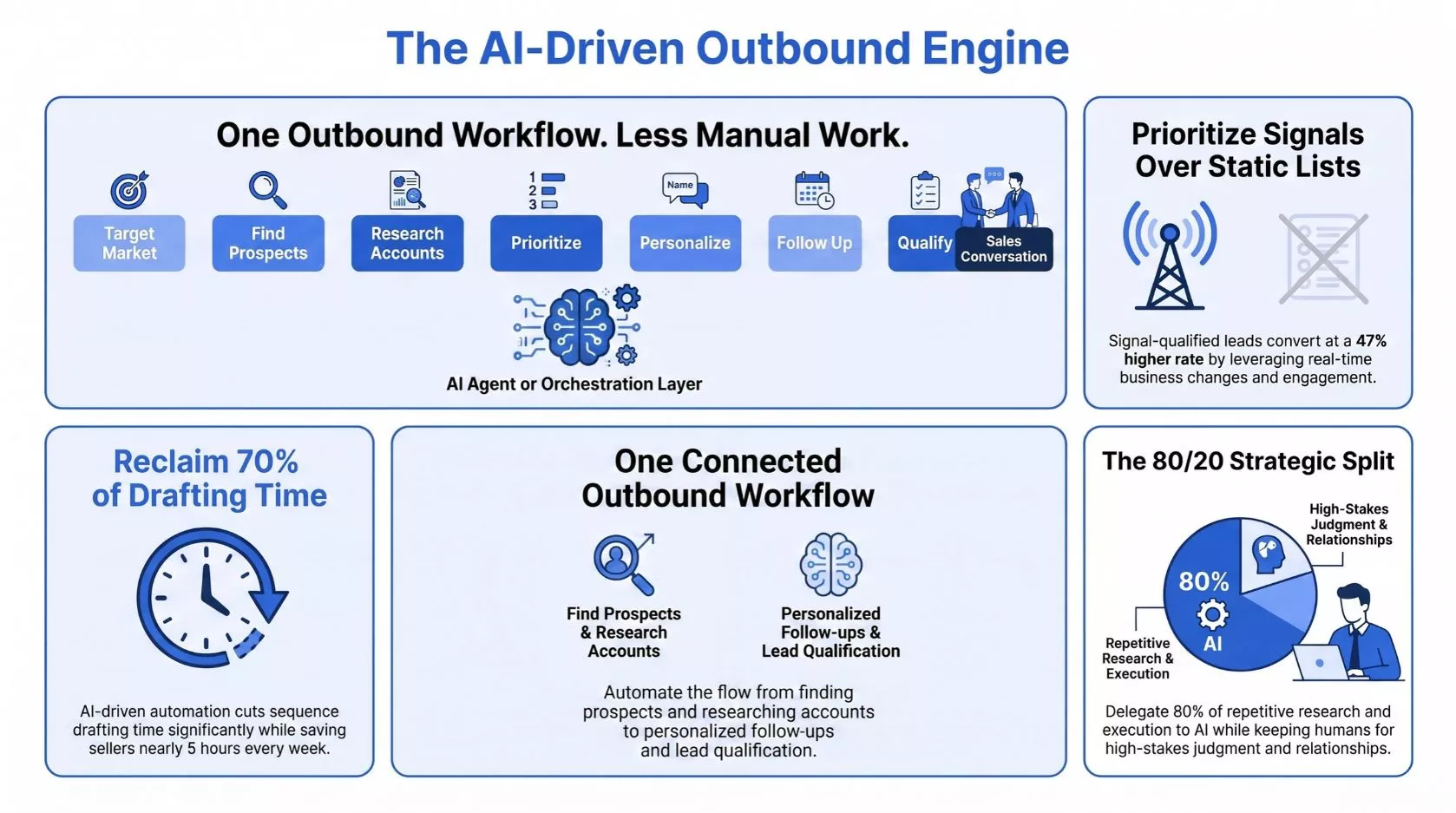
B2B outbound sales is becoming harder to manage manually. Sales teams still spend hours finding prospects, researching accounts, identifying decision-makers and keeping up with follow-ups. Benefits of AI in Sales go beyond saving time: better prospect research…
Experience Boost
Create. Deploy. Engage. With GetMyAI
Launch GPT-powered conversations that engage, support, and convert — all in one platform.
Why Enterprises Are Moving to Privacy-First AI Chatbot Platforms
getmyai
Apr 16, 2026
AI chatbot data privacy
secure AI chatbot platform
AI agent data security
no data used for AI training
private AI chatbot solution
Key Takeaways
Enterprises now focus on data control instead of AI capability, as chatbot systems handle sensitive business information every day.
Traditional AI chatbots often reuse conversation data, which creates risks related to ownership, compliance, and unexpected data exposure.
Privacy-first AI platforms stop external training and maintain strict data isolation to protect sensitive enterprise workflows.
AI risks go beyond breaches and include profiling, hidden data retention, and exposure across the entire system lifecycle.
The future of enterprise AI depends on trust, where secure data handling becomes the main competitive advantage.
As AI chatbot data privacy becomes a board-level concern, businesses are re-evaluating how conversational AI fits into their infrastructure. What started as a tool for automation is now deeply embedded in workflows, handling sensitive customer, financial, and internal data. This shift is forcing enterprises to prioritize control, transparency, and risk mitigation alongside performance and scalability.
Enterprises are moving to privacy-first AI chatbot platforms because traditional AI systems often use conversation data for training, creating risks around data exposure, compliance, and ownership. Privacy-first platforms ensure no data is used for model training, maintain strict data isolation, and give businesses full control over how their information is processed and stored.
Why Are Enterprises Shifting from AI Adoption to Data Control?
Enterprises are shifting from AI adoption to data control because the core risk is not using AI, but how it handles sensitive data. As AI becomes embedded across workflows, businesses are prioritizing AI chatbot data privacy to prevent data exposure, misuse, and loss of ownership.
This shift reflects a fundamental change in how AI is evaluated. Early adoption focused on capabilities such as speed, automation, and output quality. Today, AI systems function as continuous data pipelines, processing customer interactions, internal documents, and critical business information in real time.
The concern has moved from “Can AI do this?” to “Where does this data go, and who controls it?” When chatbots process conversations, they often collect, store, and potentially reuse that data. Without clear control, this creates risks around compliance, intellectual property, and competitive exposure.
What Changed in Enterprise Priorities?
From capability to control: AI performance is no longer a differentiator; data governance is
From tools to infrastructure: AI agents now sit inside core workflows, not just support layers
From outputs to data flow: The focus is on how data moves, not just what AI generates
From adoption to accountability: Enterprises must manage legal, compliance, and security risks
This matters when AI interacts with sensitive environments like finance, HR, or internal analytics. A system that improves efficiency but exposes data is not considered viable at scale.
Most companies get this wrong because they evaluate AI based on features, not architecture. The real decision is not which model is better, but which system allows complete control over data usage and access.
AI alone is no longer a competitive advantage. Data control has taken that role. As AI capabilities become widely accessible, the only sustainable edge comes from how securely and intelligently a business manages its data within these systems.
Features of AI Chat Privacy
AI chat privacy is defined by how a system controls data collection, usage, storage, and access across the entire interaction lifecycle. Strong AI agent privacy features are not limited to encryption or policies. They are built into how the system is designed and operated.
A privacy-focused AI chatbot minimizes unnecessary data exposure from the start. Instead of collecting excessive inputs and metadata, it limits data capture to what is required for the interaction. This reduces the risk surface and ensures compliance with principles like data minimization.
Another critical feature is data isolation. Privacy-first systems ensure that conversations, documents, and internal knowledge remain within a controlled environment. This prevents cross-tenant exposure and eliminates the risk of data being reused for external model training or shared across systems.
Access control also plays a central role. Role-based permissions, audit logs, and activity tracking ensure that only authorized users can view or interact with sensitive data. This is especially important when AI connects with internal tools or workflows.
Finally, transparency is essential. Systems must clearly define how data is processed, retained, and used. Without this visibility, businesses cannot assess risk or ensure compliance.
What Happens to Your Data in Traditional AI Chatbots?
Traditional AI chatbots collect more than just user inputs. They capture metadata such as timestamps, device details, and interaction patterns, which together create a broader data footprint. This data is then stored in logs for varying periods, often beyond the immediate conversation, increasing exposure risks.
Data Collection vs Data Ownership
While users provide the data, ownership is often unclear. Many platforms retain rights to process and reuse this data, creating a gap between input and control.
Data Storage vs Data Retention Risks
Stored data may persist in logs or systems even after deletion requests, raising compliance and security concerns.
Data Training: The Hidden Layer
A significant portion of chatbot data is used for model improvement, including training and profiling. This layer is rarely visible but critical.
Myth vs Reality: AI Chatbot Data Privacy
Most businesses assume AI chatbot privacy works the same way as traditional software systems. In reality, data handling in AI is far more complex, and common assumptions often do not reflect how these systems actually process and retain information.
Myth
Reality
AI chats are private
Conversations are often used for training or improvement unless explicitly restricted
Encryption means data is safe
Encryption protects data in transit and storage, but does not prevent internal processing or reuse
Vendors handle compliance
The business using the chatbot remains responsible for data protection and regulatory compliance
Deleting chats removes data
Data may still exist in logs, backups, or retention systems, depending on provider policies
The 5 Core Risks Enterprises Cannot Ignore
AI chatbot risks are not assumptions. They are visible, system-level, and already affecting enterprise operations. Understanding them requires focusing on data flow and storage, not just features.
Data leakage and breaches: Chatbots handle sensitive financial and internal data, making them prime targets. With AI access rising by 50% in 2025, exposure is increasing rapidly, driving the need for an AI agent with no data leakage across enterprise systems.
Unauthorized access through integrations: APIs and third-party links can create entry points. Poor security settings can expose entire systems when connected to internal tools.
Data training exposure: Many providers train models using user inputs by default, which risks exposing business data externally.
User profiling and misuse: Chatbots monitor behavior and build profiles that can reveal sensitive user information.
Hidden data lifecycle risks: Even without direct feedback, systems use indirect signals like user actions to collect more data than expected.
The real risk is not just data loss. It is continuous, often invisible data exposure across the entire AI lifecycle.
Enterprise Use Cases Driving the Shift to Privacy-First AI
Enterprises first adopted AI in customer-facing systems, where speed and quick responses drive revenue. In these environments, chatbots handle questions about orders, payments, and personal data. This is where an AI chatbot for sensitive business data becomes important, since even one interaction can include financial or identifiable information that must stay secure.
As adoption grows inside the company, businesses start using AI as an internal data assistant. These systems use knowledge bases, internal files, and operational data to help teams. An internal data AI assistant should give accurate insights, but it can create risks if internal data or reports are exposed outside controlled environments.
The highest risk appears in workflows like finance, legal, and decision-making systems. Here, AI does more than answer questions and also performs actions based on sensitive inputs. Secure AI workflow automation becomes necessary, as these systems handle data that directly impacts business results. At this stage, privacy becomes a core requirement.
Compliance Requirements Are Accelerating the Shift
Regulation is no longer a background factor in AI adoption. It now shapes how enterprises deploy and control these systems. Laws like GDPR, HIPAA, and CCPA are not built only for AI, but they apply to how chatbot data is collected, stored, and used. This creates a need for systems that reduce data exposure, ensure consent, and offer clear transparency.
GDPR-compliant AI Chatbot
Under GDPR, businesses must follow rules like data minimization and purpose limitation. This means AI systems cannot collect or reuse data beyond their purpose without clear consent. In practice, a GDPR-compliant chatbot platform ensures chatbots avoid unnecessary data storage and eliminate external training dependencies that could expose user information.
HIPAA-compliant AI Chatbot
In healthcare, HIPAA requires strict protection of patient data. Any AI system working with medical information must ensure that sensitive data is not exposed, shared, or reused. A HIPAA-compliant chatbot platform enforces this by maintaining strict data controls, making privacy-first systems essential for safe use in clinical or support environments.
AI Chatbot Data Protection Laws
Across regions, the trend is clear. Businesses are responsible for how AI handles data, no matter the vendor. Compliance is moving from written policy to system design.
What Should Enterprises Look for in a Secure AI Chatbot Platform?
Enterprises should evaluate a secure AI chatbot platform based on how it manages data usage, access, and visibility across the system. The goal is not only functionality, but to ensure that sensitive data stays protected at every stage.
A reliable evaluation framework includes:
No external model training: Ensure the platform guarantees that your data is never used to train external or shared AI models under any condition.
Clear data ownership: The business must retain full ownership of all inputs, outputs, and knowledge sources without ambiguity in terms of contracts.
Access control and permissions: The system should allow role-based access so that only authorized users can view or modify sensitive data and configurations.
Audit logs and monitoring: Detailed activity tracking is essential to understand how data is used, who accessed it, and how the AI is performing over time.
Controlled integrations: Any connection to external systems must be secure, limited in scope, and fully visible to prevent unintended data exposure.
In practice, this matters when AI is connected to internal systems or handling sensitive workflows. A platform that lacks even one of these controls can introduce risk at scale.
The Future: AI That Works Without Exposing Your Data
The future of AI is now defined less by model capability and more by how securely data is managed. As AI becomes part of enterprise operations, the focus is shifting toward systems that work without exposing sensitive data to external models or shared environments.
This shift comes from a change in the market. Access to strong AI models is no longer a competitive edge. The real advantage now lies in controlling proprietary data and how it is processed. Analysis of AI privacy policies by the IAPP shows that some enterprise AI systems retain and replicate data across vendor ecosystems, with flagged chat data stored for up to two years, exposing a gap between adoption speed and governance readiness.
At the same time, risks are becoming more complex. Emerging threats like indirect prompt injection and cross-system data exposure are no longer edge cases. They are becoming realistic enterprise concerns as AI agents connect with internal systems and workflows.
The result is a clear direction: AI is evolving into internal infrastructure, and systems that ensure data isolation, ownership, and controlled processing will define long-term adoption.
What to Look Forward To
Zero external model training
Fully isolated AI environments
Internal-first AI architectures
Reduced data retention by design
Embedded governance controls
Secure multi-system integrations
Trust-driven AI adoption models
Bottom Line: The next phase of AI will not be defined by how powerful it is, but by how safely it operates within enterprise boundaries.
Why Choose GetMyAI for Privacy-First AI Chatbot Deployment
At GetMyAI, we built the platform with one clear priority: your data stays within your control. As we saw AI adoption scale across enterprises, a clear gap emerged. Businesses were using powerful AI systems, but had limited visibility and control over how their data was being used. That gap is what we set out to solve.
We ensure that no data is used for AI training outside your environment, and we do not allow it to flow into shared AI systems. Every interaction is contained within a controlled setup designed for enterprise use. This makes GetMyAI an AI chatbot that does not use data for training, ensuring your information remains fully contained.
Giving businesses ownership, not just access. Your knowledge base, documents, and conversations remain isolated, ensuring that sensitive information is never reused or exposed. This positions GetMyAI as a secure AI chatbot for sensitive business data, suitable for internal operations, customer interactions, and regulated workflows.
We also provide full visibility through activity tracking and analytics, so you understand how your AI is being used and where improvements are needed. Access is controlled, integrations are managed, and deployment remains simple without compromising security.
FAQs
1. How does an AI chatbot protect user data? An AI chatbot protects user data through data minimization, encryption, access controls, and strict isolation, ensuring information is only processed for intended use without unnecessary retention or external exposure.
2. Does the AI chatbot use my data for training? Many traditional AI chatbots do use your data for training by default, unless explicitly restricted. Privacy-first platforms are designed to prevent this by ensuring no external model training occurs.
3. Can AI agents work without sharing data? Yes, AI agents can operate without sharing data when built on controlled environments that enforce data isolation, internal processing, and restricted integrations with external systems.
4. Is my data safe with AI chatbots? We ensure your data stays within your environment, with no external training or sharing, so sensitive information remains fully controlled and protected.
5. How to choose a secure AI chatbot platform? Look for platforms that guarantee no external training, clear data ownership, strong access controls, audit visibility, and tightly controlled integrations to prevent data exposure.
We’ve noticed that a surprising amount of a sales rep’s day is still spent preparing to sell rather than actually selling. Building lists, researching accounts, finding the right contacts, writing outreach and chasing follow-ups can consume hours before a mean…
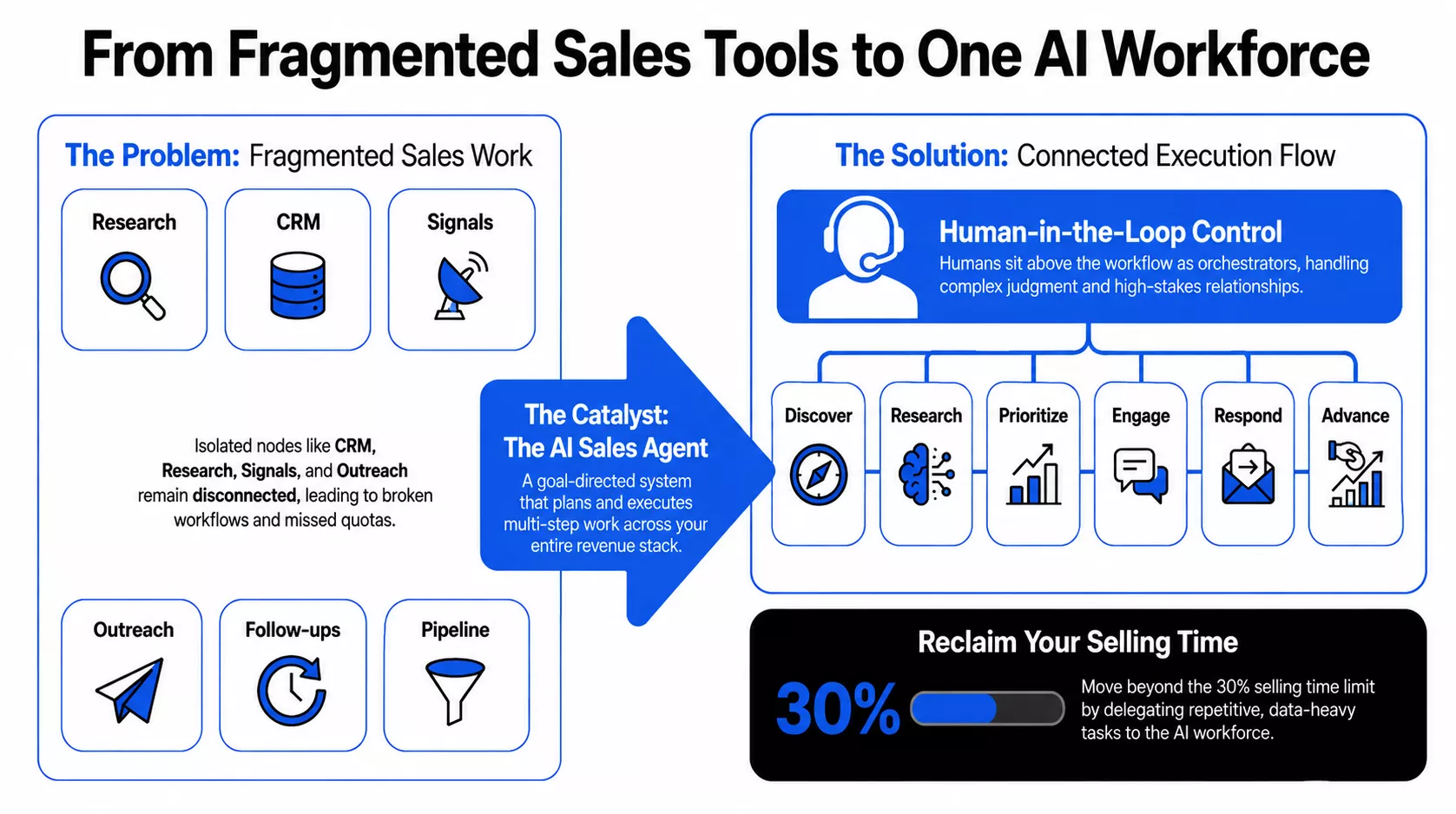
Sales teams have more AI than ever, yet the productivity problem remains. Sales AI Agents can take repetitive work off your team's plate, but adding another tool does not automatically improve execution. In 2026, 78% of B2B sellers missed quota in 2025, w…