AI Chatbots for Manufacturing Knowledge Support: A Complete Guide to Technical Support Automation

Key Takeaways
- AI chatbots transform manufacturing documentation into instant conversational support, reducing search delays, engineering interruptions and repetitive technical queries.
- Manufacturing AI assistants use RAG-based retrieval to deliver accurate, source-linked answers from approved internal documentation and systems.
- Technical support automation improves operational efficiency by accelerating troubleshooting, maintenance guidance, specification retrieval and distributor support workflows.
- Centralized AI knowledge support reduces version-control issues, inconsistent regional answers and dependency on individual employee expertise or memory.
- Effective manufacturing chatbots require secure integrations, multilingual support, role-based access and traceable document-grounded response systems.
AI chatbots for manufacturing act as always-on digital assistants that retrieve technical documentation, product specifications and operational procedures instantly without engineering intervention. The result is measurable. By connecting to existing manuals, ERP systems and SOPs, these assistants reduce support resolution time by up to 25% and cut operating costs by as much as 30%.
Manufacturing organizations do not lack information. They lack fast, reliable access to it. Specifications exist. Manuals are written. Certifications are stored. The real problem is that the right person often cannot find the right document at the right moment.
An AI chatbot for manufacturing solves this by turning stored knowledge into a conversational interface. Engineers stop digging. Sales teams stop chasing. Partners stop guessing.
What Is an AI Chatbot for Manufacturing Knowledge Support?
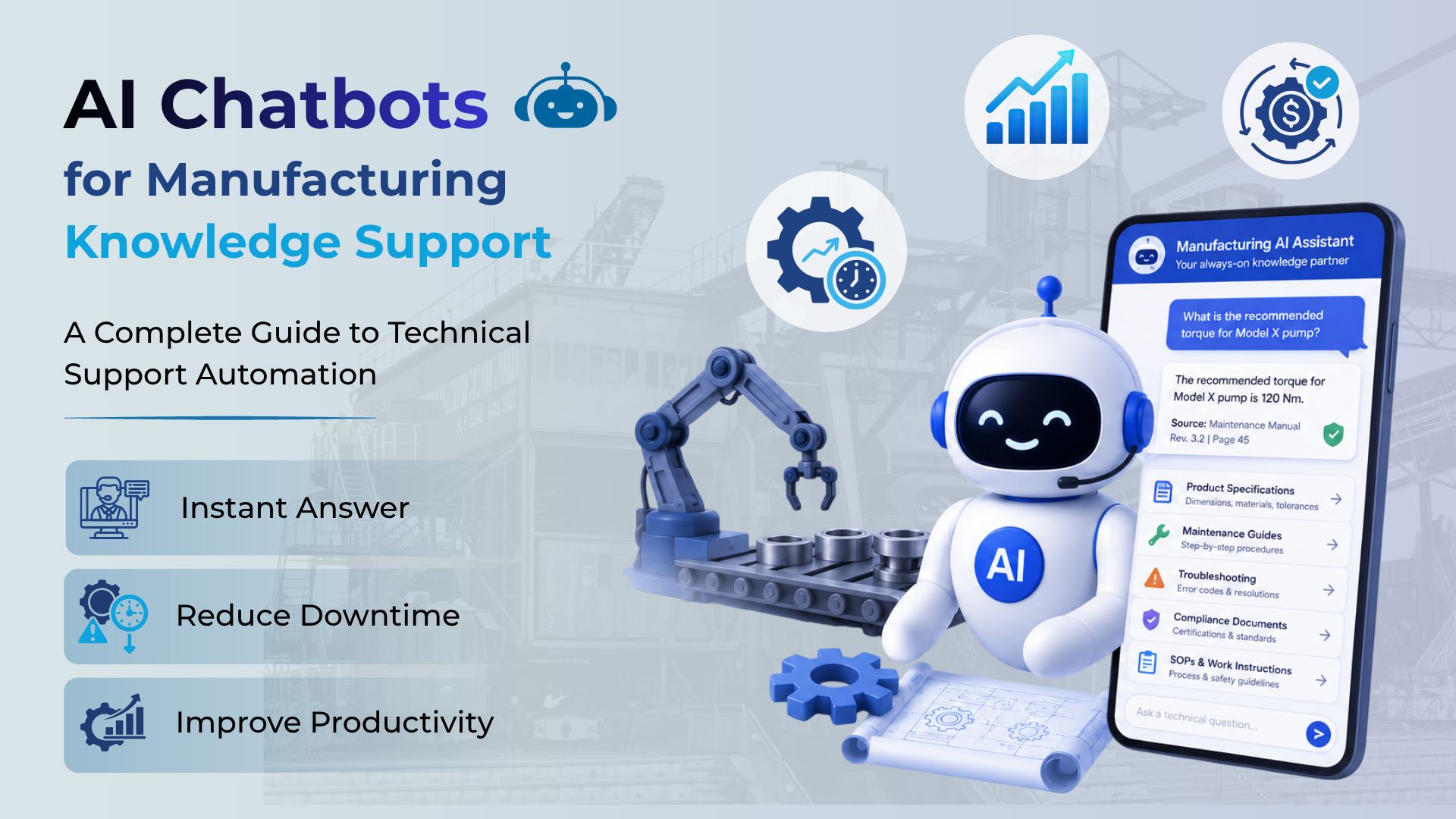
An AI chatbot for manufacturing is a knowledge-retrieval system trained on a company's own technical content, product specs, maintenance manuals, compliance documents, SOPs and drawings. When someone asks a question, it searches that content and returns a direct, sourced answer.
This is different from general-purpose AI tools. A manufacturing AI assistant does not generate answers from the internet. It retrieves meaning from documents your organization already owns and trusts. The distinction matters because in manufacturing, accuracy is not optional. A wrong specification can delay production and an outdated compliance detail can trigger rework.
Platforms built on Retrieval-Augmented Generation (RAG) architecture connect these chatbots to existing factory data sources, CMMS, ERP and MES systems, so answers reflect live operational reality, not static snapshots.
Why Manufacturing Companies Need AI-Powered Knowledge Support
Most manufacturing support problems are not complex. They are repetitive.
A distributor asks about torque specifications. A technician needs the correct part number. A sales engineer wants to confirm a certification before closing a deal. Each question takes a few minutes to resolve, but across a team and a day, the cumulative drag is significant.
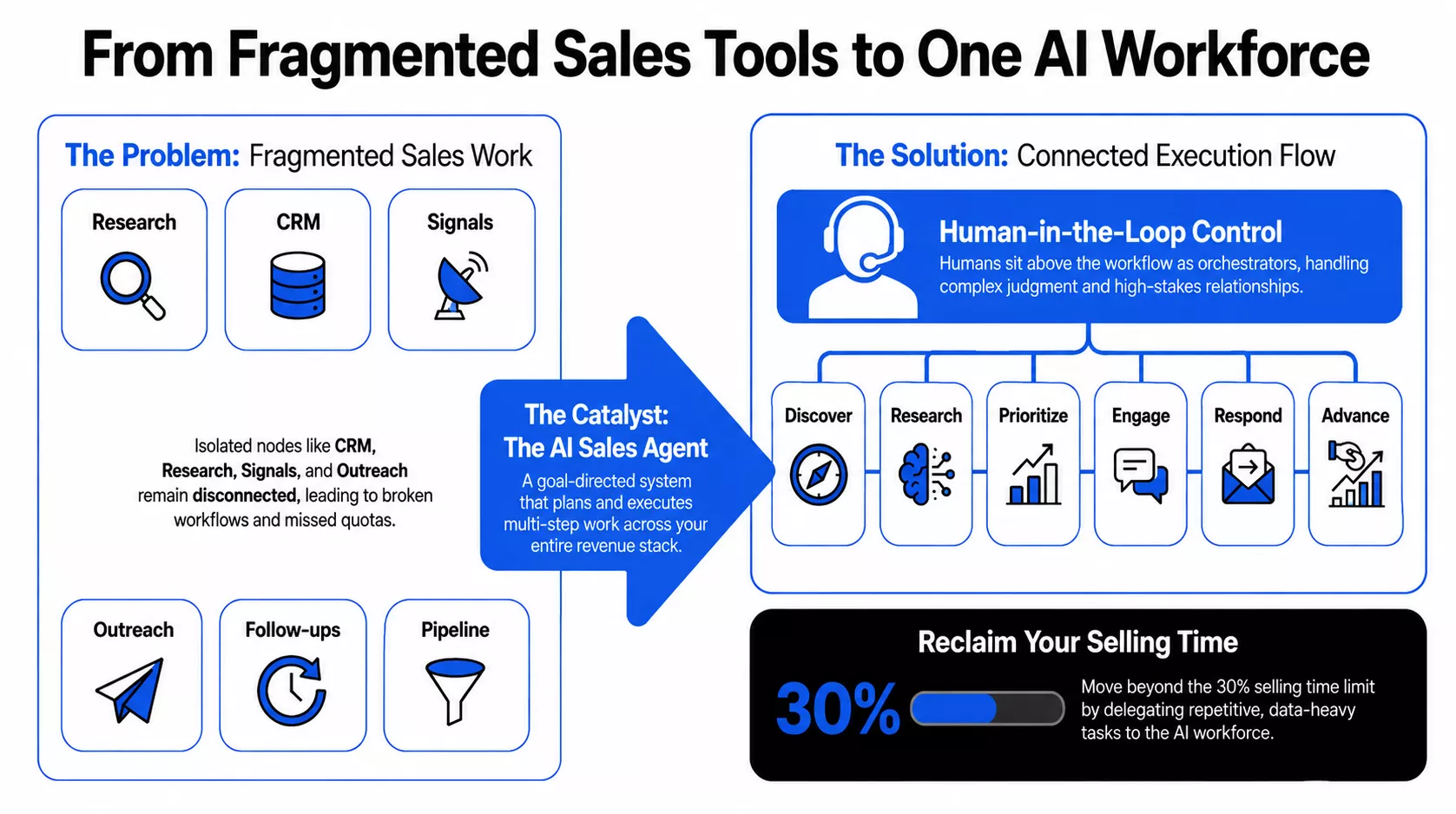
The access problem compounds over time. New products are added. Existing ones are revised. Certifications change. Regional variants multiply. What once seemed organized fragments across shared drives, email threads and personal copies of outdated PDFs slowly.
The result is predictable:
- Engineers spend time answering questions they have already answered dozens of times
- Sales teams double-check specifications instead of progressing deals
- Partners share inconsistent information with end customers
- Support teams become human search engines for documents that already exist
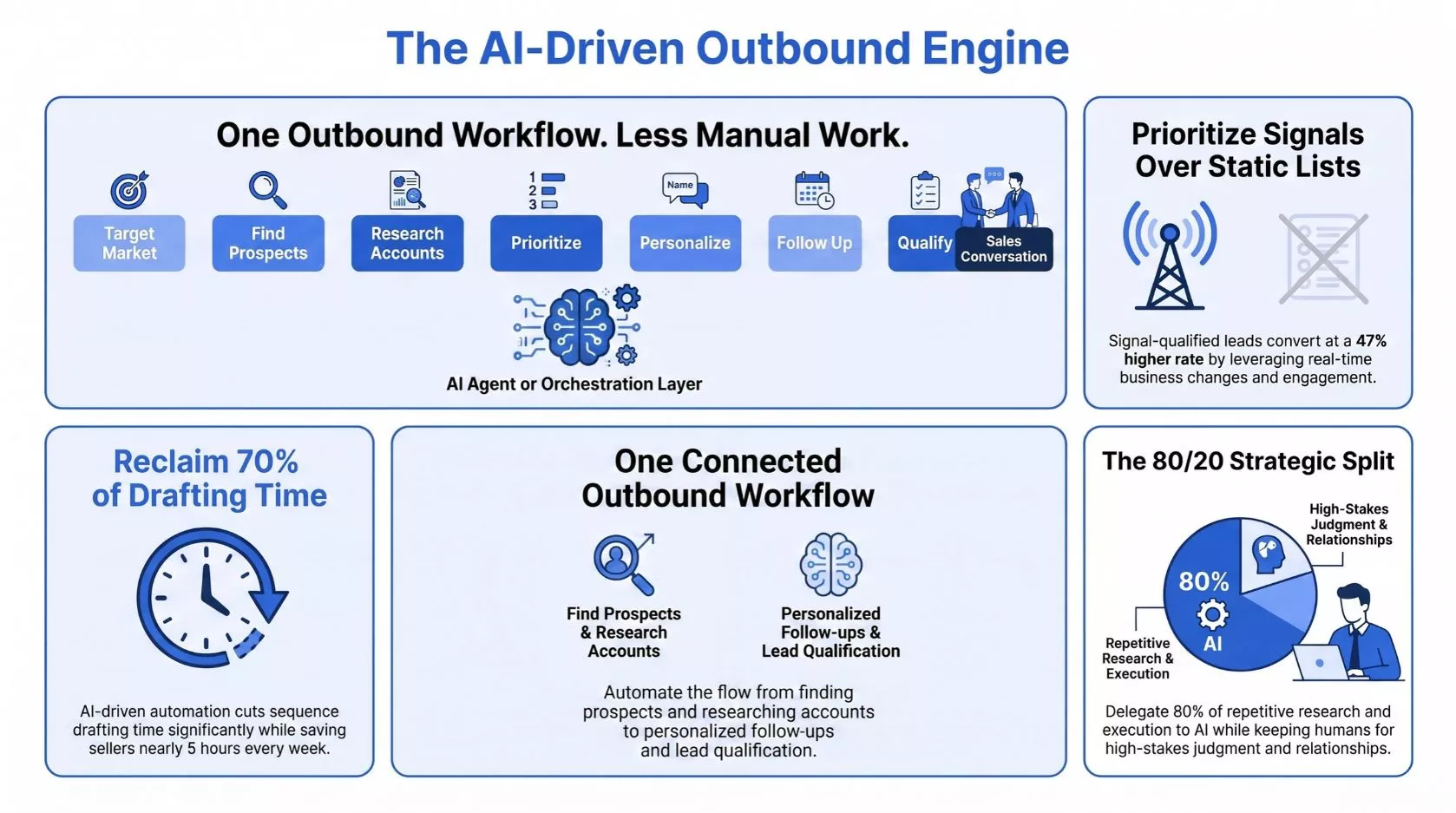
According to industry research, roughly 35% of traditional engineering and documentation labor time can be automated through AI-assisted knowledge retrieval. That is time reclaimed for higher-value work.
How AI Chatbots Work in Manufacturing Support Operations
When a user asks a question, the chatbot does not guess. It searches indexed content, PDFs, manuals, spec sheets, compliance documents and returns an answer drawn directly from that material.
The underlying process works in three steps:
- Ingestion: The platform indexes existing documents. PDFs, legacy spreadsheets, CAD metadata, safety records and SOPs are all converted into searchable, structured knowledge.
- Retrieval: When a query arrives, the system uses semantic search to find the most relevant sections across all indexed content, not just keyword matches, but meaning-based retrieval.
- Response: The answer is returned with source attribution, so users know exactly which document and section the information came from. This is not guesswork. It is citable output.
This model works because it respects source authority. Clean documents go in. Reliable answers come out. And when documents are updated, the knowledge base updates with them old versions naturally fade from active use.
Key Use Cases of AI Chatbots in Manufacturing
Product Specification Assistance
Sales engineers, distributors and customers frequently need to confirm specs before making purchasing or production decisions. An AI chatbot retrieves precise values, tolerances, dimensions, material grades, load ratings instantly from official documentation, eliminating back-and-forth email chains.
Technical Troubleshooting Support
Floor technicians can query the chatbot to receive step-by-step diagnostic guidance, relevant error codes and exact page references from maintenance manuals. Research shows this approach reduces escalation to senior engineers by up to 60%, meaning most issues are resolved on first contact.
Equipment Maintenance Guidance
Maintenance teams no longer need to search through dense physical manuals under time pressure. Workers can describe a symptom and receive targeted repair instructions, part numbers and safety precautions sourced from approved maintenance documentation.
Dealer and Distributor Support
Partners represent products in the market. When they lack accurate information, mistakes travel downstream to customers. An AI chatbot gives every distributor access to the same approved knowledge base — no more regional inconsistencies, outdated files, or conflicting answers.
Documentation Retrieval Automation
Instead of navigating shared drives or contacting support teams to locate a specific certification, drawing, or compliance document, users retrieve what they need through a simple conversational query. This alone saves meaningful time across large organizations.
Internal Employee Onboarding and Training
New hires can use the chatbot to ask questions about factory operations, machinery usage and company policies without overwhelming supervisors. Training scales without requiring proportionally more trainer time.
Customer Service Automation
For manufacturers with direct customer relationships, an AI chatbot handles routine post-sale queries, installation requirements, compatibility questions and warranty terms without routing every inquiry through a specialist.
AI Chatbots for Product Documentation and Knowledge Management
Documentation is only useful if people can access it when they need it. In most manufacturing organizations, access breaks down in predictable ways.
Documents live in multiple locations. Version control is inconsistent. Updates arrive by email and do not always reach everyone. Over time, teams lose confidence in which version is correct and conservative employees default to asking a person rather than trusting a document.
An AI chatbot changes this dynamic by becoming the single access point for verified documentation. Users do not search by folder or file name. They ask in plain language the same way they would ask a colleague and receive answers tied to specific, current sources.
This creates a practical side benefit: usage analytics reveal documentation gaps. When the same question causes repeated confusion, that signals a documentation problem worth fixing. Over time, the chatbot becomes a feedback loop for improving the knowledge base itself, not just accessing it.
Benefits of Technical Support Automation in Manufacturing
The operational impact of deploying an AI chatbot for manufacturing is measurable across several dimensions:
- Faster resolution: Traditional document searches take 15–30 minutes. A knowledge chatbot delivers answers in under 10 seconds. A difference that compounds significantly across support volume.
- Lower operating costs: Automating routine technical queries reduces operational overhead by up to 30%, according to industry data on knowledge automation in manufacturing.
- Reduced engineering interruptions: When standard questions are handled automatically, engineering specialists focus on complex problems, design decisions and customer relationships.
- Higher partner and workforce satisfaction: Research indicates that 62% of industrial personnel prefer querying an AI chatbot for instant technical support over waiting for a human tier-2 response. Faster access improves confidence and experience.
- Scalable support without headcount growth: As product lines expand, the chatbot absorbs increasing query volume without requiring proportionally more support staff.
- Consistent accuracy across regions and channels: Every user, internal or external, regardless of timezone, receives answers drawn from the same approved source material.
Challenges Manufacturers Face Without AI Knowledge Support
If any of these describe your organization, knowledge access is already costing you:
- Your engineers answer the same questions repeatedly because there is no self-serve layer; every query routes to a specialist.
- Partners are working from old files; version control exists on paper, but outdated PDFs still circulate in the field.
- Support answers vary by region or team without a shared source of truth and consistency depends on who picks up the request.
- Documentation improvements happen after complaints without usage data; no one knows which documents are causing confusion until someone flags them.
- Institutional knowledge leaves when people do expertise lives in individual memory and inboxes, not in a system that the organization controls.
Features to Look for in an AI Chatbot for Manufacturing
Not all chatbot platforms are suited to industrial environments. When evaluating options, these capabilities matter most:
- Knowledge base integration: The platform must ingest diverse document formats, PDFs, Word documents, spreadsheets, CAD metadata and keep the knowledge base current as documents change.
- ERP and CMMS integration: For real-time answers about inventory, parts availability, or equipment status, the chatbot needs live connections to operational systems, not just static document stores.
- Multi-language support: Manufacturing operations span regions. A multilingual AI chatbot that handles queries in various languages ensures consistent access regardless of where partners or employees are located.
- Document intelligence and source attribution: Answers should be traceable to specific source documents, so users can verify and trust the information they receive.
- Role-based access control: Not all users should access all information. Sensitive technical details, pricing data, or internal SOPs should be accessible only to authorized roles.
- Analytics and reporting: Usage data should surface which topics generate the most queries, where confusion occurs and how support volume shifts over time.
- Omnichannel deployment: AI agent integrations with channels like WhatsApp, Slack, and web interfaces ensure teams and partners can access knowledge without switching systems or workflows.
- Secure data handling: Manufacturing data includes proprietary specifications and confidential compliance records. The platform must meet appropriate security and data governance standards.
The Future of AI in Manufacturing Support Operations
The next evolution of AI agents in manufacturing goes beyond answering questions. Predictive support workflows are emerging systems that flag potential equipment issues before workers report them, based on patterns in maintenance queries and operational data.
Smart factory assistance is moving toward full integration with production floor systems. Rather than just retrieving documentation, AI agents will monitor machinery health, flag anomalies in real time and guide technicians through resolution steps connected directly to live equipment data.
For manufacturers investing now, the foundation is the same: clean, well-structured knowledge bases connected to conversational interfaces. Organizations that build this layer today are positioning themselves for more sophisticated automation without having to rebuild from scratch.
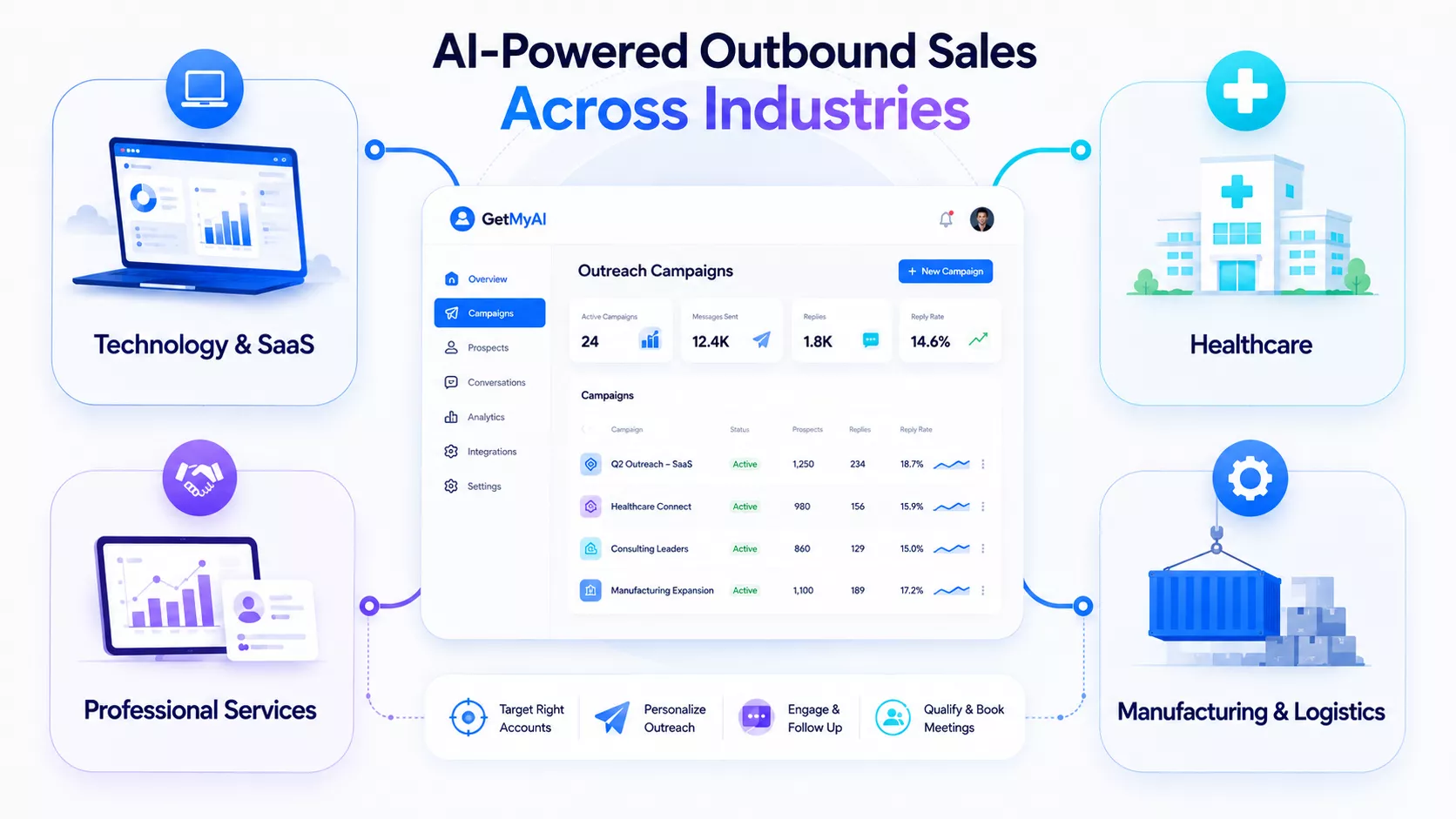
How GetMyAI Supports Manufacturing Knowledge Automation
GetMyAI turns existing manufacturing documentation into a reliable, conversational knowledge layer without rebuilding your knowledge base or involving engineering teams.
Upload your PDFs, manuals and compliance records. The platform indexes them into a searchable system. From that point, every answer comes from your documents, not from generic AI output.
What this looks like in practice for manufacturing teams:
- Document-grounded answers: Responses are pulled from your approved content and traceable to the source. No hallucinations. No outdated information slipping through.
- 75+ language support: Partners, distributors and floor workers across regions ask in their language and receive answers from the same knowledge base.
- Analytics and query tracking: See which topics generate the most questions, where confusion repeats and how support volume shifts as products grow.
- Role-based access control: Sensitive specifications, internal SOPs and pricing data stay visible only to the roles that need them.
- Website and messaging channel integration: Deploy where your teams and partners already work, without rebuilding workflows around a new platform.
As query volume grows, the system absorbs it. Support becomes more consistent and predictable, without adding headcount.
FAQs
1. What is an AI chatbot for manufacturing knowledge support?
An AI chatbot for manufacturing is an AI-powered assistant that provides instant access to product specifications, technical manuals, SOPs, maintenance guides, compliance documents, and other manufacturing knowledge. Instead of searching through multiple files, users can ask questions in natural language and receive accurate answers from approved documentation.
2. How do AI chatbots help manufacturing companies manage product knowledge?
AI chatbots centralize technical documentation into a searchable knowledge base. They allow employees, distributors, service teams, and customers to quickly find product specifications, troubleshooting guides, certifications, and maintenance procedures, reducing time spent searching for information.
3. Can AI chatbots answer technical product questions accurately?
Yes. Modern manufacturing AI chatbots use Retrieval-Augmented Generation (RAG) to retrieve answers directly from approved company documents instead of generating unsupported responses. This improves accuracy and helps users verify information with the original source documentation.
4. What manufacturing teams benefit most from AI chatbots?
AI chatbots support engineering, technical support, maintenance, production, quality assurance, customer service, sales teams, distributors, and field service technicians. Any team that regularly accesses technical documentation can benefit from faster and more reliable knowledge retrieval.
5. Can AI chatbots reduce engineering and technical support workload?
Yes. AI chatbots handle repetitive technical questions, documentation requests, troubleshooting guidance, and product specification lookups. This reduces interruptions for engineering teams and allows technical experts to focus on complex projects and customer issues.
6. Can AI chatbots integrate with manufacturing systems?
Yes. Many AI chatbot platforms integrate with ERP, CRM, MES, CMMS, document management systems, and internal knowledge bases. These integrations enable the chatbot to provide accurate, up-to-date information from multiple business systems through a single conversational interface.
7. How do AI chatbots improve distributor and partner support?
Manufacturers often work with distributors and dealers across multiple regions. AI chatbots provide all partners with consistent access to the latest product documentation, installation guides, certifications, and technical specifications, reducing errors caused by outdated information.
8. What features should businesses look for in a manufacturing AI chatbot?
Key features include document-based knowledge retrieval, multilingual support, ERP and CRM integrations, role-based access control, source attribution, analytics, secure data handling, and omnichannel deployment. These capabilities help manufacturers deliver reliable technical support while protecting sensitive business information.
9. Can AI chatbots support employee onboarding and technical training?
Yes. AI chatbots provide new employees with instant answers to questions about products, machinery, operating procedures, and company documentation. This shortens onboarding time and gives employees continuous access to technical knowledge whenever they need it.
10. Why are AI chatbots becoming essential for manufacturing knowledge management?
As product portfolios and technical documentation continue to grow, finding accurate information becomes increasingly difficult. AI chatbots simplify knowledge access, reduce response times, improve documentation consistency, lower support costs, and help manufacturers deliver faster, more accurate technical assistance across the organization.