The Cross-Industry AI Playbook: Five Sectors Using Conversational AI Platform

For years, AI sat in pilot projects. Small tests. Quiet experiments. Limited use. That phase is over. Today, 78% of global organisations use AI in at least one business function, according to McKinsey. This is no longer curiosity. It is infrastructure.
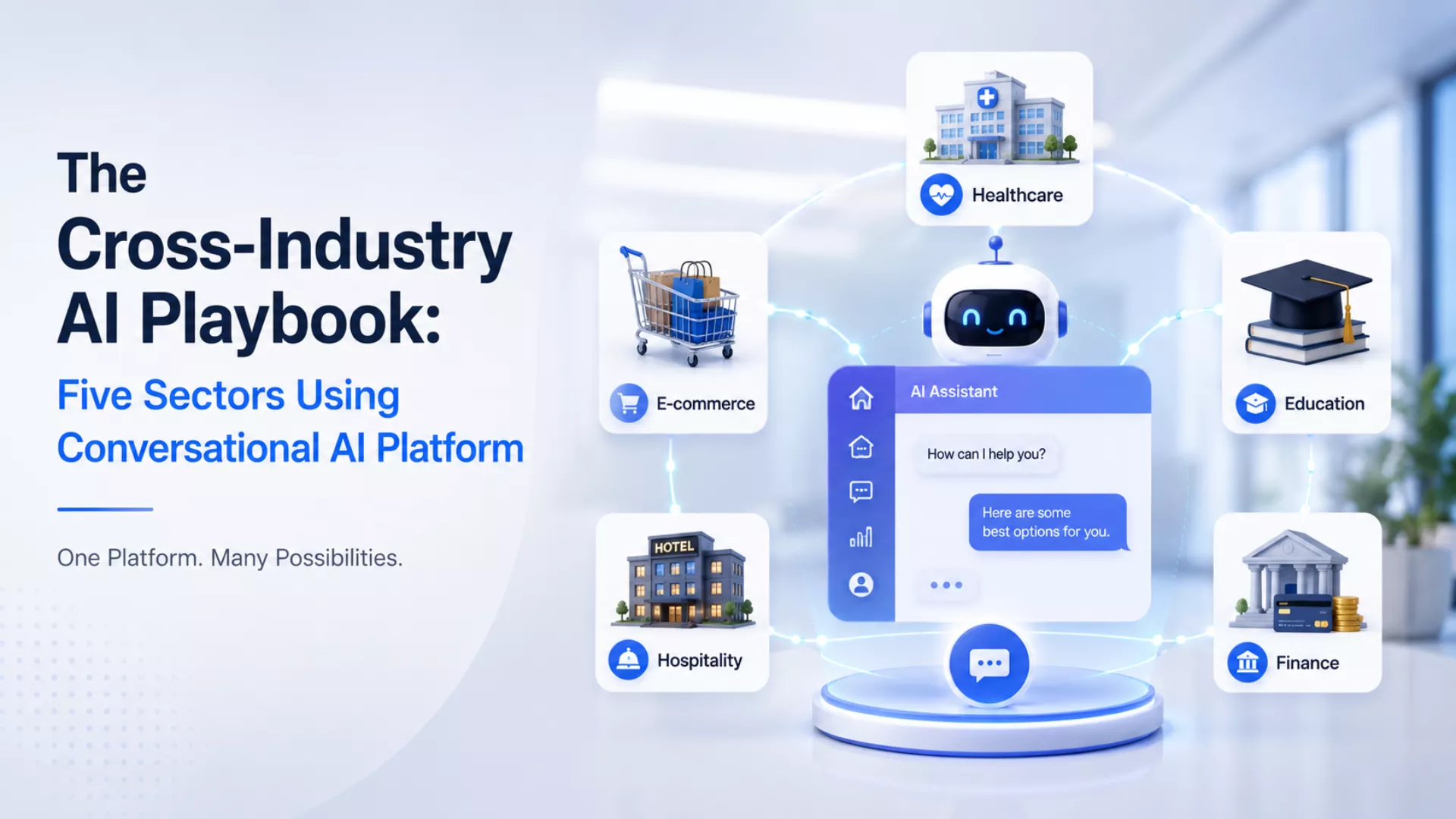
But here is what matters more. AI is not being used the same way everywhere. A hospital does not deploy it like an online store. A SaaS company does not think about risk the same way a fitness chain does. Each sector shapes AI around its own pressure points. Healthcare demands accuracy and trust. E-commerce demands speed and conversion. Education needs clarity and dependable knowledge delivery. Fitness relies on engagement and frictionless scheduling. SaaS focuses on onboarding and support efficiency.
This is where structure matters. A conversational AI platform cannot be generic anymore. It must adapt without breaking into five different systems.
Industry Context Is the Real Design Layer
Customer expectations are rising just as fast as adoption. Salesforce reports that 88% of customers believe the experience a company provides is as important as its products. That changes the bar. Conversations must be contextual. Responses must feel intentional.
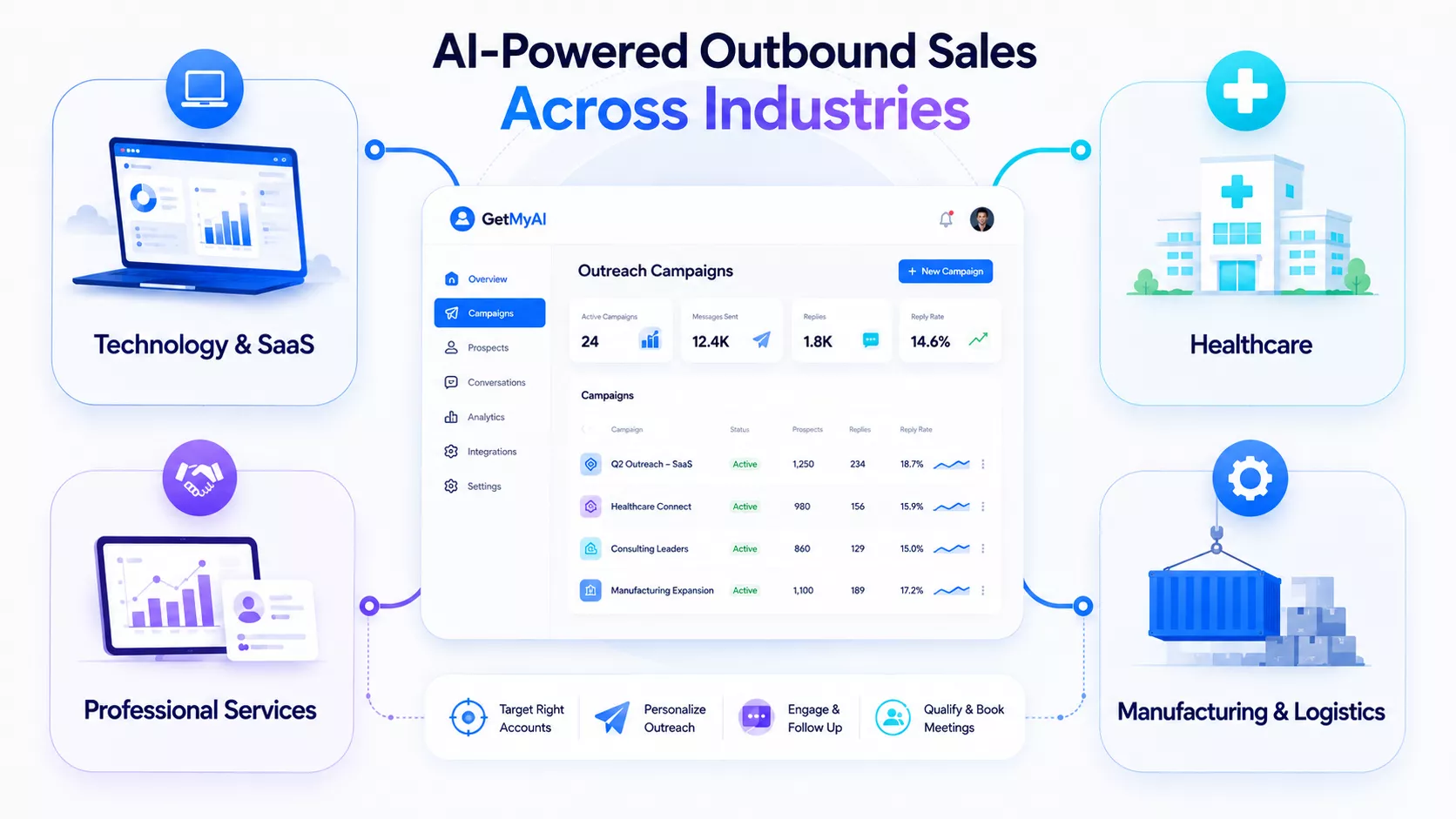
Modern AI chatbot solutions for business now sit at the center of operations. Not as a side tool. As a core layer. GetMyAI fits into this shift by acting as that structured layer across industries, adapting to each operational demand without fragmenting the system.
The Real Question for 2026
The question is no longer, “Should we use AI?” It is, “Have we operationalised it for our industry?”
Why Industry Context Changes How AI Should Be Designed
AI Is Not a Plug-and-Play Tool. It is tempting to think AI works the same everywhere. Install it. Train it. Launch it. Done. That thinking is outdated.
Across industries, leaders are not just testing AI anymore. According to McKinsey, 78% of global organizations now use AI in at least one business function. That number tells a clear story. AI is no longer experimental. It is operational. But how it is designed and deployed looks very different depending on the industry.
This is where many strategies fail. They treat AI like a universal feature. In reality, it behaves more like infrastructure. And infrastructure must match the environment it operates in.
Different Risk Tolerance, Different Architecture
Consider risk first. In healthcare, a wrong answer can damage trust or even harm a patient. In SaaS, a wrong response can break a client’s workflow. In e-commerce, the risk may be a lost sale. Still serious. But not life-altering.
This difference changes everything. When designing AI agent use cases for enterprises, the risk model shapes the structure. High-risk sectors demand traceability and human oversight. Lower-risk sectors prioritize speed and automation. The design cannot be the same.
An AI agent in a hospital might assist with documentation. In a gym, it may focus on booking and reminders. In SaaS, it might triage technical support. The surface looks similar. The architecture beneath it is not.
Customer Expectations Are Not Equal
Now look at the customer side. Customer expectations vary by sector. In retail and digital services, speed wins. In education, clarity matters more than speed. In healthcare, empathy and accuracy outweigh convenience. Salesforce reports that 88% of customers believe the experience a company provides is as important as its products or services. That means conversational systems are not judged only by answers. They are judged by how those answers feel.
In one industry, instant replies drive conversion. In another, careful phrasing builds trust. In SaaS, contextual awareness prevents frustration. The expectations shape the interface, tone, and workflow logic. This is where Enterprise AI chatbot software must be flexible without becoming fragmented. It must adapt to sector norms without forcing teams to rebuild the system from scratch each time.
Decision Cycles Define Deployment
Decision cycles also vary widely.
- In e-commerce, decisions happen in seconds. A shopper abandons a cart quickly. A delay costs revenue.
- In education, decisions span months. Enrollment processes move slowly. Visa approvals take time. The AI must support longer journeys.
- In SaaS, onboarding windows are critical. The first few interactions shape long-term retention. The AI must reduce friction immediately.
If the system is designed for instant, transactional interactions, it may struggle in environments that require guidance over time. If it is too cautious and slow, it may fail in high-speed digital commerce. AI maturity is shaped by these decision cycles. A mature deployment understands how quickly users expect resolution.
Data Sensitivity Changes Everything
Not all data is equal.
In healthcare, data may involve protected medical records. In education, student records require privacy controls. In SaaS and finance, sensitive personal information carries security risks. In fitness, data is behavioural but still personal.
Each industry operates under different regulatory and ethical boundaries. This is why AI design cannot be generic. The governance layer must match the data environment. Logging, access control, and review workflows are not optional add-ons. They are structural requirements.
When comparing AI agents vs chatbots, the gap becomes easier to see. A simple chatbot usually gives answers or shares details. An AI agent can take action and connect with internal systems. As that connection grows deeper, the need for strict rules grows too. A healthcare AI agent cannot work the same way as one managing gym memberships. The rules around data and compliance require different types of supervision.
Success Metrics Are Industry-Specific
Even success looks different across sectors.
In healthcare, success might mean reducing administrative burden or documentation time. In e-commerce, it may mean lifting conversion rates. In fitness, improving retention is the goal. In SaaS, deflection and faster resolution reduce cost.
Across industries, ROI drives adoption. Research shows that 90% of CX leaders report positive ROI from AI tools, with top-performing organisations achieving strong multipliers in their first year. The financial case is clear. But the measurement lens differs.
One sector measures burnout reduction. Another measures revenue growth. Another measure of enrollment efficiency. This is why AI maturity is industry-shaped. A system optimised for support deflection may not deliver the same value in academic advising. A system designed for lead qualification may not address complex technical troubleshooting. The architecture must align with the performance metric that matters most.
Industry Context Is the Real Maturity Model
Many organisations ask the wrong question. They ask, “How advanced is our AI?” The better question is, “How aligned is our AI with our industry pressure?” Maturity is not about how many features exist. It is about how well the system fits the risk model, customer expectation, data sensitivity, and success metrics of the sector it serves. That alignment determines whether AI remains a pilot project or becomes a stable operational layer.
GetMyAI supports this alignment by acting as a structured layer that adapts to different industry contexts without forcing teams into separate systems. The goal is not to fragment capability. It is to centralise the structure while respecting sector differences.
Preparing for the Five Vertical Deep Dives
This foundation matters because each industry operationalises AI differently.
- Healthcare prioritises accuracy and trust.
- E-commerce prioritises speed and conversion.
- Education focuses on clarity and knowledge delivery.
- Fitness depends on engagement and scheduling flow.
- SaaS demands onboarding precision and support efficiency.
The next sections will explore how each vertical shapes AI design through its own operational pressures.
AI is no longer a tool you test quietly in the corner. It is becoming a core operational layer. But it is not universal in design. Industry context shapes architecture. Risk tolerance defines workflows. Customer expectation defines tone. Data sensitivity defines governance. Success metrics define optimisation. When organisations recognise this, they move from experimentation to structured deployment. That is where real competitive advantage begins.
Healthcare: Clarity, Accuracy, and Patient Trust
In healthcare, confusion is not a small issue. It is a risk. A missed instruction can delay treatment. A wrong explanation can create fear. A vague answer can break trust. This is why conversational systems in healthcare must be built differently. They are not just tools for convenience. They are part of the care experience.
Primary care doctors already face pressure. Research shows that physicians spend nearly six hours a day interacting with electronic records, according to industry findings referenced earlier. That burden shapes how automation should be used. The goal is not to replace medical judgment. It is to reduce noise and improve clarity. An AI chatbot for healthcare must support clarity without creating new risk. It must reduce confusion without introducing misinformation.
The Core Operational Priority
Healthcare does not reward speed alone. It rewards precision. The core priority is simple. Reduce confusion. Protect accuracy. Maintain trust. When patients ask questions, they want clear instructions. They want the correct details about visits. They want confidence that what they are reading is reliable.
This is where design choices matter. A Secure healthcare chatbot must operate within boundaries. It must rely on structured documents. It must avoid guessing. It must escalate when unsure. Trust is not a feature. It is architecture.
How Do Medical AI Assistants Improve Patient Scheduling?
This question matters because scheduling is one of the most common pain points in healthcare.
A well-designed assistant can:
- Provide available appointment windows
- Share clinic hours clearly
- Explain cancellation policies
- Confirm required documents
- Route complex cases to staff
These actions reduce friction. They also reduce phone calls.
But scheduling in healthcare is different from booking a gym class. It involves pre-visit preparation, insurance details, and patient history. Every step must be clear. Every message must be structured. This is why structured document training is critical. The assistant must be trained only on approved materials. Policies, FAQs, and pre-visit guides should be reviewed before upload. Clear boundaries prevent accidental misinformation.
Healthcare automation works best in controlled workflows. It does not replace clinical judgment. It supports operational clarity.
Common use cases include:
- Appointment scheduling
- FAQ clarification
- Pre-visit instructions
- Policy explanations
- Patient inquiry routing
Each of these reduces confusion. Each reduces repetitive calls. Each allows care teams to focus on direct patient needs.
A health system using ambient documentation tools reported a 20% reduction in note-taking time, according to earlier cited research. That impact shows what happens when automation targets the right layer. Administrative clarity improves clinician focus.
Deployment That Protects Trust
Healthcare deployment requires caution. The environment is sensitive. Small mistakes can cause real harm. That is why every step must be planned, reviewed, and monitored carefully before the assistant interacts with patients.
Controlled Visibility
Not every assistant should be public from day one. Internal testing should happen first. Teams must check responses, tone, and clarity in a safe setting. This reduces risk before patients ever see the system live.
Clear Disclaimers
Patients must clearly understand that the assistant does not replace medical advice. Simple and visible notices help set the right expectations. This protects both the patient and the care provider from confusion or misplaced trust.
Structured Document Training
Only verified policies, approved guidelines, and official instructions should be used to train the assistant. This ensures answers stay aligned with current medical standards and internal protocols, reducing the chance of outdated or incorrect information being shared.
Careful Response Monitoring
Conversation logs should be checked on a consistent schedule. Any unanswered or unclear questions need improvement through Q&A updates and careful document edits. Regular review helps keep answers accurate and strengthens long-term reliability.
Human Oversight
A Human-in-the-Loop model protects patient safety by placing final decisions with licensed experts. The assistant can support with drafts or general direction, but a medical professional must verify any details connected to treatment or care.
Performance Indicators That Matter
Healthcare success metrics are strict. Error tolerance is low.
Teams should monitor:
- Response clarity
- Reduced call volume
- Escalation accuracy
- Patient understanding
- Feedback signals
Low error tolerance is the standard. Even small inaccuracies can have outsized consequences. Unlike retail or fitness, healthcare cannot experiment casually. Performance must be measured carefully.
Building for Patient Confidence
Patients do not think in technical terms. They think in personal terms.
They ask simple questions.
- When should I arrive?
- What documents do I bring?
- What does this policy mean?
If answers are clear, trust grows. If answers are vague, trust fades.
That is why healthcare automation must remain focused on clarity and safe boundaries. It must never overreach into diagnosis or treatment advice without proper oversight. GetMyAI offers training, visibility controls, and monitored deployment inside the Dashboard. The goal is not to automate everything. It is to automate safely.
Trust Is the True Outcome
Healthcare is different. It moves carefully. It protects patients. Conversational systems in this space must reflect that mindset. They should reduce confusion, not create it. They should simplify scheduling, not complicate care.
When built with structured documents, clear disclaimers, and careful monitoring, automation becomes an ally. It reduces administrative noise. It frees staff time. It supports patient understanding. In healthcare, clarity builds confidence. Accuracy builds trust. And trust is the metric that matters most.
E-commerce: Conversion, Speed, and Revenue Optimisation
The cart is not the finish line. A shopper adds a product to the cart. You feel hopeful. Then they leave. This is the daily story of online retail. Research shows that 70.19% of online shopping carts are abandoned, according to industry data cited earlier. That number is not small. It is a warning. E-commerce runs on speed. It runs on clarity. It runs on small moments that either move a buyer forward or push them away.
This is why an AI chatbot for e-commerce is not just a support tool. It is part of the revenue engine.
Turning Engagement Into Purchases
The core priority in online retail is simple. Turn engagement into completed purchases. Visitors arrive with questions. Some are simple. Some are about shipping. Some are about size, returns, or delivery times. Every unanswered question slows momentum. An E-commerce customer support chatbot must respond fast. It must reduce doubt. It must guide without pressure. Speed builds trust. Clarity builds confidence. Confidence builds revenue.
Where Conversational Support Creates Impact
Automation in e-commerce performs best when it reduces confusion at critical decision steps. It must not appear cold or scripted. It should feel natural and appear at the right time.
Here are common use cases that drive measurable value:
- Product discovery
- Order tracking
- Cart abandonment prompts
- FAQ automation
- Lead capture
Product discovery makes it easier for buyers to search through large collections without feeling lost. Order tracking lowers constant “Where is my order?” messages. Cart prompts give shoppers a nudge before they leave. FAQ automation handles policy questions instantly. Lead capture keeps potential buyers connected for follow-up.
Each of these removes the delay. Each keeps the buying journey moving.
Commercial Velocity Depends on Timing
In e-commerce, timing is everything.
Proactive chat triggers can appear when a visitor lingers on a checkout page. A small prompt at the right moment can answer a hidden concern. It might clarify shipping costs. It might explain return policies. Personalized suggestions also matter. If a visitor browses a specific category, the assistant can guide them toward related items. This keeps attention focused and increases basket value.
Channel presence is equally important. Conversations should not be limited to one space. Buyers expect support on the website and on messaging channels. If the experience is consistent, trust grows. This is how velocity is maintained. Not by pushing harder, but by removing doubt faster.
Measuring What Actually Matters
E-commerce teams do not measure success by message count alone. They look at outcomes.
Performance indicators should include:
- Engagement rate
- Conversion lift
- Support ticket reduction
- Response time
- Cart recovery rate
Engagement rate helps you see whether visitors are actively participating. Conversion lift measures the direct effect on revenue. Ticket reduction shows the amount of support workload that has been reduced. Response time indicates speed. Cart recovery rate shows how many shoppers returned to complete purchases. Salesforce research notes that 83% of customers expect immediate interaction when contacting a company. That expectation shapes performance standards. Slow response equals lost opportunity.
Deployment That Supports Revenue Growth
Implementation must be thoughtful. It is not about adding a chat bubble and hoping for results.
Proactive Chat Triggers
Triggers should activate when behavior signals hesitation. For example, extended time on checkout pages or repeated visits to the shipping information. Timely prompts reduce uncertainty and encourage completion without overwhelming the user experience.
Personalized Suggestions
Recommendations should be based on browsing patterns and preferences. When suggestions feel relevant, shoppers stay engaged longer. This increases the chance of larger orders and repeat purchases.
Channel Presence
Customers expect support on the website and inside messaging spaces. A consistent presence across these areas ensures they receive the same level of service everywhere. This reliability helps build confidence in the brand.
Continuous Monitoring
Conversation logs should be checked often. Responses that are unclear must be corrected through Q&A updates and document improvements. Regular updates help keep answers aligned with new promotions and policy changes.
Clear Performance Review
Teams need to monitor engagement, lift, and deflection numbers weekly or monthly. If reviews are ignored, even powerful tools may slowly lose effectiveness.
Beyond Support, Toward Revenue
E-commerce automation is not just about reducing workload. It is about increasing commercial velocity. A well-structured assistant reduces friction at every stage. It clarifies costs. It confirms delivery timelines. It answers policy questions instantly. It reminds shoppers when they leave items behind.
GetMyAI supports this flow by allowing structured deployment across website and messaging channels, with performance tracking built into the Dashboard. The focus remains on revenue movement, not just message exchange.
The Momentum Principle
Online shopping moves fast. Attention is fragile. Trust is earned in seconds. When engagement feels smooth, purchases follow naturally. When questions linger, hesitation grows. An AI chatbot for e-commerce becomes powerful when it supports momentum instead of interrupting it. Revenue optimisation in digital retail is not magic. It is clarity delivered at the right time. It is speed without confusion. It is engagement that leads directly to action.
The Real Engine Behind Growth
In e-commerce, every conversation has commercial weight. The brands that win are not always the loudest. They are the clearest. They respond quickly. They remove doubt. They guide decisions. Conversion is not just a metric. It is the result of structured, timely engagement. That is how speed becomes revenue.
Education: Structured Knowledge Delivery at Scale
Walk into any university office during enrollment season. Phones ring. Emails pile up. Students ask the same questions again and again.
- When does the semester start?
- How do I apply?
- What documents are required?
The pressure is real. As of 2025, there are 264 million students enrolled in universities worldwide, according to UNESCO. That scale changes everything. Institutions are not just managing classes. They are managing constant inquiry. This is where an AI chatbot for education becomes more than a convenience. It becomes a support layer for structured knowledge delivery.
Reducing Repetition Without Losing Clarity
The core priority in education is simple. Reduce repetitive queries while maintaining clarity. Students need answers fast. But they also need correct information. Policies change. Deadlines move. Requirements shift. A system built for conversational AI in education must focus on structured knowledge. It should not guess. It should rely on verified documents. It should escalate when unsure. Clarity protects trust. Accuracy protects reputation.
Where Structured Automation Makes Sense
Education has predictable inquiry patterns. These patterns can be organized and automated carefully.
Common use cases include:
- Course information
- Enrollment guidance
- Student FAQs
- Document access
- Policy clarification
Course information usually stays similar from one semester to the next. Enrollment guidance follows a clear set of steps. FAQs focus on housing, fees, and schedules. Document access helps students find forms and transcripts easily. Policy clarification ensures consistency across departments.
Each of these reduces administrative workload. Each creates a smoother student experience.
Knowledge Integrity Over Speed
Speed matters. But accuracy matters more. Students plan their futures based on what they read. If an answer is outdated or unclear, it can lead to missed deadlines or incorrect submissions. Research suggests that AI-driven self-service in education can reduce administrative incidents by 40 to 50 percent, according to UNESCO and OECD findings. That improvement is not just about time saved. It is about reducing errors and confusion.
This is why knowledge integrity must guide deployment.
Deployment That Protects Academic Trust
Automation in education must be disciplined. Loose training leads to inconsistent information.
Strong Document Training Discipline
Only approved documents should guide responses. Policies, course catalogues, and enrollment instructions must be reviewed before upload. Structured sources prevent mixed messaging across departments and ensure students receive consistent guidance.
Updated Knowledge Management
Academic calendars and rules change frequently. Teams must update training documents on a set schedule. Old information should be removed quickly to prevent conflicting answers that confuse students.
Structured Q&A Improvement Loop
Unanswered or unclear questions should move directly into the Q&A section for refinement. This loop turns real student inquiries into better future responses and strengthens accuracy over time.
These steps protect knowledge integrity. They ensure that clarity remains stable even as enrollment numbers grow.
Measuring What Matters in Education
Success in education is not measured by message volume. It is measured by reduced confusion and improved efficiency.
Performance indicators should include:
- Reduced administrative workload
- Faster response time
- Consistent information accuracy
- Lower repetitive inquiry volume
- Improved student satisfaction
When the workload decreases, staff can focus on difficult situations. Quicker responses improve how students feel about their experience. Accurate answers protect fairness and meet compliance standards. Lower repetition reduces burnout. Satisfaction strengthens institutional trust. When structured properly, automation becomes a support system, not a replacement for human advisors.
Balancing Automation and Responsibility
Education operates within clear ethical boundaries. Student records are sensitive. Academic decisions carry weight. A chatbot should support, not decide. It should make policies clear, not analyze grades. It should outline the next steps, not replace human authority. This balance is important.
An AI chatbot for education should operate within defined limits. It should provide structured answers drawn from official documents. It should avoid speculation. It should escalate complex academic or personal cases to the staff. That is how responsibility is maintained at scale.
Supporting Institutions at Scale
Global enrollment continues to grow. Administrative teams feel the pressure. A carefully designed system can answer common questions instantly while preserving clarity. It can share updated deadlines. It can explain the application steps. It can provide links to verified documents. GetMyAI supports this structure by enabling document-based training and continuous Q&A refinement inside the Dashboard. The goal is not to replace advisors. It is to remove repetitive strain so advisors can focus on guidance that requires human judgment.
Knowledge as Infrastructure
Education is built on information. Syllabi. Policies. Calendars. Procedures. When knowledge is scattered, confusion grows. When knowledge is structured, access improves. Conversational AI in education should act as a gateway to verified institutional knowledge. It should unify answers across departments. It should reflect official sources. It should protect clarity. Scale does not have to mean chaos.
The Foundation of Academic Trust
In education, trust rests on accuracy. Students trust that instructions are correct. Parents trust that policies are fair. Faculty trust that information is consistent. Structured automation can support that trust when it is built on discipline. Reduce repetition. Maintain clarity. Protect knowledge integrity. That is how institutions deliver structured knowledge at scale without losing control.
Fitness & Gyms: Engagement, Scheduling, and Retention
The first six months decide everything. Someone joins a gym. They feel motivated. They buy new shoes. They promise to stay consistent. Then life gets busy. Fitness operators know this story well. Research shows that 50% of new gym members cancel or become inactive within their first six months. That number shapes everything. Retention is not just a metric. It is survival. This is where a 24/7 fitness centre customer support bot becomes more than a support layer. It becomes part of the engagement strategy.
Friction Kills Momentum
The core operational priority in fitness is simple. Make booking frictionless. Keep members engaged. If a class is hard to book, people skip it. If schedules are unclear, they give up. If membership questions take days to answer, interest fades. An AI chatbot for gym membership enquiries removes small obstacles before they grow into cancellations. It answers fast. It guides clearly. It supports at any hour. Availability matters in fitness because motivation does not follow office hours.
Where Automation Supports Daily Operations
Fitness centres operate on routines. Classes. Trainers. Promotions. Renewals. Automation works best when it supports these predictable flows.
Common use cases include:
- Class booking
- Trainer scheduling
- Membership questions
- Promotions
- Reminders
Class booking must feel easy and clear. Trainer scheduling has to display current availability at all times. Membership questions tend to come up again and again over months. Promotions require timely updates. Reminders reduce missed sessions. Each of these actions supports consistency. And consistency supports retention.
Engagement Is a Daily Habit
Fitness businesses win when members return regularly. Not once. Not twice. Often. An AI chatbot for gym member support & FAQs helps maintain that rhythm. It can remind a member about tomorrow’s class. It can confirm booking details instantly. It can explain membership benefits without delay.
This steady communication builds small touchpoints. Small touchpoints build habit. At the IHRSA convention, case studies showed that AI reception systems achieved a 10X ROI in some fitness operations. That scale of return highlights how reducing friction and improving follow-up directly impacts revenue.
Deployment That Keeps Things Moving
Technology in fitness must be simple. Overcomplication slows adoption.
Calendar Integration
Class schedules and trainer availability must connect directly to the booking system. Real-time updates prevent double bookings and reduce confusion about open slots. Members should see accurate availability every time.
Real-Time Updates
Changes happen daily. Classes fill up. Trainers reschedule. Promotions shift. Real-time updates ensure members receive accurate information without needing staff confirmation.
Simple Conversational Flows
Conversations should be short and clear. Members want fast answers. Complex steps discourage use. Simple flows encourage repeat engagement.
Clear Availability Signals
Members should know the bot is ready to help at any hour. Visible support builds confidence and encourages quick interaction.
Continuous Monitoring
Conversation logs should be reviewed often. Unclear responses should be improved through Q&A updates and document refinements. This keeps answers aligned with new offers and scheduling changes.
Measuring Success in Fitness
Fitness operators measure progress differently from online stores or hospitals.
Performance indicators should include:
- Reduced no-shows
- Increased bookings
- Higher engagement frequency
- Faster response time
- Membership retention trends
Reduced no-shows improve class utilisation. Increased bookings fill schedules. Higher engagement frequency reflects ongoing motivation. Faster responses maintain momentum. Retention trends show the long-term health of the business. When automation improves these metrics, it becomes a strategic tool, not just a support add-on.
Availability Builds Trust
Fitness is emotional. Members set goals. They track progress. They seek improvement.
When support is always available, members feel supported. A question about billing can be answered at midnight. A class booking can happen early in the morning. A promotion can be explained instantly.
GetMyAI allows deployment across websites and messaging, ensuring members receive consistent answers while the Dashboard tracks performance. The focus remains on ease and engagement, not complexity.
Retention Is Built on Small Wins
Retention does not happen through one big event. It happens through small wins.
- A booked class.
- A reminder received on time.
- A quick answer to a membership question.
Each interaction reinforces commitment. Each reduces friction. An AI chatbot for gym membership enquiries supports that process quietly but consistently. It reduces delay. It clarifies options. It keeps members moving.
Keeping Momentum Alive
Fitness businesses compete on energy and experience. Scheduling friction weakens both. By making booking easy, providing fast responses, and keeping communication consistent, operators create a smoother member journey. Automation in fitness is not about replacing staff. It is about supporting engagement at scale. Reduced no-shows. More bookings. Higher frequency. These outcomes define success. In fitness, ease builds habit. Habit builds retention. And retention builds growth.
SaaS & Tech: Onboarding, Support Efficiency, and Scale
Complexity is the real cost. Software looks simple on the surface. A clean dashboard. A login screen. A quick setup guide. Behind it sits complexity. APIs. Integrations. Configuration rules. In SaaS, support tickets are not small. They are detailed. They often require deep investigation. Research shows that SaaS companies pay an average of 19 to 35 dollars per support ticket. That cost adds up quickly.
This is why an AI chatbot for SaaS companies must focus on reducing support load while accelerating user activation. The goal is not just faster answers. It is structured efficiency at scale.
Onboarding Is the First Retention Test
The first few days matter most. If users struggle during onboarding, they leave. If the setup feels smooth, they stay longer. This directly answers the question: How do AI chatbots improve SaaS customer retention? Retention begins with clarity. A well-designed Chatbot for SaaS supports new users by guiding them step by step. It explains features. It reduces confusion. It answers setup questions instantly.
Fast onboarding builds confidence. Confidence builds habit.
Where Conversational Support Creates Leverage
SaaS systems receive frequent questions and recurring setup challenges. Automation delivers the strongest value in these predictable workflows.
Common use cases include:
- Account setup assistance
- Product walkthrough support
- Error resolution help
- Team documentation access
- Prospect qualification
Getting started assistance supports early-stage users clearly. The feature overview support explains functionality without confusion. Technical problem-solving resolves typical configuration challenges quickly. Internal knowledge support assists teams inside Slack. Lead qualification identifies high-intent prospects before sales outreach.
Each of these reduces ticket volume. Each improves speed.
The Shift Toward Agentic Resolution
The SaaS sector is leading in advanced AI deployment. Research from the Forethought 2025 AI in CX Benchmark Report shows that organisations using agentic systems report deflection rates 24 percent higher than those using older models. This matters. Deflection reduces workload. Lower workload reduces cost. Lower cost improves margin.
But deflection must be accurate. A wrong solution wastes more time than no answer at all. That is why structured oversight remains critical.
Deployment That Supports Scale
SaaS companies grow quickly. Systems must grow with them.
Role-Based Agents
Every task calls for its own conversational role. One agent may support onboarding. Another may solve technical troubleshooting cases. A different flow may qualify new leads. Defined roles limit confusion and help resolve issues faster.
Separate Support vs Sales Bots
Support questions and sales conversations need different tones and goals. Keeping these flows separate creates clarity. Users receive answers that fit their needs without confusing messages.
Slack Deployment for Internal Teams
Internal teams benefit from knowledge support inside Slack. Engineers, support staff, and sales teams can query documentation quickly without switching platforms. This reduces internal friction and speeds collaboration.
Structured Monitoring
Conversation logs need regular review. Unanswered questions should be added to Q&A updates for correction. Ongoing monitoring keeps performance steady as product features continue to change over time.
Clear Escalation Paths
Complex technical issues should escalate to human experts. Automation should handle repeatable queries while preserving expert oversight for advanced cases.
Measuring What Matters in SaaS
SaaS metrics are precise. Leaders look for clear efficiency gains.
Performance indicators should include:
- Ticket deflection
- Faster onboarding
- Reduced support cost
- Response time improvement
- Customer activation rate
Ticket deflection lowers team workload. Faster onboarding speeds up user activation. Reduced support cost strengthens overall profitability. Response time improvement enhances user experience. Activation rate predicts long-term retention.
Each metric reflects scalability.
Balancing Speed and Structure
In SaaS, speed is important. But structured oversight matters just as much.
Products evolve. Features change. Documentation updates frequently. If conversational systems rely on outdated material, confusion spreads quickly. An AI chatbot for SaaS companies must connect to updated documents and maintain a disciplined Q&A improvement loop. Structured training protects accuracy. Continuous review protects reliability.
This balance supports growth without sacrificing quality.
Scale Without Chaos
As user bases expand, ticket volume rises. Without automation, costs grow at the same pace. That model does not scale.
A structured Chatbot for SaaS allows companies to handle higher volumes without proportional increases in headcount. It answers common setup questions. It explains configuration steps. It sends difficult cases to the correct team efficiently. GetMyAI supports this system with role-based deployment and Slack integration, while tracking results inside the Dashboard. The priority remains scalability with control, not automation without limits.
The Real Engine of Retention
SaaS retention is not driven by marketing alone. It is driven by user success. When onboarding feels smooth, users reach value faster. When troubleshooting is clear, frustration drops. When support is immediate, trust grows. Reducing support load and accelerating activation are not separate goals. They are linked. Scale requires structure.
Efficiency requires clarity. In SaaS, structured conversational systems become part of the growth engine. They reduce cost. They improve speed. They protect user experience. That is how onboarding, support efficiency, and scale connect into one sustainable model.
What’s Common Across All Five Industries
Different Sectors. Same Pressure. At first glance, hospitals, online stores, universities, gyms, and SaaS companies look nothing alike. Their goals are different. Their risks are different. Their customers are different. But look closer. They all face volume. Questions repeat. Customers expect fast replies. Teams feel stretched.
Research shows that 72% of customers demand instant service, according to Salesforce. That expectation cuts across every industry. It does not matter if someone is booking a class or troubleshooting software. Speed is no longer optional. This is where an AI chatbot for customer service becomes the unifying layer.
The Shared Operational Reality
Across industries, the pattern repeats.
Every organisation faces:
- High volume of repetitive queries
- Need for 24/7 availability
- Demand for consistent answers
- Pressure to reduce manual workload
- Need for measurable performance
Repetition exhausts teams. Questions that come in after hours build a backlog. Different answers from different sources weaken trust. Manual workload limits scale. Without metrics, improvement stalls. These are not industry-specific problems. They are operational problems. A Scalable customer support chatbot addresses these pressures by absorbing repetitive queries while keeping responses consistent. It does not replace teams. It supports them.
Structured Systems, Not Random Replies
Speed alone is not enough. Structure matters. Regardless of the sector, conversational systems require discipline. They require organised training and clear review processes.
Clean Document Training
Answers should come from approved and updated documents. This prevents outdated or conflicting responses.
Centralised Activity Review
Conversation logs must be reviewed regularly. Gaps should be identified quickly and corrected.
Ongoing Improvement Loop
Unanswered questions should move into Q&A updates. This turns real user queries into future clarity.
Analytics Driven Refinement
Improvement depends on tracking results through AI chatbot analytics. Engagement data, reply speed, and feedback signals direct better decisions.
Channel Consistency
Across website and messaging channels, replies should match in tone and content. Consistency strengthens user confidence.
Performance Is the Real Differentiator
Across industries, leaders focus on measurable results. Research indicates that 90% of CX leaders report positive ROI from AI tools. That number signals maturity. This is not about experimentation anymore. It is about operational return. An AI chatbot for customer service becomes valuable when it reduces workload and improves speed at the same time.
GetMyAI supports this structured approach by combining document-based training, centralized Activity review, and analytics tracking inside the Dashboard. The system remains unified while adapting to different environments.
One Framework, Many Industries
Healthcare focuses on accuracy. E-commerce focuses on conversion. Education focuses on clarity. Fitness focuses on engagement. SaaS focuses on onboarding and support efficiency. But behind each goal lies the same need. Structure. Availability. Measurement. A Scalable customer support chatbot becomes the bridge between complexity and clarity. It absorbs repetitive demand. It maintains consistent answers. It provides measurable insight.
The Pattern Behind the Progress
Different industries. Same foundation. High volume. High expectation. Limited human bandwidth. Structured conversational systems solve these shared pressures when built on disciplined training, centralized review, and analytics-driven refinement. That common framework is what turns AI from a tool into infrastructure.
How GetMyAI Supports Each Industry
Every industry speaks a different language. Hospitals talk about clarity. Online stores talk about conversion. Universities talk about knowledge. Gyms talk about retention. SaaS companies talk about efficiency.
Yet behind all those words is the same need. Structure. Speed. Measurable results.
A Business AI chatbot platform cannot stay generic anymore. It must adjust to context without losing control. It must support clarity in healthcare, velocity in e-commerce, structure in education, engagement in fitness, and scale in SaaS. That is where disciplined design matters. An Enterprise-grade AI chatbot should adapt by industry while staying unified at the core. And strong AI chatbot integration ensures that every deployment connects smoothly with real workflows, not just surface conversations.
Below is a simple view of how structured capability aligns with sector priorities.
| Industry | Primary Objective | Common Use Case | Key Deployment Focus | Performance Metric | GetMyAI Capability |
| Healthcare | Accuracy & clarity | Appointment support | Controlled training & visibility | Response clarity | Structured document ingestion + Activity review |
| E-commerce | Conversion | Product discovery | Multi-channel engagement | Engagement rate | Website embed + WhatsApp + analytics |
| Education | Knowledge delivery | Enrollment FAQs | Strong Q&A discipline | Reduced admin load | Document training + improvement workflow |
| Fitness | Scheduling | Class booking | Calendar sync + reminders | Reduced no-shows | Real-time booking + chat presence |
| SaaS | Support efficiency | Onboarding | Role-based agents | Ticket deflection | Multi-agent system + Slack integration |
Different industries. Different pressures. One structured foundation. That is how commercial value becomes measurable instead of theoretical.
From Experiment to Operational Discipline
The real shift is not about tools. It is about intent.
AI adoption is not one size fits all. A hospital does not design like a retailer. A gym does not think like a SaaS firm. Industry context defines AI design. Structured deployment separates novelty from value. And at scale, multi-agent specialization becomes inevitable. This is where AI agents for customer support move from simple responders to operational layers that carry real business weight.
Measurement is what proves maturity. Without clear metrics, even advanced systems stay stuck in trial mode. With defined outcomes, they become infrastructure. The businesses that win are not the ones experimenting with AI. They are the ones operationalizing it intentionally, by industry context. If you want to see how this looks in practice, explore how GetMyAI aligns by industry and supports structured growth.
FAQs
1. Why can’t a conversational AI be the same across industries?
Because risk, customer expectations, and data sensitivity differ. A conversational AI platform must adapt structurally without fragmenting into separate systems.
2. What makes Enterprise AI chatbot software different from consumer bots?
Enterprise AI chatbot software requires oversight, logging, integration, and performance tracking, not just conversational capability.
3. What does an E-commerce customer support chatbot improve?
It reduces cart abandonment, answers policy questions instantly, and improves engagement at checkout.
4. What role does a Chatbot for SaaS play in onboarding?
It guides setup, clarifies features, and reduces activation friction.
5. How does structured training protect academic trust?
Approved document ingestion ensures answers remain consistent across departments.