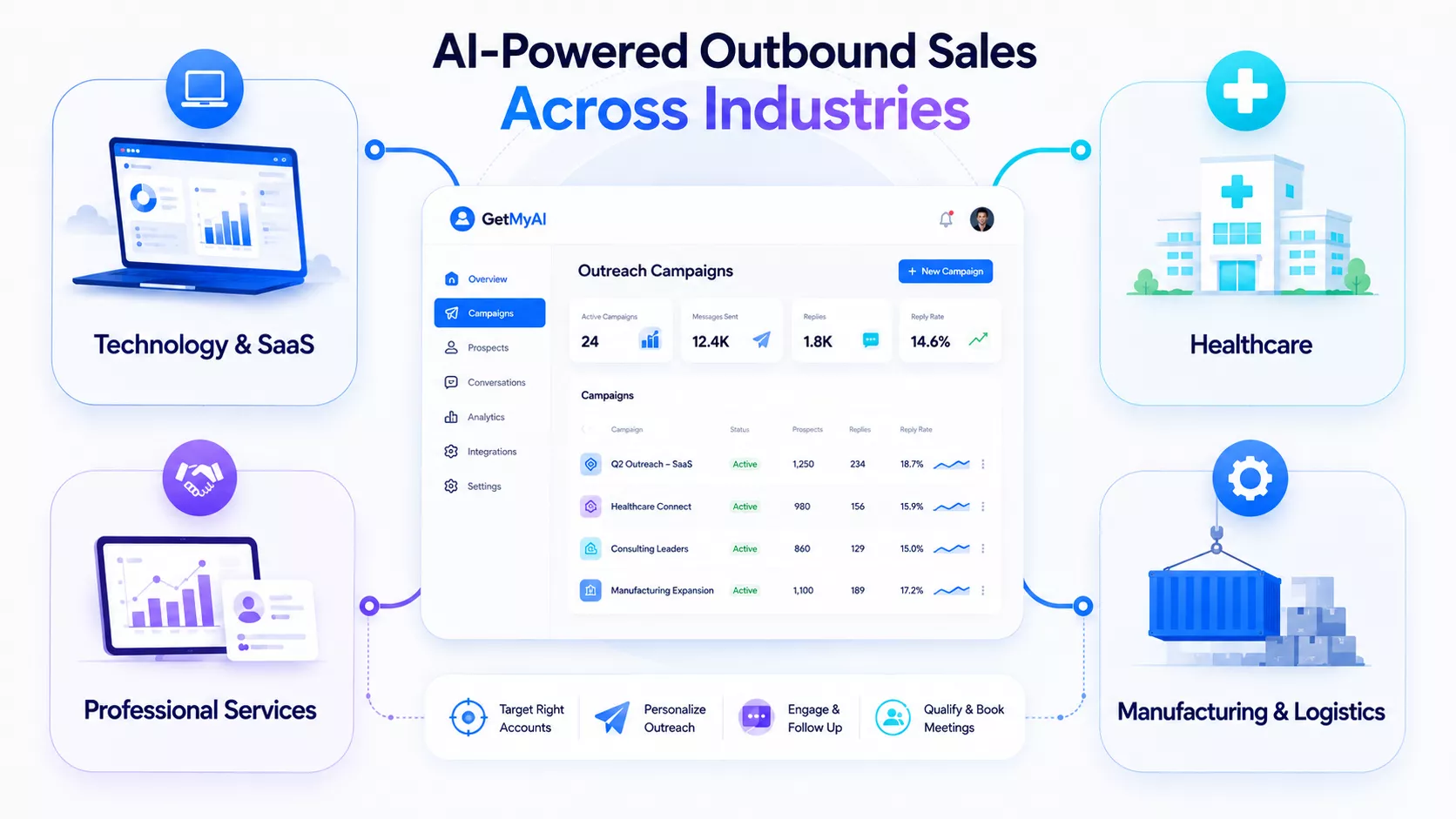
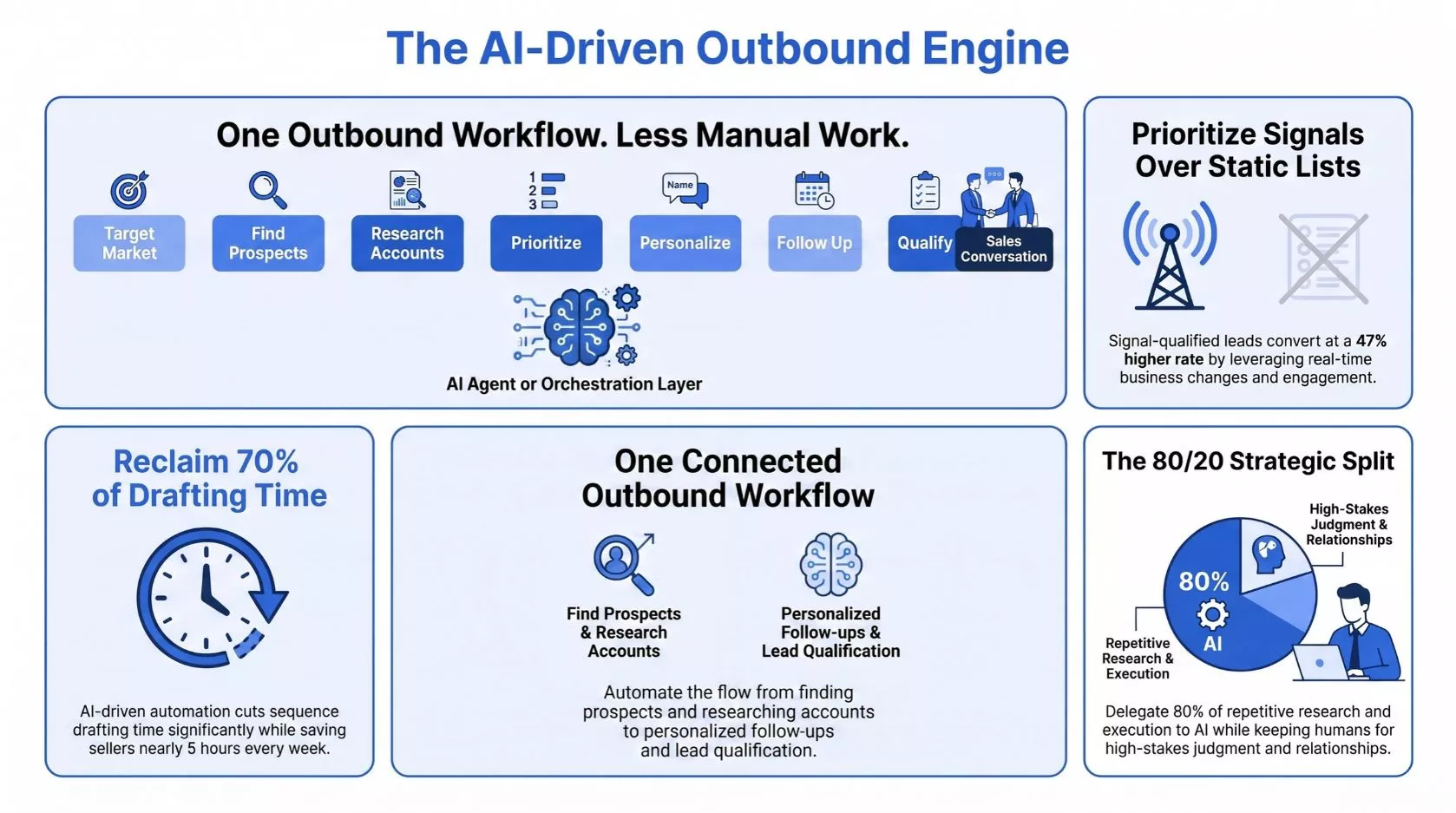
B2B outbound sales is becoming harder to manage manually. Sales teams still spend hours finding prospects, researching accounts, identifying decision-makers and keeping up with follow-ups. Benefits of AI in Sales go beyond saving time: better prospect research…
Experience Boost
Create. Deploy. Engage. With GetMyAI
Launch GPT-powered conversations that engage, support, and convert — all in one platform.
Why End-to-End Encryption Matters for AI Chatbots Handling Customer Data
Shubhendra Kartikeya
Apr 28, 2026
end-to-end encryption AI chatbots
AI chatbot data security
customer data encryption chatbot
chatbot data protection
Key Takeaways
Standard encryption protects data from external threats, but does not secure data during AI processing or inference stages
End-to-end encryption removes provider-level access, ensuring customer data remains inaccessible even during processing within AI systems
Most AI chatbot security risks occur during inference, where data is temporarily decrypted and exposed inside system memory
High-risk industries like healthcare, finance, and legal require E2EE to meet strict compliance and data protection requirements
Stronger encryption improves data security but introduces trade-offs such as higher costs, increased latency, and reduced system flexibility
Most teams assume their AI chatbot is secure because it says “encrypted.” In reality, encryption in AI systems is more nuanced, and enterprise chatbot security depends on how data moves through input, processing, and storage. Data moves through multiple stages: input, processing, and storage, and each stage introduces different levels of exposure. Understanding where protection holds and where it breaks is what actually defines security.
End-to-end encryption in AI chatbots ensures that customer data is encrypted on the user’s device and only decrypted within isolated environments such as Trusted Execution Environments (TEEs) or local endpoints, preventing even the service provider from accessing it. Unlike standard encryption (TLS in transit, AES-256 at rest), E2EE eliminates provider visibility during processing, reducing risks of data leakage, model training exposure, and unauthorized access.
What is End-To-End Encryption in AI Chatbots?
End-to-end encryption AI chatbots ensure that only the sender and intended recipient can read the data, with no access available to the service provider at any stage. This means data remains encrypted during transmission, storage, and crucially, processing.
In most AI systems, data encryption for chatbots protects information in transit and at rest, but not during inference. True E2EE removes this gap by processing data either on-device or inside secure enclaves like Trusted Execution Environments (TEEs). This architecture prevents providers from accessing plaintext data, even temporarily.
A citable distinction: encryption protects data from external attackers, while E2EE protects it from the platform itself. This difference directly impacts customer data exposure and regulatory risk.
What encryption do AI chatbots actually use today?
Most AI chatbots with data security relies on Transport Layer Security (TLS 1.2 or higher) for data in transit and Advanced Encryption Standard (AES-256) for data at rest. These encryption methods protect information from external interception and storage breaches. However, data is decrypted during processing, which means service providers can still access it at the inference stage.
How do AI Chatbots Protect Customer Data Across the Data Lifecycle?
AI chatbots protect customer data by applying different security controls at each stage, input, processing, and storage to ensure customer information security across the entire interaction. A customer data encryption chatbot must secure data movement, limit exposure during inference, and control how information is stored or reused. This lifecycle view is critical because most risks do not come from transmission, but from how data is handled after it enters the system.
Input stage: transmission and redaction
AI systems use Transport Layer Security (TLS) to encrypt data during transmission, preventing interception. Teams also apply redaction techniques to remove personally identifiable information (PII) before sending prompts, reducing exposure risks at the source.
Inference stage: secure processing (TEEs)
Secure customer conversations require isolating data during processing. Trusted Execution Environments (TEEs) create hardware-level secure enclaves where decrypted data is processed without access from the host system, minimizing risks of memory scraping or internal access.
Storage stage: logs, embeddings, and retention
How data is stored after interaction determines risk levels, and Customer information security depends on encrypting logs, controlling retention periods, and securing vector embeddings to prevent reconstruction attacks or unintended reuse in training pipelines.
Where does chatbot data become vulnerable during processing?
Data is decrypted in memory (VRAM) during inference, exposing it temporarily to the system
Standard encryption does not protect against internal access during model processing stages
Memory-level attacks or misconfigurations can expose sensitive prompt data during execution
See how secure AI chatbots work in real scenarios
Learn how sensitive data stays protected during real chatbot interactions
When is End-to-end Encryption non-negotiable for businesses?
Standard encryption is not enough when AI systems handle regulated, high-value, or legally sensitive data. Enterprise-grade chatbot security becomes critical when exposure during processing can lead to compliance violations, financial loss, or legal risk.
Imagine this: A healthcare provider uses an AI chatbot to summarize patient notes. The data is encrypted in transit and storage, but during processing, it is decrypted. Without a HIPAA-compliant AI chatbot, a single misconfiguration can expose protected health information (PHI), triggering a serious compliance breach.
What looks secure on the surface quickly becomes a liability when processing-level protections are missing, especially in environments handling sensitive medical data.
Finance teams face similar risks when using conversational AI agents for finance to analyze mergers, evaluate investments, or draft internal strategy. An executive may share sensitive deal data, assuming enterprise chatbot security is enough. In reality, that data is often decrypted during processing, exposing it to potential internal access or misuse. Standard encryption protects movement and storage, but not inference, making high-value financial data vulnerable at the most critical stage.
Real estate businesses encounter parallel challenges when using an enterprise AI agent chatbot for real estate businesses to manage property data, client negotiations, or investment insights. Agents may input pricing strategies, buyer details, or confidential agreements into the system. If processing environments are not secured, this information can be exposed despite encryption at rest and in transit, increasing the risk of data leaks and chatbot data protection failures that impact competitive advantage.
By 2027, more than 40% of AI-related data breaches will result from improper use of generative AI across borders due to weak oversight and unintended data transfers, as per Gartner. AI inference still requires temporary plaintext processing unless protected by E2EE or secure enclaves
Cross-border data flow + plaintext exposure = compounding risk in enterprise AI security
What are the Benefits of End-to-end Encryption for AI Chatbots?
End-to-end encryption strengthens AI chatbots’ data security by ensuring that sensitive data remains inaccessible to service providers during transmission, processing, and storage. The advantages of E2EE in chatbots directly reduce exposure risk, improve compliance readiness, and enable safer use of AI in sensitive workflows.
Eliminates provider-level data access
E2EE ensures that even the AI service provider cannot access customer conversations in plaintext. This removes dependency on vendor trust and significantly reduces insider risk, making it critical for protecting sensitive customer info in AI Chatbot, especially within regulated environments.
Reduces risk during AI processing
E2EE combined with secure enclaves prevents data exposure during inference, where most vulnerabilities occur. This directly addresses the processing gap, ensuring that decrypted data is never accessible outside controlled execution environments during AI operations.
Strengthens compliance and audit readiness
Organizations using E2EE align better with GDPR-compliant AI chatbot requirements. By minimizing data visibility and enforcing strict access controls, businesses can demonstrate stronger data governance and reduce legal exposure during audits, regulatory reviews, or cross-border data handling scenarios.
Improves customer trust and data confidence
When users know their data cannot be accessed or reused by the platform, trust increases. This is especially important in industries where conversations involve financial, medical, or legal information that requires strict confidentiality.
Enables safe AI adoption in high-risk use cases
E2EE allows businesses to use AI chatbots in scenarios involving highly sensitive data, such as healthcare records, legal documents, or financial strategies. Without it, these use cases carry unacceptable levels of data exposure risk, making AI chatbot compliance essential for safe deployment.
E2EE Use Cases by Industry
It is not universally required as it depends on data sensitivity, regulatory exposure, and business impact. Industries handling confidential, regulated, or strategic data require E2EE, while low-risk use cases can operate with standard encryption without significant security trade-offs.
Use Case
Data Type Involved
Encryption Requirement
Why It Matters
Healthcare & Clinical Diagnostics
Patient records, diagnostic data, genetic information (PHI)
E2EE Mandatory
Prevents HIPAA violations and ensures patient data cannot be accessed during AI processing
Protects high-value corporate data from industrial espionage and internal exposure risks
Legal & Privileged Communication
Case files, legal drafts, and attorney-client conversations
E2EE Mandatory
Maintains legal privilege by ensuring no third party can access or be compelled to disclose data
Cybersecurity & Internal Systems
Network logs, threat detection data, internal system activity
E2EE Recommended
Prevents attackers from manipulating AI systems or exposing internal infrastructure through compromised processing layers
How can you protect customer data when using AI chatbots today?
Minimizing exposure at input, controlling processing environments, and choosing the right deployment model are essential steps to protect customer data with AI chatbots. Teams must also define strict controls around data retention, access permissions, and training usage to reduce unintended exposure. Most risks come from how data is handled after it enters the system, not just how it is encrypted.
Minimize sensitive data in prompts
Remove names, emails, IDs, and financial details before sending data to AI systems. Use placeholders instead of real identifiers. This reduces the risk of unintended storage, training exposure, or internal access during processing.
Use secure deployment options
Prefer enterprise-grade setups with no-training policies, private cloud (VPC), or API-based access. These reduce provider-level data access and give more control over how chatbot data is handled.
Disable unnecessary data retention
Turn off chat history, memory features, and training options wherever possible to support data breach prevention in AI. Shorter retention windows directly reduce long-term exposure risk in logs and storage systems.
Apply encryption beyond storage
Use tools that support secure processing environments like Trusted Execution Environments (TEEs). This protects data even during inference, where standard encryption typically fails.
Define clear usage boundaries
Avoid using AI chatbots for regulated or highly sensitive data unless E2EE or equivalent controls are in place. Not all workflows are safe for AI by default.
What Trade-offs Come with Stronger Encryption
Stronger encryption improves security, but it introduces measurable trade-offs in performance, cost, and system flexibility. Choosing the best encryption standards for AI customer support chatbot systems requires balancing risk reduction with operational efficiency.
Security Benefit
Trade-off
Data remains inaccessible to providers during processing (E2EE, TEEs)
Slower response times due to secure execution environments (often 20–30% latency increase)
Lower risk of data breaches and internal exposure
Higher infrastructure costs for confidential computing and secure hardware
Better alignment with compliance requirements like GDPR and HIPAA
Reduced compatibility with third-party integrations and real-time data access
Stronger control over data ownership (BYOK, HYOK models)
Increased setup complexity and need for specialized security management
Takeaway: stronger encryption directly reduces exposure risk but limits system flexibility. Businesses must align encryption depth with data sensitivity, not apply maximum security blindly.
Conclusion
End-to-end encryption in AI chatbots removes provider access to data, not just external threats. This matters because most risks occur during processing, where standard encryption fails to ensure AI data privacy compliance. As AI adoption grows, secure usage depends on controlling how data is processed, accessed, and retained. Businesses that align encryption depth with data sensitivity reduce exposure, meet compliance requirements, and maintain trust without compromising operational efficiency.
Build your secure AI chatbot
Launch a secure AI chatbot without compromising performance or data privacy
Encryption protects customer data from unauthorized access during transmission and storage. However, without end-to-end encryption, data can still be exposed during processing, making encryption necessary but not sufficient for complete enterprise chatbot security.
2. How do AI chatbots protect customer data?
AI chatbots use Transport Layer Security (TLS) for data in transit and Advanced Encryption Standard (AES-256) for storage. Advanced systems add secure processing environments like TEEs to reduce exposure during inference and improve overall data protection.
3. Can AI chatbots leak personal information?
Yes, AI chatbots can leak data through model memorization, prompt injection, or insecure processing environments. Data is often decrypted during inference, which creates a temporary exposure risk if not protected by stronger security measures like E2EE.
4. What encryption do AI chatbots use?
Most AI chatbots rely on TLS (Transport Layer Security) for transmission and AES-256 (Advanced Encryption Standard) for storage. These methods protect against external threats but do not prevent access during data processing.
5. When should businesses use end-to-end encryption in AI chatbots?
Businesses should use E2EE when handling sensitive, regulated, or strategic data such as healthcare records, financial plans, or legal documents. In these cases, standard encryption does not provide sufficient protection during AI processing and is critical for AI chatbot compliance.
Written by
Shubhendra Kartikeya
Technical Content Writer
I've spent quite some time writing technical content in the AI SaaS industry. I provide technical and SEO content writing services across a wide variety of industries, primarily B2B AI SaaS, tech, and marketing. I focus on writing pieces people want to read while also making them visible in AI search engines. At GetMyAI, I turn the platform's AI capabilities into content people can understand and trust. Outside of writing, I spend my time reading up on industry trends and business books.
We’ve noticed that a surprising amount of a sales rep’s day is still spent preparing to sell rather than actually selling. Building lists, researching accounts, finding the right contacts, writing outreach and chasing follow-ups can consume hours before a mean…
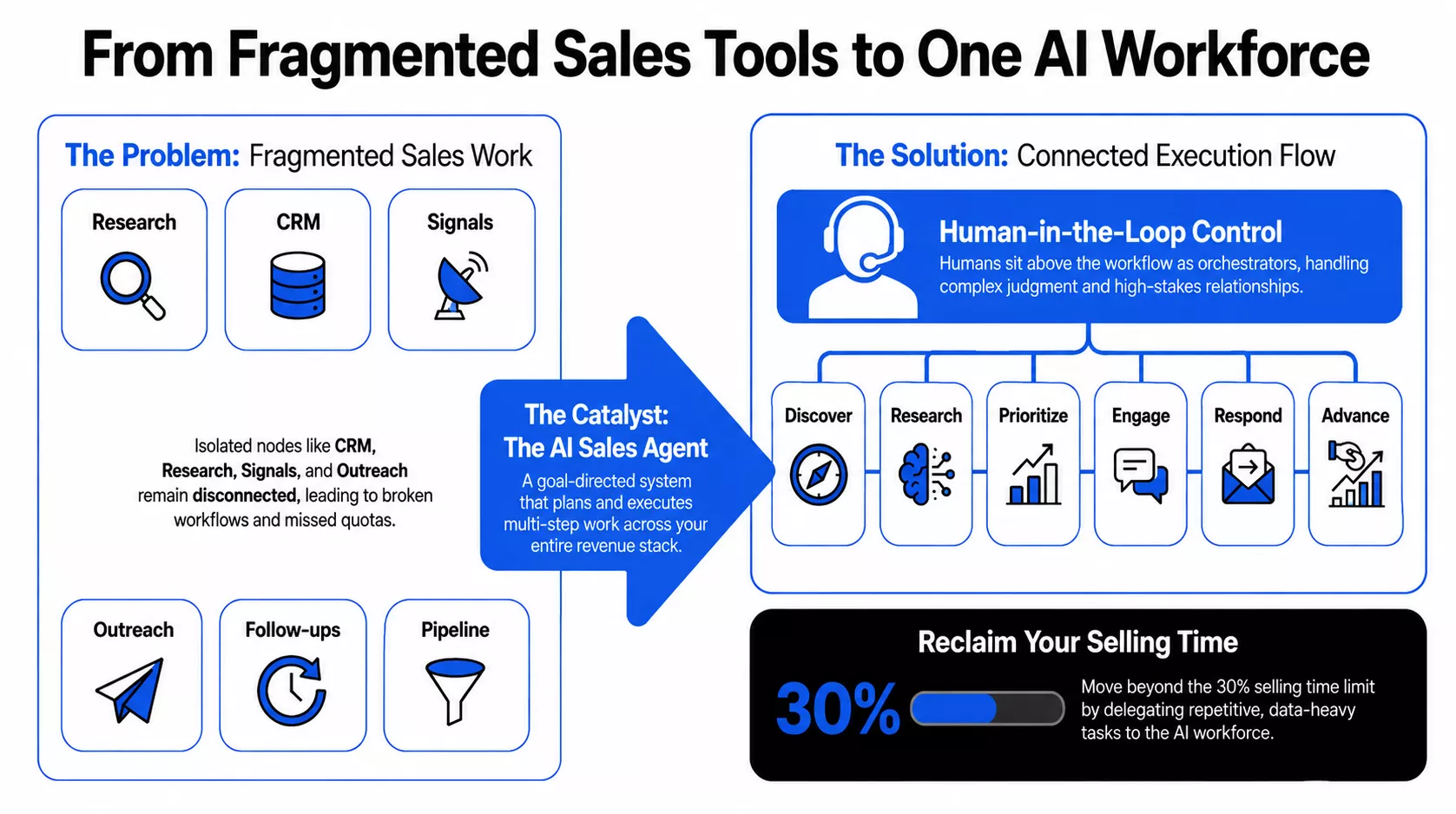
Sales teams have more AI than ever, yet the productivity problem remains. Sales AI Agents can take repetitive work off your team's plate, but adding another tool does not automatically improve execution. In 2026, 78% of B2B sellers missed quota in 2025, w…