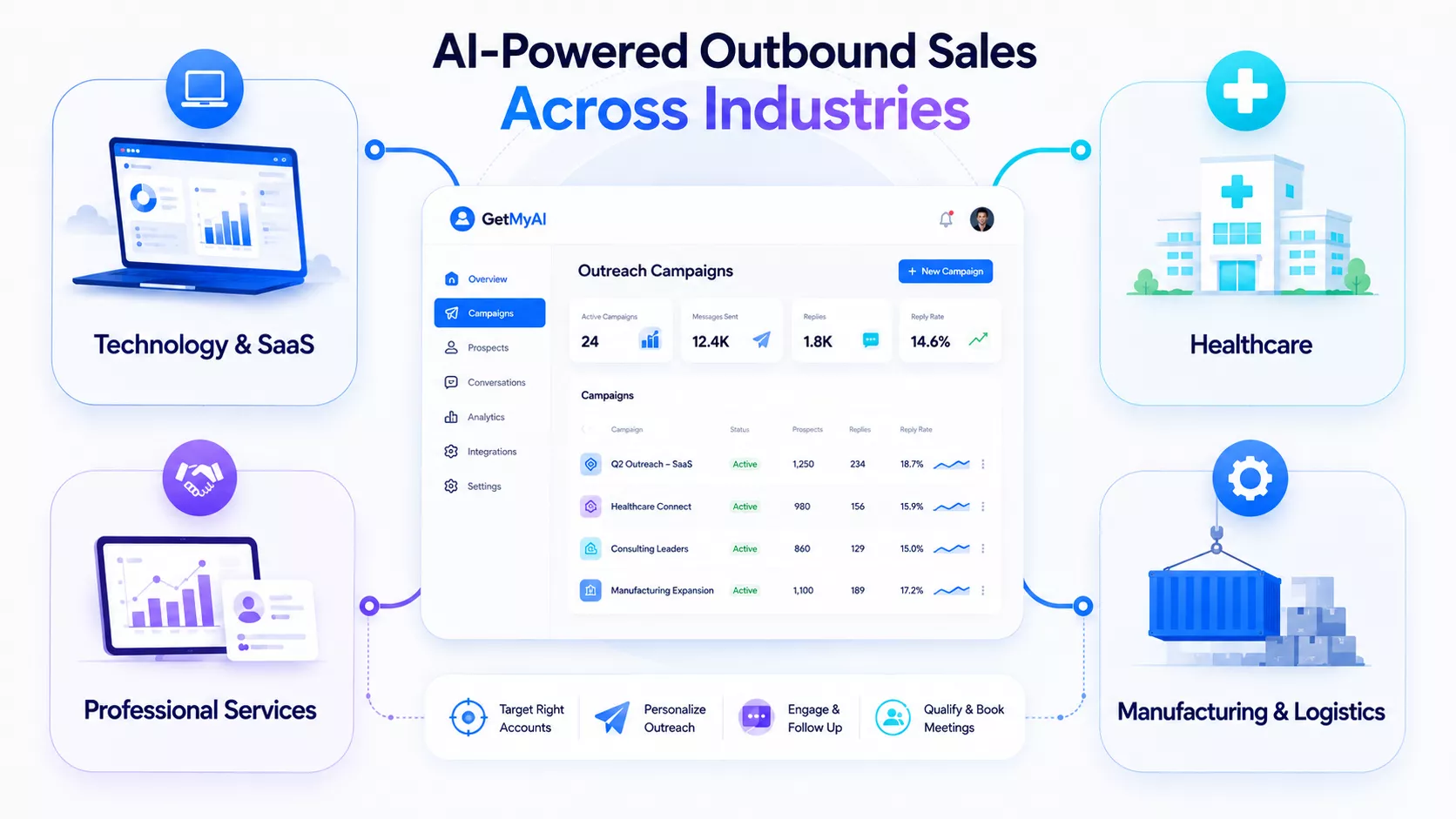
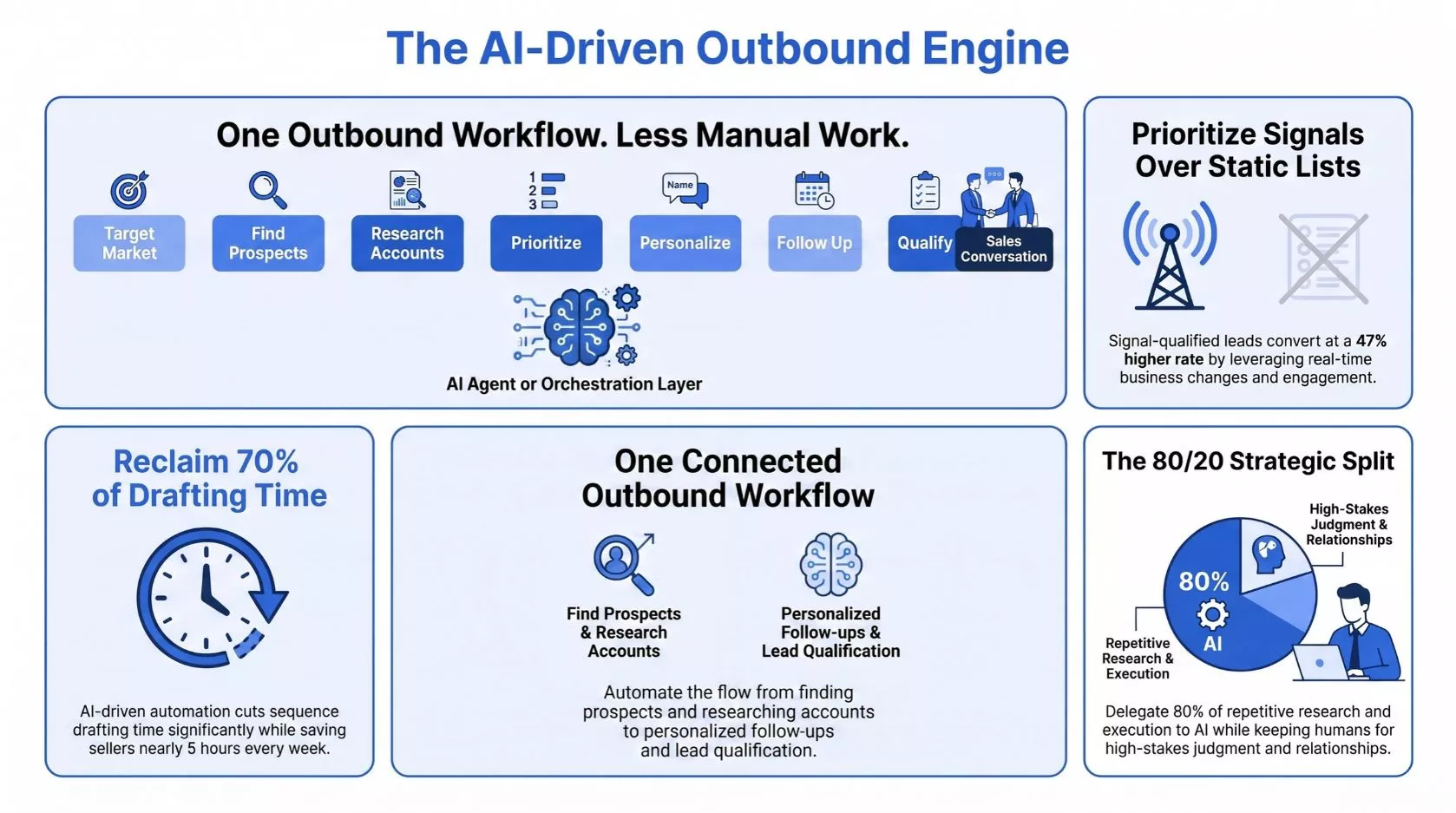
B2B outbound sales is becoming harder to manage manually. Sales teams still spend hours finding prospects, researching accounts, identifying decision-makers and keeping up with follow-ups. Benefits of AI in Sales go beyond saving time: better prospect research…
Experience Boost
Create. Deploy. Engage. With GetMyAI
Launch GPT-powered conversations that engage, support, and convert — all in one platform.
5 Must-Have Features in an Enterprise AI Chatbot for Telecom Providers
GetMyAI
Apr 23, 2026
enterprise AI chatbot for telecom
AI chatbot for telecom providers
conversational AI for telecom enterprises
telecom AI customer support automation
Key Takeaways
Enterprise telecom AI chatbots must connect with core systems to give correct, real-time, and context-aware customer support.
True ROI comes from agentic automation that completes tasks fully, not just passes or redirects customer queries.
Scalability during outages is critical, as telecom AI systems must manage very high traffic without slowing down or failing.
Omnichannel continuity and multilingual support improve customer experience by reducing repeated questions and keeping users engaged across platforms.
Security, compliance, and data governance are required, ensuring sensitive telecom data stays protected and risks are properly controlled.
Telecom environments involve millions of concurrent interactions across billing, network issues, and plan management, where delays directly impact customer retention. A telecom chatbot implementation solution functions as an operational layer that connects systems, enables automation, and delivers consistent, context-aware support across channels, making it a strategic necessity rather than a support add-on.
Telecom providers are shifting from basic chatbots to advanced agentic bots because traditional bots cannot access real-time subscriber data, execute multi-step workflows, or handle surge traffic during outages. An AI chatbot for telecom providers must integrate with core systems, automate support tasks, and maintain performance under extreme demand to reduce costs and improve service reliability.
How AI Chatbots Stand Apart from Standard Chatbots in the Telecom Industry
Enterprise AI systems differ from basic chatbots by operating as integrated, decision-capable systems rather than scripted responders. Telecom chatbot automation workflows require systems that integrate with internal tools, execute multi-step tasks, and maintain context across channels. Standard chatbots rely on predefined logic and cannot handle complex telecom scenarios effectively.
For telecom leaders evaluating a telecom conversational AI platform, the distinction is operational, not cosmetic. Basic bots reduce surface-level queries. Enterprise AI systems reduce workload, improve resolution rates, and directly impact cost and retention.
Evaluation Checklist for Telecom AI Chatbot Platforms
Ecosystem Interoperability: Can the AI connect with OSS/BSS, CRM, and internal data sources to deliver real-time, context-aware responses?
Autonomous Resolution Capability: Can the AI handle multi-step queries like billing breakdowns or troubleshooting without human intervention?
Omnichannel Context Continuity: Does the system maintain conversation history across Website, WhatsApp, Telegram, and Slack without resetting context?
Governance and Data Control: Are there safeguards to prevent incorrect responses, ensure data privacy, and maintain compliance?
Model Flexibility and Scalability: Can the platform adapt to different AI models and handle high-volume telecom traffic without performance loss?
A practical constraint: if a system fails even one of these checks, it will not scale in telecom environments.
Evaluate Your Telecom AI Chatbot Readiness
See how an enterprise AI chatbot connects with your systems, automates workflows, and scales under real telecom conditions without complex setup.
Top 5 Features to Look for in an Enterprise Telecom AI Chatbot Platform
Telecom systems require solutions that cut costs, manage high usage, and fit into current infrastructure without issues. An enterprise AI chatbot is measured by its ability to take over tasks, handle busy periods, and work safely within strict regulations.
The following five features determine whether a platform delivers measurable ROI or becomes another layer of overhead.
1. Deep BSS/OSS and CRM Integration
A telecom AI chatbot solution must connect directly with billing systems (BSS), network operations (OSS), and CRM platforms to deliver accurate, real-time responses. Without this integration, the AI cannot access subscriber data, validate account details, or resolve billing and service-related queries reliably.
This is not a marginal improvement. Telecom operators prioritizing system integration report measurable gains: churn prediction accuracy improves from 62% to 87%, and hyper-personalized plans driven by integrated data can increase revenue by 5–15%. Additionally, 73% of telecom executives identify legacy system modernization as a top priority for AI adoption.
While implementation may require effort, a chatbot without integration cannot access real data, resulting in inaccurate responses and a higher support load. For enterprise deployment, this capability is mandatory.
2. Agentic Workflow Automation
Execution capability defines ROI in telecom AI customer support automation. Instead of handing off every request, the AI completes actions independently across systems.
What enterprise buyers should expect:
End-to-end resolution of billing disputes
Automated SIM activation and plan updates
Guided diagnostics without agent involvement
Lead qualification and routing
Triggered follow-ups and task execution
Platforms that achieve high autonomous resolution directly reduce call center dependency and operational cost. Industry data shows that agentic AI systems already handle up to 54% of inbound telecom queries, reducing call time by 34%. If the system cannot execute workflows, it only shifts workload rather than eliminating it, limiting financial impact.
3. Outage-Ready Scalability
Telecom support systems fail when demand peaks. All AI chatbot telecom deployment services must maintain performance during extreme spikes, including outage scenarios where queries can increase dramatically.
Reality: When a network failure occurs, thousands of users request support simultaneously. A system that slows down or crashes raises churn risk and damages trust. Telecom environments require AI systems that manage up to 50x spikes in demand, making scalability essential for reliability.
AI-driven systems built for this scale maintain response speed and absorb demand without degradation. They also help reduce perceived downtime by providing instant updates and guidance. If scalability is not proven, the platform becomes unreliable exactly when it is most needed, making it unsuitable for enterprise deployment.
4. Security, Compliance, and Data Control
A telecom conversational AI platform must comply with strong security and regulatory requirements before scaling, particularly in environments handling large amounts of sensitive customer data.
Telecom providers manage sensitive data, so encryption, audit logs, and controlled access are essential to maintain trust, prevent breaches, and meet global data protection rules.
Example: If a chatbot exposes incorrect billing details or mishandles customer data, the result is immediate loss of trust and potential regulatory action.
AI systems with strong governance reduce breach risks and improve response times to threats. A GDPR-compliant AI chatbot ensures data is processed, stored, and accessed within defined legal boundaries. However, security is not just technical. It requires strict control over how data is accessed, processed, and stored. Any platform lacking these controls introduces more risk than value, making it unsuitable for enterprise telecom environments.
5. Omnichannel and Multilingual Coverage
A conversational AI for telecom enterprises must provide a continuous experience across channels and languages. Users shift between web chat, mobile apps, and messaging platforms during a single interaction and expect the conversation to continue smoothly without needing to restart.
What enterprise buyers should verify:
Shared conversation memory across website, WhatsApp, Telegram, and Slack
Consistent responses regardless of channel
Support for multiple languages within the same session
Ability to handle high query volumes across channels simultaneously
Enterprise benchmarks show leading platforms automate up to 90% of queries across 35+ channels and support over 100 languages. Companies using unified omnichannel strategies report up to 91% higher customer retention.
If users are forced to repeat context or switch languages manually, the system increases friction instead of reducing it.
Summary: Enterprise AI Chatbot Features for Telecom
End-to-end task execution without human intervention
54% query automation, 34% reduction in call time
High support dependency, limited ROI
Outage-Ready Scalability
Handles 50x traffic spikes during outages
Continuous service, reduced downtime impact
System failure during peak demand
Security & Compliance
Data protection, auditability, and regulatory adherence
Reduced breach risk, faster threat response
Legal risk, data exposure, loss of trust
Omnichannel & Multilingual
Unified experience across channels and languages
90% query automation, up to 91% higher retention
Fragmented journeys, repeated queries
What Limits Performance in Telecom AI Chatbot Deployments?
A telecom conversational AI platform is not a perfect system. Every deployment involves trade-offs that directly impact performance, cost, and control. Understanding these early prevents poor implementation decisions.
Speed vs Control
Faster deployment often means using pre-built workflows with limited customization. While this accelerates go-live, it can restrict how deeply the system aligns with telecom-specific processes. More control requires more setup time.
Automation vs Accuracy
High automation reduces support load, but over-automation without proper training can lead to incorrect responses. Enterprise systems must balance execution capability with response reliability.
Integration Depth vs Implementation Time
Deep integration with BSS, OSS, and CRM systems improves accuracy and personalization. However, it increases implementation complexity. Shallow integration is faster but limits real operational impact.
The practical takeaway is simple: optimizing for one dimension always affects another. The right decision depends on whether the priority is speed, cost reduction, or long-term operational efficiency.
What are the Most Valuable Enterprise AI Chatbot Use Cases in Telecom?
Enterprise AI chatbots in telecom provide the most value when they shift from answering questions to completing operational tasks, cutting costs, and protecting revenue. Key AI chatbot telecom use cases automate high-volume processes, improve retention, and enable real-time decisions across customer and network functions.
1. Automated Tier 1 & Tier 2 Customer Support (Primary ROI Driver)
The highest immediate ROI comes from support automation. An AI chatbot platform for telecom customer support automation now resolves entire query cycles, not just first responses.
AI agents handle billing issues, plan upgrades, and troubleshooting end-to-end. Industry benchmarks show they manage 54% of inbound telecom queries and reduce call handling time by 34%. Advanced systems can resolve up to 75% of customer requests autonomously, significantly lowering support costs. If the platform cannot fully resolve queries, it reduces tickets but not the workload.
2. Hyper-Personalized Retention and Revenue Expansion
Telecom AI systems now intervene before churn happens. By analyzing usage patterns and account behavior, AI agents recommend personalized plans and offers in real time.
This shift moves telecom from reactive support to proactive revenue protection. Integrated systems raise churn prediction accuracy from 62% to 87% and deliver 5–15% revenue uplift through targeted recommendations. Personalization is no longer driven by marketing. It is automated and powered by system-level intelligence.
3. Real-Time Fraud Detection and Risk Monitoring
Telecom networks handle massive transaction volumes, making fraud detection a critical use case. AI systems monitor activity in real time, identifying anomalies like SIM fraud or unusual call patterns. Modern implementations can analyze up to 90% of transactions and reduce false positives by 39%, helping telecom providers detect threats faster and minimize financial and operational risks.
Given that 55% of telecom executives report security breaches, this use case directly impacts risk reduction and compliance.
4. Network-Aware Customer Interaction
The best enterprise AI chatbot for telecom providers connects with network intelligence systems to respond using real-time conditions instead of static data. This enables the system to detect outages, congestion, or service issues as they happen and adjust responses instantly, improving accuracy and reducing unnecessary support interactions.
Predictive models further enhance this by identifying potential failures 20–30 days in advance, enabling proactive communication instead of reactive support.
Example 1: A user experiences slow internet. The chatbot analyzes network conditions, detects local issues, and informs the user with a clear resolution estimate.
Example 2: A customer reports call drop issues. The chatbot identifies regional network work and suggests quick fixes while sharing when service will stabilize.
This level of awareness reduces unnecessary support load and improves customer trust by replacing vague responses with precise, actionable information.
5. Field Service and Operational Efficiency
Beyond customer-facing use cases, AI supports internal operations by reducing manual workload and optimizing resources. AI-driven systems help reduce unnecessary technician visits, with some implementations lowering “truck rolls” by 28%. They also assist internal teams by accelerating workflows and reducing errors.
Business impact: Lower operational cost, faster resolution cycles, and improved resource allocation.
Summary: The most valuable telecom AI use cases share one pattern: they replace manual effort with automated decision-making. If a system only answers questions, it delivers limited value. If it executes, predicts, and optimizes, it becomes a revenue and efficiency driver.
Turn AI Into a Revenue Driver for Telecom
Deploy AI agents that automate support, reduce operational costs, and improve customer retention, built for telecom-scale environments.
Proactive support with AI predicting issues and guiding users early
Response Time
Delays due to queues and agent availability
Instant responses with consistent speed across all queries
Workload Distribution
Heavy reliance on human agents for repetitive queries
Reduced agent dependency as AI handles high-volume tasks
Customer Experience
Fragmented interactions across channels with repeated inputs
Continuous, context-aware conversations across all channels
Improvement Process
Manual updates based on assumptions or limited feedback
Continuous improvement using real chat data, Activity logs, and Q&A updates
Enterprise Telecom AI Agent Deployment with GetMyAI
An AI chatbot platform for telecom customer support automation must work in line with telecom operations, where volume is high and timing matters. GetMyAI enables teams to create AI agents trained on internal data that deliver context-aware responses and improve over time. Rather than using fixed scripts, agents learn from documents, Q&A, and activity logs, ensuring answers reflect real business logic and adapt to changing customer scenarios effectively.
For telecom use cases, this translates into handling billing queries, plan-related questions, and support requests with accuracy while maintaining consistency across channels. As an AI chatbot for telecom providers, GetMyAI focuses on deployment simplicity and operational control, allowing teams to launch agents quickly and refine them based on real usage without engineering dependency.
What Enables Telecom-Ready Deployment
Train agents using documents, FAQs, and internal knowledge
Deploy across the website, WhatsApp, Telegram, and Slack
Monitor real conversations through Activity logs
Improve responses using unanswered questions and Q&A
Track performance using analytics and engagement metrics
This ensures the AI evolves with real customer interactions, reducing gaps over time and improving resolution quality without requiring complex system rebuilds.
FAQs
Which features are essential in a telecom AI chatbot platform?
An enterprise telecom chatbot must integrate with BSS/OSS and CRM systems, support workflow automation, handle high traffic during outages, maintain omnichannel continuity, and ensure strong security. These features directly impact resolution accuracy, scalability, and operational efficiency.
How to implement an AI chatbot in telecom companies?
AI chatbot implementation for telecom companies starts with defining use cases like billing or support automation, then training the AI on internal documents and FAQs. GetMyAI simplifies deployment by enabling teams to build, train, and launch agents without complex engineering dependencies.
How do telecom AI chatbots handle data privacy, security risks, and compliance?
Enterprise telecom AI chatbots require strong data governance to protect sensitive user information. This includes encryption, controlled access, audit tracking, and GDPR compliance. GetMyAI keeps data secure, limits unauthorized access, and ensures responses stay accurate and compliant.
What are the benefits of AI chatbots in telecom customer service?
AI chatbots shorten response times, handle repetitive queries automatically, and improve customer satisfaction by giving instant and accurate answers. They also reduce support costs by managing large volumes of interactions without adding more staff, even during peak demand.
How to choose the right telecom chatbot platform?
Focus on integration capability, automation depth, scalability, and security. The right platform should handle real telecom workflows, not just conversations. GetMyAI supports this by combining training, deployment, and continuous improvement within a single controlled environment.
We’ve noticed that a surprising amount of a sales rep’s day is still spent preparing to sell rather than actually selling. Building lists, researching accounts, finding the right contacts, writing outreach and chasing follow-ups can consume hours before a mean…
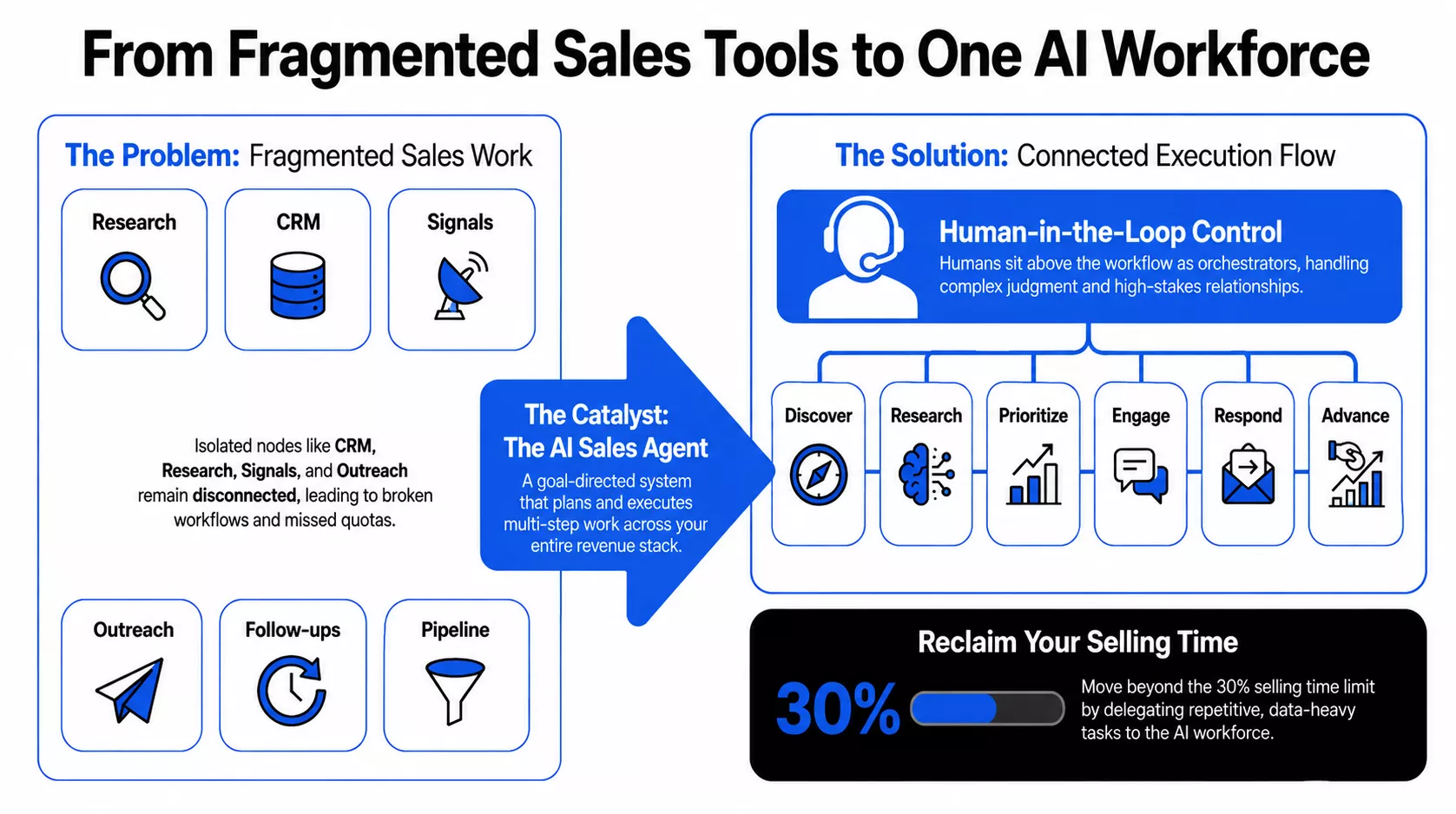
Sales teams have more AI than ever, yet the productivity problem remains. Sales AI Agents can take repetitive work off your team's plate, but adding another tool does not automatically improve execution. In 2026, 78% of B2B sellers missed quota in 2025, w…