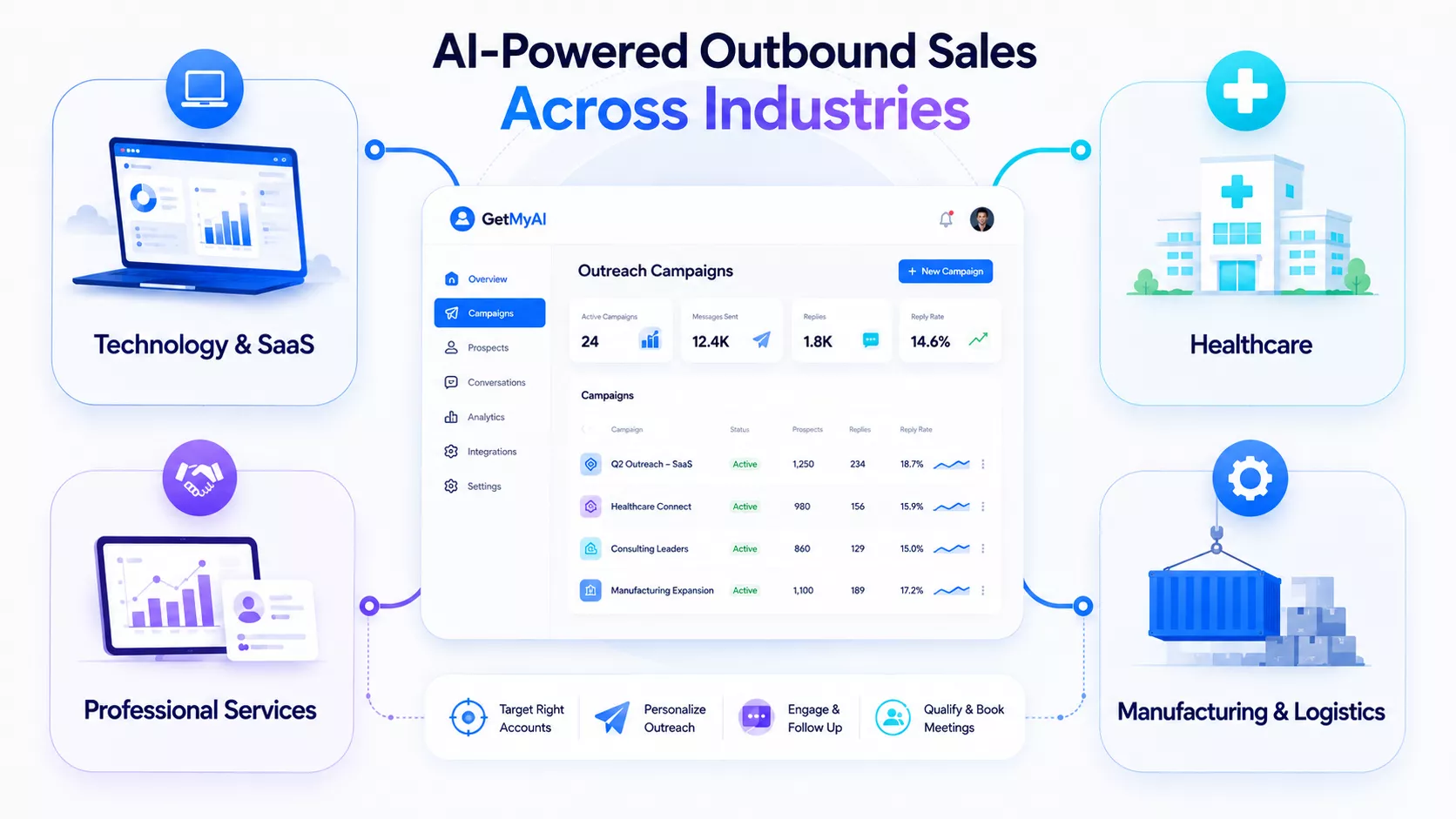
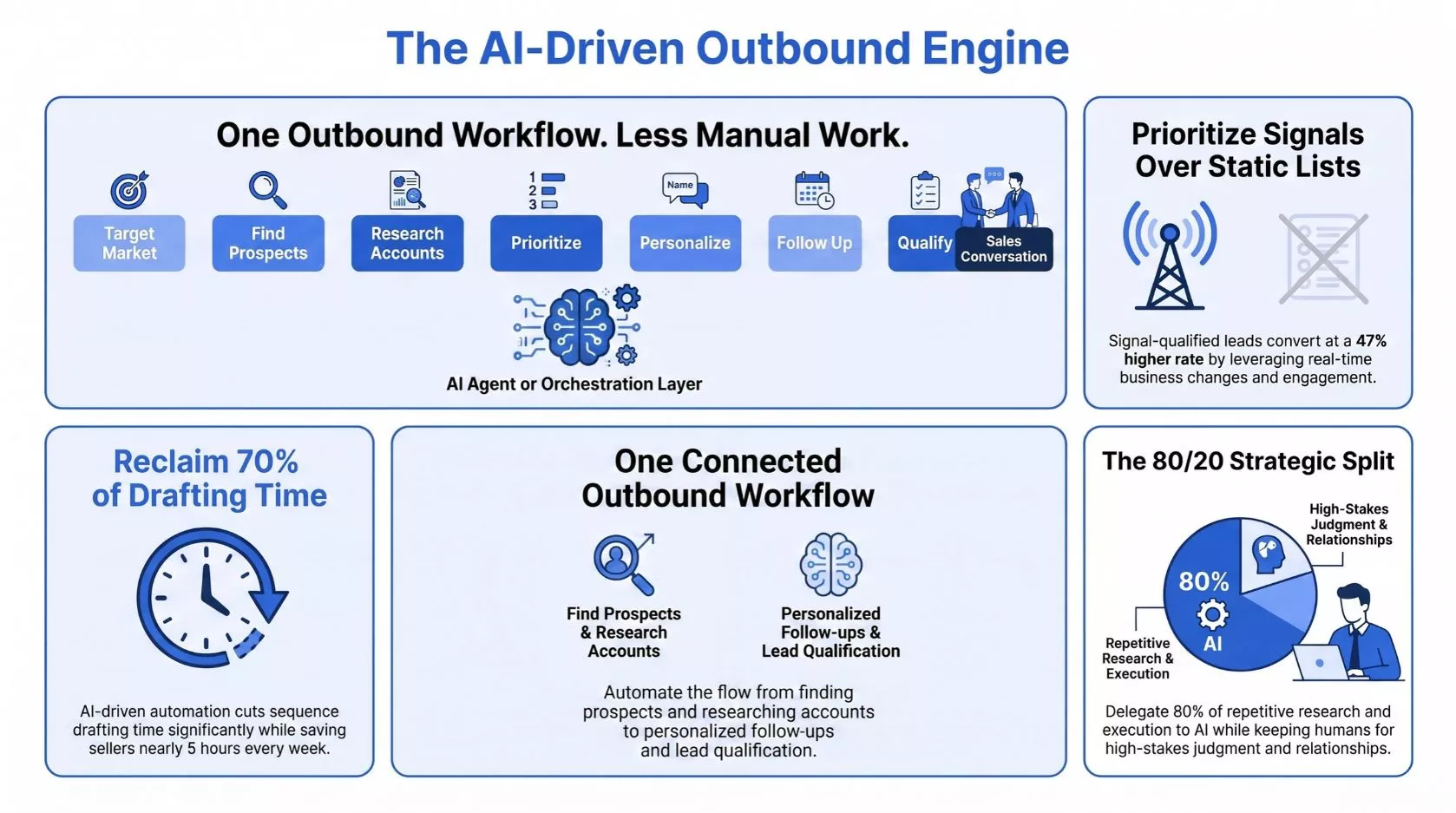
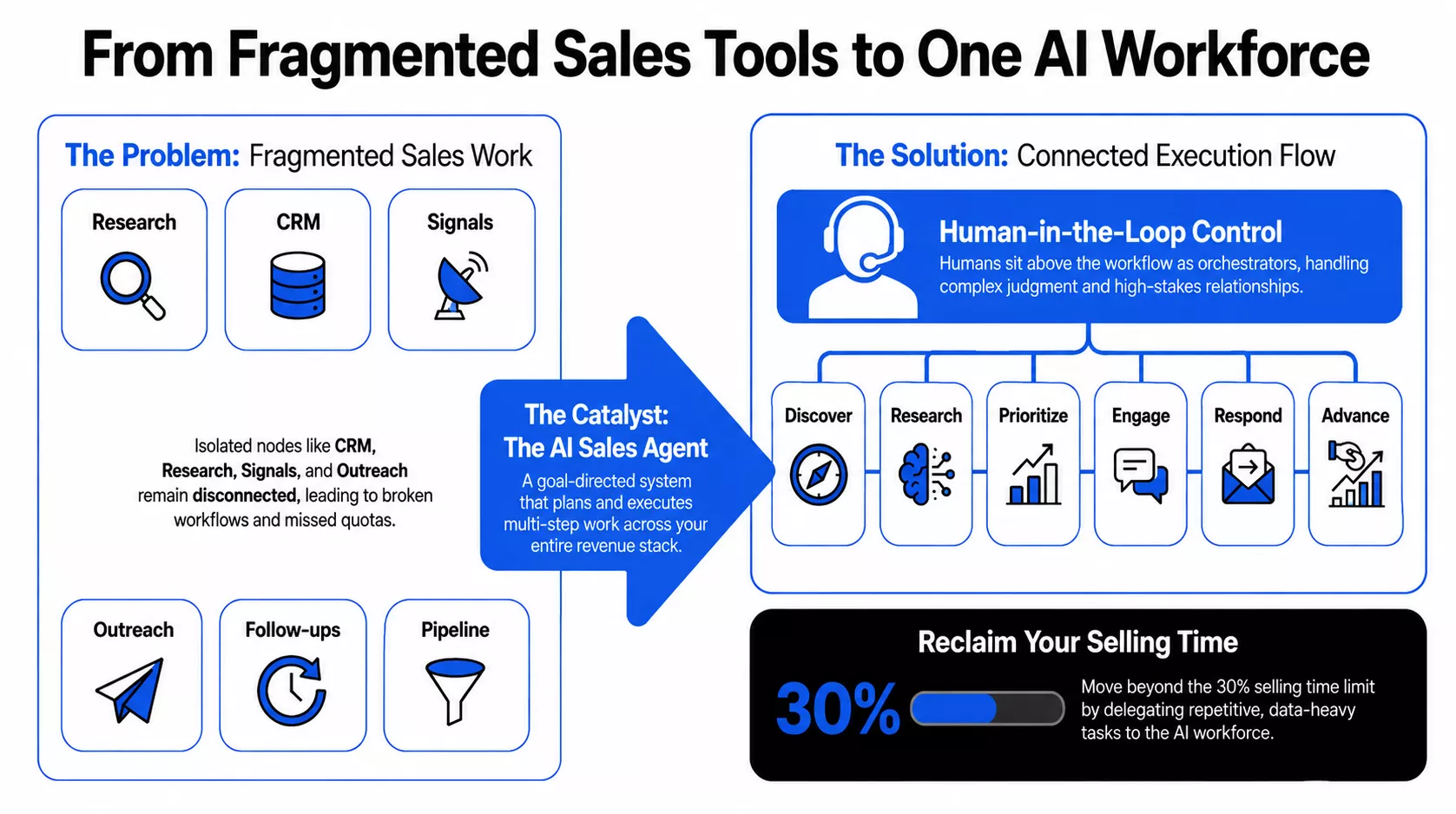
B2B outbound sales is becoming harder to manage manually. Sales teams still spend hours finding prospects, researching accounts, identifying decision-makers and keeping up with follow-ups. Benefits of AI in Sales go beyond saving time: better prospect research…
Experience Boost
Create. Deploy. Engage. With GetMyAI
Launch GPT-powered conversations that engage, support, and convert — all in one platform.
11 AI Chatbot Strategies to Enhance Customer Engagement and Drive Conversions
getmyai
Apr 7, 2026
AI chatbot strategies for conversions
AI chatbot for customer engagement
AI chatbot tools for business
AI chatbot for businesss
Key Takeaways
Chatbots capture user intent early and guide actions, instead of letting users navigate websites on their own.
Engagement alone is not enough; clear guidance during conversations is what improves conversions.
Step-by-step interactions reduce friction and make it easier for users to take action.
Real-time responses help users move faster from interest to decision without confusion.
The most effective chatbot systems focus on direction, context, and timing rather than just answering user queries.
Businesses use chatbots to understand user intent, guide choices, and make interactions easier. These are called AI chatbot strategies for conversions. An AI chatbot for customer engagement responds fast, adapts to user needs, and keeps conversations active, which helps increase conversions by moving users from interest to action.
Most teams try to improve websites by adding more pages. The real problem is not content; it is how users experience it. We have seen this pattern repeatedly. People land on a site, scroll for a few seconds, and leave when they do not find clear answers.
The problem is simple. Websites are passive, while users expect direction. When no guidance is provided, confusion builds, and sessions end without action.
The fix is not more information. The fix is interaction. When we improve customer engagement with AI, we turn static visits into guided conversations. That shift is what helps improve conversions with chatbots, because users are no longer guessing what to do next.
11 AI Chatbot Strategies for Conversions and Engagement
1. Predictive Intent Engagement
Imagine this: A visitor lands on your pricing page, scrolls twice, pauses on a feature comparison, and hesitates. No form is filled out. No question is asked. In most cases, that user leaves.
Now change the experience. The system detects this behavior and steps in at the right moment. It opens a conversation based on what the user is already exploring, not with a generic greeting. The interaction feels relevant, not forced.
This is predictive intent engagement. Instead of waiting for users to act, the system responds to behavior in real time. That shift captures interest early, before it turns into a drop-off.
2. Guided Selling with AI Chatbots
Guided selling replaces exploration with direction. Instead of showing users multiple options and expecting them to decide, the system asks a few targeted questions to understand their needs. Each response narrows down choices, making the process simpler and faster.
This approach works because decisions become structured instead of overwhelming. Users are not comparing everything at once. They are being led step by step toward the most relevant solution. In fact, 64% of customers want companies to respond and interact in real time, which makes guided interactions far more effective than static experiences. An AI chatbot for customer engagement works best here, as it keeps users engaged and helps them move toward a clear decision step by step.
3. AI Chatbot Qualification Frameworks (BANT/MEDDICC)
Qualification is often where most conversions are lost. Using forms or waiting for follow-ups often stops user momentum. Chat-based qualification keeps users engaged and collects the required information during the conversation.
Instead of asking everything up front, the system identifies key signals through conversation:
Budget: Understands spending capacity without direct friction
Authority: Identifies decision-makers through contextual questions
Need: Clarifies the actual problem the user wants to solve
Timeline: Gauges urgency based on user intent
This is how the best AI chatbot strategies for customer engagement maintain flow while filtering high-quality prospects efficiently.
4. Interactive Product Demos via Chatbots
Before: Users click on a product demo, watch a generic walkthrough, and try to map features to their own needs. Most users drop off because the experience is passive and not tailored.
After: The demo becomes interactive. Users ask questions, explore features relevant to their use case, and get step-by-step guidance inside the conversation. Each interaction adapts based on what they need, not what is pre-recorded.
Using chatbots for e-commerce conversions works better when users get clarity before committing. Interactive experiences help users take part, which improves understanding and lowers hesitation.
5. AI-Powered Objection Handling
Objections are a natural part of any decision process. The problem is not the objection itself, but the delay in addressing it. When users hesitate, traditional systems offer no immediate response, which leads to drop-offs.
Chat-based systems handle objections in real time. When a user expresses concern about pricing, features, or comparisons, the system responds instantly with relevant information. This keeps the conversation active and prevents momentum loss.
Chatbot analytics and optimization play a role by tracking recurring objections, businesses refine responses over time, making interactions more precise and improving overall conversion outcomes.
6. Exit-Intent Chatbot Intervention
Imagine this: A user reaches your pricing page, scrolls briefly, and moves the cursor toward the exit button. No action taken. No form filled. This is where most potential conversions are lost.
Now change the moment. Just before the user leaves, a message appears offering something relevant: a quick answer, a tailored suggestion, or a next step. The interaction feels timely, not intrusive.
Exit-intent intervention works because it captures users at the exact point of hesitation. Instead of letting them leave silently, it re-engages them with context, turning abandoned sessions into active opportunities.
7. Conversational Content (PDF to Chat Experience)
Most businesses rely on long documents like brochures, case studies, or PDFs to share information. The problem is simple. Users do not read everything. They scan, miss key points, and leave without clarity.
Now shift the format. Instead of downloading a document, users ask questions and get direct answers pulled from that content. Information becomes accessible, not buried. This approach works especially well with conversational AI platforms, where users interact with content instead of navigating it. The result is faster understanding, better engagement, and fewer drop-offs caused by information overload.
8. CRM Enrichment Through Conversations
Problem: CRM data is incomplete, inconsistent, and often outdated
Cause: Users are asked for too much information upfront, before context or intent is clear
Fix: Capture data progressively through conversation instead of static forms
When data is collected during interaction, users provide more accurate and relevant inputs. The system structures this information in real time, eliminating the need for manual updates. Over time, each interaction strengthens the data layer, making follow-ups more precise and effective. This approach ensures that CRM systems are continuously improving rather than relying on occasional updates.
9. Sentiment-Based Customer Recovery
Gain: Immediate detection of frustration and real-time response
Trade-off: Requires accurate interpretation of user tone to avoid misjudgment
When users express frustration, delays often lead to churn. Sentiment-based systems identify signals like negative language or repeated queries and respond instantly. This could mean offering clarification, escalating to support, or providing a resolution.
Results depend on how well timing and accuracy are handled. When done right, it reduces drop-offs and builds trust. When done poorly, it feels off and unhelpful. Over time, it helps keep users who might otherwise leave.
10. Personalization with Behavioral Data
Personalization works better when based on real data. The AI chatbot uses pages visited, time spent, and actions taken to adjust responses. This keeps interactions relevant and aligned with user intent instead of showing the same replies to everyone.
Key elements that drive this:
Tracking user behavior across sessions
Adapting responses based on intent signals
Recommending relevant products or services
Adjusting conversation flow dynamically
Reducing unnecessary steps in decision-making
This is where customer engagement automation improves outcomes by making every interaction context-aware and purposeful.
11. Multi-Channel Chatbot Automation
Users do not interact with businesses on a single platform. They move between websites, messaging apps, and email, expecting consistency in responses. Multi-channel systems ensure that conversations continue seamlessly, regardless of where they start or end.
What makes this effective:
Unified conversations across channels
Consistent responses without repetition
Centralized data for better context
Faster response times across platforms
Reduced dependency on manual support
This approach strengthens AI-powered customer support by ensuring users receive the same level of clarity and assistance across every touchpoint.
Why AI Chatbots Are Central to Engagement and Conversion
The Shift from Static Pages to Conversational Experiences
Websites were built to display information. Users today expect interaction. That gap is where most drop-offs happen. Conversational AI platforms change this dynamic by turning passive pages into responsive experiences.
Instead of forcing users to search, businesses guide them through questions, answers, and next steps in real time. This shift creates AI-driven communication where every interaction adapts to user intent. The result is not just engagement, but movement, users progress instead of pausing or leaving.
Why Engagement Alone Doesn’t Matter Without Direction
Myth: More engagement leads to better conversions
Reality: Unstructured engagement leads to confusion and drop-offs
Why: When users interact without guidance, they still need to figure out what to do next. Conversations without direction create friction instead of removing it.
Effective systems do not just engage. They guide users toward outcomes, whether that is selecting a product, understanding a service, or taking action. This is where AI chatbot strategies for conversions become critical, because they turn interaction into progress.
The Psychology Behind Chatbot Conversions
Users convert faster when decisions feel easy and immediate. Chat-based interactions reduce effort and remove delays, which directly impacts how users behave during decision-making.
Example:
Instant gratification: Users get answers immediately instead of waiting, which keeps momentum high
Cognitive ease: One question at a time reduces overload and keeps users focused
Guided decision-making: Structured conversations narrow choices and remove uncertainty
These factors show the real AI chatbot benefits for business. Conversions improve because users find it easier to decide, not because they are forced to act.
How AI Chatbot Tools for Business Actually Drive Results
Users arrive with a question or a specific goal in mind. Instead of waiting for them to fill out forms or navigate multiple pages, the system identifies intent instantly through interaction. This reduces delay at the very first step and keeps users engaged while their interest is still high. Today, 80% of customers say the experience a company provides is as important as its products, which makes real-time interaction critical.
Once intent is clear, the system begins qualification. Rather than overwhelming users with long forms, it asks relevant questions one at a time. This makes it easier to filter serious prospects while maintaining a smooth, uninterrupted experience.
After qualification, the next step is helping them move forward. The AI chatbot uses their responses to show the most relevant product, service, or solution. This removes confusion and helps users decide faster.
When clarity is achieved, the system moves directly to conversion. Whether it is booking a meeting, signing up, or making a purchase, the next step is presented immediately. This is where chatbot automation for sales becomes effective because it replaces waiting with action.
Chatbots vs Traditional Forms
Factor
Chatbots
Forms
Speed
Instant
Delayed
Engagement
High
Low
Conversion
Higher
Lower
Traditional forms collect data. Chatbots create interaction.
Forms depend on user effort. Chatbots reduce effort by guiding responses one step at a time. This difference is why chatbot tools for lead generation consistently outperform static forms; they turn passive interest into active participation.
Implementation Insights: What Most Businesses Get Wrong
The issue usually isn’t the technology itself; it’s how loosely or poorly the system is put together.
Common Mistakes
The most common issue is over-automation. Businesses try to automate everything without defining how conversations should guide users. Generic responses make this worse, as users receive answers that do not match their intent. Poor data further breaks the experience, leading to irrelevant or inconsistent interactions.
What Actually Works
Effective systems rely on structured flows that move users step by step. Context-aware responses ensure that conversations adapt based on user input. Continuous refinement based on real interactions is what improves outcomes over time. This is where AI chatbot tools for business deliver value, by combining structure with adaptability.
Checklist Before Deployment
Is the system guiding decisions or just answering questions?
Is the underlying data structured and reliable?
Is personalization based on real user behavior?
These AI chatbot implementation tips for businesses ensure that systems perform consistently, not just technically.
Why Choose GetMyAI for AI Chatbot Strategies
THE GOLDEN RULE: If the system cannot guide decisions, it cannot drive conversions.
GetMyAI is built as an operational layer, not just another interface. It structures conversations so every interaction leads somewhere: a qualification, a recommendation, or an action. This is what makes it effective as an AI chatbot for business, where outcomes matter more than responses.
Use Case:
Capture and convert intent in real time for businesses.
Reduce manual qualification and follow-ups for sales teams.
Customers get clear answers without friction.
This works because:
Interactions follow logic, not scripts
Responses adapt to context, not keywords
Every conversation moves toward a defined outcome
Conclusion
Chatbots are no longer support tools. The focus has shifted from engagement to outcomes, where every interaction should lead to action. AI chatbot tools for business work best when structured to guide decisions, not just respond. That is where real AI chatbot benefits for business show up through clarity, speed, and consistent conversions.
FAQs
1.How do AI chatbots improve customer engagement?
With GetMyAI, you can improve engagement by responding instantly, guiding users through conversations, and reducing the effort needed to find information. Instead of passive browsing, users move step by step through interactions, which keeps them involved and increases the chances of action.
2.What are the best chatbot strategies for conversions?
The best AI chatbot strategies for increasing conversions focus on capturing intent early, guiding decisions through structured conversations, and removing friction in the buying journey. Clear next steps and timely responses are what turn engagement into actual results.
3.Why use AI chatbots in marketing?
AI chatbots help marketing teams engage visitors in real time, qualify leads automatically, and reduce dependency on forms. They create direct interaction, which increases response rates and helps move users faster from interest to action.
4.What features make a chatbot effective?
A chatbot becomes effective when it can read user intent and respond clearly. Instead of random answers, it should guide users toward the next step. Tools like quick replies, defined flows, and chatbot analytics and optimization help maintain performance.
5.How do chatbots personalize customer experience?
Chatbots personalize experiences by using real user behavior instead of assumptions. They adjust responses based on actions, preferences, and past interactions. This makes conversations more relevant and helps users find what they need without going through generic information.
6.Are AI chatbots worth it for small businesses?
AI chatbots help small businesses manage conversations without adding more workload. They answer common questions, capture leads, and keep response times fast. This allows businesses to handle more users while maintaining consistency and reducing operational effort.
7.How to optimize a chatbot for better engagement?
Improving engagement comes from refining how the chatbot interacts with users. This includes improving response accuracy, adjusting conversation flows, and reviewing user behavior regularly. These AI chatbot implementation tips for businesses help reduce drop-offs and keep interactions useful over time.
We’ve noticed that a surprising amount of a sales rep’s day is still spent preparing to sell rather than actually selling. Building lists, researching accounts, finding the right contacts, writing outreach and chasing follow-ups can consume hours before a mean…
Sales teams have more AI than ever, yet the productivity problem remains. Sales AI Agents can take repetitive work off your team's plate, but adding another tool does not automatically improve execution. In 2026, 78% of B2B sellers missed quota in 2025, w…