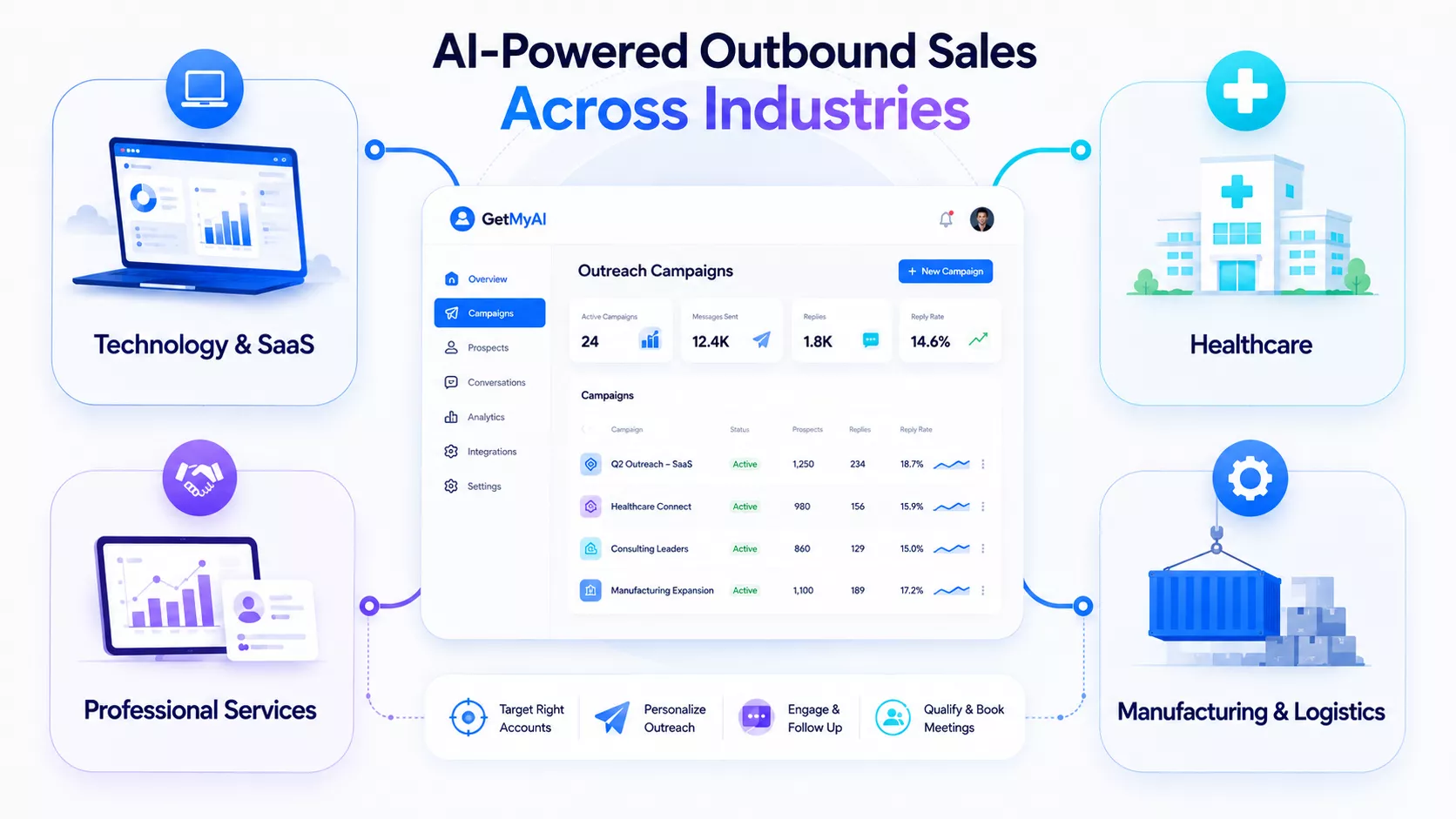
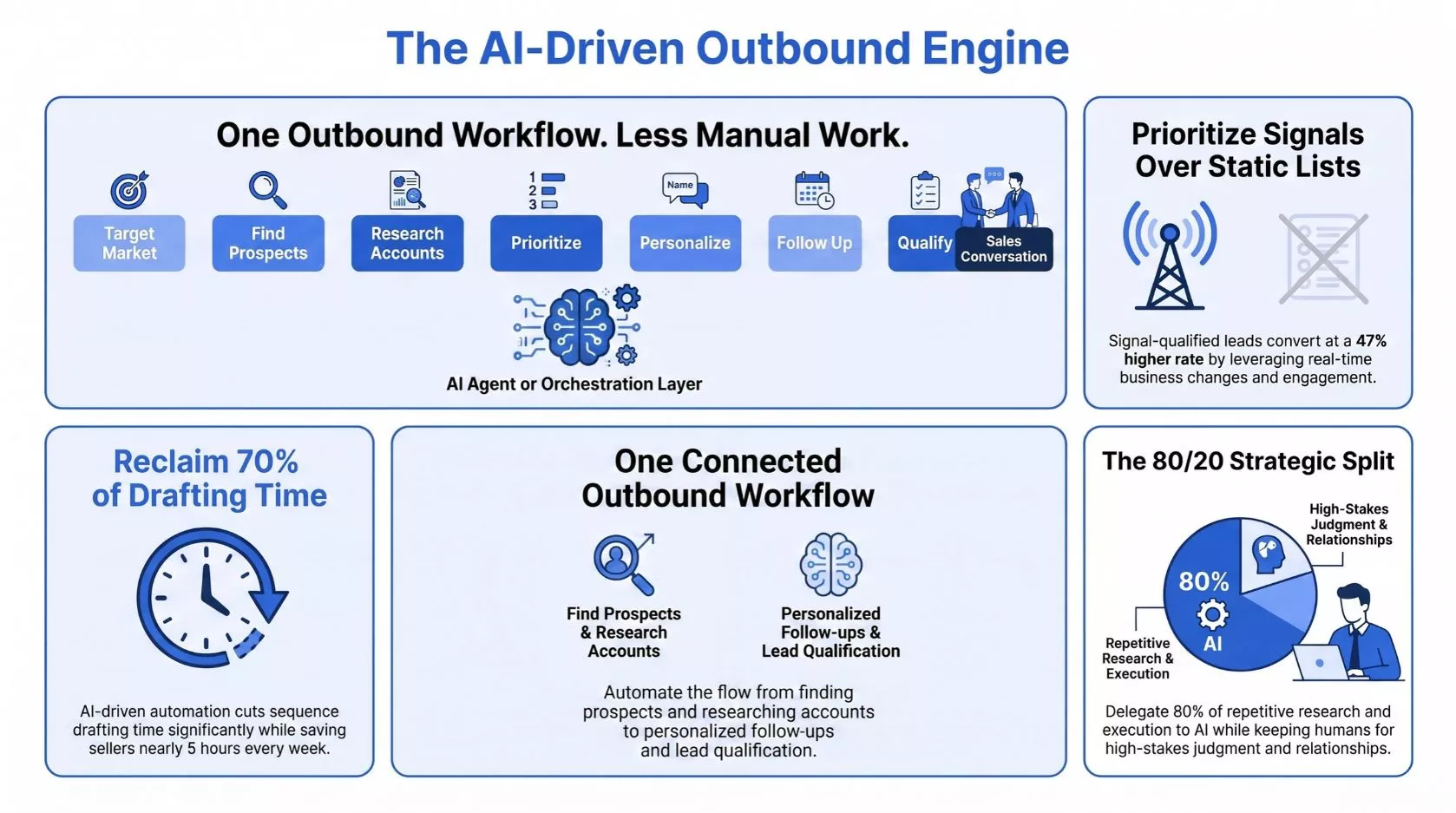
B2B outbound sales is becoming harder to manage manually. Sales teams still spend hours finding prospects, researching accounts, identifying decision-makers and keeping up with follow-ups. Benefits of AI in Sales go beyond saving time: better prospect research…
Experience Boost
Create. Deploy. Engage. With GetMyAI
Launch GPT-powered conversations that engage, support, and convert — all in one platform.
AI Chatbots in Pharma: 10 High-Impact Industry Use Cases for 2026
getmyai
Apr 29, 2026
AI chatbots in pharma
conversational AI pharmaceutical industry
healthcare AI chatbot platform
pharmaceutical chatbot solution
AI chatbot use cases pharma
Key Takeaways
AI chatbots in pharma now act as execution layers, replacing fragmented workflows with real-time, structured interactions across patient, HCP, operational, and commercial systems.
Pharma adoption depends on integrating conversational AI into existing workflows, enabling continuous engagement, faster decision-making, and automated data structuring without infrastructure changes.
The highest impact comes from full deployment across patient support, HCP engagement, internal operations, and commercial workflows, not isolated use cases or partial implementations.
Performance depends on tracking engagement, response speed, and unanswered queries, ensuring continuous improvement and maintaining accuracy in regulated, high-stakes pharmaceutical environments.
The shift from support systems to execution systems enables autonomous workflows, while human oversight ensures compliance, accuracy, and safe adoption in clinical and regulatory contexts.
If you look at how support and communication are handled in pharma today, much of it still depends on documents, emails, and systems that don’t talk to each other. That usually leads to delays, repeated queries, and gaps in consistency. Conversational AI in the pharmaceutical industry is being introduced to manage this more reliably. It allows teams to respond in real time, keep interactions structured, and handle communication across channels without losing context or control over compliance requirements.
In 2026, AI chatbots in pharma are used as intelligent agents across patient support, HCP engagement, internal operations, and commercial workflows. They automate interactions like adherence tracking, medical information delivery, trial screening, and lead qualification, while maintaining compliance through controlled data, real-time responses, and structured improvement workflows.
10 High-Impact Use Cases of AI Chatbots in Pharma (2026)
AI chatbot use cases in pharma now include supporting real-time interactions across patient, HCP, operational, and commercial workflows. These pharmaceutical chatbot solutions replace fragmented processes with structured, real-time interactions that improve speed, accuracy, and scalability.
1. Medication Adherence & Real-Time Reminders
Patients relied on alarms and manual tracking, leading to missed doses and poor adherence due to a lack of context. AI-powered medical chatbots engage with patients in two-way conversations, identify reasons for missed doses, and provide contextual guidance or escalation.
A 2025 study showed statistically significant improvement in adherence (p=0.001) and reduced diabetes distress. A virtual health assistant shifts adherence from reminders to behavioral intervention.
2. Symptom Triage & Care Navigation
Patients searched for symptoms online or waited for overloaded support lines, increasing delays and misinformation. Chatbots assess symptoms using conversational inputs and direct patients to appropriate care levels instantly.
Bots achieved 94% patient satisfaction in triage accuracy (2026 data). Conversational chatbot for pharma organizations reduces unnecessary clinical load by filtering 40–50% routine queries.
3. Financial Assistance & Copay Onboarding
Patients faced long forms and delays to verify insurance or eligibility for financial programs. AI chatbots integrate with billing workflows to verify eligibility and guide document submission in real time.
Pharma organizations report a 25–50% reduction in onboarding administrative costs. Automating customer engagement in the pharmaceutical industry improves conversion at the point of prescription.
4. Clinical Trial Recruitment & Pre-Screening
Recruitment depended on static campaigns and manual screening, resulting in high drop-offs. Chatbots pre-screen patients 24/7 against eligibility criteria and schedule site visits automatically. AI-driven trial workflows reduced timelines by up to 80% in certain cases. This pharmaceutical chatbot solution converts passive interest into qualified participation instantly.
5. Instant Medical Information Requests (MIRs)
HCPs waited 3–5 days for responses from Medical Science Liaisons. AI chatbots retrieve answers from approved medical libraries in seconds using structured knowledge retrieval. Response times reduced to under 5 seconds, with 87% queries resolved without escalation. Using an AI chatbot helps pharma teams to make real-time decisions during patient consultations.
6. Automated Sample Ordering & Tracking
Doctors relied on rep visits or legacy portals to request drug samples. Chatbots process sample requests via messaging platforms and provide real-time tracking updates. Simplified workflows increase HCP engagement rates by 30–40%. Pharma virtual health assistant models bring “consumer-grade” convenience into clinical workflows.
7. Dosing & Drug Interaction Support
HCPs manually checked prescribing information for dosing and interactions, increasing cognitive load. AI chatbots provide instant, label-based dosing guidance using patient-specific inputs like weight or age.
Domain-trained bots achieve 94–98% accuracy in dosing queries. Chatbot for pharmaceutical companies reduces prescription errors in high-pressure environments.
8. Regulatory & Compliance Documentation Support
Teams manually reviewed documents for consistency, causing delays and errors. AI chatbots pre-screen documents, identify inconsistencies, and assist with version control. 20–30% time savings and improved accuracy in regulatory documentation workflows. An AI medical chatbot in enterprise systems takes teams from manual review to validation roles.
9. Pharmacovigilance Intake & Reporting
Adverse events were manually logged from calls or emails, leading to delays and inconsistencies. Chatbots capture structured safety data directly from conversations and prepare audit-ready reports. AI-driven PV systems support scalability in a market projected to reach $732M by 2034. Pharmaceutical chatbot solutions enable real-time safety signal detection and structured reporting.
10. Omnichannel Lead Qualification & Engagement
Leads from campaigns remained unengaged for days, reducing conversion potential. Chatbots initiate conversations instantly, qualify intent, and route leads to sales teams in real time. Conversational AI improves lead qualification efficiency by 45%. Pharmaceutical customer engagement automation converts interest into an actionable pipeline instantly.
Use of AI chatbots in pharma now spans patient care, clinical engagement, operations, and revenue workflows, delivering measurable improvements in adherence, response speed, and operational efficiency across the pharmaceutical value chain.
Put These Use Cases into Action
Create your AI setup and begin automating high-impact pharma workflows from day one.
Traditional pharma systems fail at execution due to fragmentation, delays, and a lack of real-time coordination. These gaps limit how effectively a pharmaceutical automation chatbot can operate unless workflows are restructured at the interaction level.
Fragmented Systems Across Core Infrastructure
Pharma operations run across disconnected systems like LIMS, CDMS, and ERP, each handling isolated data layers without real-time synchronization. This fragmentation prevents unified execution, forcing teams to manually bridge gaps instead of enabling continuous workflows through a pharma digital assistant compliance-ready system.
Manual Handoffs Between Teams
Pharma workflows depend heavily on sequential handoffs between departments, such as medical, regulatory, and commercial teams. Each transition introduces delays, miscommunication risks, and duplication of effort, slowing down execution where a pharmaceutical automation chatbot could otherwise enable direct, structured task flow.
Document-Heavy, Static Workflows
Most pharma processes rely on static documents like PDFs, reports, and submissions, which require manual navigation and interpretation. This creates bottlenecks in accessing relevant information, limiting how a chatbot for pharmaceutical companies can deliver contextual, real-time responses without structured data layers.
Lack of Real-Time Information Access
Teams often struggle to access updated data instantly due to system delays and fragmented storage. This impacts decision-making speed and response accuracy, especially in clinical and operational scenarios where a digital pharma assistant requires immediate, validated information retrieval.
High Clinical Trial Enrollment Failure Rates
Clinical trial workflows remain inefficient, with 86% of trials failing to meet enrollment timelines. This reflects a lack of continuous engagement, automated pre-screening, and real-time coordination, all of which a pharmaceutical chatbot can directly address through structured interaction layers.
Operational Inefficiencies Across Workflows
Pharma teams spend significant time on repetitive coordination, data validation, and manual tracking across systems. These inefficiencies reduce execution speed and scalability, highlighting the need for an intelligent chatbot for pharmaceutical workflows to convert fragmented processes into streamlined, automated processes.
The Four Pillars of AI Chatbot Adoption in Pharma
AI chatbots in pharma operate across four core pillars that align directly with the pharmaceutical value chain. A healthcare AI chatbot platform becomes an execution layer across patient, clinical, operational, and commercial systems.
Pillar
Where It’s Used
Execution Role of AI
Impact
Patient Support
Post-prescription, adherence, patient lifecycle
Handles continuous patient interactions, education, and guidance through conversational workflows
Converts one-time interactions into continuous engagement, improving adherence and reducing drop-offs across treatment journeys
HCP Engagement
Clinical decision support, medical communication
Delivers instant, context-aware medical information and structured interactions with healthcare professionals
Removes delays in information access, enabling real-time decision-making during patient care
Internal Operations
Regulatory, documentation, compliance workflows
Automates document navigation, validation support, and internal query handling using approved knowledge sources
Shifts teams from manual coordination to structured execution, improving speed and consistency across regulated processes
Commercial Workflows
Marketing, lead management, engagement funnels
Engages, qualifies, and routes interactions in real time across channels using conversational flows
Transforms static campaigns into dynamic, real-time engagement systems that improve conversion and pipeline efficiency
Enterprise AI chatbot solutions for pharma succeed when deployed across all four pillars together, not in isolation. Partial adoption limits impact, while full-stack deployment aligns execution across the entire pharmaceutical lifecycle.
How Conversational AI is Improving Pharmaceutical Work
The delay usually comes from transitions across systems and teams. With pharma omnichannel engagement with AI, those steps are handled within the interaction itself, allowing workflows to progress without separate coordination.
Instant responses replace queue-based delays, enabling immediate action without waiting on approvals or callbacks.
Conversations persist across channels, improving adherence and long-term engagement.
Inputs are captured in usable formats, enabling real-time analysis and workflow triggers.
Step-by-step interactions reduce drop-offs and support customer engagement.
From Static Systems to Real-Time Interaction Layers
Conversational AI in the pharmaceutical industry is replacing static interfaces with interaction-driven systems where users complete actions in real time instead of navigating disconnected tools. This shift reflects a change in user behavior from searching and waiting to interacting and completing workflows within a single conversation layer.
From PDFs to Conversations
Static documents are being replaced by dynamic interactions where users ask questions and receive contextual answers instantly. A pharma AI assistant eliminates manual searching and delivers relevant information within the flow of interaction.
Not Portals, Messaging Channels
Traditional portals are giving way to messaging environments like WhatsApp, Telegram, and web-based chat, where users already engage. This shift enables omnichannel engagement without requiring users to switch platforms or learn new systems.
Requests turned into Guided Workflows
Instead of submitting requests and waiting for responses, users are guided step-by-step through processes such as onboarding, support, or qualification. This reduces drop-offs and ensures workflows move forward without manual follow-ups.
Interfaces are now Interaction Layers
Pharma systems are evolving into interaction layers that sit across channels and systems, enabling continuous engagement. Light adoption of digital twin concepts allows these layers to simulate user journeys and adapt responses in real time.
The transformation is technological and behavioral. Users no longer tolerate fragmented systems. They expect immediate, guided, and continuous interactions across every touchpoint.
How Pharma Teams Actually Deploy AI
Pharma teams deploy AI through a structured workflow that fits into existing systems without requiring infrastructure changes. The process focuses on defining scope, training with approved knowledge, configuring the interaction layer, launching across channels, and continuously improving based on real usage.
Step 1: Define role and scope
Identify whether the system supports patient, HCP, or internal workflows to ensure controlled execution aligned with compliance requirements.
Step 2: Train with approved knowledge
Upload validated documents and structured responses so outputs remain accurate, consistent, and fully dependent on controlled knowledge sources.
Step 3: Customize the interaction experience
Configure interface, tone, and messaging to match brand guidelines and ensure communication aligns with regulatory standards across use cases.
Step 4: Deploy across interaction points
Embed into websites and messaging channels to enable real-time engagement without modifying backend systems or existing infrastructure.
Step 5: Monitor and improve continuously
Review interactions, identify gaps, and refine responses using real usage data to maintain accuracy and improve performance over time.
Start Your Pharma AI Journey
Sign up to build AI agents that manage interactions, improve workflows, and scale pharma operations instantly.
Tracking these metrics ensures a pharmaceutical CRM chatbot integration performs consistently across workflows and improves over time.
Engagement Rate: Measures interaction depth and user participation
Response Time: Indicates the speed of replies across interactions
Unanswered Queries: Identifies gaps in knowledge and coverage
Channel Adoption: Tracks usage across platforms and touchpoints
Geographic Reach: Shows the distribution of users across regions
The Future of Pharma Interaction Models
Conversational AI in the pharmaceutical industry is shifting from support systems to execution systems that actively drive workflows. Instead of responding to queries, these systems now coordinate actions across patient, clinical, and operational layers. Autonomous workflows reduce dependency on manual routing, while human-in-the-loop validation ensures compliance remains intact in regulated environments supported by HIPAA-compliant AI chatbot standards.
AI-driven systems are enabling continuous engagement through digital companions that support patients across their full journey. Adaptive clinical trials adjust recruitment and monitoring in real time, improving execution speed and reducing delays. AI-managed patient journeys replace fragmented touchpoints, creating connected experiences that improve adherence, follow-ups, and long-term outcomes.
Conversational AI for pharma field force automation is transforming how reps and medical teams operate. Field teams can access insights, log interactions, and plan actions through natural language instead of navigating complex systems. This shift supports outcome-based pharma models, where continuous interaction and structured data directly influence treatment effectiveness and commercial performance.
Why Pharma Teams Prefer GetMyAI
GetMyAI is built for pharma teams that need controlled, scalable execution across patient, HCP, and internal workflows. It enables teams to deploy AI agents using approved knowledge sources, ensuring accuracy, compliance, and consistency without changing existing infrastructure.
Key Capabilities
Train agents on controlled documents and structured Q&A for compliant, reliable responses
Deploy across website, WhatsApp, Telegram, and Slack for real-time engagement
Support appointment booking with integrated scheduling and fallback logic across tools
Customize interface, tone, and access from a central Dashboard without coding
Continuously improve using interaction data and built-in analytics tracking
Built for Decision-Ready Pharma Teams
For teams evaluating the best AI chatbot platform for pharmaceutical companies, the advantage lies in control and execution. GetMyAI supports enterprise AI chatbot solutions for pharma by combining structured knowledge, multi-channel deployment, and continuous improvement, allowing teams to scale interactions while maintaining accuracy and regulatory alignment.
FAQs
How can pharma companies use conversational AI?
Pharma companies use conversational AI to automate patient support, deliver medical information, pre-screen clinical trial participants, and manage internal workflows. It enables real-time interactions, structured data capture, and continuous engagement across patient, HCP, and operational processes without increasing manual workload.
What are the top pharma chatbot use cases?
Top use cases include medication adherence support, symptom triage, clinical trial pre-screening, medical information delivery, pharmacovigilance intake, and lead qualification. These use cases improve response speed, reduce manual effort, and enable structured, scalable execution across pharmaceutical workflows.
How much does a pharma AI chatbot cost?
Pharma AI chatbot costs vary based on usage, model complexity, and deployment scale. Most platforms follow a subscription or usage-based pricing model, allowing predictable costs while scaling interactions without additional staffing or infrastructure investment.
How can AI chatbots improve patient adherence in pharma?
AI chatbots improve adherence by engaging patients in two-way conversations, identifying reasons for missed doses, and providing contextual guidance or reminders. This shifts adherence from passive alerts to active behavioral support, improving consistency and long-term treatment outcomes.
What is the ROI of AI chatbots in pharma marketing?
AI chatbots improve marketing ROI by qualifying leads instantly, reducing response delays, and increasing conversion rates. They enable real-time engagement, turning static campaigns into interactive experiences that improve pipeline efficiency and maximize return on marketing investments.
We’ve noticed that a surprising amount of a sales rep’s day is still spent preparing to sell rather than actually selling. Building lists, researching accounts, finding the right contacts, writing outreach and chasing follow-ups can consume hours before a mean…
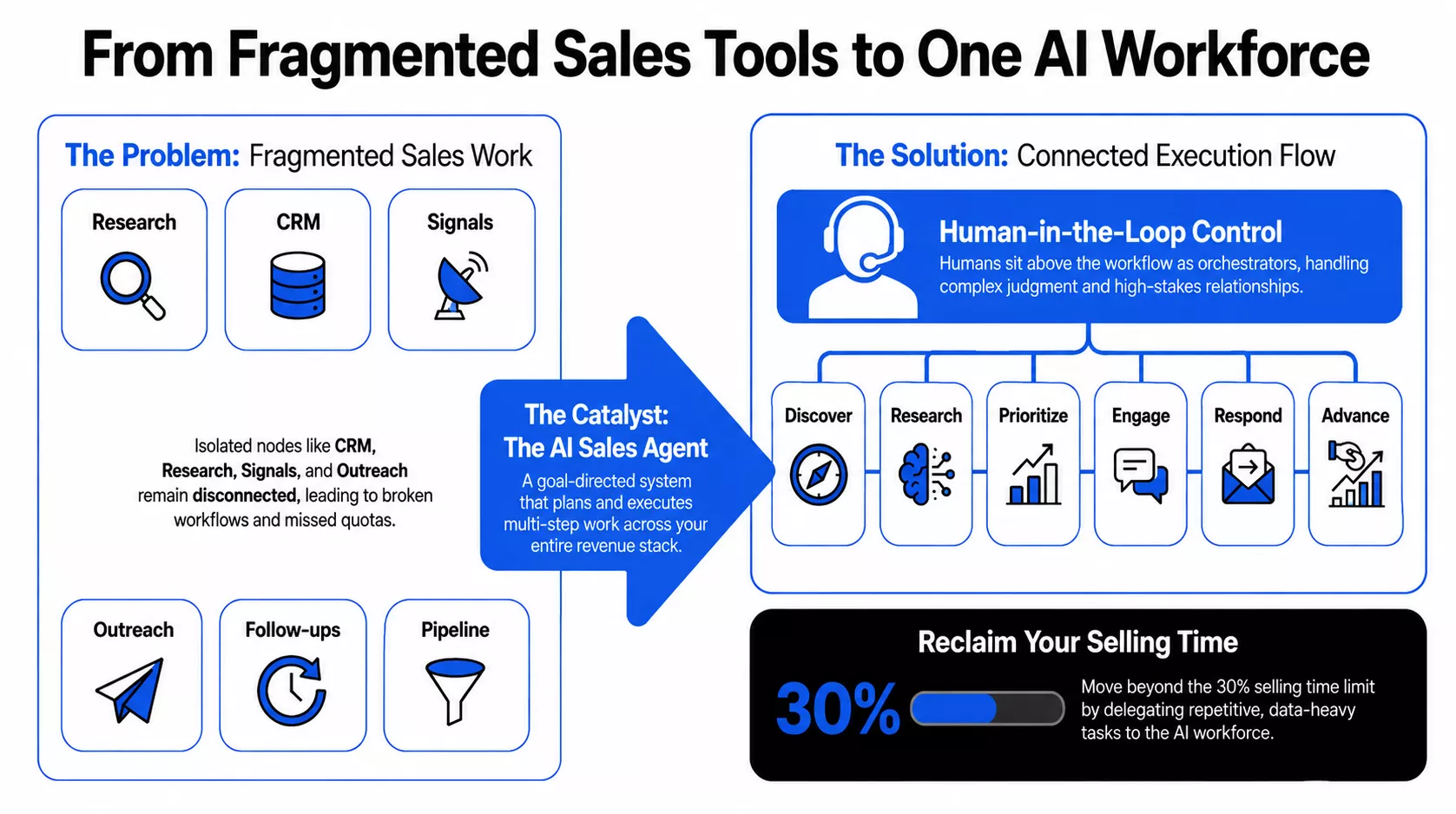
Sales teams have more AI than ever, yet the productivity problem remains. Sales AI Agents can take repetitive work off your team's plate, but adding another tool does not automatically improve execution. In 2026, 78% of B2B sellers missed quota in 2025, w…