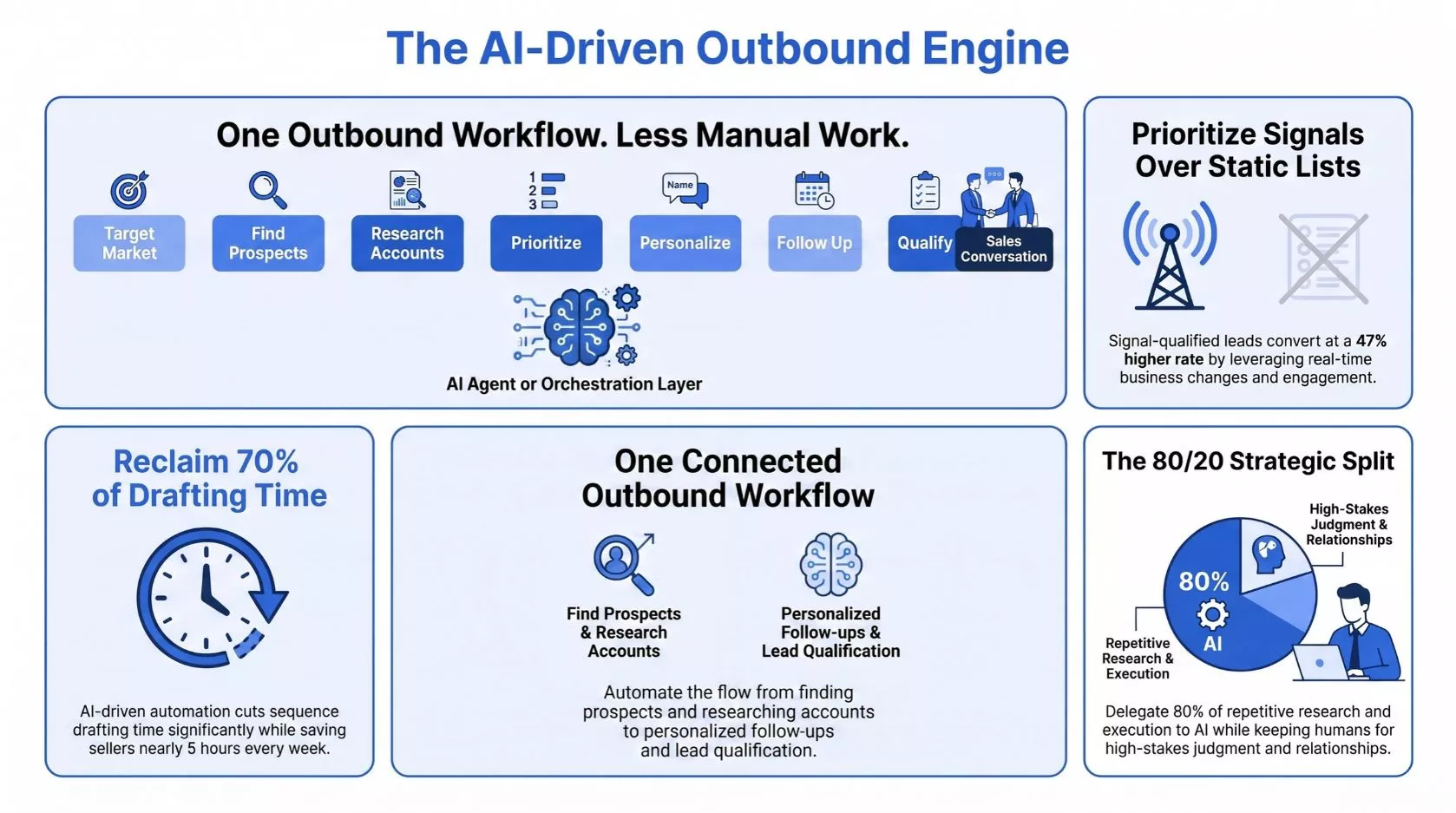
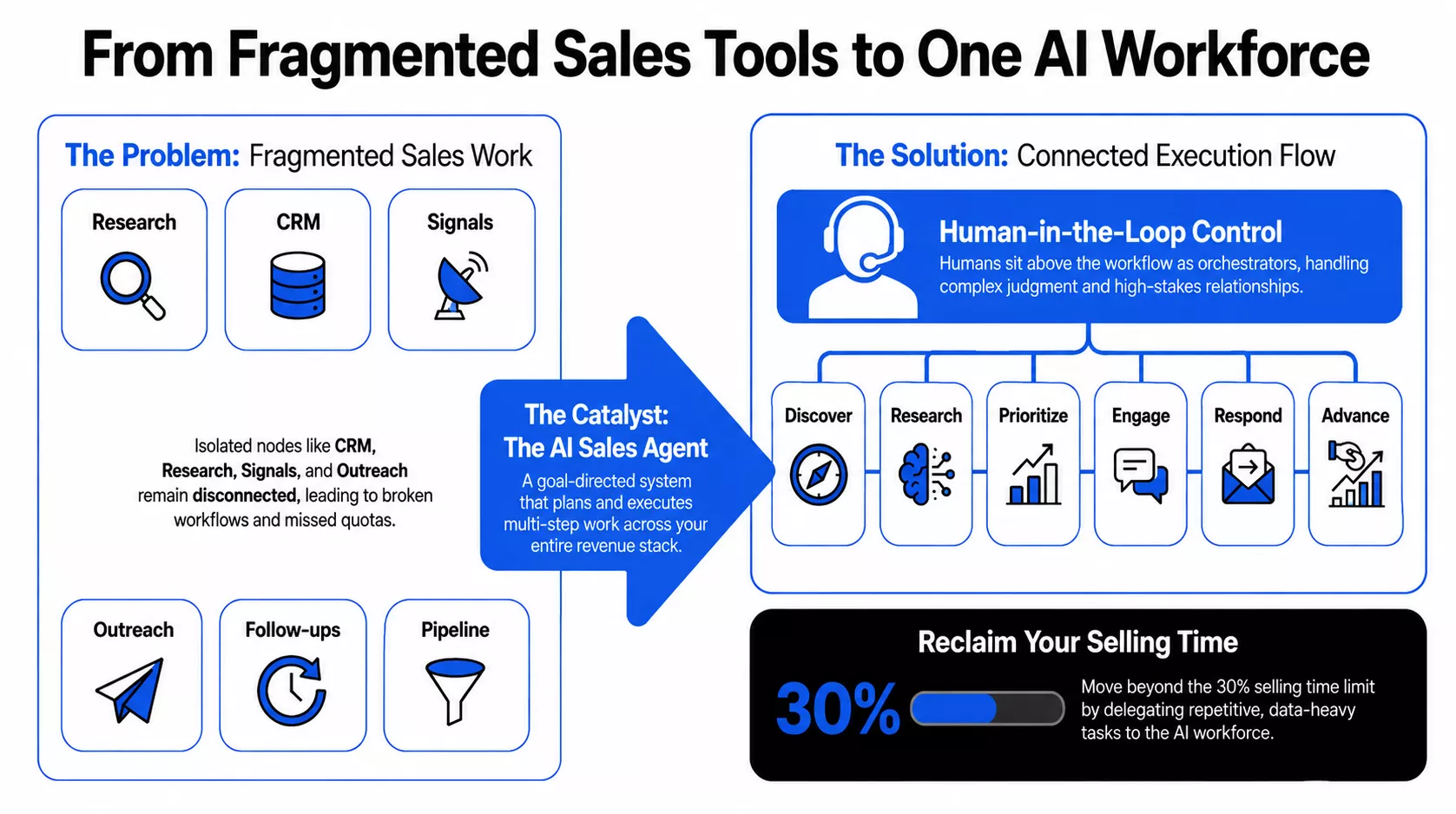
B2B outbound sales is becoming harder to manage manually. Sales teams still spend hours finding prospects, researching accounts, identifying decision-makers and keeping up with follow-ups. Benefits of AI in Sales go beyond saving time: better prospect research…
Experience Boost
Create. Deploy. Engage. With GetMyAI
Launch GPT-powered conversations that engage, support, and convert — all in one platform.
Conversational Commerce vs E-commerce Websites: What Works Better?
getmyai
Apr 3, 2026
conversational commerce vs ecommerce
conversational commerce platform
AI chatbot for ecommerce
Key Takeaways
Conversational commerce improves online sales by guiding users instantly, reducing wait time, and helping faster decisions across the full buying journey.
E-commerce websites still matter for structure and payments, but they lack real-time interaction needed to support quick user decisions.
An AI chatbot for e-commerce gives instant answers, personalized suggestions, and ongoing support, improving conversions and reducing abandoned shopping sessions.
Businesses that combine conversational commerce with websites build stronger systems that deliver information while guiding users in real time.
As users expect speed and clear answers, brands using conversational AI gain better engagement, more conversions, and improved customer experience.
E-commerce used to be simple. You built a website, drove traffic, and hoped visitors would figure things out. Today, that model is breaking. Users don’t want to browse anymore. They don’t want to click through pages, compare tabs, or search endlessly. They want answers. They look for guidance when they need it the most. This is why many brands are moving toward using an AI chatbot for e-commerce to replace slow, self-serve browsing with real-time interaction.
The question is no longer “How do I bring users to my website?”
It’s now “How do I help users decide faster?”
What is Conversational Commerce?
Conversational commerce is where online shopping meets real-time interaction.
Instead of navigating a website alone, users can:
Ask questions directly
Get product recommendations
Clarify doubts instantly
Complete actions within the conversation
It mirrors how people behave in real life. When someone walks into a store, they don’t read product labels for 20 minutes. They ask a salesperson. Conversational commerce brings that same experience online.
This is why businesses are adopting:
AI-powered shopping assistants
Chat-based product discovery
Real-time customer interaction tools
Messaging-driven sales flows
And it’s not a small trend. Global spending on conversational commerce is projected to reach $290 billion, showing that this shift is already underway.
Conversational Commerce Or E-commerce: The Real Difference
The difference isn’t just technology. It’s how decisions happen.
Factor
Traditional E-commerce
Conversational Commerce
User Experience
Browse and search
Ask and get answers
Speed
Slow decision-making
Instant clarity
Effort
High (manual navigation)
Low (guided interaction)
Conversion
1–3% average
Higher with guidance
Engagement
Passive
Interactive
In e-commerce, users are responsible for figuring things out. And with conversational commerce, the system helps them decide. That shift changes everything.
Why Are Brands Shifting from E-commerce Websites to Conversational Commerce?
E-commerce websites have always been effective at organizing products and enabling transactions. They provide structured catalogs, detailed pages, and the infrastructure needed to scale. But they rely entirely on users to navigate, compare, and interpret information on their own. When questions arise, answers are not immediate, and that delay slows decisions and leads to drop-offs.
Conversational commerce changes how that decision process works. It introduces real-time interaction, where users can ask questions, receive instant answers, and move forward without interruption. With the implementation of an AI chatbot in e-commerce stores, businesses guide users through decisions instead of leaving them to figure things out independently.
This shift does not remove the need for restructuring. Conversational systems depend on accurate data and existing content to function effectively. Without a strong foundation, responses can lack depth, especially in complex scenarios.
The highest-performing systems do not replace e-commerce with conversational commerce. They combine both; websites handle information and transactions, while conversational layers guide decisions in real time.
How to Choose the Right Conversational Commerce Platform for Your Business
The platform should support real-time interactions, enabling users to ask questions and receive immediate, relevant answers during decision-making moments.
It must understand user intent accurately, using your data to provide context-aware responses that guide users effectively through their journey.
Strong integration capabilities are essential, allowing connection with websites, documents, and business tools to ensure complete and reliable responses.
Continuous improvement is critical, where unanswered questions are identified and resolved to enhance accuracy and performance over time.
The goal is not just automation, but a system that becomes more reliable with usage and consistently supports users across interactions.
Why Conversational AI Drives E-commerce Growth Faster
Growth in e-commerce depends on how quickly users move from intent to decision. Every extra second spent searching, comparing, or waiting for clarity increases the chances of abandonment. Conversational AI changes this by introducing real-time responses at every step. Users no longer need to navigate across pages or depend on delayed support. They can ask, understand, and act within the same interaction.
Research from HelloRep.AI indicates that AI-enabled sites see 47% faster purchases than traditional shopping experiences by removing these moments of friction.
Conversational AI in online shopping speeds up decision-making by delivering immediate, relevant answers during the buying journey. Instead of moving through FAQs, product pages, or support channels, users interact directly with a system that understands intent and responds instantly. This removes delays and keeps momentum intact throughout the journey.
What Changes
Users stop searching and start asking
Answers are delivered instantly within the conversation
Recommendations adapt to user intent in real time
Decisions happen without interruption
Impact on Growth
Conversational AI directly improves key performance drivers:
Faster decision cycles: Users move from interest to action quickly
Reduced drop-offs: Questions are resolved before hesitation builds
Speed is no longer a feature. It determines whether a user converts or leaves. Conversational AI is becoming the standard for how users interact, decide, and buy in modern e-commerce.
Real-World Examples of Conversational Commerce
This isn’t theoretical. It’s already happening across industries.
Domino’s
Domino’s has turned conversational commerce into a fully functional ordering system. Customers can place orders directly through chat interfaces without navigating a website or app.
Instead of browsing menus, adding items to a cart, and going through multiple steps, users can simply type their order. The system understands intent, confirms details, and completes the transaction within the same interaction.
What They Changed
Domino’s did not just add a chatbot. It redesigned how ordering works.
The conversation replaces navigation
The order happens inside the interaction
The decision process is compressed into a few seconds
This removes the need for menu exploration, repeated selections, and multi-step checkout flows
Why This Works
The success of this model comes from eliminating delays. When a user wants to order, they already know what they want, do not want to browse again, and they want speed and confirmation. An AI chatbot for e-commerce aligns perfectly with that behavior.
Customer Thought: “I just want to reorder my usual pizza.”
Traditional Flow: Open app, find previous order, add to cart, and then check out
Conversational Flow: “Reorder my last pizza”, Confirm, and Done
Business Impact
This approach delivers measurable advantages:
Faster order completion
Higher repeat purchases
Reduced drop-offs during checkout
Lower dependency on UI-heavy flows
4 Steps to Deploy an E-commerce Website with an AI Chatbot Sales System
This doesn’t mean deleting your website. It means adding a conversational layer that handles decision-making.
Here’s how businesses are doing it:
Step 1: Add a Chat Interface
Deploy an AI chatbot where users can interact instantly.
Step 2: Train the System
Use documents, FAQs, and the website to ensure accurate responses.
Step 3: Guide Conversations
Let the system qualify users, recommend products, and answer questions.
Step 4: Improve Continuously
Use real conversations to identify gaps and improve answers over time.
This turns your website from a static experience into an interactive system.
Conversational Commerce for Small Businesses
This shift isn’t just for large brands. Small businesses benefit even more. Why? Because they can’t afford large support teams, they need faster conversions and rely on every visitor.
Conversational commerce solutions for businesses allow small teams to:
The real cost is not adopting it because every unanswered question is a lost opportunity.
Which is Better for DTC Brands: Conversational Commerce or E-commerce?
The answer isn’t either/or; the winning approach is: E-commerce shows options. Conversational commerce helps users decide.
Websites still matter. But they are no longer enough.
Customer Thought: “I just need to know if this is right for me.” Current Experience: Users move across pages, compare options, and try to find answers on their own. The process slows, confusion increases, and many sessions end without any action.
Now compare that with a guided experience.
Before: Users are left to explore and interpret information independently, moving through pages without clear direction.
After: Users ask a question, receive a direct answer, and move forward with clarity in the same interaction.
This shift works because decisions happen faster when clarity is immediate. When users don’t have to search or interpret, they stay engaged and move forward with confidence. The brands that design for this experience don’t leave progress up to the user; they actively support it at every step.
What’s Next for Conversational Commerce
For Users
Commerce is becoming faster, clearer, and more direct. Instead of navigating pages, they ask questions and expect immediate answers that help them move forward without delay. Every interaction is expected to reduce effort and speed up decisions.
For Businesses
This shift changes how value is captured. Conversations surface intent earlier, shorten the path to action, and increase the chances of conversion. Real-time interaction is no longer an enhancement; it is becoming the standard layer of engagement.
Brands that adapt to this behavior build systems that respond and guide. Those that don’t continue to lose users to experiences that are faster, clearer, and easier to act on.
How GetMyAI Solves the Gaps in Your Conversational Commerce
Most small businesses adopt conversational commerce for speed. The real problem starts after deployment.
Conversations begin to break when the system cannot keep up with real user behavior. Information becomes outdated, context is lost between interactions, and the same unanswered questions appear repeatedly. Over time, the experience degrades, and the same gaps that conversational commerce was meant to eliminate begin to reappear.
This happens because most systems stop at interaction. They respond, but they do not learn.
GetMyAI solves this by turning conversations into a system that keeps improving. Every interaction is recorded, missed questions are identified, and gaps are fixed using Q&A or updated content. Instead of staying static, the AI chatbot learns from real usage and becomes more accurate and reliable over time.
This works because:
Conversations reveal real user intent
Repeated gaps highlight missing knowledge
Structured updates improve future responses
Deployment stays simple. The same system operates across websites and messaging channels like WhatsApp, Telegram, Slack, and Instagram, allowing teams to manage conversations without switching tools or workflows.
Conclusion: The Advantage Now Comes Down to Guidance
E-commerce is still important, but the decision process is evolving. Static pages are no longer enough to guide users. As demand for speed and clarity grows, businesses need AI chatbot systems that respond instantly and support decisions. Conversational commerce enables this by turning passive browsing into active interaction, helping users decide faster and with more confidence.
Websites will continue to play a role, but they cannot carry the entire experience on their own. The advantage now comes from combining information with real-time guidance, ensuring users never feel stuck or uncertain during their journey. Brands that adapt to this will capture more intent and convert more effectively, while others will struggle to keep pace.
The real question is: Are you ready to guide your users or keep making them figure things out themselves?
FAQs
1. How does conversational commerce improve online sales compared to websites?
Conversational commerce improves sales by answering questions instantly, guiding decisions, and using conversational AI for customer engagement to reduce drop-offs and increase conversions.
2. Why are brands shifting from e-commerce websites to conversational commerce?
Brands are shifting because users expect faster decisions, and a conversational commerce platform enables real-time guidance, reducing hesitation and improving conversion efficiency.
3. What is conversational commerce in simple terms?
Conversational commerce allows users to interact with businesses through chat, ask questions, receive recommendations, and complete actions without navigating multiple pages or steps.
4. Can small businesses benefit from conversational commerce?
Small businesses benefit by automating responses, capturing leads faster, and using real-time customer interaction tools to engage users without needing large support or sales teams.
5. Does conversational commerce replace e-commerce websites?
Conversational commerce does not replace websites; it works alongside them by helping users decide faster while websites continue to handle product display and transactions.
We’ve noticed that a surprising amount of a sales rep’s day is still spent preparing to sell rather than actually selling. Building lists, researching accounts, finding the right contacts, writing outreach and chasing follow-ups can consume hours before a mean…
Sales teams have more AI than ever, yet the productivity problem remains. Sales AI Agents can take repetitive work off your team's plate, but adding another tool does not automatically improve execution. In 2026, 78% of B2B sellers missed quota in 2025, w…