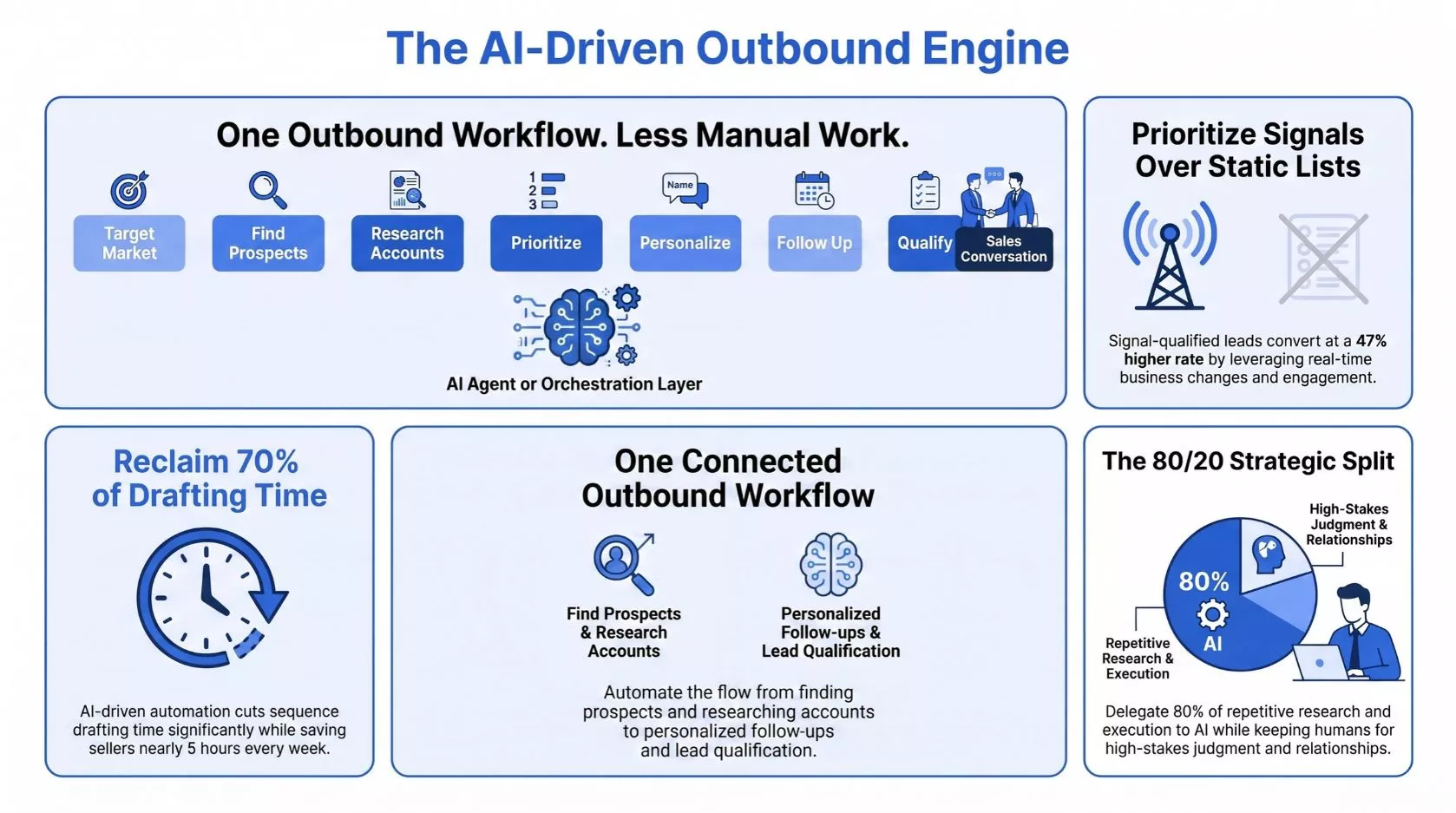
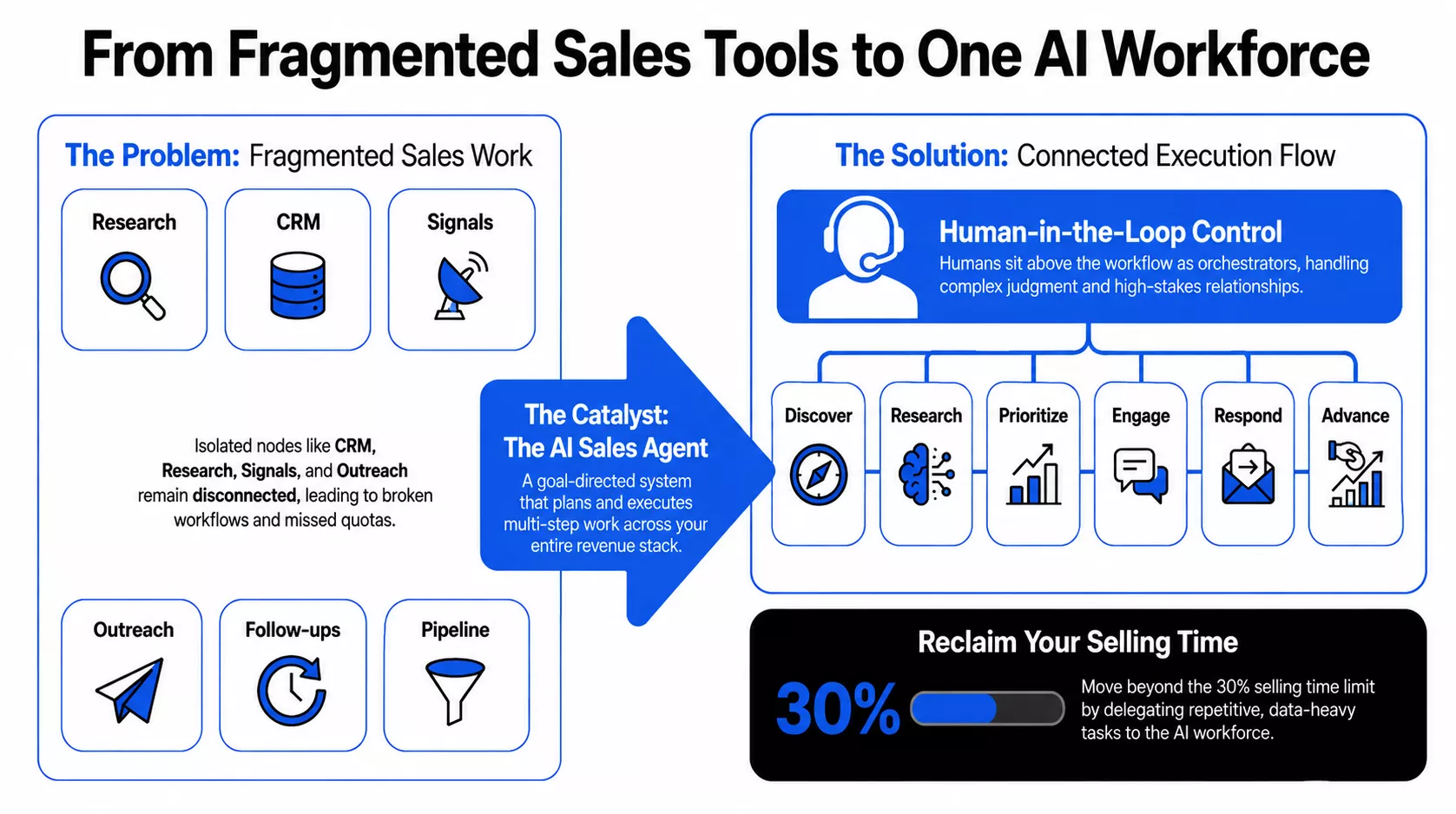
B2B outbound sales is becoming harder to manage manually. Sales teams still spend hours finding prospects, researching accounts, identifying decision-makers and keeping up with follow-ups. Benefits of AI in Sales go beyond saving time: better prospect research…
Experience Boost
Create. Deploy. Engage. With GetMyAI
Launch GPT-powered conversations that engage, support, and convert — all in one platform.
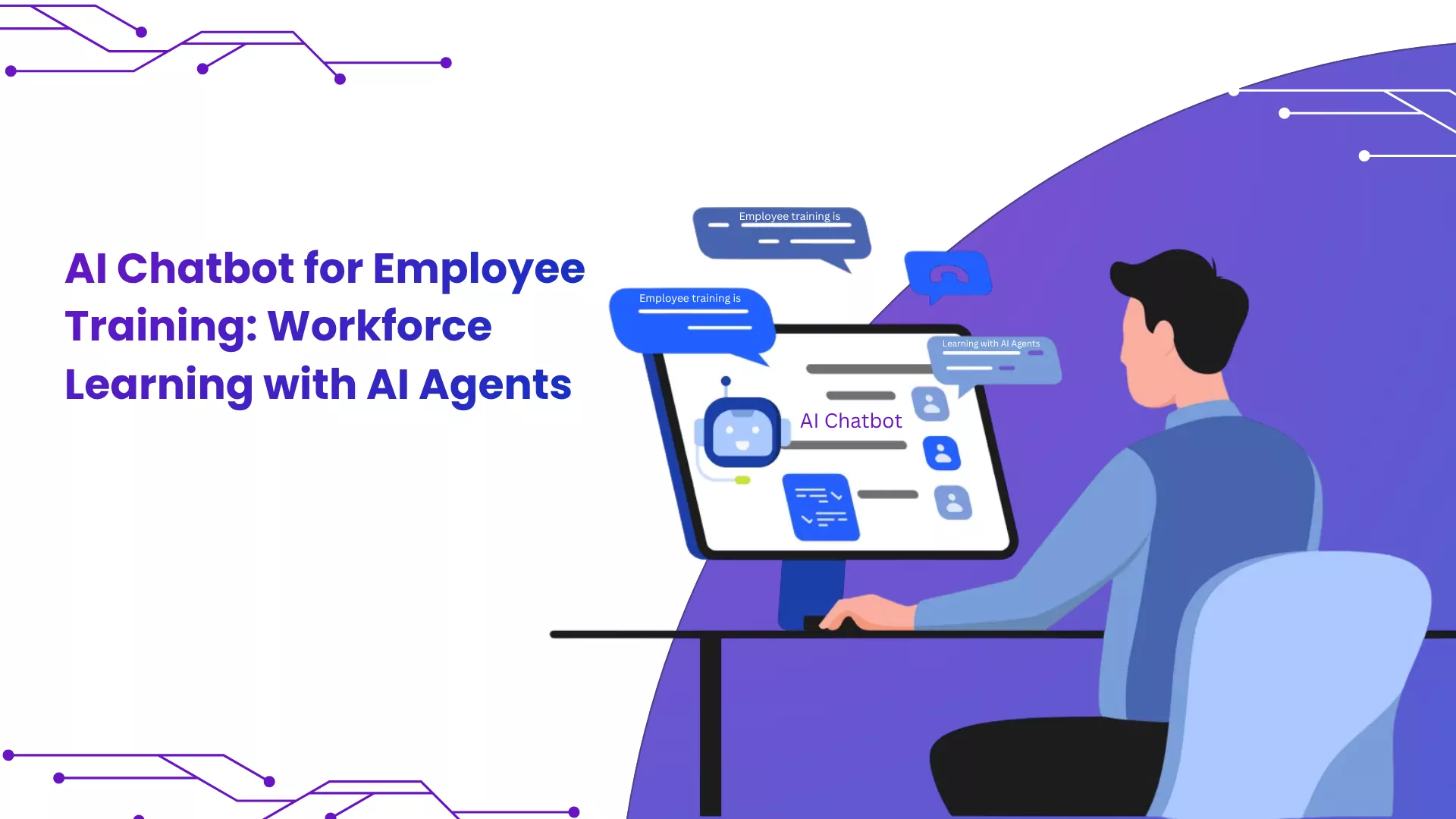
AI Chatbot for Employee Training: Workforce Learning with AI Agents
getmyai
Mar 25, 2026
AI chatbot for employee training
AI agent chatbot training
AI training solutions for employees
AI-powered employee training
Key Takeaways
Employee training is moving from fixed sessions to real-time learning inside daily work.
An AI chatbot for employee training gives quick answers inside tools employees already use.
AI agent chatbot training helps employees learn again and again, not just once.
Companies using AI training see lower costs, faster learning, and better engagement.
AI training is now a core system, not just an extra HR tool.
Employee training is no longer isolated within HR systems. It has evolved into a real-time part of daily operations.
The way teams work has changed. Employees are expected to learn while executing tasks, not before them. Traditional models built on learning management systems, scheduled sessions, and static documentation struggle to support this shift. Information becomes outdated quickly, and employees often find themselves searching for answers instead of applying knowledge.
This is where AI chatbots for employee training systems are redefining how learning works inside organizations.
Instead of relying on static content, companies are now deploying intelligent assistants that deliver answers, guidance, and learning in real time. These systems go beyond storing information; they actively support employees in real time. This transition is turning training from a periodic activity into a continuous system embedded in daily workflows.
The Shift from Traditional Training to AI-Powered Employee Training
The biggest problem with traditional training is timing. Employees learn at one time and are expected to use it later. In real work, most of that learning is forgotten before they actually need it.
Traditional training models also assume that every employee learns at the same pace and needs the same information. This creates a gap between training content and actual job requirements.
In contrast, employee training with AI agents changes the way entirely. Learning becomes part of the workflow. Instead of attending sessions, employees ask questions as they work and receive immediate answers. This removes friction and allows learning to happen exactly when it is needed.
For example, an employee doing a task can use an AI chatbot to learn a process, check a policy, or fix a problem quickly. There is no waiting, no need to ask a trainer, and no need to look through files.
This shift can be summarized simply:
Training is no longer scheduled
Learning is no longer static
Support is no longer delayed
It becomes continuous, adaptive, and embedded. This is the foundation of conversational AI training systems, where knowledge is delivered through interaction rather than content consumption.
How the AI Agent Chatbot for Training Systems Works
Such a system works as a real-time assistant that sits within the employee’s workflow and provides guidance based on context.
The system goes beyond keyword search by understanding intent and delivering precise, contextual answers that pick the right information and give a simple answer. The experience feels like guidance, not like looking through results.
These systems are built on a combination of:
Knowledge bases and internal documents
Q&A systems for structured learning
Workflow integrations, such as Slack or internal tools
Continuous improvement loops based on real conversations
For example, when an employee asks about a task, the AI chatbot guides them step by step. If it cannot answer, the question is saved, reviewed, and added to Q&A, so the system gives better answers next time.
This creates a loop:
Employees ask real questions
The system responds
Gaps are identified
Knowledge is improved
Over time, the system becomes more accurate and aligned with actual business needs.
Benefits of AI in Corporate Training Programs
The adoption of AI training solutions for employees is driven by measurable improvements across performance, cost, and scalability.
Personalized Learning at Scale
One of the biggest advantages is the ability to deliver personalized learning experiences with AI. Every employee receives answers based on their context, role, and query. This eliminates the limitations of one-size-fits-all training.
Instead of following a fixed curriculum, employees learn based on real needs. This significantly improves retention and engagement.
Faster Employee Upskilling
Employee upskilling with AI makes learning happen right away. Employees do not wait for training sessions or support teams. They use the AI chatbot to fix problems and learn new skills in real time.
This reduces onboarding time and accelerates productivity.
Cost and Time Efficiency
AI cuts down the need for trainers and support teams. Routine questions are handled by the chatbot, helping human resources focus on tasks that need more attention.
Organizations using employee training automation AI are seeing significant reductions in operational costs while increasing efficiency.
Improved Engagement
Traditional training often feels formal and disconnected. AI-driven systems make learning conversational and interactive.
Employees engage more because the experience feels natural and relevant.
Scalable Global Training
For distributed teams, consistency is a major challenge. AI systems ensure that every employee receives the same quality of information, regardless of location.
This makes AI training solutions for the remote workforce highly effective, especially for global organizations.
AI Skills Development Tools and Continuous Learning
Skills are evolving rapidly. Static training systems cannot keep up with the pace of change.
These tools play a key role by tracking how employees work, finding gaps, and giving helpful learning at the right time. Instead of waiting for training sessions, employees get answers and support while they are working.
For example:
A sales employee gets real-time suggestions during a conversation
A support agent receives instant answers to customer queries
A new employee is guided step by step through onboarding tasks
These are examples of AI coaching assistants for employees that support users during work, not just training. The AI does not replace training. It helps employees learn while doing tasks in real time.
AI Chatbots in HR and Workplace Training Automation
HR roles are shifting today. Instead of handling the same queries again and again, HR teams now focus on strategy and better employee support.
This reduces the volume of repetitive tasks and allows HR teams to focus on higher-value activities.
In markets like the USA, workplace training automation trends show companies adding AI chatbots to training systems. The focus is not just on automation, but also on giving better, faster, and more personal support.
The result is a faster onboarding process, better employee experience, and reduced operational load.
How to Implement AI-based Training Solutions for Employees
Implementing such solutions for employees requires a structured approach.
Step 1: Identify Training Gaps
Start by identifying areas where employees struggle:
Onboarding
Customer support
Sales processes
Internal operations
Step 2: Choose the Right System
Look for systems that offer:
Conversational AI capabilities
Integration with existing tools
Scalability
Step 3: Integrate with Workflows
AI should be embedded into tools employees already use, such as Slack or internal systems. This ensures adoption and usability.
Step 4: Start with High-Impact Use Cases
Focus on areas where AI can deliver immediate value, such as internal support or onboarding.
Step 5: Measure and Improve
Track performance using:
Engagement rates
Response accuracy
Resolution time
Use real conversations to improve the system through Q&A updates and document training.
Challenges and Considerations
AI gives many benefits, but teams must solve some problems first. Good results come when automation is balanced with control and regular improvement.
Challenge
Impact
What to Focus On
Adoption resistance
Low usage
Gradual onboarding and clear use cases
Poor data quality
Inaccurate responses
Maintain updated and clean data
Integration gaps
Workflow friction
Align with existing tools
Over-automation
Loss of control
Keep human oversight
Unclear use cases
Low adoption and confusion
Define clear use cases
Why Choose GetMyAI for Employee Training
GetMyAI transforms internal knowledge into intelligent training systems. We help you to implement an AI chatbot to help in employee training without complexity.
Businesses can reduce training time and improve employee performance by using their internal data and deploying it on websites and Slack. These AI chatbots give instant support, answer employee questions, and guide users step by step through tasks.
All interactions are captured inside the Dashboard:
Conversations are reviewed in Activity: Employee questions help teams see where users get stuck and where training is not clear or incomplete.
Gaps are identified through unanswered questions: Unanswered queries show missing parts, so teams can improve areas where employees struggle most.
Improvements are made using Q&A: Teams adds common questions to Q&A, so others can get instant and correct answers during work.
Performance is tracked through Analytics: Teams track usage and feedback to see what’s working and where training needs improvement.
This builds a continuous learning loop that gets better over time. GetMyAI not only automates replies. It helps businesses create a scalable training system that grows as their team and needs expand.
Conclusion
Employee training is no longer about delivering information. It enables employees to do their work better in real time. Companies using these agents create systems where learning never stops, support is quick, and improvement keeps happening.
The shift is clear: training is moving from fixed sessions to a system that works all the time. Businesses using this model do more than train faster. They build teams that keep learning, adjust quickly, and perform better daily. With GetMyAI, we turn employee questions into a learning loop that keeps improving. Instead of using static training, our AI chatbot helps your team learn during work and improve over time.
FAQs
1.Can AI replace traditional employee training?
We enhance training with real-time support, but structured programs still matter for foundational knowledge and long-term learning.
2.What are the benefits of AI in learning and development?
Our platform improves personalization, reduces training costs, speeds up learning, and keeps employees engaged during daily work.
3.How are AI chatbots used in employee training?
We provide instant answers, guide tasks, and support employees directly within their workflow without interrupting their work.
4.How to implement AI in corporate training?
We recommend starting with key use cases, integrating into workflows, and improving continuously using real employee interactions.
5.How do AI agents help in skill development?
Our agents identify gaps, guide employees in real time, and help them learn while performing actual tasks.
We’ve noticed that a surprising amount of a sales rep’s day is still spent preparing to sell rather than actually selling. Building lists, researching accounts, finding the right contacts, writing outreach and chasing follow-ups can consume hours before a mean…
Sales teams have more AI than ever, yet the productivity problem remains. Sales AI Agents can take repetitive work off your team's plate, but adding another tool does not automatically improve execution. In 2026, 78% of B2B sellers missed quota in 2025, w…