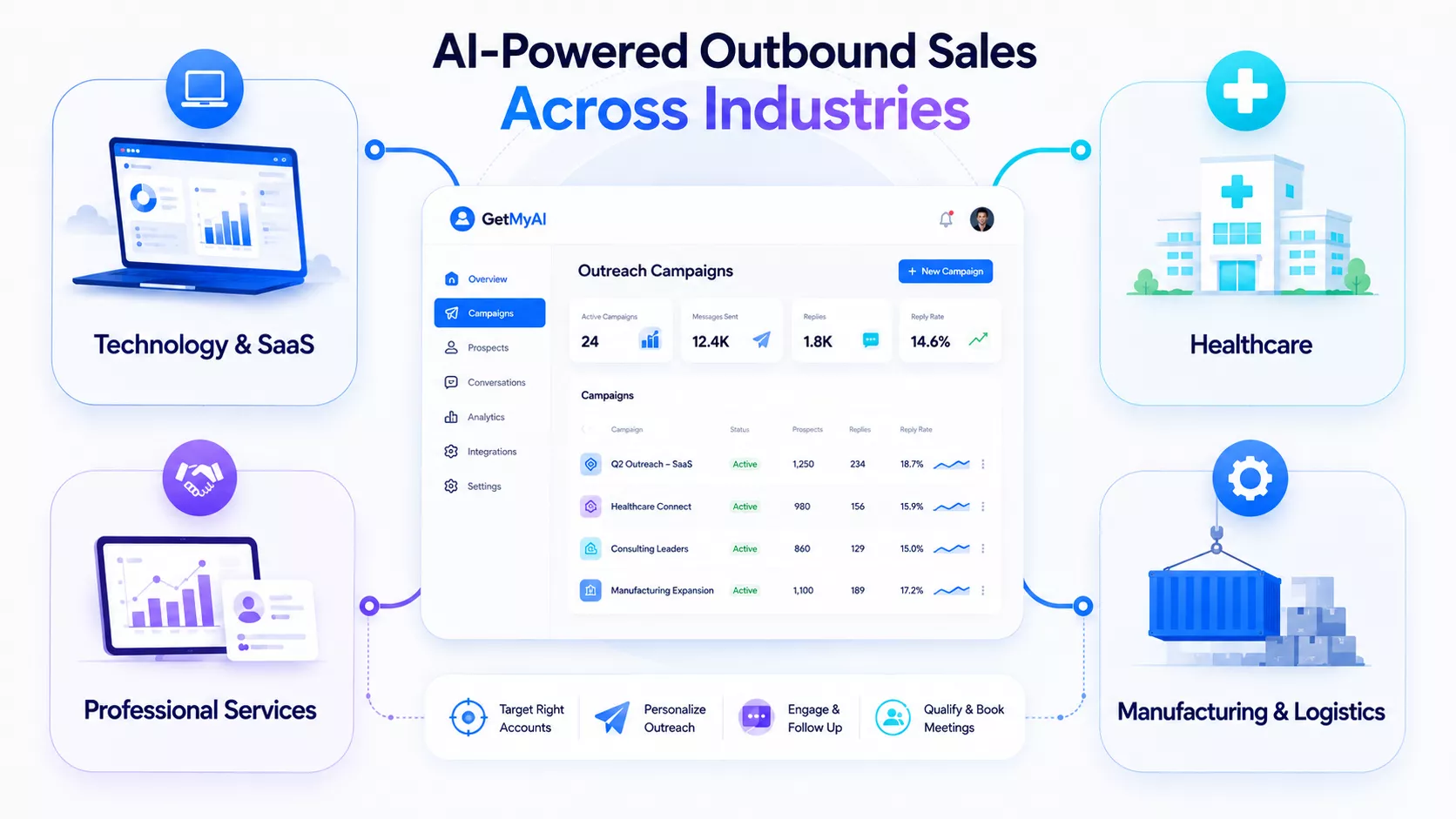
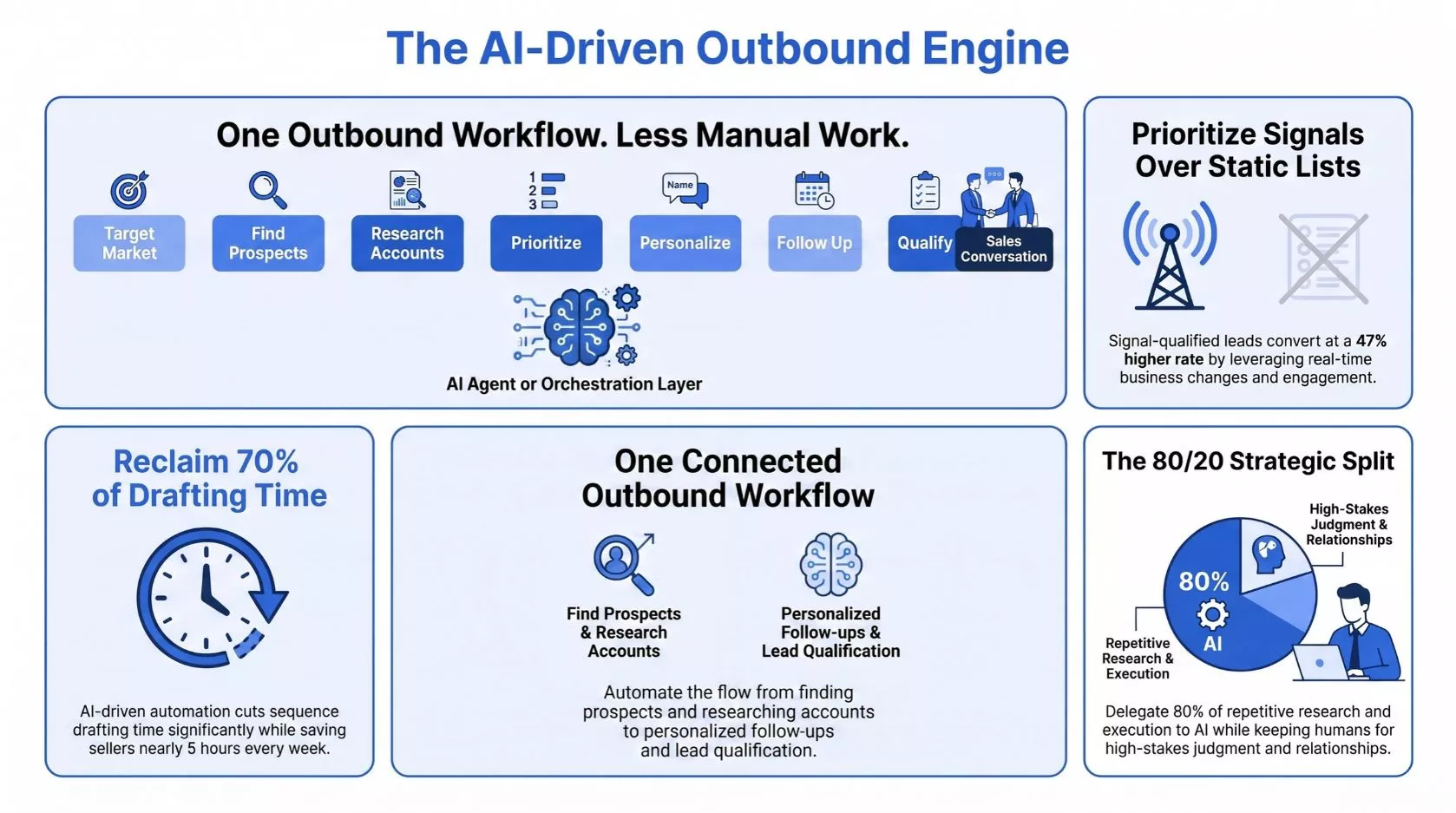
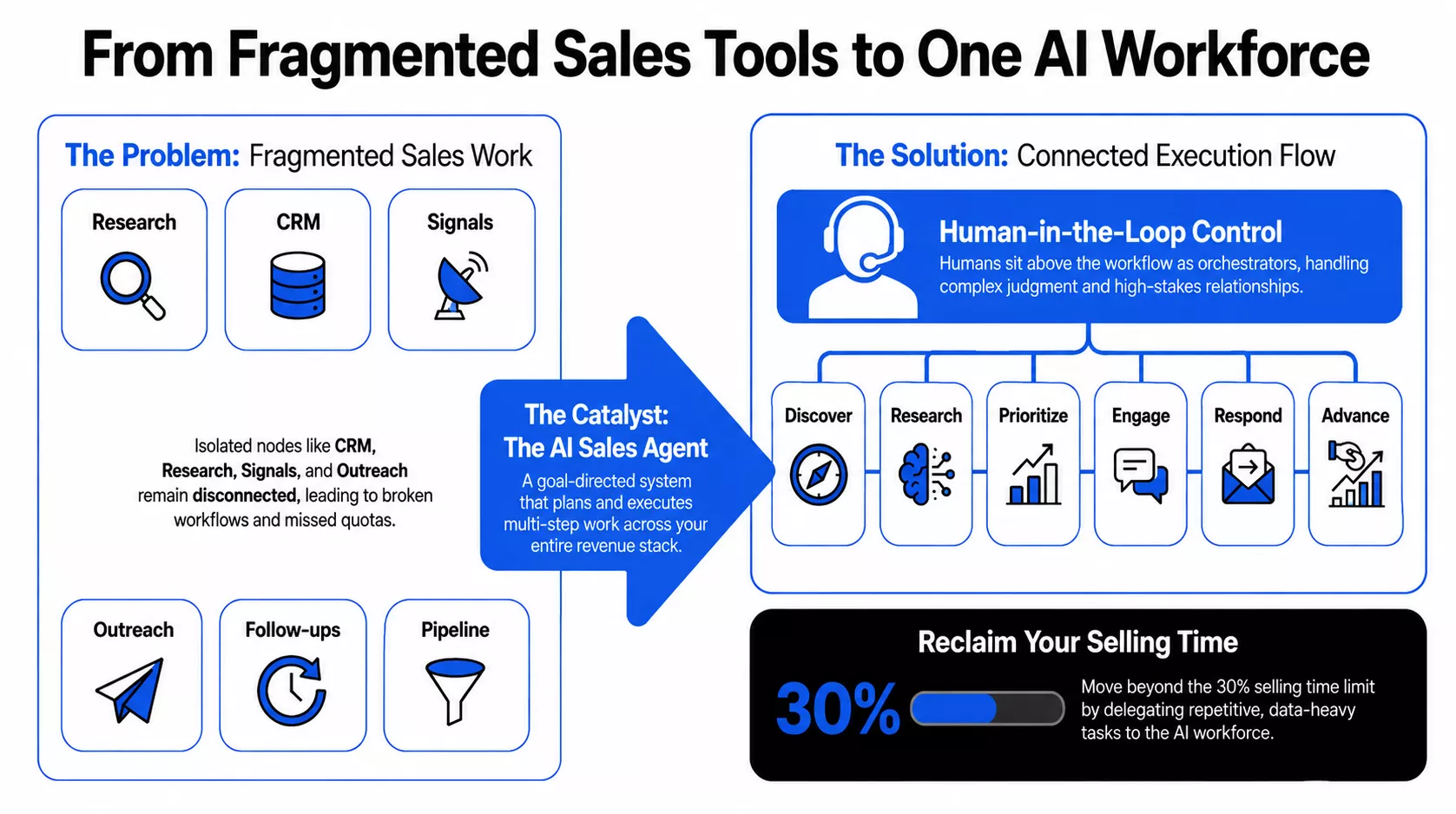
B2B outbound sales is becoming harder to manage manually. Sales teams still spend hours finding prospects, researching accounts, identifying decision-makers and keeping up with follow-ups. Benefits of AI in Sales go beyond saving time: better prospect research…
Experience Boost
Create. Deploy. Engage. With GetMyAI
Launch GPT-powered conversations that engage, support, and convert — all in one platform.
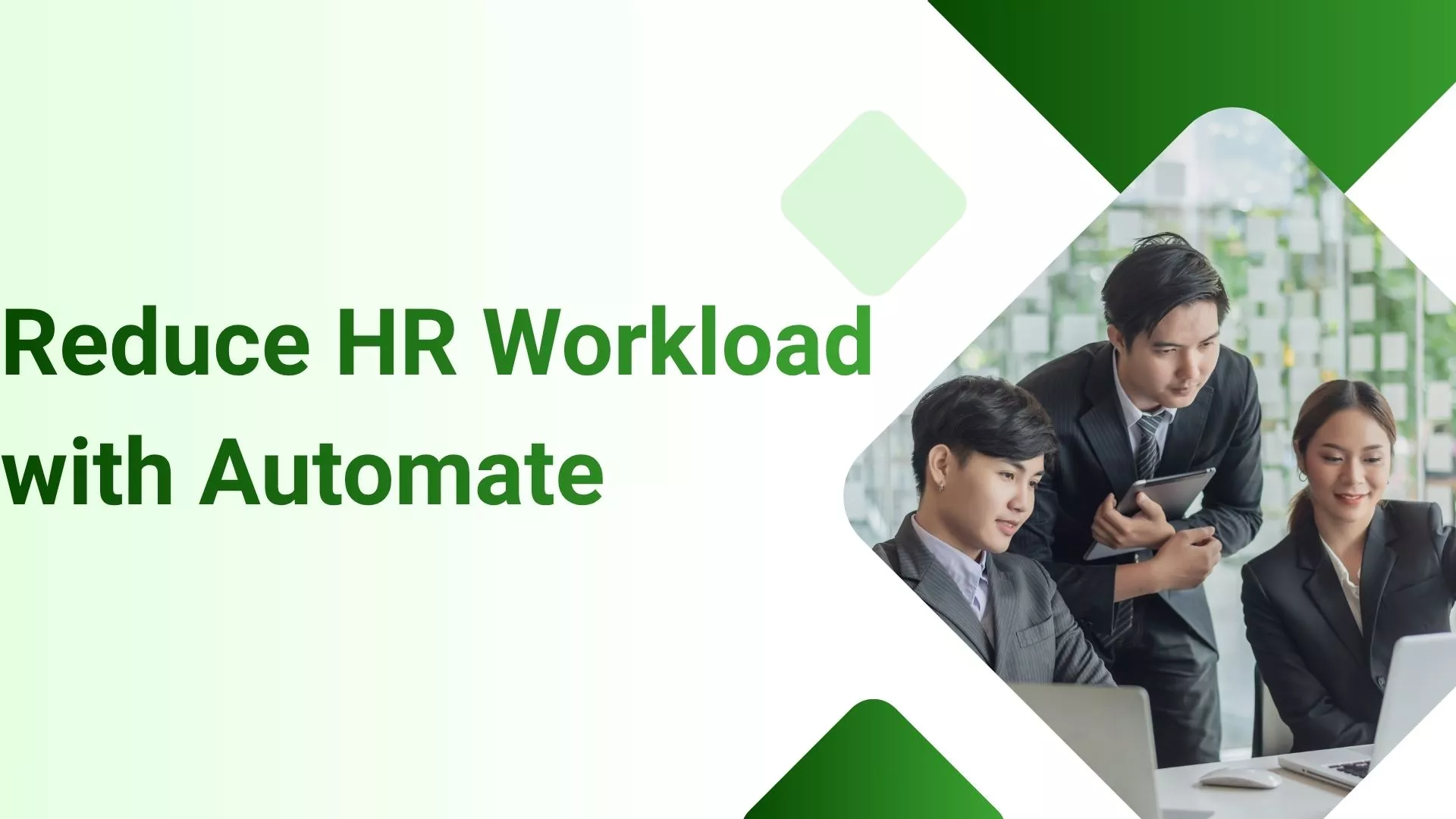
How AI Chatbots Automate Employee Queries and Reduce HR Workload
getmyai
Apr 17, 2026
AI chatbot for HR
HR automation chatbot
AI chatbot for employee queries
conversational AI for HR
Key Takeaways
AI chatbots answer common HR questions right away, cutting manual work and speeding up employee support.
Hiring moves faster because screening, scheduling, and follow-ups happen automatically without repeated messages.
Employees and candidates get quick answers, clear updates, and less waiting during important steps.
Employees aAutomation lets HR spend less time on coordination and more time on decisions and improving employee experience.nd candidates get quick answers, clear updates, and less waiting during important steps.
HR teams are dealing with continuous employee queries, hiring coordination, and internal support requests across multiple systems. An HR automation chatbot handles these tasks by answering questions instantly, managing scheduling, and reducing dependency on manual processes. The result is faster response times, fewer operational delays, and more consistent HR support.
An AI chatbot for HR handles employee questions, hiring steps, and interview scheduling by connecting with internal documents and calendar systems. It gives instant answers, handles hiring coordination, and completes tasks automatically, helping reduce HR workload while improving response time and consistency.
What AI Chatbots Actually Do in HR Processes
HR teams use many systems that store data but do not take action. Policies, employee data, and workflows are spread across tools, so even simple tasks need manual effort. A conversational AI for HR fixes this by turning stored data into actions.
The system reads intent, gets the right information, and finishes the task without waiting for HR. An HR automation chatbot handles requests, scheduling, and follow-ups quickly, reducing delays and effort.
Intent Recognition: Understands employee or candidate requests instantly and maps them to the correct HR workflow without manual triage.
Automated Query Resolution: Pulls correct answers from internal data and replies instantly without HR help or delays.
Workflow Execution: Manages tasks like leave requests, interview scheduling, and follow-ups without manual coordination.
Context-Aware Responses: Uses role, past activity, and context to give relevant and personalized answers.
Continuous Improvement Loop: Learns from missed questions and updates answers over time to improve accuracy.
Why Traditional HR Systems Struggle with Growing Workload
Limitation
Impact on HR’s Responsibilities
Information without action
Systems store data but cannot complete tasks or respond to requests
Manual handling of requests
HR teams spend time answering repetitive questions and coordinating workflows
Slow response cycles
Employees and candidates wait for replies, creating delays
Disconnected tools
Data is spread across systems, leading to inconsistent responses
Limited capacity
More requests require more HR effort instead of improving efficiency
Traditional systems support HR teams but do not reduce their effort. As employee queries and hiring activities increase, manual work grows with it, making automation necessary to handle volume without adding more workload.
How AI Chatbots Handle Employee Queries
Employee queries in HR usually follow repeatable patterns, which makes them ideal for automation. An AI chatbot for employee queries handles these interactions by converting a simple question into a completed response without HR involvement.
Step 1: Employee asks a question
Example: “How many leave days do I have left?” or “When will my salary be credited?”
Step 2: Intent is identified
The system understands whether the query is about leave balance, payroll, benefits, or policy information.
Step 3: Relevant data is retrieved
It pulls information from internal documents, HR policies, or connected systems where employee data is stored.
Step 4: Response is generated and delivered
The answer is shared instantly, based on accurate and updated information.
Most Common HR Questions Employees Ask
“How many leave days do I have left, and what is the carry-over policy?”
“Where can I download my latest payslip or tax documents?”
“Does our health insurance cover a specific treatment or service?”
“What is the current policy on remote work or flexible hours?”
“How do I apply for parental or medical leave?”
These are not complex problems. They are information and navigation tasks. Instead of HR teams manually checking systems or explaining policies, an AI chatbot for handling employee queries automatically retrieves the exact answer, provides links where needed, and explains next steps clearly.
Employees get immediate responses without searching through documents or waiting for replies. HR teams avoid repetitive queries and focus on tasks that require judgment, not lookup.
Recruitment Automation: Where AI Has the Biggest Impact
Recruitment is one of the most time-intensive HR functions, with coordination delays often slowing down hiring cycles. Studies show that manual scheduling and communication can take recruiters more than two days per candidate, while AI-driven automation reduces this to minutes. An AI chatbot for recruitment automation handles screening, scheduling, and communication continuously, allowing candidates to move through the hiring process without waiting for human intervention.
AI Chatbot for Candidate Screening
Candidate screening is one of the first bottlenecks in hiring. Rather than reviewing applications by hand, the chatbot asks targeted questions, collects needed information, and filters candidates using predefined rules.
Captures details like experience, availability, and qualifications
Asks structured questions aligned with job requirements
Identifies qualified candidates and moves them forward
This reduces the time spent on initial screening and ensures only relevant candidates reach the next stage.
AI Chatbot for Interview Scheduling
Interview scheduling often requires repeated communication between candidates and hiring teams. A chatbot removes this by managing the entire process from start to finish.
Candidate qualifies after screening
Checks the interviewer and candidate availability
Available time slots are presented instantly
The candidate selects a suitable slot
Confirmation is sent along with reminders
There are no emails, no follow-ups, and no delays. Scheduling happens in real time, which shortens hiring cycles and prevents candidate drop-off.
AI Chatbot for Job Applications
The chatbot simplifies the application process by guiding candidates through each step.
Answers role-related questions during the application
Collects required details and documents
Provides clarity on next steps
Candidates do not need to navigate complex forms or wait for responses. The process becomes faster, clearer, and easier to complete.
Embedded HR Support Across the Employee Lifecycle: Use Cases
HR support becomes more effective when it is available inside the tools people already use. A chatbot for HR operations allows candidates, employees, and internal teams to get answers and complete tasks without switching platforms or raising tickets.
Candidates Exploring Roles and Applying
When candidates land on a website or career page, they usually have questions. An AI chatbot on the website helps them get answers about roles, eligibility, and application steps right away. This removes confusion and keeps the application process smooth.
New Hires During Onboarding
New hire onboarding often runs across messaging platforms and shared systems. Embedded chat support in tools like Slack or internal platforms helps them find documents, understand processes, and complete steps easily. They get answers quickly without depending on HR.
Existing Employees Managing Day-to-Day Needs
For existing employees, support is needed with the tools they already use for work. Whether checking policies, planning leave, or handling compliance requests, embedded chat within internal systems or calendar-connected workflows allows them to get answers and complete actions instantly. This removes the need to switch platforms or depend on manual follow-ups.
5 Key Benefits of HR Workflow Automation with AI Chatbots
Faster Hiring Cycles
Manual scheduling can take over two days per candidate. Automation reduces this to minutes by handling screening, coordination, and confirmations instantly, allowing candidates to move through hiring stages without waiting.
Reduced HR Workload
AI systems have saved up to 50,000 hours each year in HR work. By automating tasks like queries, scheduling, and follow-ups, teams reduce manual effort and spend more time on important decisions.
Lower Operational Costs
Companies have reported savings of up to $5 million through automation. With less manual coordination, staffing costs go down while recruitment and support continue to run efficiently.
Improved Candidate Experience
Quick responses and steady communication improve engagement. Candidates get instant updates and answers, which reduces drop-offs and helps more people complete applications and interviews.
Scalable HR Operations
AI systems help teams handle more work without hiring more people. As demand increases, processes continue at the same speed and accuracy without creating delays.
Candidate Experience: How Faster Communication Improves Hiring Results
A candidate applies for a role and waits two days for a reply. Then they wait a few more days for the next update. In many cases, slow replies and poor communication make candidates lose interest.
Candidate experience is one of the most practical advantages of using an AI chatbot for HR. Faster responses reduce uncertainty, keep candidates engaged, and prevent drop-offs during key stages of the hiring process.
With AI chatbots handling communication, interaction becomes immediate. Candidates don’t wait for the recruiter’s availability. They can ask questions, schedule interviews, and receive updates at any time, including outside working hours.
It makes the whole process easier to follow. Candidates stay engaged instead of losing interest midway. The result is straightforward. Faster hiring, smoother communication, and better conversion throughout the hiring process.
The Future of HR with AI Agents: From Tasks to Autonomous Workflows
HR teams are moving from handling requests to managing systems that complete tasks automatically. Gartner predicts that 40% of enterprise applications will feature task-specific AI agents by 2026, up from less than 5% in 2025. What began as simple query handling is now full execution, where AI agents run processes end-to-end instead of just answering questions.
Industry predictions already point in this direction. By 2026, AI in HR is expected to shift from answering individual queries to running role-based workflows such as leave management, hiring coordination, and compliance tasks. This reduces manual workload significantly while keeping processes consistent and always active.
Stage
Capability
Impact on HR Teams
Query-based chatbots
Answer FAQs and basic employee questions
Reduces repetitive queries but still requires manual follow-ups
NLP-driven assistants
Understand intent and provide contextual answers
Improves response quality and reduces clarification effort
Generative AI systems
Deliver detailed, context-aware responses
Enhances employee experience and reduces dependency on HR
Autonomous AI agents
Execute workflows across systems
Removes manual coordination and completes tasks end-to-end
What This Means for HR Teams
HR teams will simply spend less time on repetitive work and more time on decisions that actually matter.
Administrative work has reduced because tasks like screening, scheduling, and query handling are automated. Response times drop close to zero for common requests, which improves overall efficiency.
At the same time, HR teams focus more on areas that require judgment. This includes talent strategy, employee experience, retention planning, and governance of AI systems. As HR process automation tools become more advanced, the responsibility shifts from doing the work to managing how the work gets done.
The future of HR is not less work. It is different work, with more focus on decisions and less on coordination.
Why GetMyAI Works for HR Automation
Most of the challenges discussed above come down to the same issue: too much manual coordination across disconnected systems. Queries, hiring steps, and internal workflows exist, but they are not connected or automated in a way that reduces effort.
GetMyAI is built around solving that exact problem.
It allows teams to create AI agents that are trained on internal documents, policies, and knowledge sources. This directly addresses repetitive employee queries by giving instant, accurate answers without HR involvement.
For hiring, the same system handles screening questions, collects candidate information, and manages interview scheduling by connecting with calendar availability. This removes back-and-forth communication and keeps the process moving without delays.
It also fits into the tools teams already use. Whether candidates are interacting on a website or employees are asking questions inside internal communication platforms, the experience remains consistent and continuous.
What makes this practical is how improvement happens over time. Every unanswered question is captured in the Activity section and can be added to Q&A. This ensures the system keeps getting better based on real usage, not assumptions.
The result is simple. Fewer repetitive queries, faster hiring coordination, and less manual follow-up across HR workflows.
FAQs
1.How do AI chatbots automate interview scheduling?
AI chatbots connect with calendar systems, check real-time availability, and show open time slots to candidates. Once a slot is selected, they confirm the interview and send reminders, removing manual coordination and reducing scheduling delays.
2.What is an AI recruitment chatbot?
An AI recruitment chatbot is used to manage hiring steps like screening candidates, answering job-related questions, and scheduling interviews. It helps reduce manual effort while making the hiring process faster, more structured, and easier to manage.
3.How do recruiters use AI chatbots?
Recruiters use chatbots to handle early-stage hiring tasks like screening candidates, scheduling interviews, and answering common questions. GetMyAI helps automate these steps so recruiters can focus more on selecting and evaluating candidates.
4.How do chatbots improve candidate experience?
Chatbots improve candidate experience by providing instant responses, clear communication, and 24/7 availability. Candidates receive quick updates and answers, which reduces waiting time, keeps them engaged, and increases completion rates during applications and interviews.
5.Can AI reduce recruitment time?
Yes, AI reduces recruitment time by automating tasks like screening, interview scheduling, and communication. With GetMyAI, hiring steps happen instantly, allowing candidates to move through the process faster without delays or manual coordination.
We’ve noticed that a surprising amount of a sales rep’s day is still spent preparing to sell rather than actually selling. Building lists, researching accounts, finding the right contacts, writing outreach and chasing follow-ups can consume hours before a mean…
Sales teams have more AI than ever, yet the productivity problem remains. Sales AI Agents can take repetitive work off your team's plate, but adding another tool does not automatically improve execution. In 2026, 78% of B2B sellers missed quota in 2025, w…