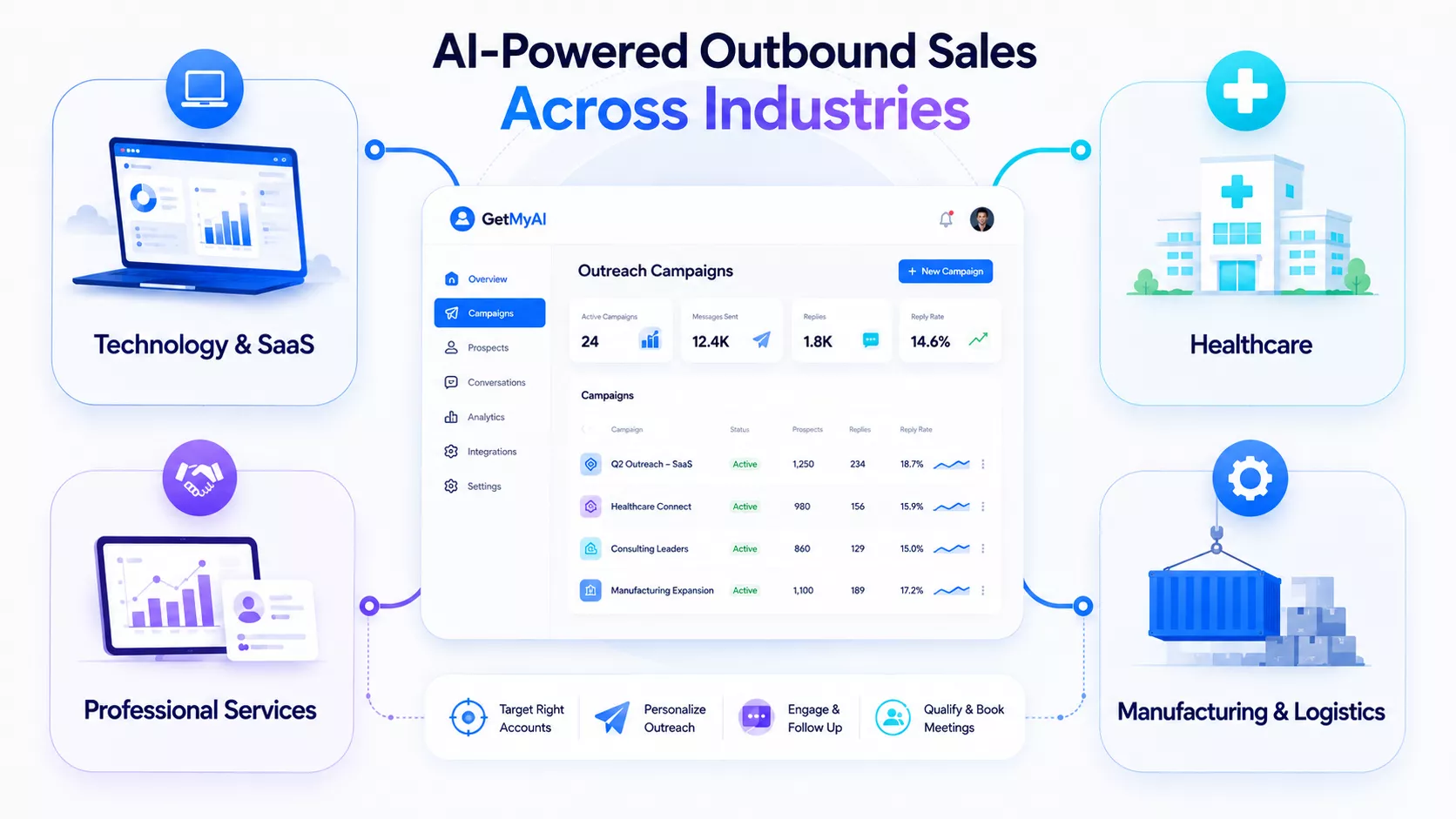
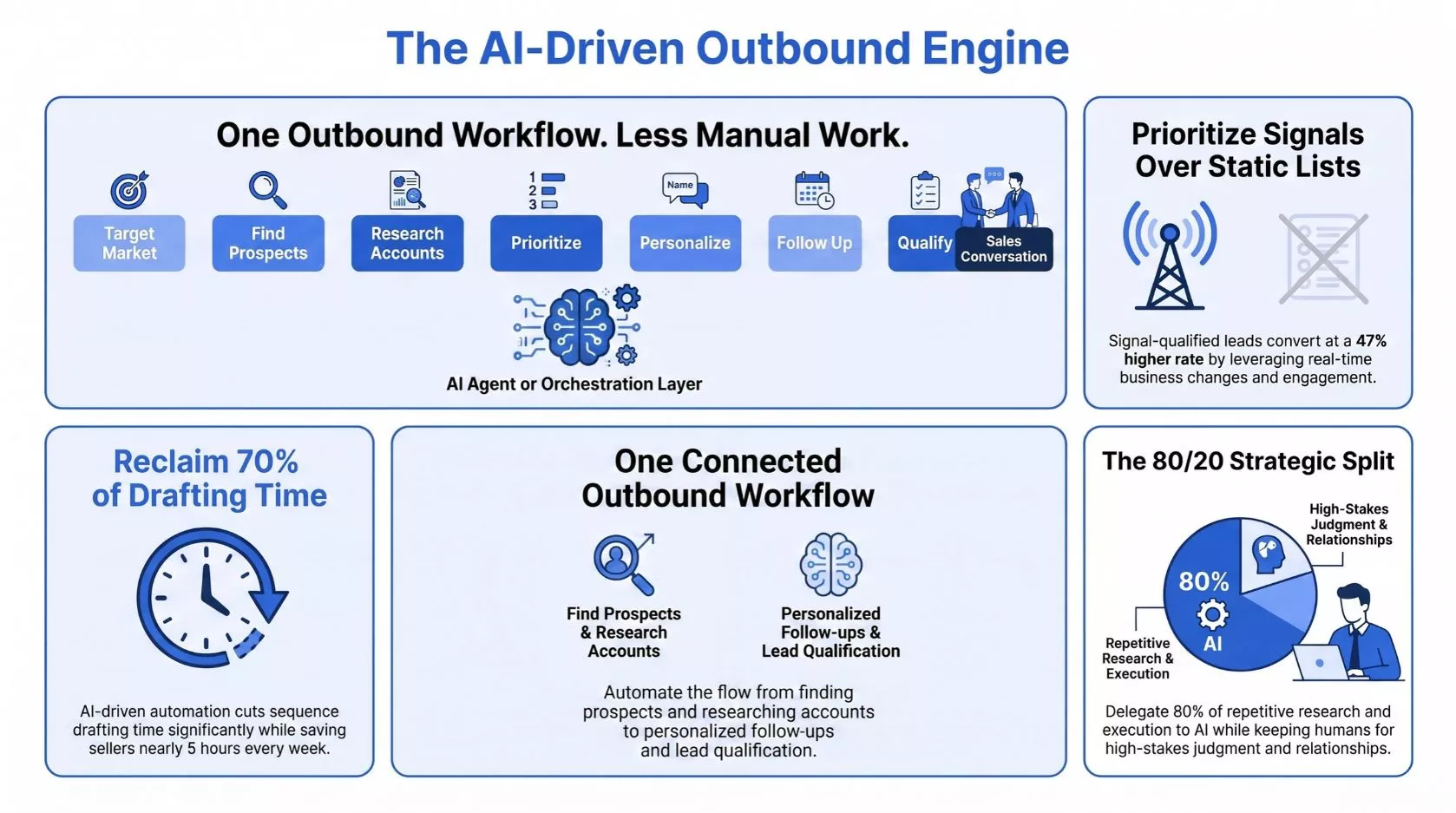
B2B outbound sales is becoming harder to manage manually. Sales teams still spend hours finding prospects, researching accounts, identifying decision-makers and keeping up with follow-ups. Benefits of AI in Sales go beyond saving time: better prospect research…
Experience Boost
Create. Deploy. Engage. With GetMyAI
Launch GPT-powered conversations that engage, support, and convert — all in one platform.
How GetMyAI Helps You Build AI Healthcare Assistants Like Amazon
getmyai
Apr 1, 2026
AI healthcare assistant platform
HIPAA compliant AI assistant
conversational AI healthcare platform
Key Takeaways
AI healthcare assistants are shifting toward managing workflows in scheduling, support, and patient communication instead of only answering queries
Clinics can now provide Amazon-like patient experiences without complex setups or large internal AI teams
Up to 90% of routine patient queries can be automated through AI chatbots, lowering workload and improving response times
The real advantage lies in integration, compliance, and continuous improvement; AI alone cannot solve everything
AI healthcare assistants need a structured implementation where workflows, data, and systems work together for reliable outcomes
Healthcare is entering a phase where speed, accuracy, and accessibility are no longer differentiators; they are expectations. Patients do not compare experiences with other hospitals. They compare them with digital platforms that respond instantly, guide decisions, and remove friction. This shift is redefining how healthcare systems engage, support, and retain patients.
At the same time, most providers are still operating with fragmented systems and delayed responses. The gap comes from how AI is implemented. Organizations need structured systems that manage interactions, guide workflows, and operate consistently across patient touchpoints.
The Amazon Benchmark: What “Advanced” Actually Means
Amazon’s healthcare assistants are not traditional bots. They are connected systems.
What makes them stand out is not just how they respond, but how they fit into the broader healthcare experience. The assistant integrates into the journey, guiding users from question to outcome without requiring platform switches or repeated information.
In practice, this creates a smooth flow. A patient can go from asking about a symptom to taking action, like booking an appointment, checking medication, or connecting with a provider. The experience feels connected because the AI chatbot works across systems in the background.
They can:
Interpret medical records
Guide symptom-based decisions
Manage medications
Book appointments
Connect patients to providers
This is not about intelligence alone. It is about integration combined with execution. The assistant sits across systems and completes tasks. AI healthcare assistants now play an active role in managing patient workflows and interactions across systems.
Why Most Healthcare Providers Cannot Replicate This
Most healthcare providers know AI assistants can help a lot, but many still do not use them the right way. The main problem is turning ideas into clear systems that work well in healthcare settings, where rules, accuracy, and system connection are very important for giving patients a smooth experience.
Strict rules about patient data make providers unsure and slow down the use of AI tools in healthcare
High costs to build and set up systems make it hard for clinics to create and manage AI solutions on their own
Different systems for booking, records, and communication break the workflow and affect patient experience
Limited technical teams make it hard to build, launch, and improve AI healthcare systems properly
At the same time, the need is growing fast. 82% of users want quick replies, and in healthcare, delays reduce trust, interest, and patient happiness. This shows a clear gap where AI is used, but not set up in the right way for real results.
How GetMyAI Helps You Build an AI Healthcare Assistant Platform Without Complexity
GetMyAI removes the need to build systems from scratch by providing a structured environment where healthcare teams can deploy and manage AI assistants quickly. Instead of investing in long development cycles, you configure a conversational AI healthcare platform around your existing workflows, data, and patient interactions.
Guiding Patient Interactions Through Structured Conversations
Patients move through queries, triage steps, and next actions using a clear chat flow without needing help from staff.
Responses Based on Your Clinic’s Knowledge
All answers are based on your uploaded documents, ensuring alignment with clinic-specific policies, services, and medical information.
Maintaining Accuracy Through Continuous Improvement
Teams can refine responses using Q&A, allowing the system to improve over time based on real patient interactions.
Engaging Patients Across Multiple Channels
Deploy the assistant across your website, WhatsApp, Telegram, Slack, and Instagram to deliver consistent patient engagement everywhere.
The result is a system that fits your operations, adjusts to your processes, and supports patient interactions at scale without needing complex setup or large AI teams.
Building an AI Healthcare Assistant That Works in Real Operations
The focus is on how the system performs in real situations, helping patients with queries, guiding actions, and supporting workflows without delays or broken interactions.
With GetMyAI, healthcare providers can:
Guide patients through questions and next steps without delays
Provide responses that reflect actual clinic processes, not generic data
Handle high volumes of queries instantly without increasing staff load
Ensure smooth escalation when human intervention is required
Improve accuracy over time using real conversation data
These results come from a system focused on execution instead of simple interaction. The assistant becomes part of daily operations, helping patients and teams consistently.
Powered by Amazon AI Models for Healthcare Assistants
One of the key factors in building an AI healthcare assistant like Amazon is using the same class of models that support scalable, real-time interactions.
GetMyAI supports Amazon AI models, including:
Amazon Nova Lite
Amazon Nova Micro
Amazon Nova Pro
This allows healthcare providers to:
Select models based on reasoning requirements and response complexity
Balance performance and efficiency depending on usage needs
Scale capabilities as patient interactions grow over time
Rather than depending on a single model, you can adjust the assistant’s intelligence based on your needs while maintaining steady performance.
HIPAA, Security, and Trust in AI Healthcare Assistants
In healthcare, every interaction is a responsibility. Accuracy, privacy, and control are not optional layers; they are built into how systems must operate. When AI becomes part of patient communication, the focus shifts from convenience to accountability.
Any HIPAA-compliant AI assistant must be designed with strict safeguards that govern how data is accessed, processed, and protected across every interaction.
What This Requires in Practice
Controlled data usage to ensure responses are limited to approved and trusted information sources
Secure storage and transmission to protect sensitive patient data across all touchpoints
Restricted access based on roles to prevent unauthorized data exposure
Predictable system behavior to avoid incorrect or unsupported responses
GetMyAI aligns with these requirements by grounding every response in your uploaded documents and Q&A, ensuring the assistant operates within defined boundaries instead of relying on uncontrolled external data.
This approach allows healthcare providers to automate communication with the best HIPAA-compliant AI healthcare assistant platform while maintaining full control over accuracy, access, and compliance.
This is where theory becomes practical. Below is how Amazon-level functionality maps to what you can build with GetMyAI.
Feature Comparison: Amazon vs GetMyAI
Amazon Capability
GetMyAI Equivalent
Healthcare Impact
Symptom navigation
Custom conversational flows
Guides patients to the right next step without manual triage
Appointment booking
Calendly and Google Calendar integration
Enables 24/7 scheduling without staff involvement
Medical guidance
Document + Q&A-based responses
Ensures accurate, controlled patient communication
Multichannel access
Website, WhatsApp, Telegram, Slack, Instagram
Patients engage on preferred platforms
Continuous improvement
Activity + Improvement (Q&A updates)
System improves using real patient interactions
What This Means for Healthcare Providers
You can build an AI assistant for healthcare providers that:
Answers patient questions instantly
Schedules appointments automatically
Reduces administrative workload
Improves patient experience
This is not experimental. It is operational.
The Human-in-the-Loop Safety Model
Even the most advanced systems do not remove humans. They support them. Amazon uses multi-agent systems to validate responses. The same principle applies here, in a simpler form.
With GetMyAI:
High-risk or unclear queries trigger enquiry forms
Teams can review conversations inside Activity
Unanswered questions are added to Q&A for improvement
This creates a controlled system where AI handles scale. Humans handle responsibility.
Why Integration Matters More Than AI Itself
Most failures in healthcare AI are not due to models. They are due to a lack of integration. Without connection to workflows, AI becomes a surface-level chatbot.
That is why modern systems require AI healthcare integration platforms that connect:
Patient queries
Scheduling systems
Knowledge bases
Communication channels
GetMyAI enables this through:
Calendar integrations
Document-based training
Multi-channel deployment
Why AI Healthcare Assistants Are a High-Impact Investment
Efficiency
Up to 90% of routine patient queries can be automated. This directly reduces the burden on support teams while improving response speed. Instead of handling repetitive queries manually, staff can focus on higher-value patient interactions and clinical coordination.
Patient Experience
82% of users expect immediate responses, and delays significantly impact engagement. AI assistants ensure patients receive instant answers, which improves satisfaction, builds trust, and increases the likelihood of continued engagement with the provider.
Scalability
AI-powered systems can handle 3x to 10x increases in conversation volume with only a marginal rise in costs. This allows healthcare organizations to manage demand spikes without expanding teams, making operations more flexible and resilient.
Cost Efficiency
AI interactions cost approximately $0.50 compared to $6.00 for human-led support, making them up to 12 times more cost-effective. At scale, this leads to substantial cost savings while maintaining consistent service quality.
Competitive Advantage
While 66% of organizations report efficiency gains from AI, only 34% have fully redesigned workflows around it. The real advantage does not come from adopting AI, but from integrating it deeply into operations to drive meaningful transformation.
How to Get Started
You do not need to rebuild your systems. You need to structure them.
The process is simple, but each step plays a specific role in making your AI agent accurate, controlled, and scalable.
Step 1: Connect Your Knowledge
What you do: Upload your FAQs, documents, and policies into the system.
What happens: Your chatbot becomes context-aware and starts delivering responses based on real, structured information instead of generic outputs.
Insight: The quality of your chatbot depends on the quality of what you upload. Outdated or incomplete data will directly affect response accuracy.
Step 2: Define Guardrails
What you do: Use Q&A to control responses, ensure compliance, and set clear boundaries for what the chatbot can and cannot answer.
What happens: Your chatbot operates within safe limits, reducing the risk of incorrect or sensitive responses.
Insight: Without clear guardrails, even a well-trained system can produce inconsistent or risky outputs.
Step 3: Deploy Across Channels
What you do: Launch your chatbot on your website, messaging platforms, and internal tools.
What happens: Your chatbot becomes accessible wherever users interact, ensuring consistent communication across all touchpoints.
Insight: Deployment is not just about visibility. It is about meeting users where they already are.
Step 4: Improve Continuously
What you do: Use Activity to review conversations, Improvement to update Q&A, and Analytics to track performance.
What happens: Your chatbot evolves with real interactions, becoming more accurate and effective over time.
Insight: The biggest mistake is treating deployment as the final step. Continuous improvement is what drives long-term performance.
This structured approach turns chatbot deployment into a controlled, repeatable process. Instead of relying on static setups, your system improves with every interaction, becoming more aligned with real user needs over time.
Where Healthcare AI Is Heading Next
Healthcare is moving toward systems that are always available, context-aware, and integrated into everyday operations. This shift is already underway, with AI becoming a standard layer across patient engagement and service delivery.
Amazon has shown what this looks like through connected workflows and real-time interactions. The takeaway is not scale, but structure. Providers do not need complex systems to start building similar capabilities.
With GetMyAI, healthcare teams can:
Engage patients instantly across channels without delays
Automate routine workflows like queries and scheduling
Connect interactions with existing systems for consistency
Improve continuously using real conversation data
The shift is already happening. The advantage now lies in how effectively it is implemented.
FAQs
1. What is an AI healthcare assistant, and how does it help patients?
An AI healthcare assistant is a conversational AI system designed to help patients with common questions and everyday healthcare tasks. It can provide information based on approved healthcare content, guide patients through next steps, help schedule appointments, and handle routine inquiries without requiring staff to respond to every request manually.
2. How do I build an AI healthcare assistant for my clinic or hospital?
Building an AI healthcare assistant starts with connecting your healthcare knowledge, FAQs, policies, and workflows to the AI system. You can then define response rules and guardrails, connect scheduling or other relevant systems, deploy the assistant across your preferred channels, and continuously improve its responses based on real patient interactions.
3. Can an AI healthcare assistant schedule patient appointments?
Yes. An AI healthcare assistant can be connected with scheduling tools such as Google Calendar or Calendly to help patients find available slots and book appointments through a conversation. This can reduce the administrative work involved in handling appointment requests manually.
4. Is an AI healthcare assistant HIPAA compliant?
An AI healthcare assistant can be designed to support HIPAA-compliant workflows, but compliance depends on how the entire system is configured, what data it handles, where that data is stored, and the safeguards used to protect it. Healthcare organizations should ensure that appropriate access controls, data protection measures, approved information sources, and compliance processes are in place before using AI with sensitive patient information.
5. Can an AI healthcare assistant replace doctors or healthcare staff?
No. An AI healthcare assistant is designed to support healthcare professionals, not replace them. It can handle routine questions, administrative tasks, appointment scheduling, and information delivery, while clinical decisions, diagnosis, treatment, and complex patient situations should remain under the responsibility of qualified healthcare professionals.
6. What healthcare tasks can an AI assistant automate?
An AI healthcare assistant can automate many repetitive tasks, including answering common patient questions, providing information about services, guiding patients through predefined workflows, collecting inquiries, scheduling appointments, and directing complex or high-risk questions to human staff. The exact tasks depend on the healthcare organization's workflows and the assistant's configuration.
7. Can an AI healthcare assistant work with existing healthcare systems?
Yes, integration is one of the most important parts of building a useful healthcare AI assistant. An assistant can connect with relevant calendars, knowledge bases, communication channels, and other systems so that patients can move from asking a question to taking action without switching between multiple platforms.
8. How does an AI healthcare assistant keep its answers accurate?
Accuracy depends heavily on the information and rules used to configure the assistant. Healthcare teams can provide approved documents, FAQs, policies, and Q&A content so that responses are grounded in trusted information. Reviewing conversations and updating the knowledge base regularly also helps improve the assistant as new patient questions arise.
9. What happens when a patient asks a question the AI cannot safely answer?
A well-designed healthcare AI assistant should not try to answer every question. When a query is unclear, sensitive, or outside the assistant's defined scope, it can collect the necessary information and escalate the interaction to a human team member. This human-in-the-loop approach allows AI to handle routine conversations while people remain responsible for situations that require judgment or clinical expertise.
10. Can I build an AI healthcare assistant similar to the experience offered by large platforms like Amazon?
Yes, healthcare providers can build similar types of connected experiences without recreating a large technology infrastructure from scratch. The key is combining conversational AI with structured healthcare knowledge, workflow automation, integrations, security controls, and continuous improvement. The goal is not simply to create a chatbot, but to build an assistant that can guide patients from a question to the appropriate next step.
We’ve noticed that a surprising amount of a sales rep’s day is still spent preparing to sell rather than actually selling. Building lists, researching accounts, finding the right contacts, writing outreach and chasing follow-ups can consume hours before a mean…
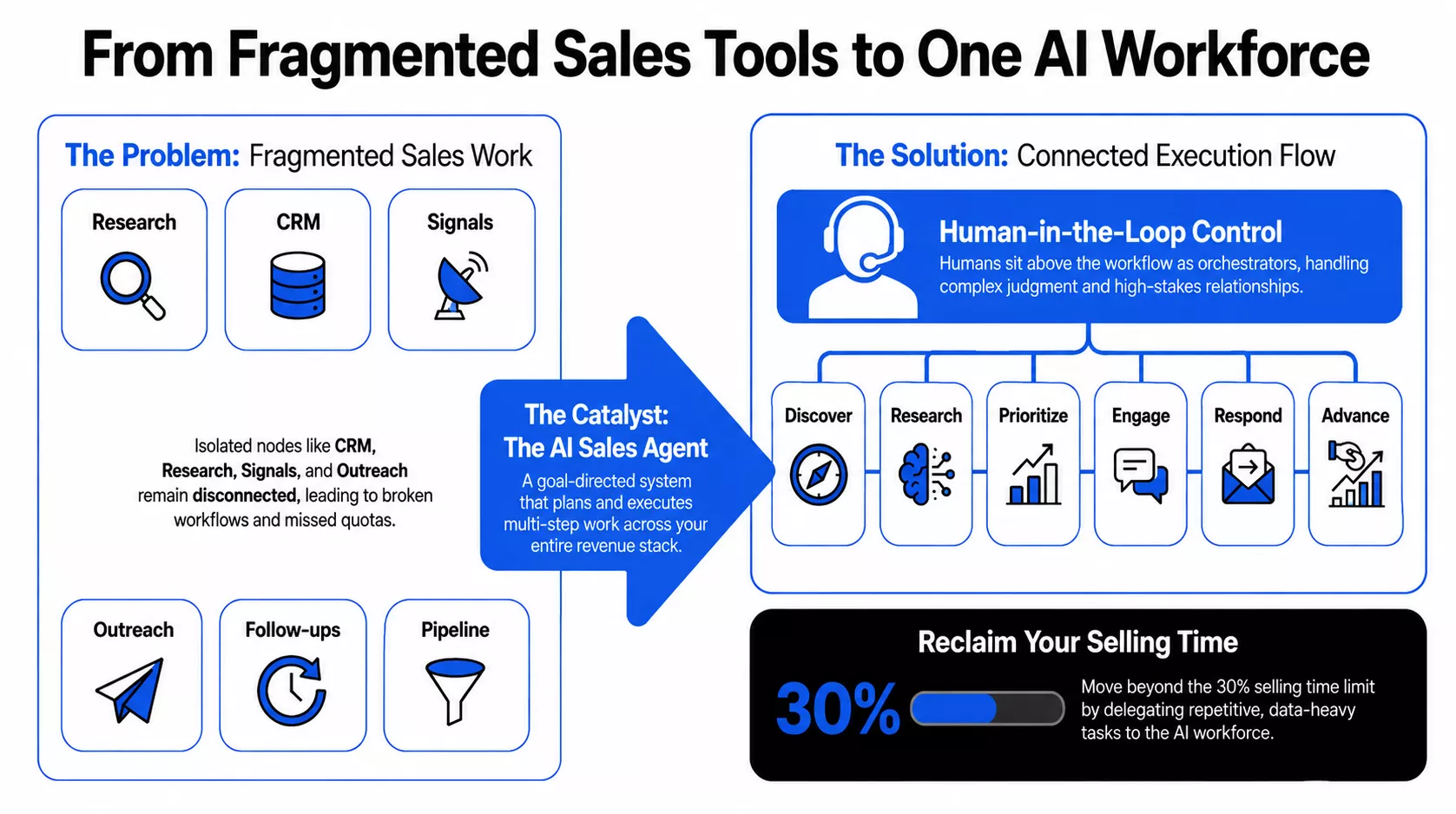
Sales teams have more AI than ever, yet the productivity problem remains. Sales AI Agents can take repetitive work off your team's plate, but adding another tool does not automatically improve execution. In 2026, 78% of B2B sellers missed quota in 2025, w…