Finance AI Agent: Automate Customer Support, Loan Queries & Financial Operations

Key Takeaways
- Finance AI agents execute complete workflows across core banking systems, delivering an average $3.50 return per $1 invested in year one.
- The primary barrier to autonomous banking deployment is not AI capability. It is write permissions, rollback infrastructure and governance readiness.
- Model Context Protocol enables institutions to deploy agentic systems over legacy infrastructure without core replacement, eliminating the most cited reason for delay.
- Institutions redesigning entire workflow domains around human-agent collaboration outperform those automating isolated tasks, capturing structural cost reduction rather than incremental efficiency.
- Banks relying entirely on third-party AI vendors risk surrendering proprietary decision logic, as competitive intelligence accrues to the vendor, not the institution.
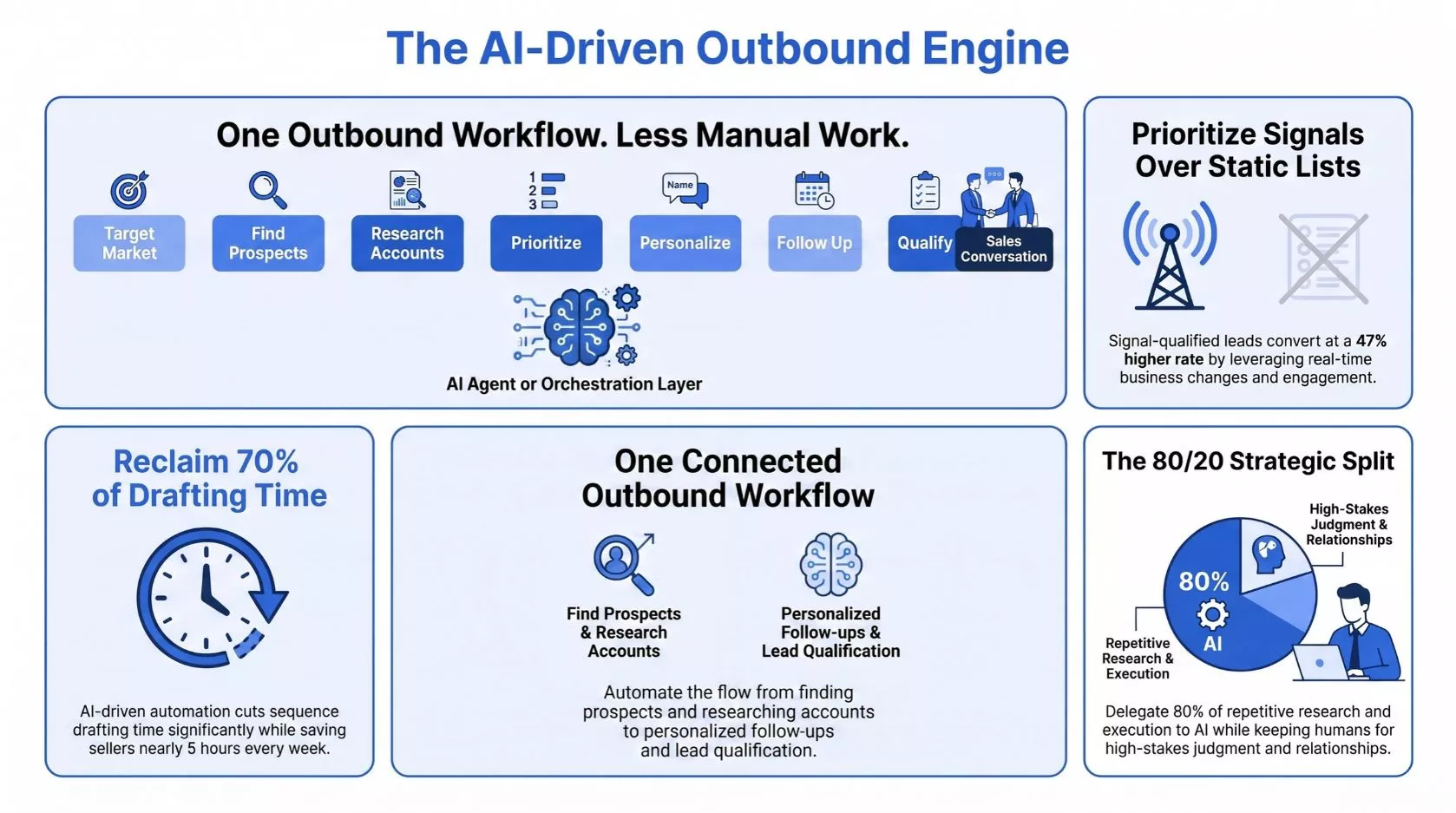
Banking automation has been layered over three decades. Rule-based systems handled deterministic transactions. RPA automates repetitive UI sequences. Chatbots deflected high-volume queries. Copilots generated suggestions for human review. Each generation solved a narrow problem and created a ceiling.
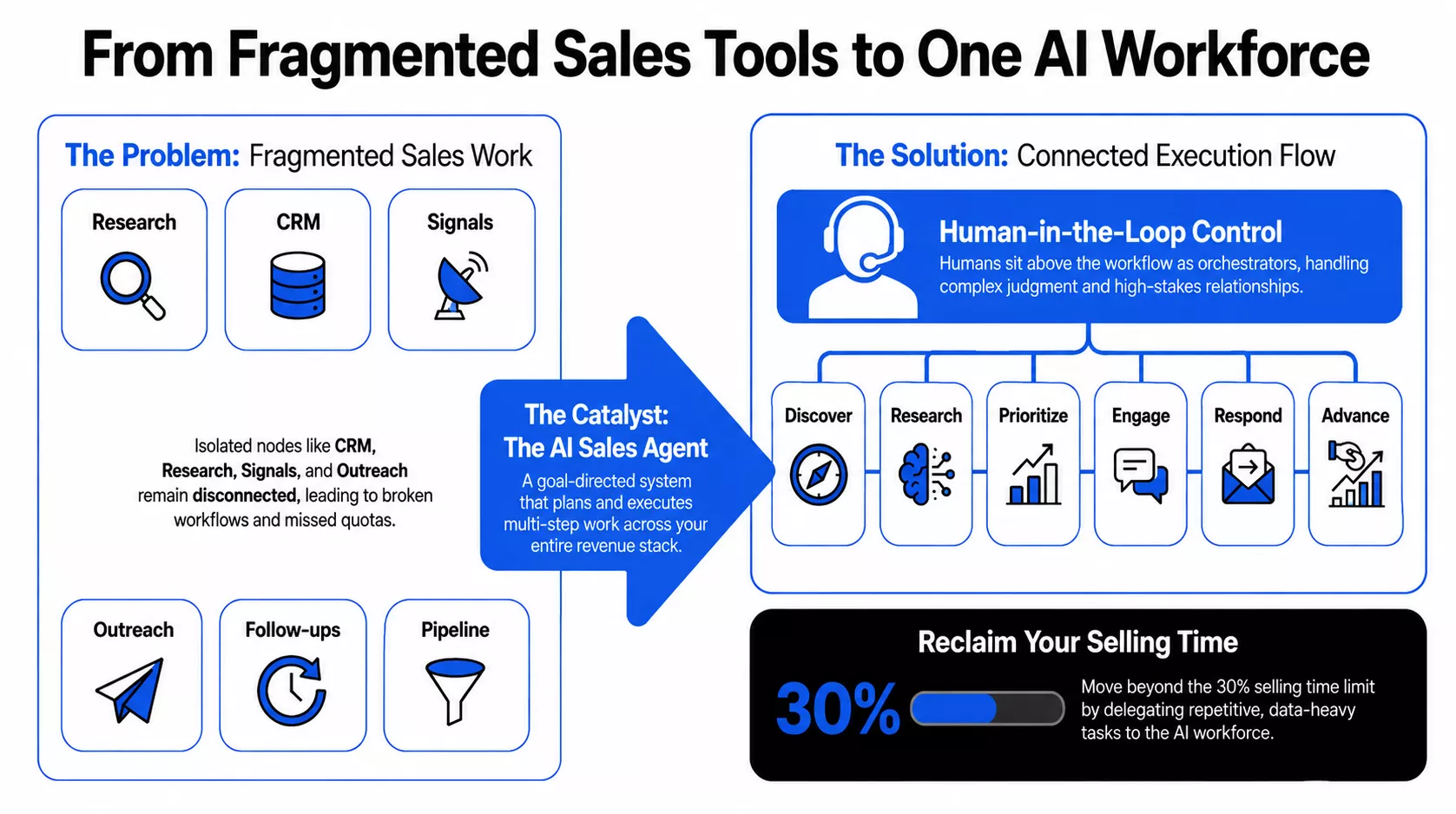
Finance AI agents are a different architectural proposal. They do not assist employees through a single task. They own workflow domains, coordinating actions across disconnected core systems, making reasoned decisions and resolving exceptions without requiring human input at each step. A finance AI agent handling a mortgage payment failure does not escalate to a loan officer. It diagnoses the decline code, checks available balances, executes the intra-account transfer, retries the payment and logs a compliance audit trail, all within a single autonomous sequence.
The question facing COOs, CIOs and CROs in 2026 is not whether to deploy them. It is whether their governance infrastructure, data architecture and organizational design are ready to support autonomous financial workflows safely. That is what this article addresses.
Capabilities Your AI Agent for Finance Must Support
Before evaluating any vendor, establish the baseline requirements. Many platforms marketed as AI agents for financial services are still operating as advanced copilots, assisting employees rather than owning workflows. The difference becomes obvious when the system encounters operational complexity, multiple systems, or exceptions that fall outside a predefined path.
A finance AI agent platform should be evaluated against five criteria:
1. Persistent Memory
Can the system retain context across interactions and customer journeys, or does every conversation begin from scratch?
2. Workflow Orchestration
Can it execute complete processes spanning multiple systems, or does each step require human intervention?
3. Core System Connectivity
Can it connect directly to banking infrastructure through APIs and modern integration layers, or is it limited to front-end interactions?
4. Exception Resolution
Can it adapt when a workflow deviates from the expected path, or does it immediately escalate edge cases to human teams?
5. Auditability and Control
Can every action, decision and system interaction be traced, reviewed and governed within existing compliance frameworks?
These capabilities are not differentiators. They are the minimum requirements for enterprise deployment. Institutions evaluating enterprise AI finance assistants should assess vendors against this framework before discussing use cases, ROI projections or implementation timelines.
How AI Agents Operate Across the Three Core Banking Domains
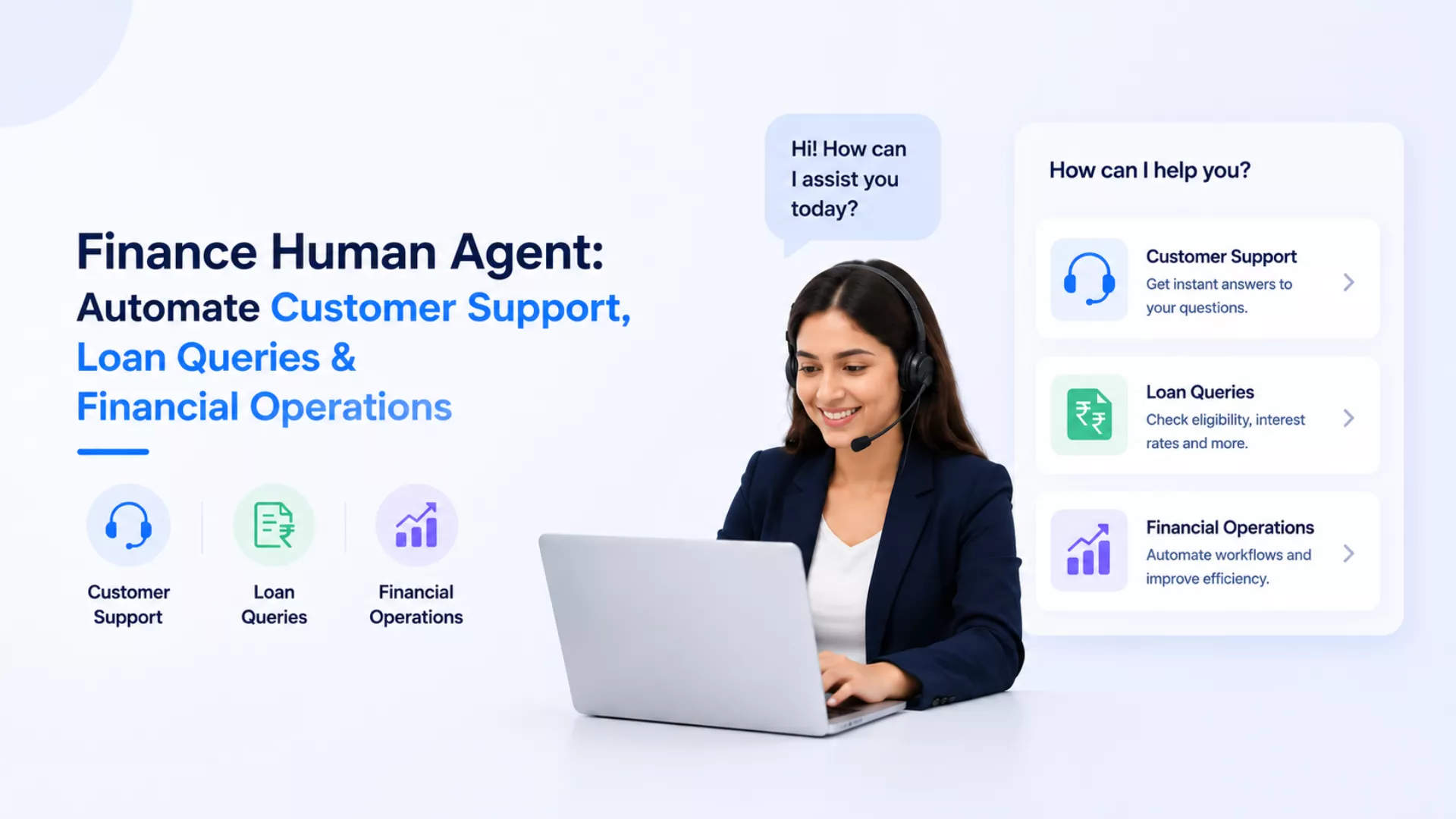
1. Customer Support
The test of any customer support system is not how it handles simple queries. It is how it handles the moment a query changes direction mid-conversation.
Consider a customer asking why a mortgage payment was declined and whether funds can be transferred from savings to cover it. A traditional chatbot typically loses context when the intent changes. An agent made for AI-powered customer support in finance treats both requests as one workflow, retrieving account data, executing the transfer, recalculating payment eligibility and logging the resolution automatically.
Resolve Customer Requests End-to-End
Deploy AI agents that handle banking queries, transactions and resolutions without constant escalation..
2. Lending Operations
The slowness of traditional loan origination is not a people problem. It is a handoff problem.
Here is where time disappears in a standard mortgage application:
- A borrower uploads income documents. They sit in a queue until a loan officer manually retrieves them.
- The loan officer requests a credit pull. Results come back in a separate system with no automatic reconciliation.
- An underwriter receives the file, then rebuilds the cash flow picture from 12 months of bank statements that were never structured for machine reading.
- A calculation mismatch on the application sends everything back to step one.
AI for loan processing automation automates loan queries by collapsing the entire origination sequence. Document extraction, OCR verification, DTI calculation, cash flow analysis and risk scoring run in parallel. Low-risk applications clear automatically. Complex cases route to underwriters with pre-populated memos. Deployments processing this workflow end to end have automated 35.5% of mortgage inquiries without human involvement.
The downstream effect: a 91% increase in funded loans per loan officer and a 29% reduction in operational costs per funded loan.
3. Back-Office Compliance and Operations
"When you get tired or bored of something like writing test cases, you tend to get less focused on it, maybe not as rigorous as you would be. By allowing a developer to review a test suite instead of writing all of them, you can really bring what they know about the code much more clearly to the quality testing outcomes. An AI agent never gets tired, an AI agent never gets bored."
Michele Willis, Head of Core Engineering Solutions, JPMorgan Chase
AML monitoring, sanctions screening and KYC verification are among the most exhausting tasks in financial services. Rule-based systems generate false positives at up to 95%, flooding compliance queues with low-signal alerts. AI-driven customer experience in banking back offices changes this. A KYC orchestration agent runs OFAC, UN and EU sanctions checks in parallel, clearing standard applications in under five minutes.
ABN AMRO's graph-based entity resolution across 30 million accounts reduced KYC onboarding cycles by 80% and surfaced criminal networks that manual review had missed. An AP agent then executes three-way invoice matching, drafts supplier discrepancy communications and updates the ERP ledger automatically. Purchase order processing cycles drop by up to 80%. Compliance teams stop doing data entry. They start doing compliance.
Why Banks Are Evaluating An AI Agent for Banking Operations
The technology is not the problem. The architecture is. Most institutions discover this only after deploying RPA, chatbots and copilots and watching each one plateau at a different ceiling.
The signs are consistent across institutions that have reached this point:
- Compliance queues are growing despite automation investment
- Loan officers are still manually reconciling data between systems
- Chatbot containment rates look healthy but escalation volumes have not dropped
- RPA maintenance costs are rising every time a core banking vendor pushes an update
- Generative AI is deployed across teams but fewer than one in four institutions report measurable bottom-line outcomes
Each of these is a signal that the current stack is automating tasks while leaving workflows intact. That distinction matters because operational costs do not fall when tasks are automated. They fall when handoffs, manual coordination and exception queues are eliminated entirely.
That is the evaluation threshold where intelligent automation in fintech becomes relevant.
Eliminate Workflow Bottlenecks
Automate complete banking workflows instead of adding another disconnected tool to your technology stack.
Summary
| Generation | What It Automated | Where It Broke |
| RPA | Repetitive UI tasks | Interface changes, unstructured data |
| Chatbots | FAQ deflection | Context loss, no write access |
| Copilots | Individual productivity | Human approval at every step |
| Finance AI Agents | End-to-end workflows | Governance and infrastructure readiness |
The Accountability Bottleneck and the Governance Model
The real deployment constraint is not intelligence. It is write permissions. A chatbot error frustrates a customer. An agent error that mutates a transaction record or approves an ineligible loan creates compliance liability that cannot be walked back. This is the accountability bottleneck and it explains why many institutions claiming to deploy AI agents for banking operations are running read-only copilots under a different name.
Three commitments must exist before autonomous execution goes into production: complete audit trails logging every decision step, transactional rollback mechanisms for agent-initiated writes and defined human approval boundaries for high-risk workflow categories.
The governance model that makes this workable is Human-on-the-Loop:
| Oversight Tier | How It Works | Best For |
| HITL | Human approves every action | High-risk, low-volume decisions |
| HOTL | Agent executes; humans review at checkpoints | Most enterprise banking workflows |
| HOOTL | Full autonomy, post-hoc auditing | Low-risk, fully reversible operations |
Most production deployments operate at HOTL. Agents handle execution at scale. Humans apply judgment where institutional accountability is highest.
Making this work organizationally requires three functions aligned: the COO identifying automation targets, the CIO managing integration pipelines and the CRO defining what agents can execute without prior approval.
How Agentic Deployment Becomes Possible Without Core System Replacement
The most common reason institutions delay agentic deployment is the assumption that it requires replacing legacy core banking infrastructure. It does not. The Model Context Protocol (MCP) functions as a standardized execution proxy between probabilistic LLMs and deterministic banking systems, translating modern JSON-based AI tool calls into the SOAP, XML and COBOL formats that legacy ledgers already understand.
- Banks overlay an agentic execution layer on top of existing infrastructure rather than replacing the systems beneath it.
- The MCP server acts as an authorization proxy, ensuring credentials never reach the LLM and that agent permissions are validated at execution time.
- Customer data stays entirely within the bank's own infrastructure, directly addressing data sovereignty and CRO oversight concerns.
- Integration is standardized across systems, meaning a single MCP implementation can connect an AI agent to multiple disconnected core platforms simultaneously.
- Adoption is accelerating. A December 2025 survey found 50% of large financial institutions actively experimenting with MCP, with 11% already in production deployment.
For technology leaders, the question is no longer whether legacy systems can support a finance automation AI platform. With MCP as the integration layer, the infrastructure constraint is already resolved.
Compliance Architecture: DORA, EU AI Act and GDPR Obligations
Regulatory obligations for AI agent deployers in financial services are specific and non-negotiable. Building compliance after deployment is significantly more expensive than designing for it from the start.
- DORA (Article 28): It classifies major AI providers, including OpenAI and Anthropic, as critical ICT third parties. Deploying banks must verify that their providers operate within EU cyber-resilience frameworks and have signed the EU GPAI Code of Practice. This is not a vendor problem. It is a deployer verification obligation.
- EU AI Act (Annex III §5(b)): Credit scoring is classified as high-risk AI under Annex III §5(b), activating mandatory Fundamental Rights Impact Assessments and explainability obligations. The Reverse-Bascule risk: fine-tuning a third-party credit model on proprietary data may reclassify the bank as an AI provider under Article 25(1)(b), shifting model validation liability to the institution. CRR Article 144 requires credit scoring and IRB models to remain isolated systems.
- GDPR and the SCHUFA ruling (C-634/21): Human sign-off does not exempt an automated credit decision from GDPR Article 22. The automated scoring process beneath human approval still constitutes automated decision-making. Agents denying credit must generate auditable explanations at the point of decision: DTI ratios, inquiry patterns, risk signals. This is a system design requirement, not a documentation afterthought.
The practical design implication: compliance obligations must be embedded into the agent's architecture before deployment, not layered on afterwards through reporting tools.
The AI Sovereignty Question: Build vs. Buy
Most institutions have not yet framed this as a strategic decision. By the time they do, the compounding knowledge gap will already have formed.
Every time a third-party vendor's AI customer support for fintech resolves an exception using your customer data, it refines its own institutional intelligence, not yours. Credit decision logic, transaction risk patterns and customer behavioral models are core intellectual property. If those models live entirely in vendor infrastructure, the competitive advantage they represent accrues to the vendor.
| Subscribed AI Intelligence | Owned AI Intelligence | |
| Model improvement | Vendor benefits | Institution benefits |
| Data residency | Third-party infrastructure | Bank-owned cloud |
| Decision logic ownership | Vendor-controlled | Internally governed |
| Competitive advantage | Shared across clients | Proprietary |
| Regulatory control | Dependent on vendor compliance | Directly auditable |
| Long-term cost | Recurring, scaling with usage | Higher upfront, lower at scale |
Progressive institutions are responding by building internal AI Capability Centres that deploy proprietary models on bank-owned infrastructure.
JPMorgan's model is the benchmark: an $18 billion annual technology budget, fraud prevention systems that stopped over $1 billion in losses and $250 million in annual savings. Not every institution can match that scale, but the strategic direction is clear.
For most regional and mid-sized institutions, a hybrid strategy is the practical path forward. Building every component internally often extends deployment timelines, increases implementation risk and delays ROI. Buying proven AI platforms accelerates adoption, provides enterprise-grade capabilities from day one and reduces the operational burden of maintaining AI infrastructure.
Modern architectures such as MCP make this balance possible. Institutions can leverage external AI platforms for deployment, orchestration and customer-facing experiences while retaining control over customer data, policies, governance frameworks and workflow intelligence. The long-term advantage comes from combining the speed of buying with the control of ownership, ensuring that the knowledge generated by your operations remains a strategic asset of the institution rather than a dependency on the vendor.
Keep Intelligence In-House
Retain ownership of decision logic, customer insights and operational knowledge as AI scales.
What ROI Evidence Actually Shows
The headline figure is $3.50 returned per $1 invested in the first year of agentic deployment, with top performers reaching $8. The gap between the average and the top performer is not explained by technology selection. It is explained by the operating model redesign.
Institutions that automate isolated tasks within existing org structures capture incremental efficiency. Institutions that redesign entire workflow domains around human-agent collaboration structures, removing the handoffs, approval chains and manual coordination that RPA and copilots left in place, capture structural cost reduction.
McKinsey estimates a 15% to 20% reduction in core banking operational costs is achievable at scale, representing $700 billion to $800 billion in cumulative industry savings globally.
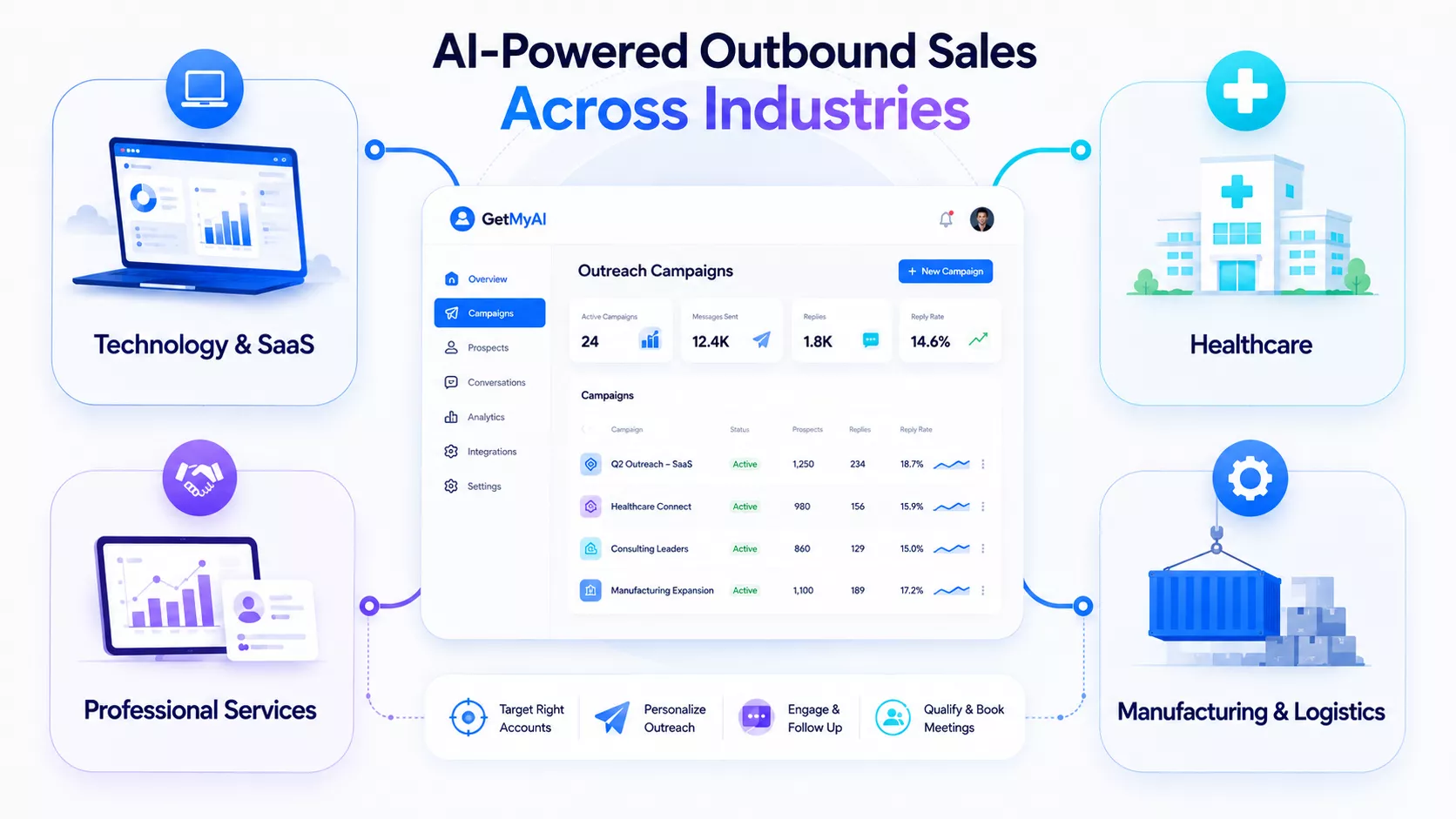
GetMyAI Handles the Front-End Problem Most Banks Haven't Solved Yet
Most finance AI agent deployments fail at the layer most institutions underestimate: the customer-facing intelligence layer. The back-office workflows get automated. The compliance pipelines get rebuilt. But the front-end experience, where customers ask policy questions, book meetings, submit inquiries and qualify as leads, remains fragmented and manual.
GetMyAI is built specifically for this layer.
As an AI agent for financial services, GetMyAI handles the operational workflows that sit between your customer and your core systems:
- Knowledge management: Instant, accurate responses to policy and product queries without routing customers through support queues.
- Policy query automation: Consistent, governance-aligned answers across every channel, every time.
- Multi-channel deployment: One agent across web, mobile, WhatsApp and voice, without rebuilding logic for each channel.
- Meeting booking: Qualified prospects move directly from conversation to calendar, without a human coordinator in between.
- Lead collection: Data captured and routed automatically, so no inquiry falls through the gaps.
What makes GetMyAI different is not the feature set. It is the governance architecture underneath it. Every workflow is designed for enterprise deployment: auditable, explainable and aligned with the oversight requirements your CRO already expects.
The customer conversation is where trust is built or lost. GetMyAI makes sure it is built.
FAQs
How do AI agents automate loan processing?
Finance AI agents automate loan processing by running document extraction, DTI calculation and risk scoring in parallel. Low-risk applications clear automatically while complex cases route to underwriters with pre-populated decision memos, compressing origination timelines from days to minutes.
Are AI agents safe for financial operations?
Yes, when deployed with a proper governance architecture. Production-grade deployments use MCP servers as authorization proxies, keeping credentials and customer data within bank infrastructure. Human-in-the-Loop oversight ensures agents execute autonomously while humans review outcomes at structured checkpoints.
How do banks use AI agents for customer queries?
Banks deploy AI support agents for handling multi-intent queries, dispute resolution and account management across voice, web and mobile channels simultaneously. Unlike chatbots, these agents retain context across intents and execute transactions directly within core banking systems.
What are the benefits of AI agents in finance operations?
AI-based financial operations management delivers 35% average cost reduction, 80% faster KYC onboarding cycles and up to 80% reduction in purchase order processing time. Benefits compound when agents redesign entire workflow domains rather than automating individual steps.
How do AI agents handle financial customer support tickets?
Intelligent automation in fintech replaces ticket-based support with real-time workflow resolution. An AI agent to automate customer support in fintech companies diagnoses issues, accesses core systems and resolves queries end to end, reducing ticket volumes by eliminating the need for escalation on routine requests.