From Browsing to Booking: Why Businesses Are Moving Towards AI Customer Assistant

Key Takeaways
- AI customer assistants go beyond rule-based chatbots. Traditional chatbots rely on scripts, decision trees, and keyword triggers, while AI assistants can interpret intent, understand context, and respond using available business information.
- Context is a major part of a useful customer experience. AI assistants can use previous conversations and customer information to reduce repetition and make interactions feel more continuous.
- AI customer assistants can support multiple business functions. The article covers customer support, sales qualification, shopping assistance, and appointment scheduling rather than limiting AI to basic customer queries.
- AI can help sales teams focus on higher-value conversations. A sales-focused assistant can ask qualifying questions, capture lead information, score prospects, provide product details, and route high-intent customers to the appropriate team.
- Shopping assistants can reduce friction during product discovery. They can help shoppers compare products, navigate large catalogues, check pricing or stock information, and get answers about policies or shipping before checkout.
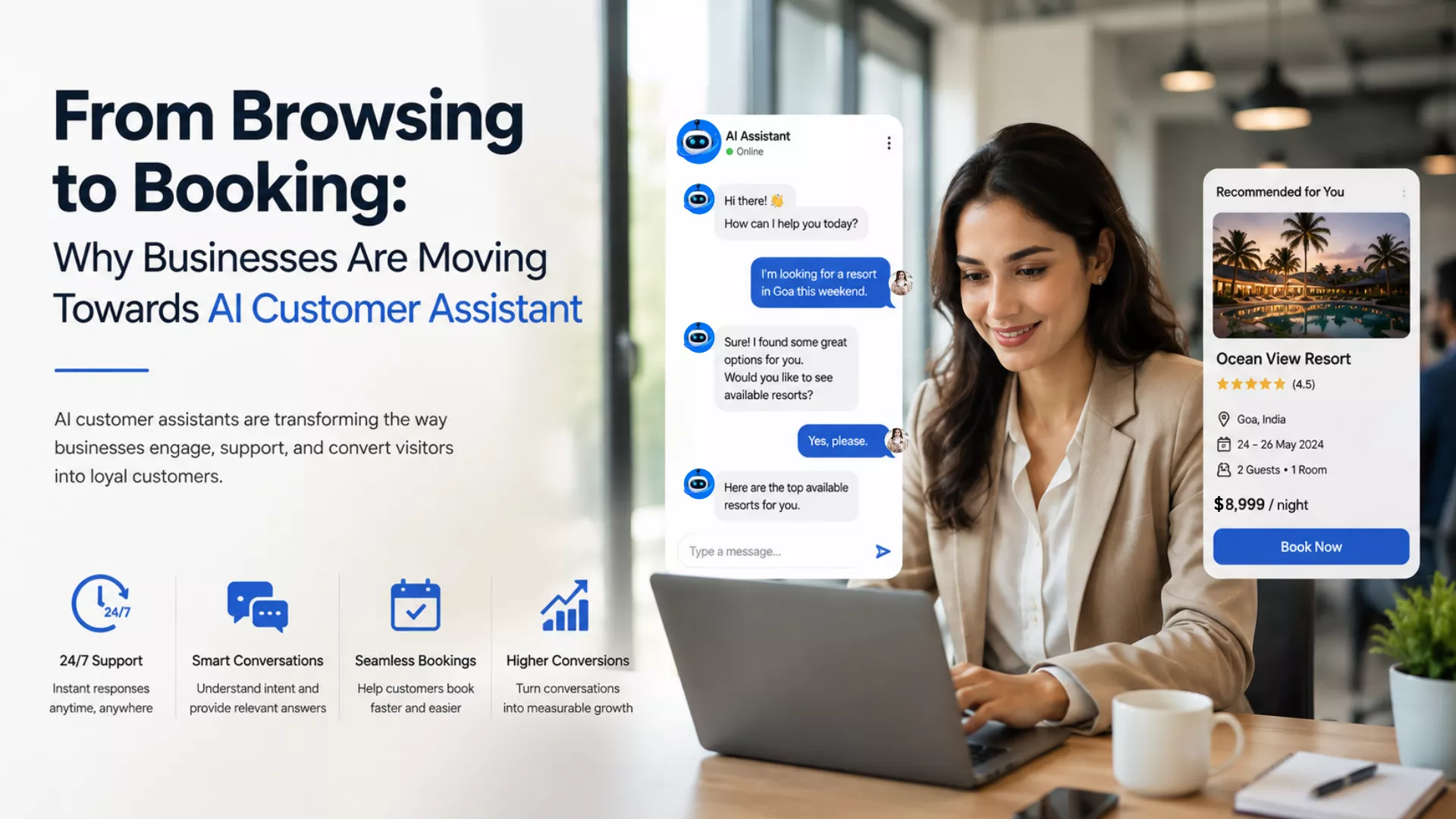
Customers expect answers now, not later. They expect clear guidance, personalized recommendations, and smooth booking or buying experiences across every digital touchpoint. That expectation has grown far beyond what traditional chatbots can deliver. Businesses are moving toward a new category of intelligent automation, and the shift is driven by one simple reality: people want real help, not pre-scripted replies.
This is where an AI customer assistant makes a difference. It fills the space between what customers expect and what teams can realistically manage by offering support that understands context and scales without effort. At GetMyAI, we work to make customer engagement feel easy, familiar, and frustration-free. Every interaction is a moment to guide someone toward a purchase, a booking, or a more meaningful connection with your brand.
Below is a closer look at why companies are making the switch from standard chatbots to more advanced AI-driven systems, and how this shift transforms the entire customer journey from browsing to booking.
Understanding the Difference: Chatbot vs AI Assistant
Most leaders are familiar with the limitations of traditional chatbots. They operate on rules, static decision trees, and keyword triggers. When customers move outside that structure, the chatbot reaches a dead end. In contrast, an AI customer assistant understands intent, remembers context, and adapts in real time.
How the two models compare
- A traditional chatbot answers simple, repetitive questions.
- An AI assistant interprets human language, analyzes intent, and responds based on real data.
- A chatbot follows rules created manually.
- An AI assistant can learn from previous conversations, documents, FAQs, and user behavior.
This shift matters because customers now want everything handled within a single conversation. They expect recommendations, support, and even booking options without being moved from one page or channel to another. That is why GetMyAI builds intelligent systems that actually improve the experience instead of acting like tools that only react to keywords.
Going Deeper Than Scripts With a Digital Support Assistant
Businesses are adopting AI-driven support because it:
- Responds instantly to high-volume queries.
- Understands context so customers never repeat themselves.
- Identifies sentiment and urgency.
- Provides guidance based on live data and internal knowledge.
Customers tend to engage more when they feel genuinely heard. It speeds up their experience and takes pressure off the team handling support. With GetMyAI, repetitive questions can be automated, complex issues can be routed to the right people, and every conversation stays consistent in tone and quality.
Strengthening Revenue With an AI Sales Assistant
Every sales team aims to spend more time on high-quality conversations. Yet most inquiries are early-stage, unqualified, or exploratory. That is where an AI sales assistant becomes a strategic advantage
What a sales-focused AI agent accomplishes
- Asks qualifying questions
- Captures lead information
- Scores prospects
- Routes high-intent customers to the right team
- Supplies product details instantly
- Keeps buyers moving smoothly through the funnel
Speed plays a role, but consistency is what truly matters. Each potential customer receives steady, reliable support and the information they need to make a decision. With GetMyAI doing the early qualification work, sales experts can spend their time on the conversations that actually close.
Creating Better Shopping Experiences With an AI Shopping Assistant
Most customers arrive with questions. They want to compare options, understand features, check availability, or verify shipping details. When those questions go unanswered, they leave. Businesses lose sales not because of pricing or product fit, but because they do not respond fast enough.
An ai shopping assistant changes that dynamic.
Shoppers get:
- Instant product recommendations
- Help navigate large catalogues
- Context-aware comparisons
- Quick answers on pricing, policies, or stock
- A smoother path to checkout
Teams benefit from fewer repetitive inquiries and better insight into shopper behavior. GetMyAI allows retailers to guide customers with the same level of attention they would get in a physical store.
Reducing Friction in Scheduling With Smart AI Assistants
Setting up an appointment sounds easy in theory, yet it usually leads to a lot of back-and-forth. Customers wait for someone to confirm times, the team checks availability, and small errors can creep in. With the right automation in place, that entire cycle becomes cleaner and far more efficient.
A combination of an AI booking assistant, a calendar scheduling assistant, and an online scheduling assistant creates a streamlined process that works for both customers and staff. By working as one system, these tools remove delays, lighten the manual workload, and make sure all calendars stay accurate throughout the day.
What this unified scheduling experience delivers
- Real-time availability checks across all staff
- Instant confirmations with zero wait time
- Automated reminders to reduce missed appointments
- Easy cancellations or rescheduling directly through chat
- Seamless integration with Google Calendar, Outlook, iCal, and similar systems
- A self-serve environment where customers can book without assistance
By centralizing all scheduling logic, businesses can offer around-the-clock access to appointment booking. Healthcare providers, consultants, salons, wellness centers, and service-driven businesses all benefit from a system that stays accurate, responsive, and reliable. With GetMyAI, these scheduling workflows operate continuously, ensuring that every booking is correct, every calendar stays updated, and every customer enjoys a frictionless experience.
Delivering Personalized, Adaptive Experiences With AI
Modern users expect more than standard automation. People expect brands to know what they like, respond with some context, and keep the flow steady as they switch between channels. A personalised AI assistant helps create that kind of connected experience by adjusting to each customer’s needs over time.
Unlike static systems, a personalized assistant adapts dynamically. It adjusts tone, identifies intent, and recalls previous interactions so customers never need to repeat themselves. This continuity creates a smoother, more human experience, strengthening trust and improving satisfaction.
Why personalization elevates the entire journey
- Conversations reflect the brand voice consistently.
- The assistant adapts to behavior, interests, and past activity.
- Context carries across the website, messaging apps, and support channels.
This level of intelligence allows GetMyAI to deliver interactions that feel relevant rather than scripted. As the assistant learns how people interact, its recommendations become more relevant, the replies sound more natural, and the guidance improves over time. Customers end up with an experience that feels intuitive, thoughtful, and very much in line with what they expect from today’s digital interactions.
The Shift to AI Customer Assistants Is Already Underway
The shift from basic chatbots to more intelligent AI systems is already underway. Companies of all sizes are adopting them because they need stronger engagement, faster support, and better visibility into customer behavior. People using these tools expect conversations that feel natural, useful, and tailored to their situation.
An AI customer assistant delivers on all of these expectations. It transforms browsing into buying, questions into conversions, and uncertainty into clarity. With the capabilities provided by GetMyAI, companies are stepping into a new era of meaningful and efficient digital engagement.
The future belongs to businesses that communicate well. AI assistants make that communication continuous, intelligent, and available everywhere customers choose to engage.
Frequently Asked Questions
1. What is an AI customer assistant?
An AI customer assistant is an AI-driven system designed to interact with customers, understand their intent and context, and provide relevant assistance. The article positions it as a more adaptive alternative to traditional rule-based chatbots.
2. How is an AI customer assistant different from a traditional chatbot?
A traditional chatbot generally follows manually created rules, decision trees, and keyword triggers. An AI customer assistant can interpret natural language, understand intent, use context, and respond using information from sources such as previous conversations, documents, FAQs, and user behavior.
3. Why are businesses moving from traditional chatbots to AI customer assistants?
The article identifies a gap between what customers expect and what traditional scripted systems can provide. Customers increasingly want immediate answers, personalized guidance, recommendations, support, and booking options within a continuous conversation.
4. How can an AI customer assistant help customer support teams?
It can respond to high-volume queries, understand conversation context, identify sentiment and urgency, and provide guidance based on available business information. The article also describes using AI to automate repetitive questions while routing more complex issues to the appropriate people.
5. Can an AI customer assistant help with sales?
Yes. The article describes an AI sales assistant that can ask qualifying questions, capture lead information, score prospects, route high-intent customers to the right team, provide product information, and keep potential buyers moving through the sales funnel.
6. How can an AI shopping assistant help e-commerce customers?
An AI shopping assistant can provide product recommendations, help customers navigate large product catalogues, compare options using context, answer questions about pricing, policies, and stock, and guide shoppers toward checkout.
7. Can AI customer assistants handle appointment scheduling?
Yes. The article describes AI-assisted scheduling that can check real-time availability, provide instant confirmations, send reminders, and allow customers to cancel or reschedule appointments through chat. It also discusses integration with calendar systems such as Google Calendar, Outlook, and iCal.
8. How does personalization improve an AI customer assistant?
Personalization allows the assistant to adapt to customer behavior, interests, intent, and previous interactions. According to the article, this can make recommendations more relevant, responses more natural, and conversations more consistent across different customer touchpoints.
9. Can an AI customer assistant maintain conversation context?
Yes. Understanding and retaining context is one of the key differences the article highlights between traditional chatbots and AI assistants. Context can help customers avoid repeating information and allows the assistant to provide more relevant responses throughout an interaction.
10. What business problems can an AI customer assistant help address?
The article presents several practical applications: handling high-volume customer questions, qualifying leads, providing product guidance, supporting shopping decisions, scheduling appointments, and creating more personalized customer interactions. The common goal is to reduce friction while allowing teams to focus on conversations that require greater human involvement.